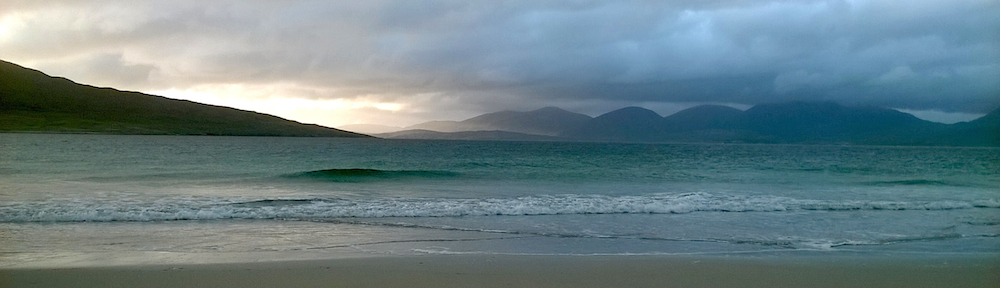
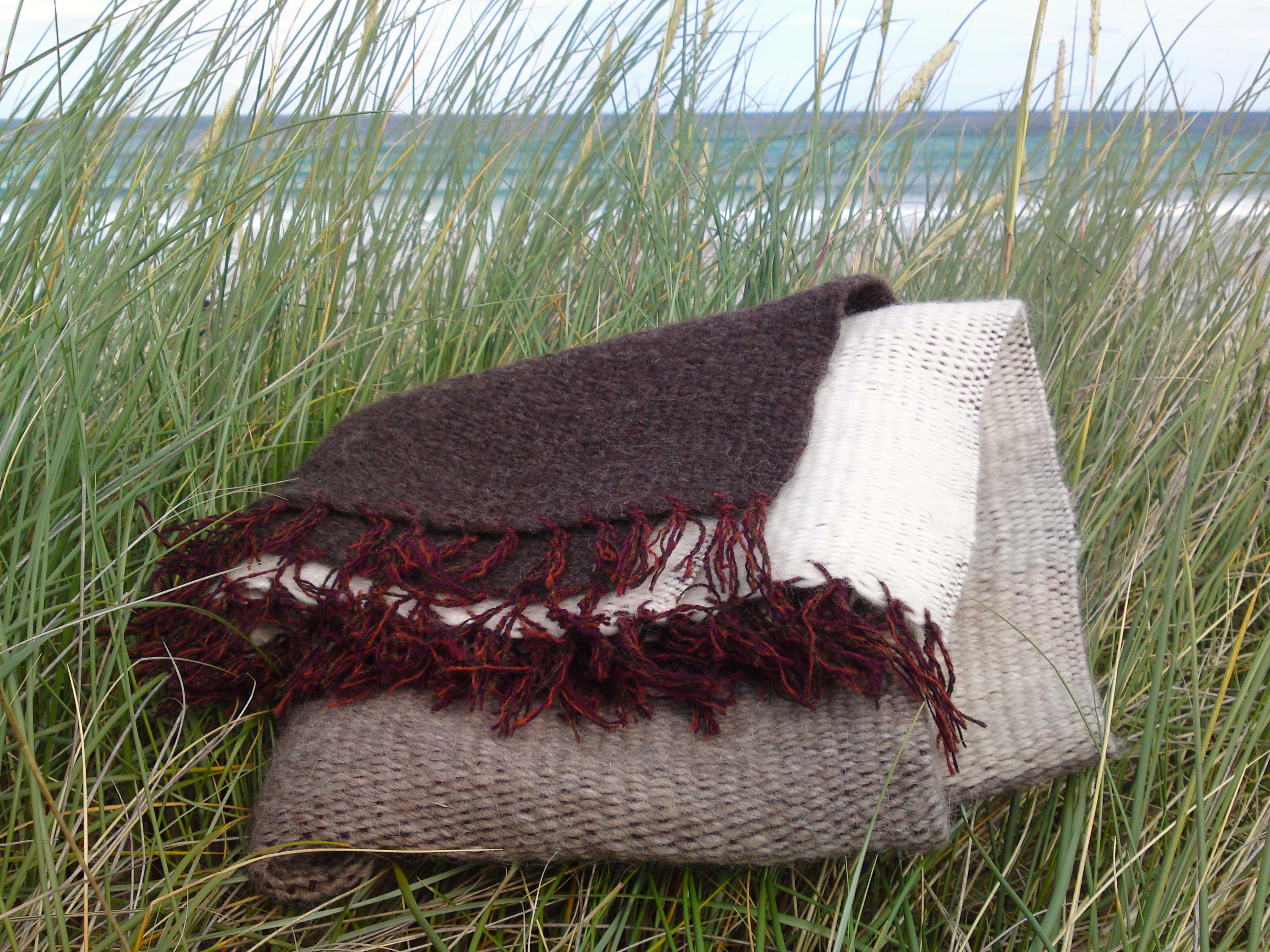
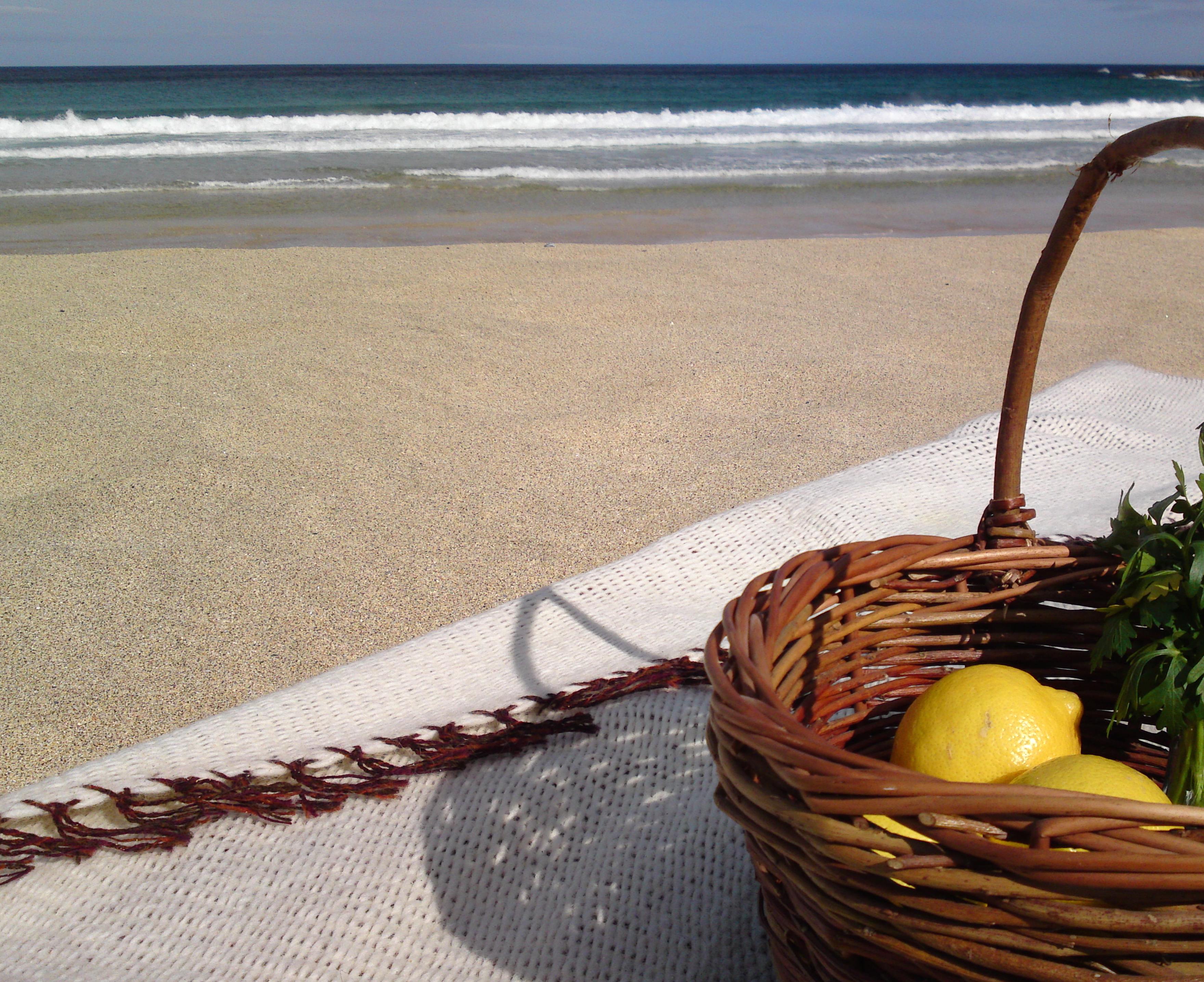
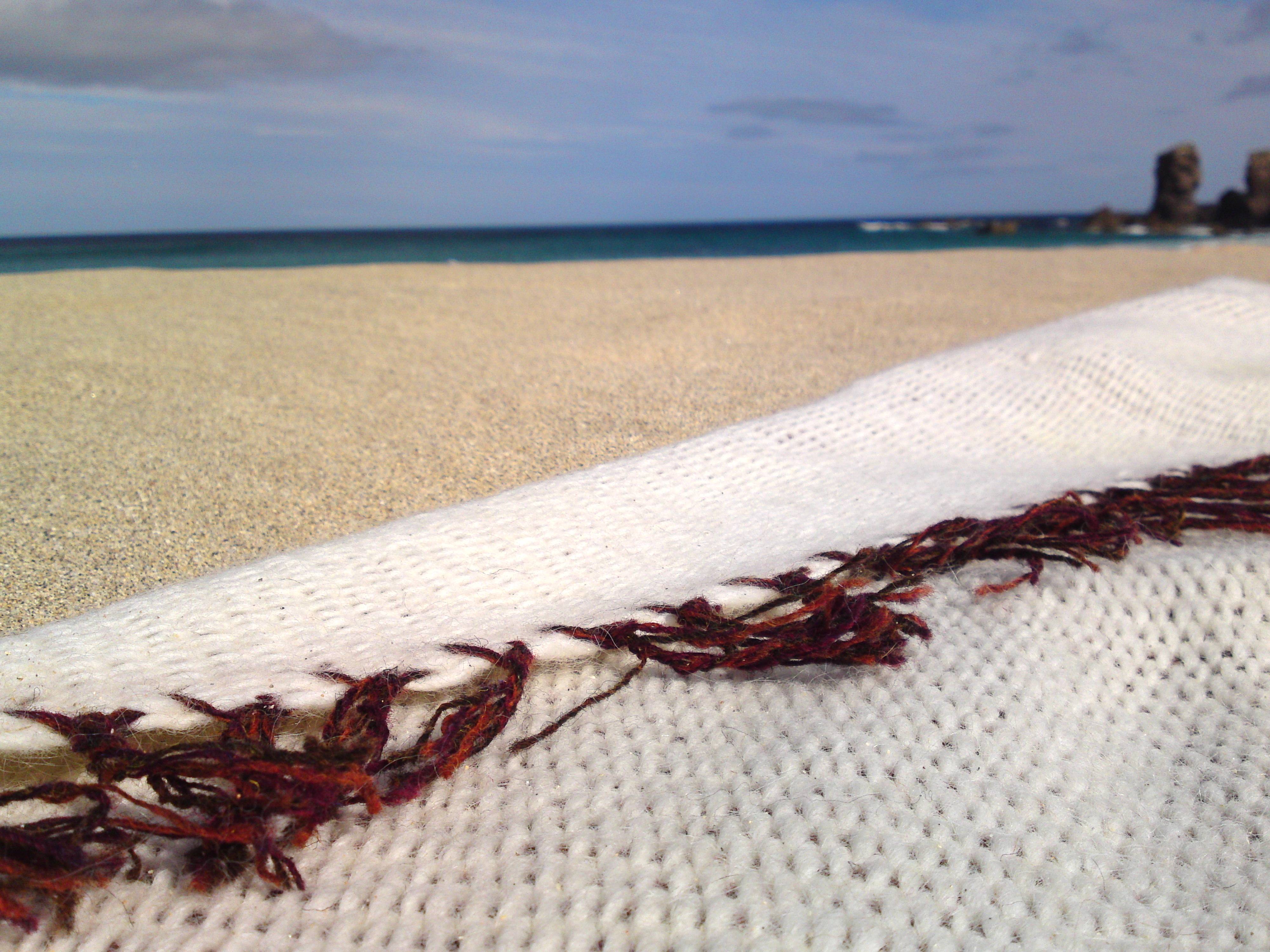
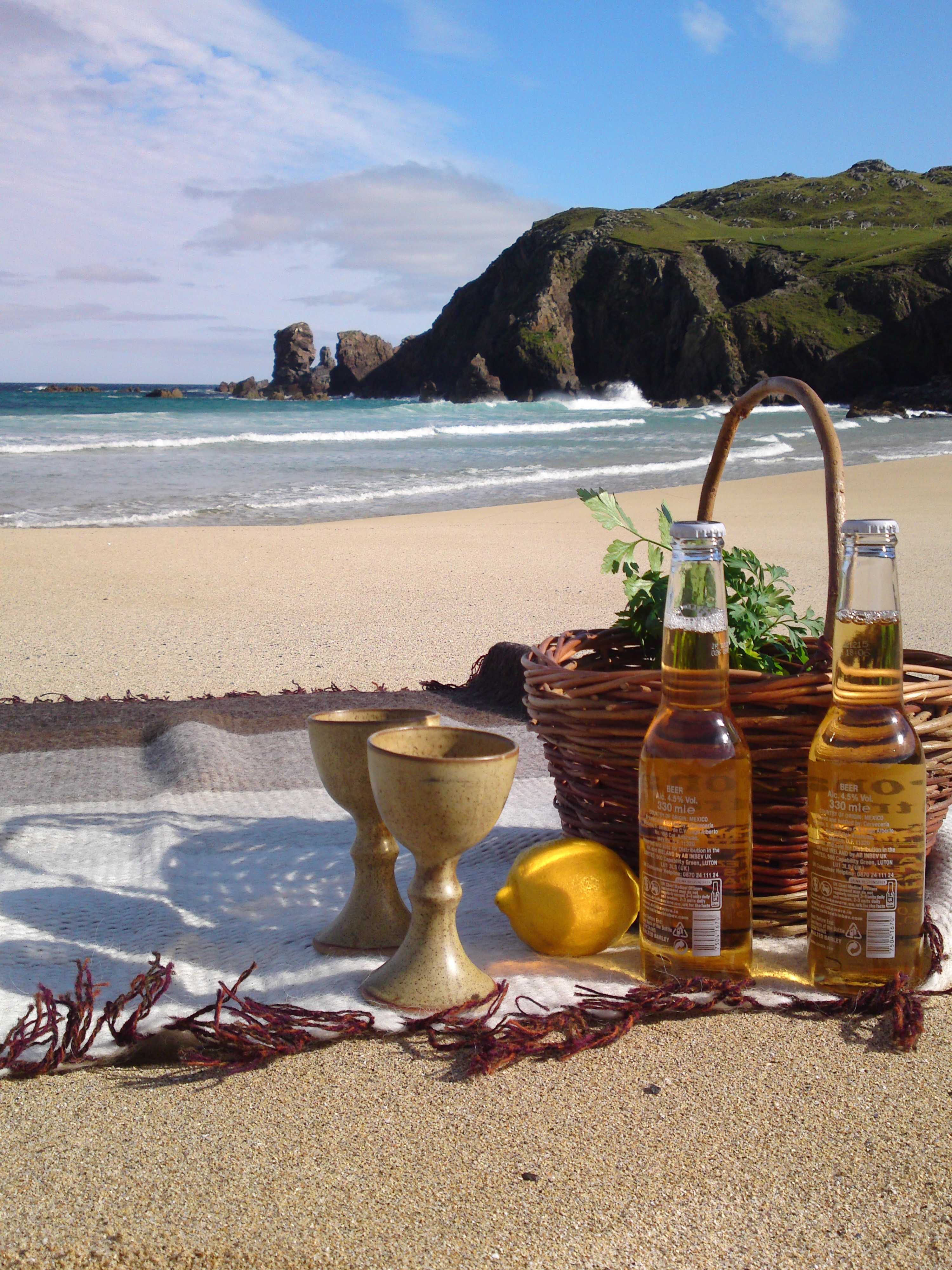
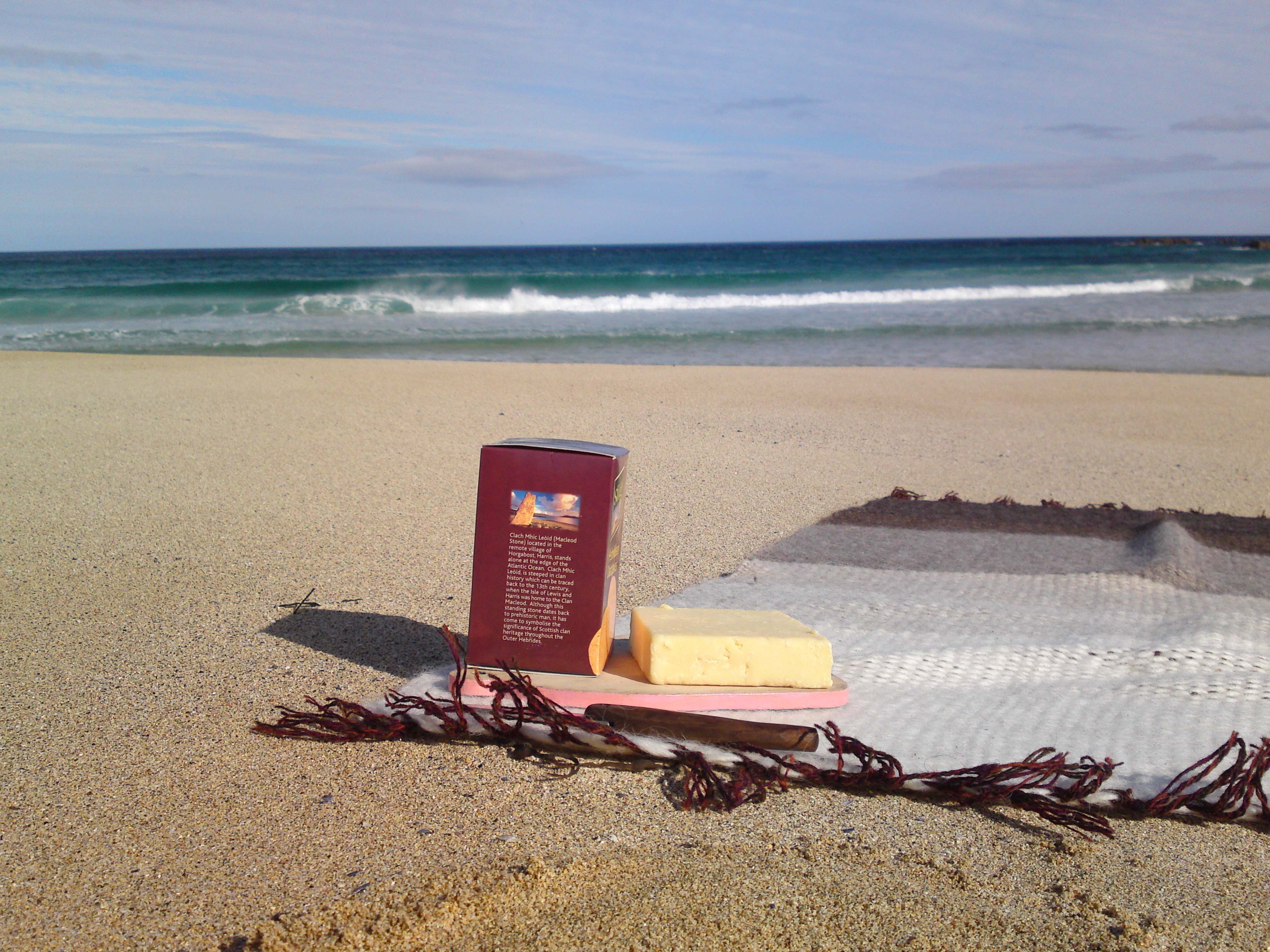
I wasn’t all that excited about my latest blanket, feeling it a waste of Harris tweed yarn to be engulfed by chunky Iceland with my too-wide sett that made for a weft-facing fabric with the peaty seaweed colours all but hidden, but as I take it off the loom it feels larger than I thought, and weighty and soft and light all at once, and the touches of bladderwrack burgundy offset the sheepy colours well. I’m now in the perfect photoshoot spot awaiting a blue day – which is happening about once a week here in the Western Isles this summer, if we’re lucky.
However, we do seem to be lucky on the midge front for that – or else everyone is making a great big fuss about not very much. They should try living on Dartmoor. Indeed a local woman said the midge phenomenon only entered her consciousness recently as tourism has grown and grown. We natives of the wilder lands have worse things to worry about, methinks! (“Eee, when aar wer yoong…”)
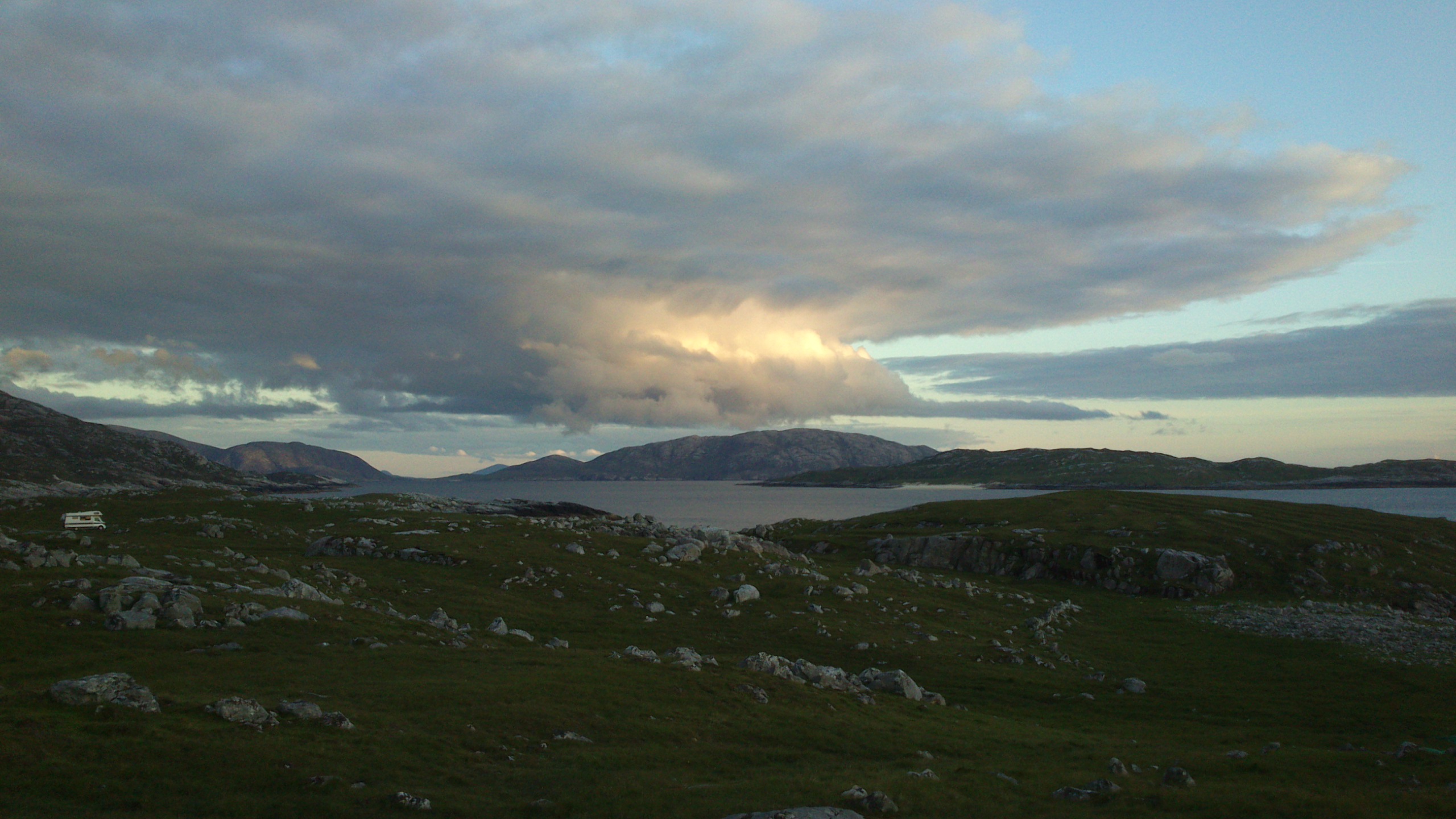
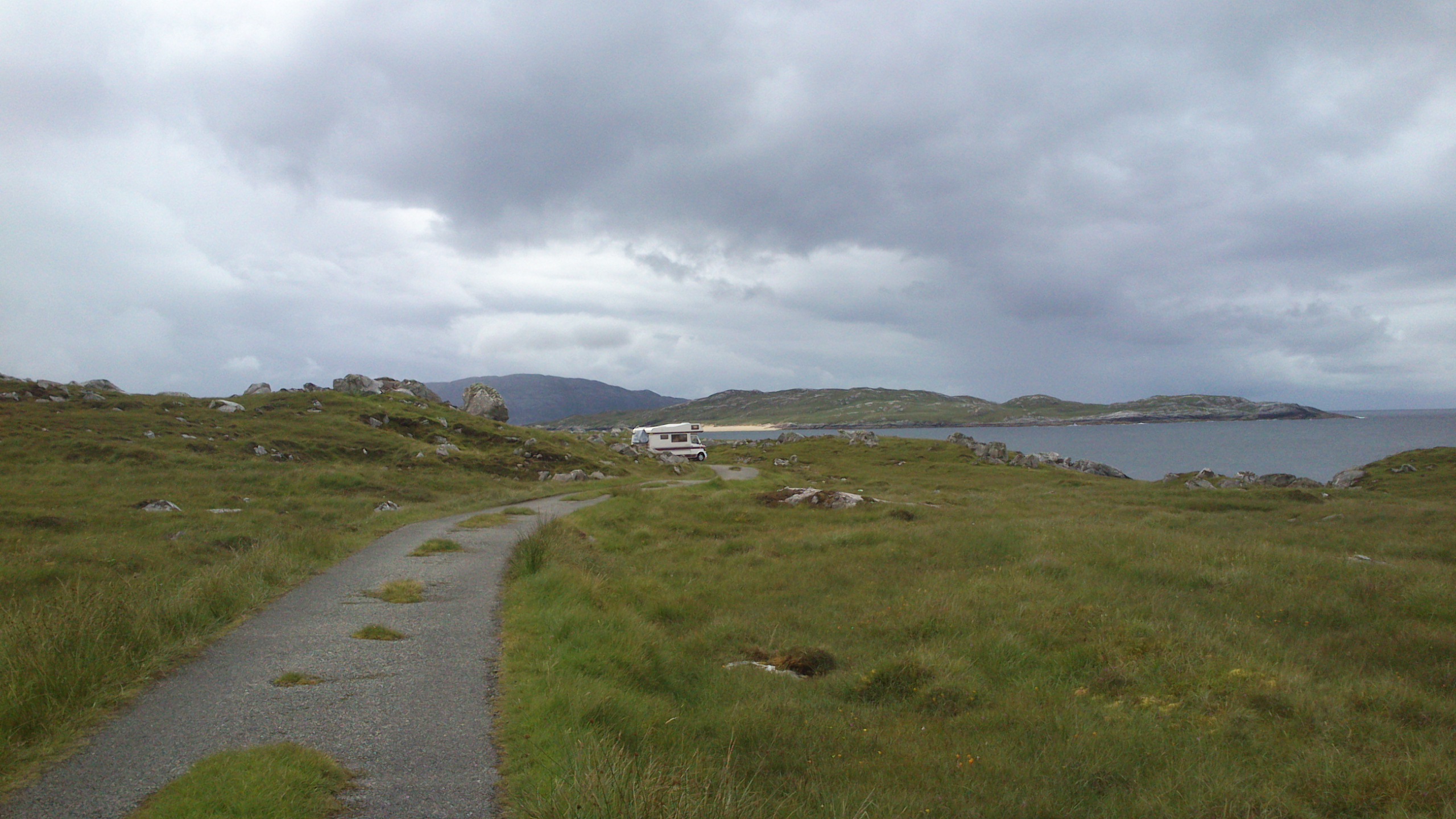
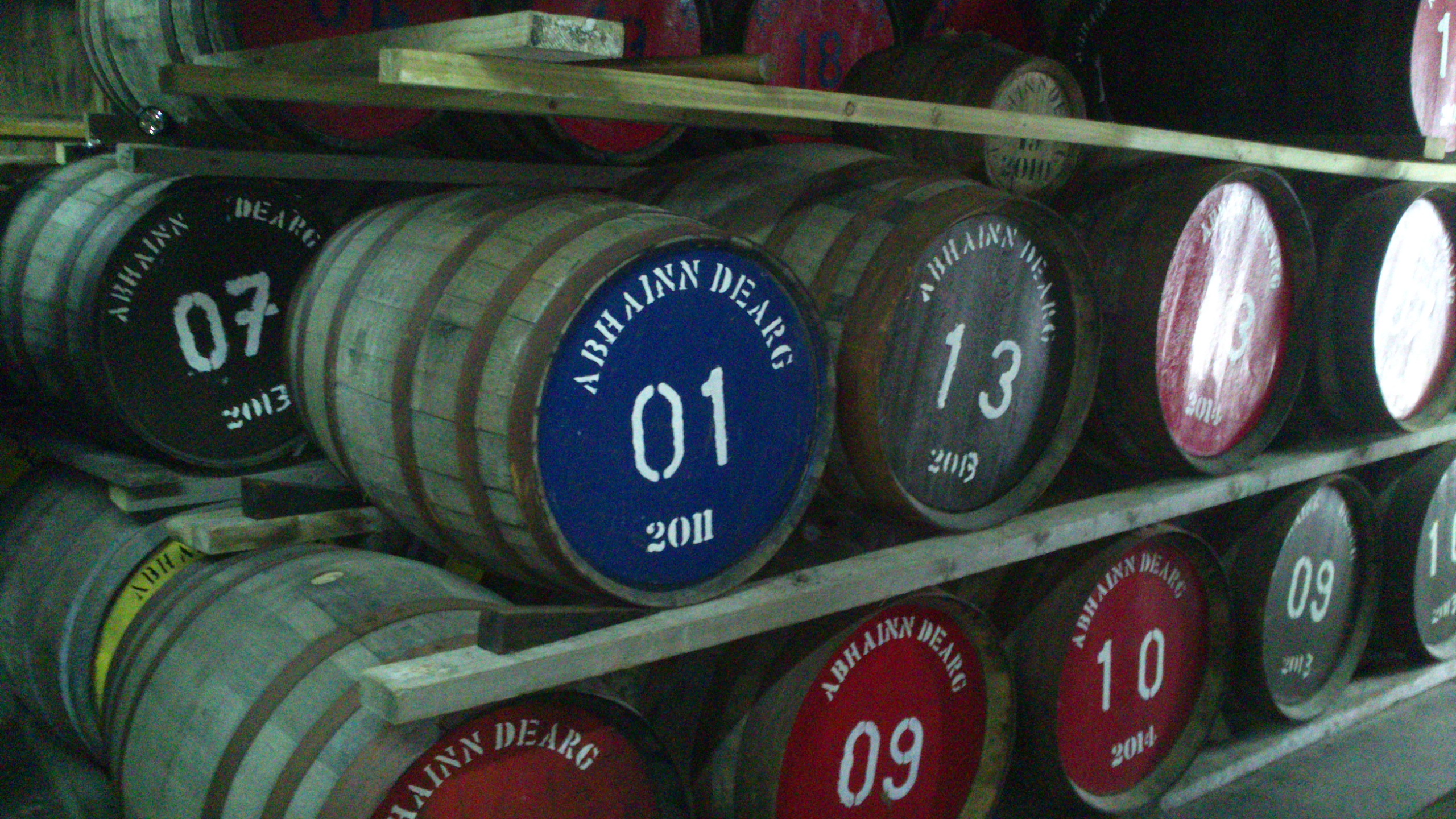
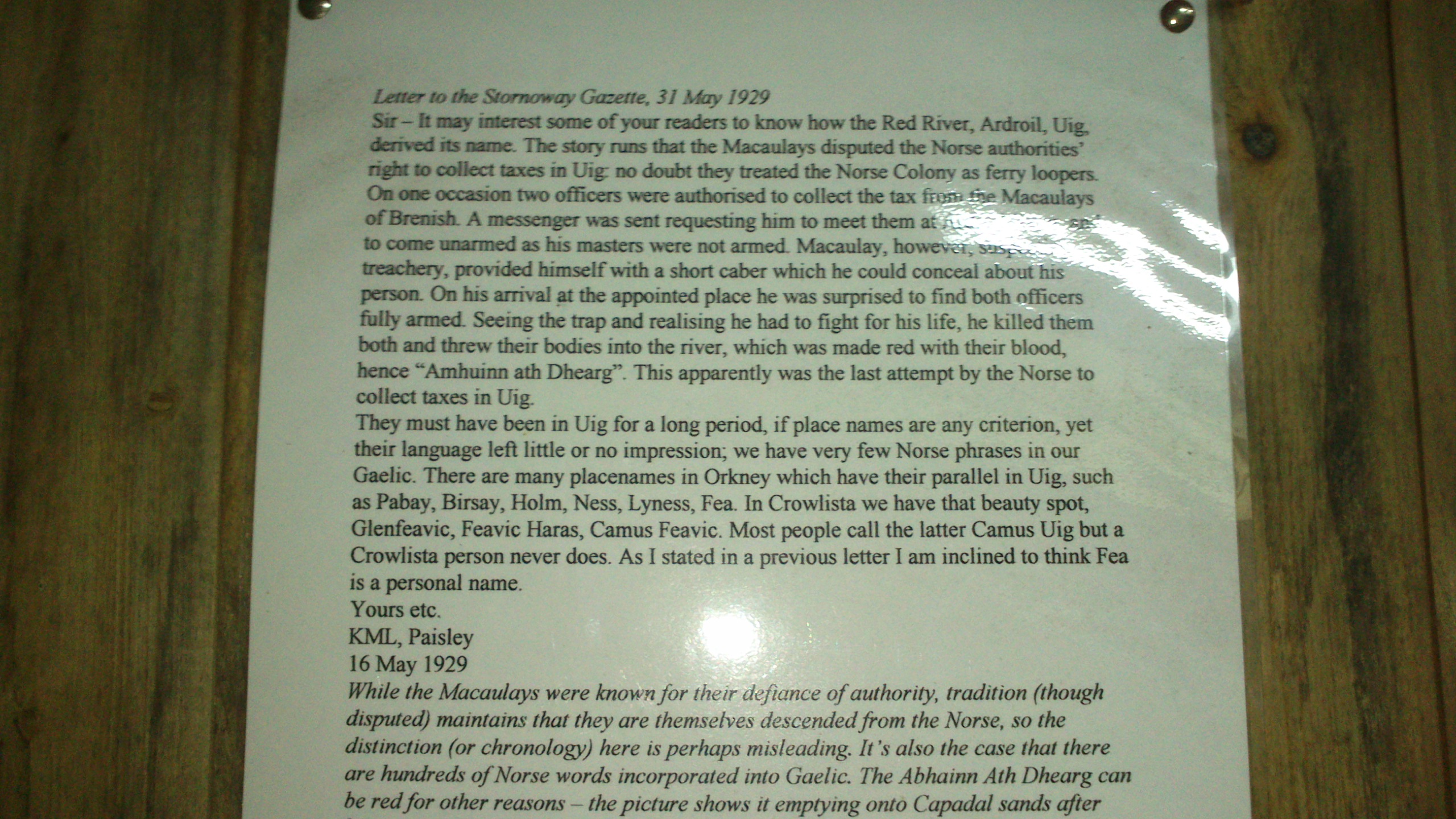
After a brave week in the bare rocky spot where I’ve finally relaxed and stopped worrying (much) about armed or drunken men and re-staked my place in the wilderness, I head back to ‘my’ little bay. I plan to go via the community shop and do a good few hours’ work on their internet, whilst their industrial-sized washing machines do my laundry. On the way I pass the Abhinne Dearg (‘avigne jarag’ = Red River) whiskey distillery and have to stop for a little taste and a tour. What a way to start a day’s work!
One of the many mornings when I say over and over to myself, ‘Oh my God, I can’t believe how good my life is’.
And after the so-called ‘reality day’, on to ‘my’ little bay.
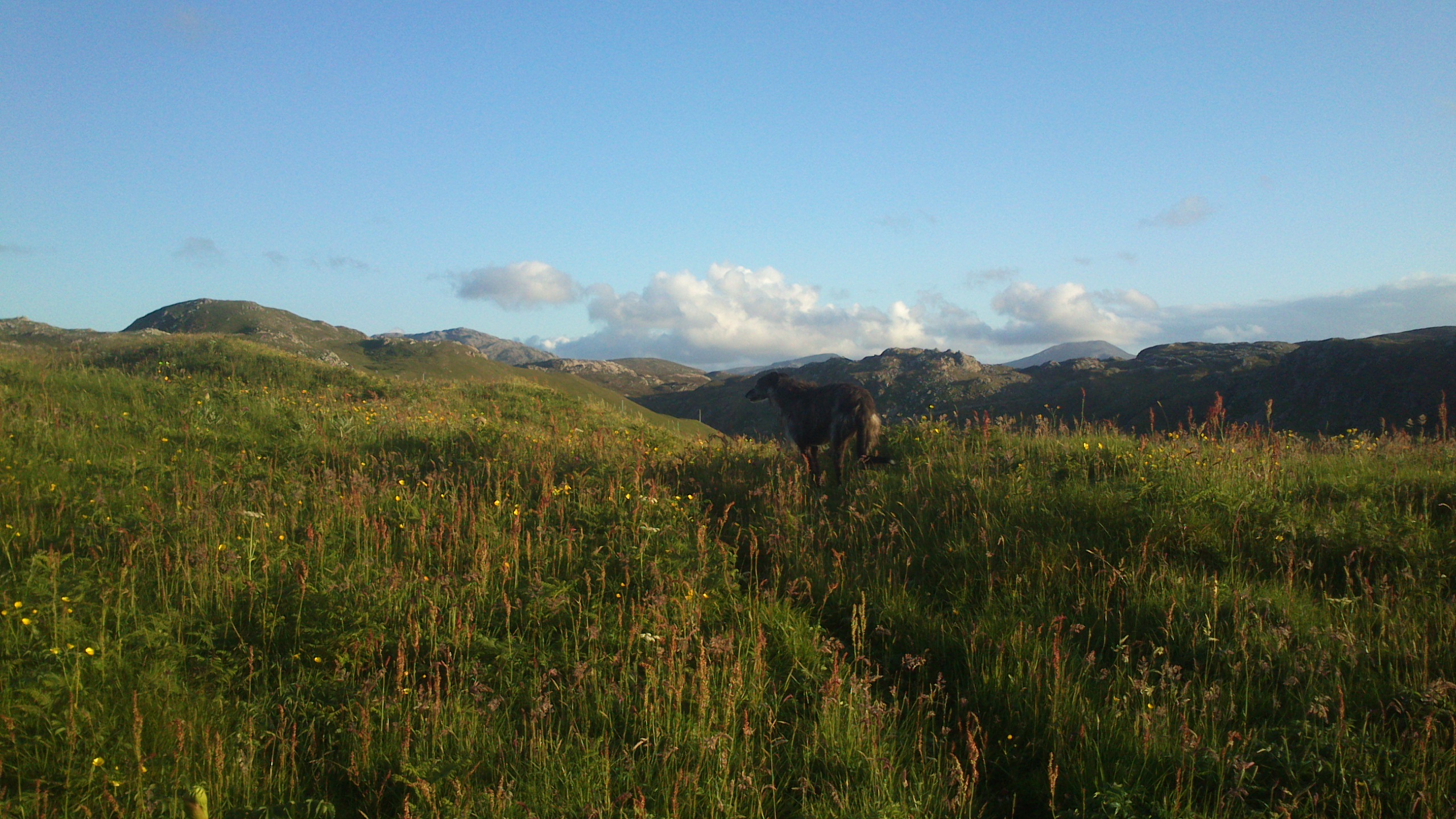
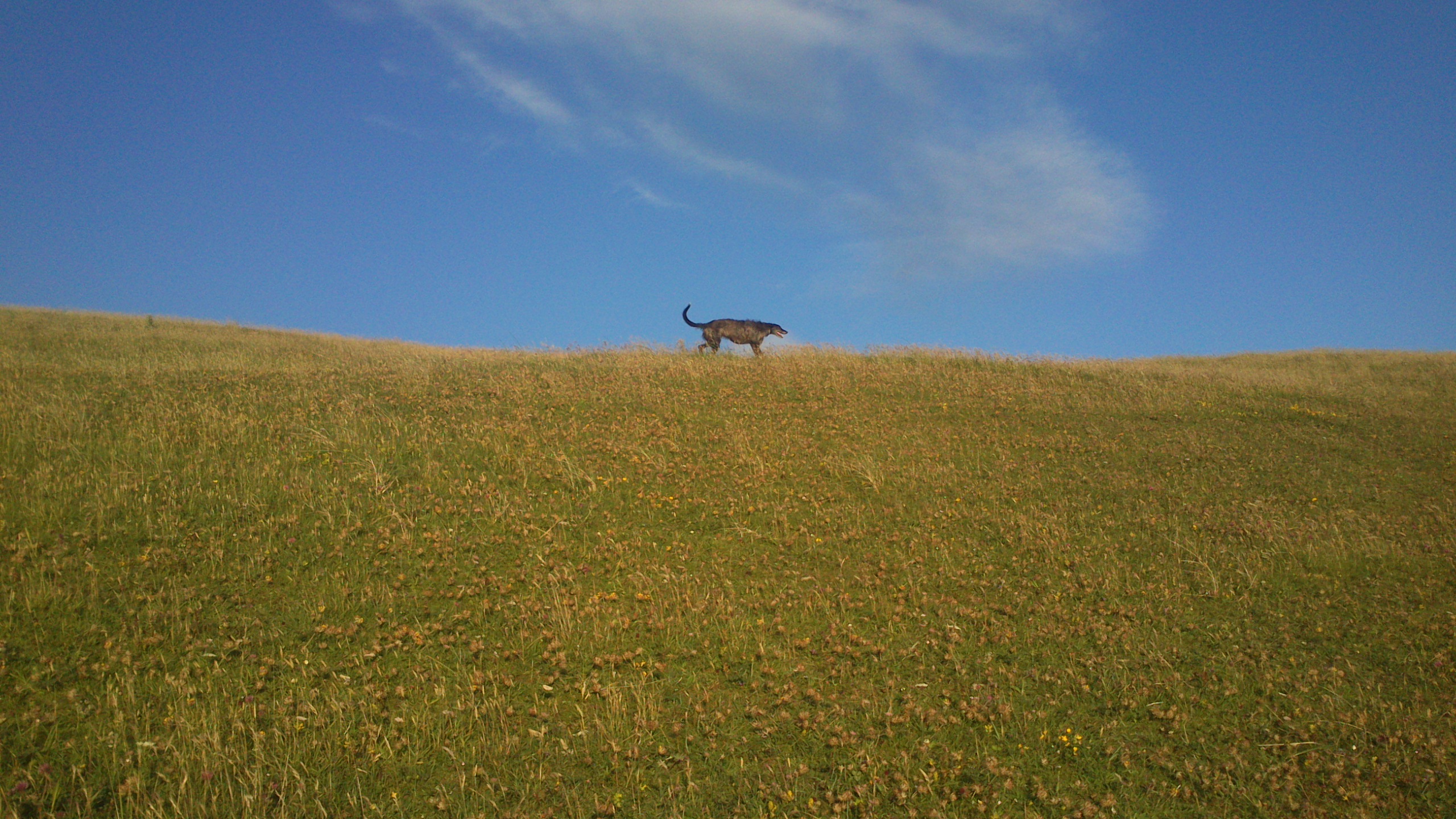
This place feels contained, familiar and very safe. I know the score: I know which spots offer shelter from the wind, and which are the more and less sociable. I know where the little fish reside in channels between the rocks. I know where the tide recedes to. I know my way up the rocks on each of the little inlets. I know where Murph will chase the rabbits. I know which pasture the sheep are in. I know where the fences have gates to go through. I know which rocks on the hilltops have a phone signal. I’ve had it to myself for one or two nights out of about 20, and apart from that there is always someone there. There is one other tonight, until a dark-coloured van pulls up at the end beyond me, and a wiry 50 year old cockily swings his leg over the fence to sit on the dunes with a can of beer and a fag to watch the sunset. Guess who. Dark is falling and I half pull curtains and, though I resent it, once again I skulk and hide as he drives back past, peering. The evening after next, there he is again, briefly, and hoots a hello, which I almost ignore, pretending to concentrate on keeping my *unruly* hound under control. (Smurf is being good as gold as usual, but if you see a very uncharacteristic picture of him looking like he’s about to rip somebody’s throat out, I’ve posted it to make myself feel better. He probably could if necessary.) Maybe I will leave this area tomorrow.
So the next morning I hit the road, singing my heart out to Christy Moore’s deep enunciations and Andy Irvine’s plaintive bouzouki, and go-karting from bay to bay over the yellow machairs and round the lochens and through the rocks and up and down the knaps and dales with a grey wet gale rocking the van I grin at the sadness of leaving and the excitement of moving on and all the wonderful Celticness.
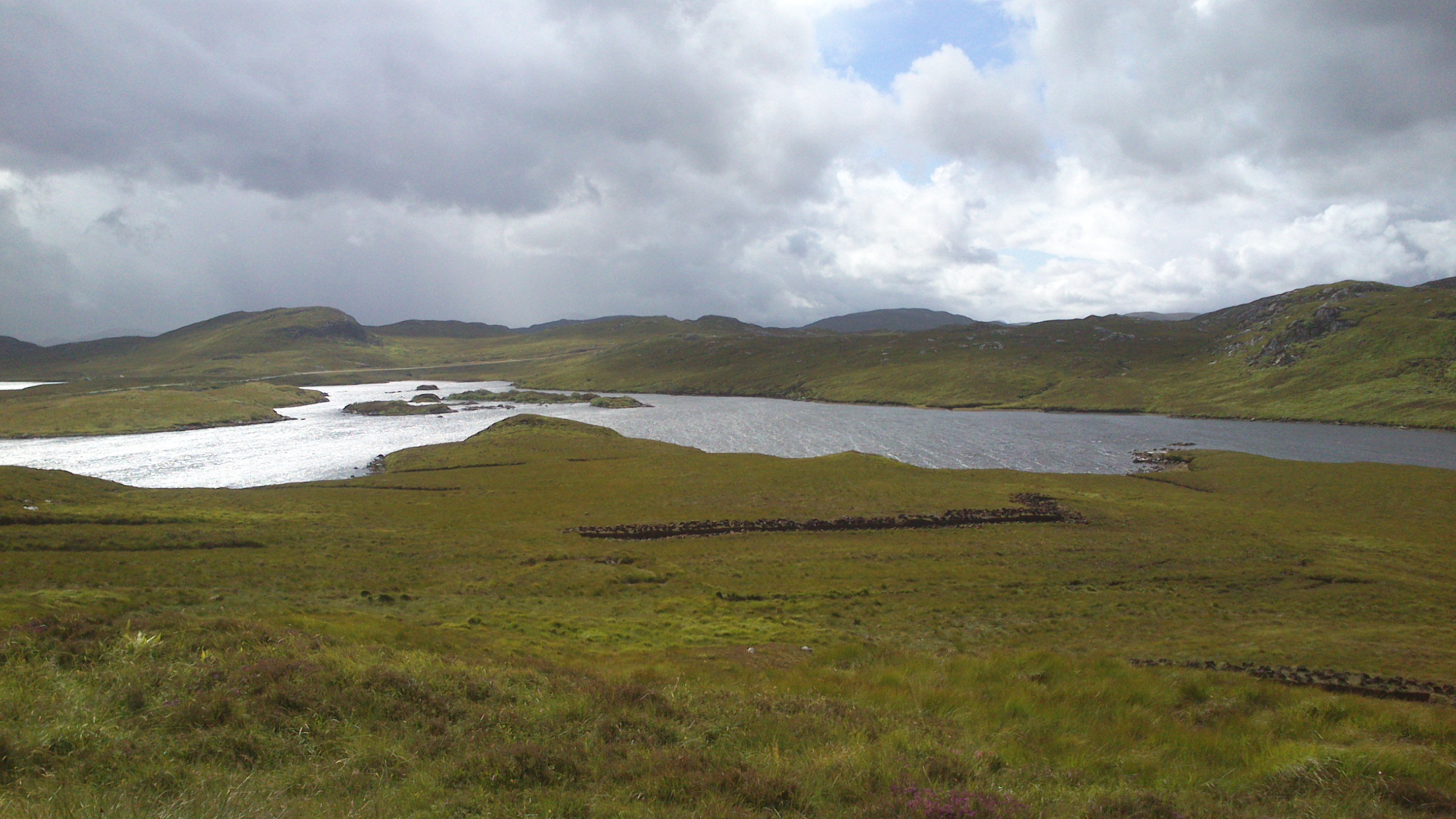
I go all the way to the top of the little island of Bernera, off the island of Lewis, off the bigger island of Britain, run through the dunes in a downpour that is too horizontal to be called ‘down’, to the refuge of a peat fire in a 5th Century Pictish hut.
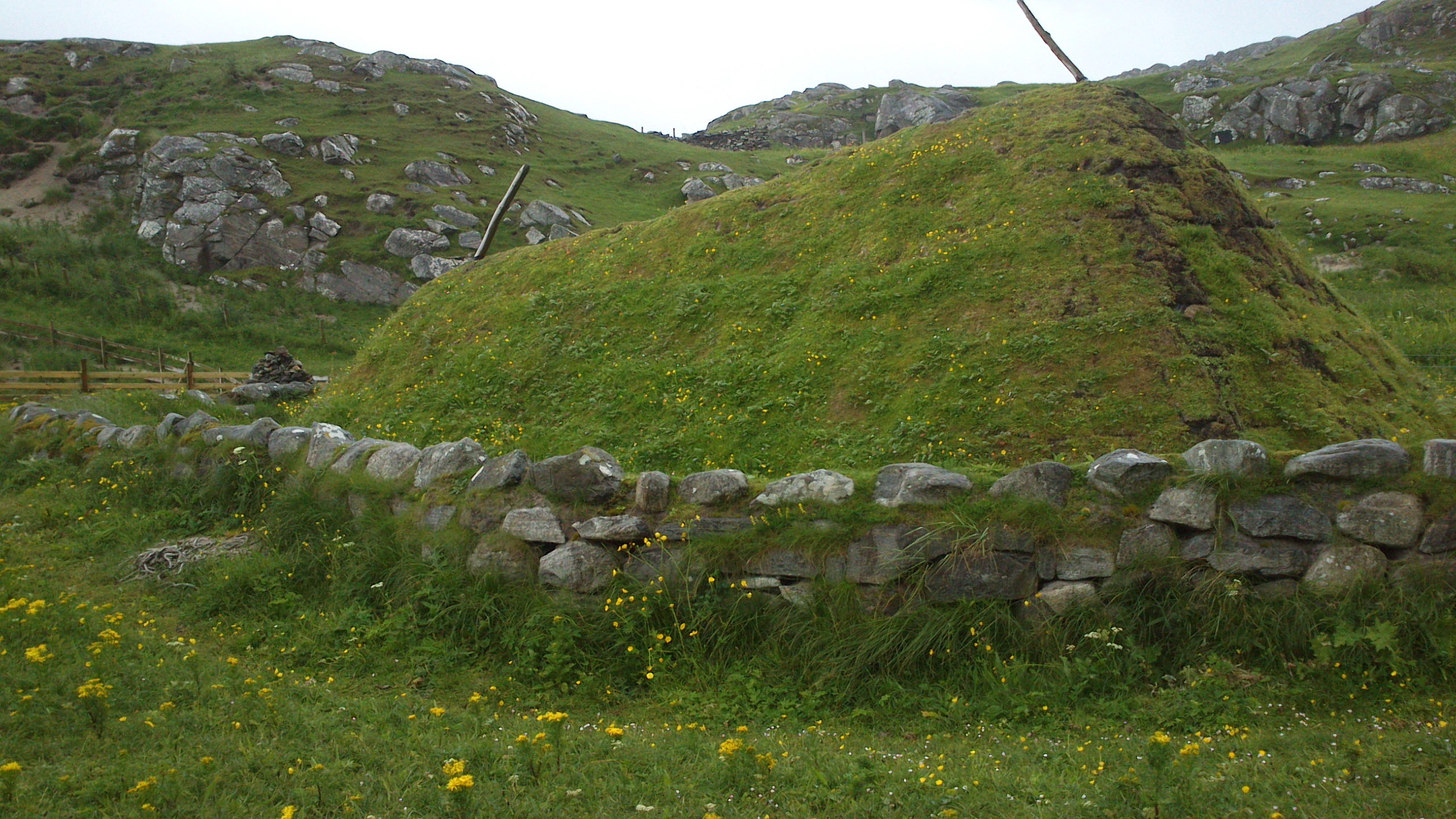
It is round, with double-skinned earth-filled walls a total of more than a metre and a half deep, half underground, turf-roofed. I think of Dartmoor hobbits, tangly low dark ancient woodlands, and my friend Alan Lee who recreated our landscape in New Zealand for the films. This house is a reconstruction on the site of an actual Iron Age house that would have been the same. Curiously, they took these stones from a slightly younger Norse-influenced blackhouse nearby, and found that there were exactly the right number of stones, lintels and all, to make the Pictish house – presumably successions of settlers re-used each other’s materials. It’s funny nowadays the number of croft-house shells that sit untouched with a new house in their curtilage made of very different, less beautiful materials. Apparently though some of the building principles have remained: most houses still have their backs to the north wind, their doors to the south and some even follow the old layout. In this roundhouse the entrance hallway is at a diagonal through the thick walls, with its own slight curve, seemingly so that the wind funnels clockwise around the room, where the earth floor is trodden to follow, so that the left side, the walkway from the entrance through the main room to the cold store at the back, is cooler and the draught curls around the central fire pit to send the smoke upwards and the warmth rightwards. There are sleeping platforms in the rafters. The hut feels low-ceilinged but is not. Elizabeth MacLeod, our proud local host who is young but who could have lived here for all the 1500 years, wiles away her hours in the dark house making the kinds of tools that the Picts might have made. Her prized possession is a smooth, flattish, black stone the like of which she says is commonly found at Irish digs, and which is rough at either end as if it’s been much used as a tool. She has worked with archeologists and scholars and though she is technically neither, her interpretations of things, when they differ from those of the scientists, are more compelling. Much is unknown, but she tells us that here there was a ‘Late Iron Age’ that the South didn’t have, because the Romans had moved us into the Dark Ages. (Thanks guys.) It seems as if the Celts played a much lesser part in shaping these isles than the Picts and then the Norse, whose language litters the Gaelic here. Elizabeth says that DNA tests on locals reveal often as much as 80% Norse blood. I ask her what she considers herself, and she answers ‘Hebridean, like the sheep’, and we laugh that they are a breed of black sheep. I haven’t seen any on Lewis yet, alas – they are among my favourites: dark coloured, pale-eyed, wildy and a little goatish, like the Soay.
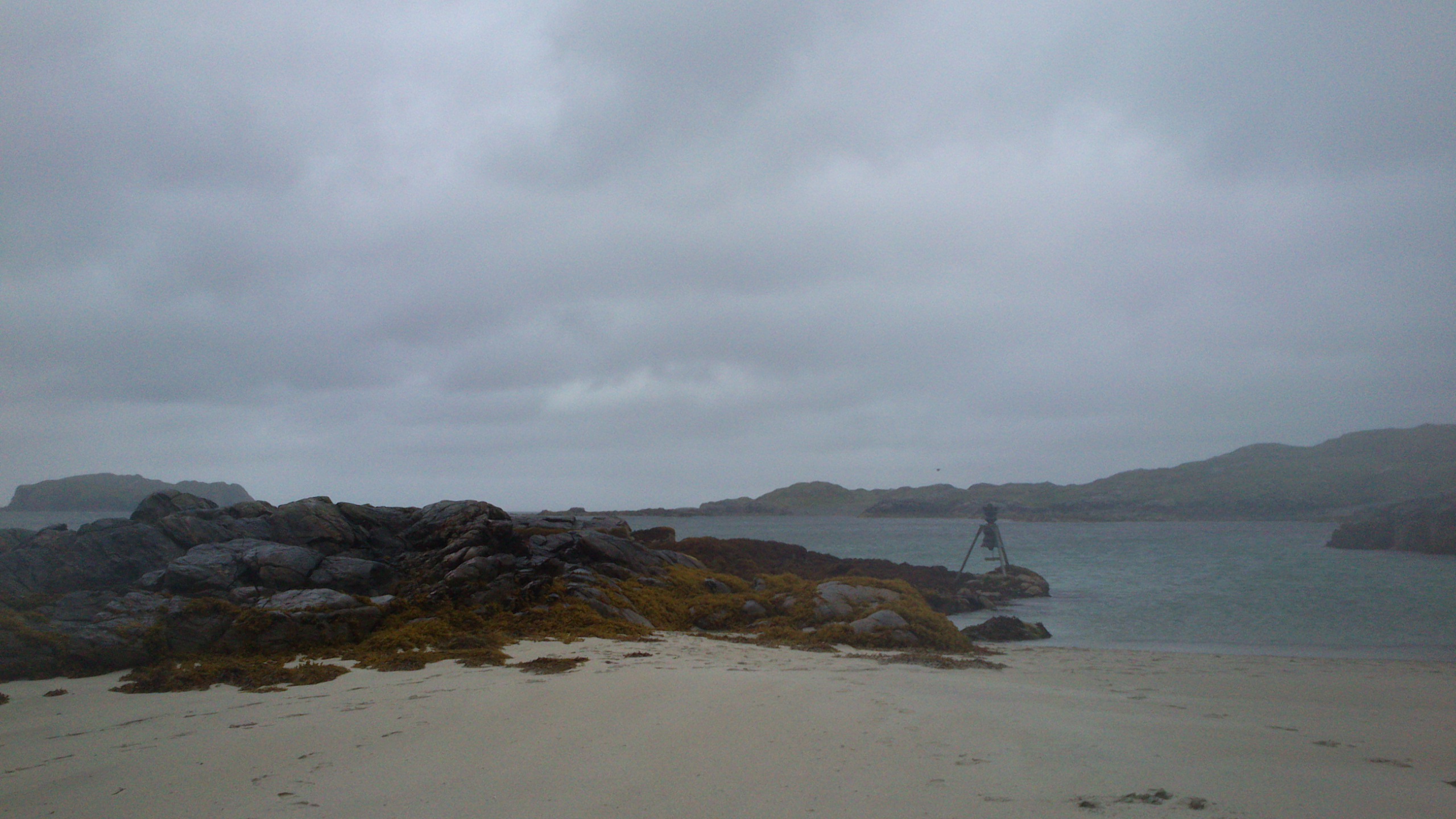
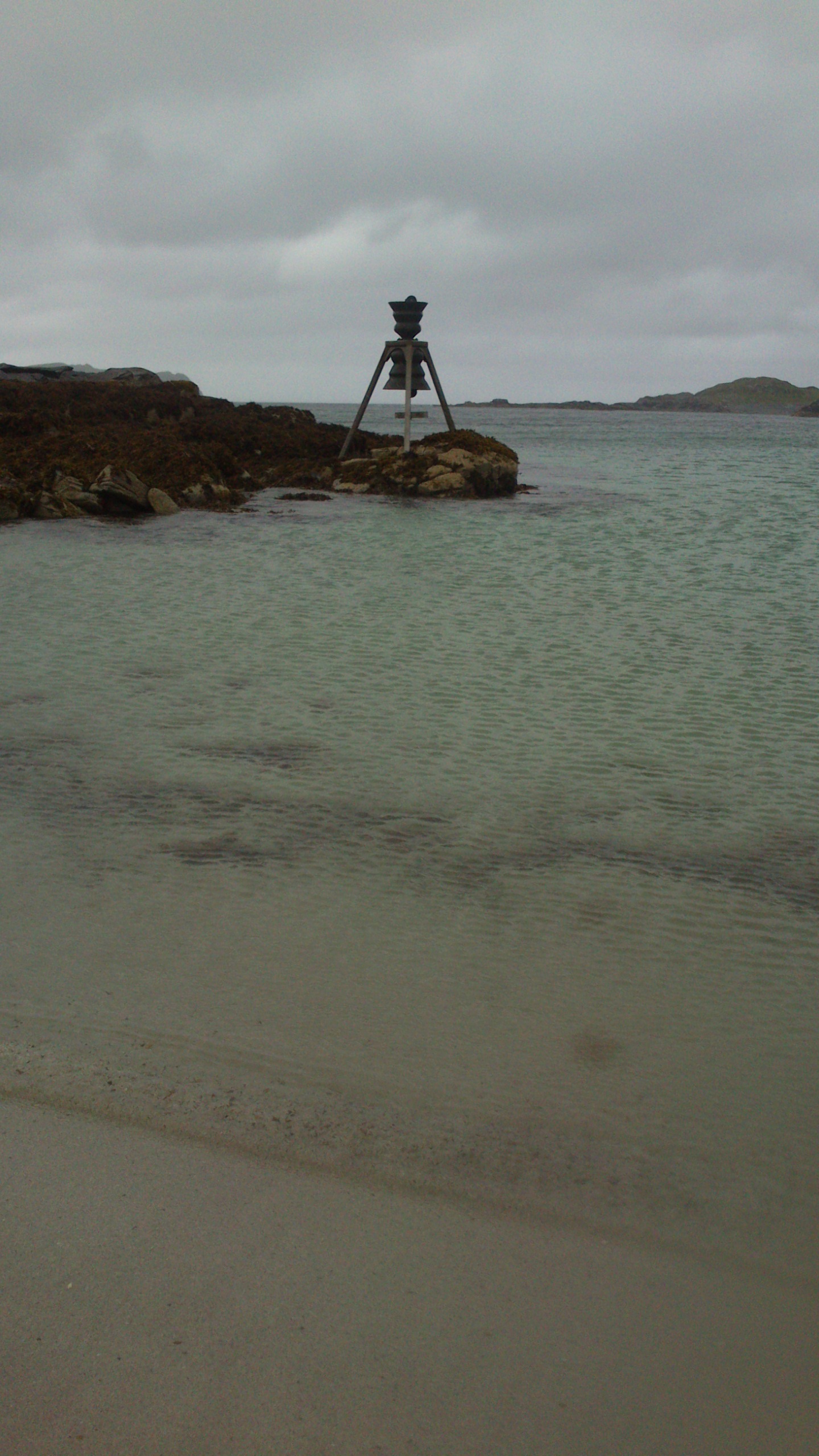
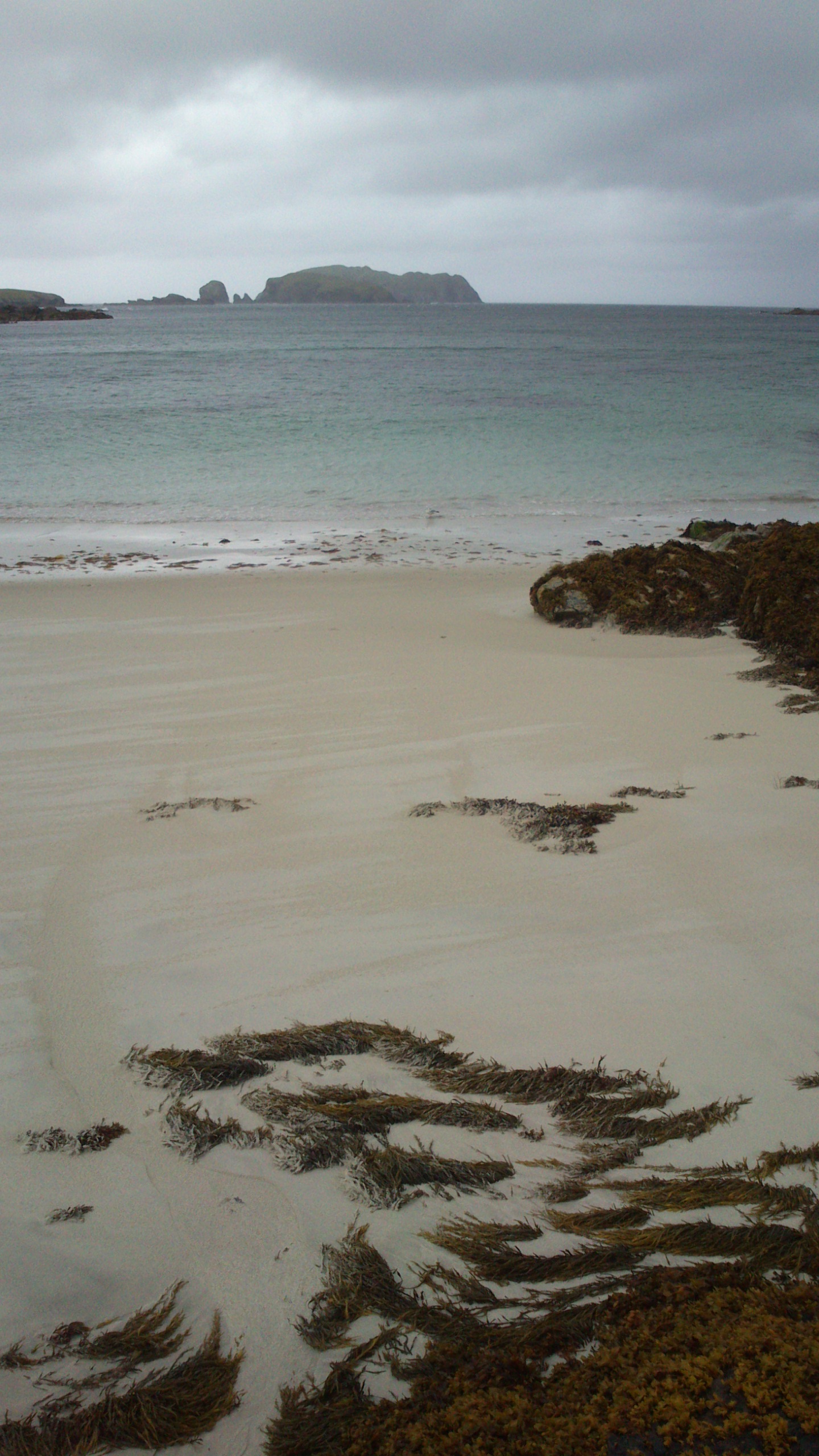
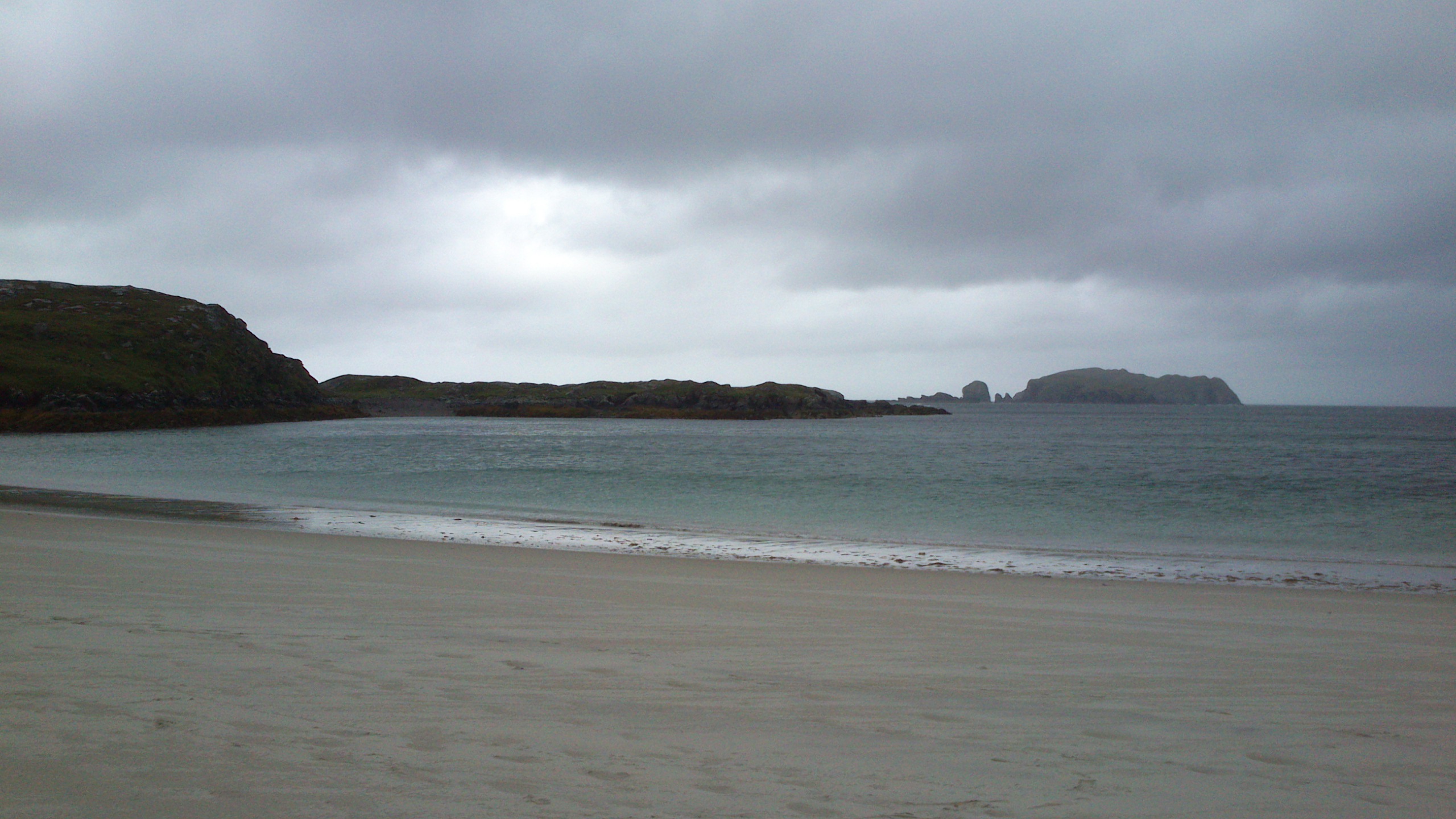
Earlier my friend Angus and beach combing daughter, artist and environmentalist Violet spotted my van and made a detour to greet me and offer hospitality in the holiday cottage that they’ve taken for a week. For a bunch of introverts who seek the farthest edges away from hustle and neighbours and interaction, we have a lot to natter about, and it is great to see them, as it is every time. The following day at a local show (where I am lured by the Harris Tweed weaving class), I bump into some lovely young girls who have made good friends with Murphy, and we find ourselves together again in a new (to me) camping spot, reassuringly. Leaving the last spot I kicked myself at not having crossed paths with a young guy I’d not sought to greet simply because he was male and alone (and wearing a hoody – god, that makes me old – though my jumper has a hood, so please, not that old): when I left after two days we finally exchanged lovely smiles. It turns out that he is at today’s camping spot too. I like this travelling community. It’s like a market or festival scene, a kind of informal circus, a diaspora that moves like an undulating flock of starlings, sometimes closer together, sometimes further apart, sometimes landing in different divets, sometimes in the same one. Some we see again, some we don’t. Summer people with the camaraderie of rain.
The Hattersley
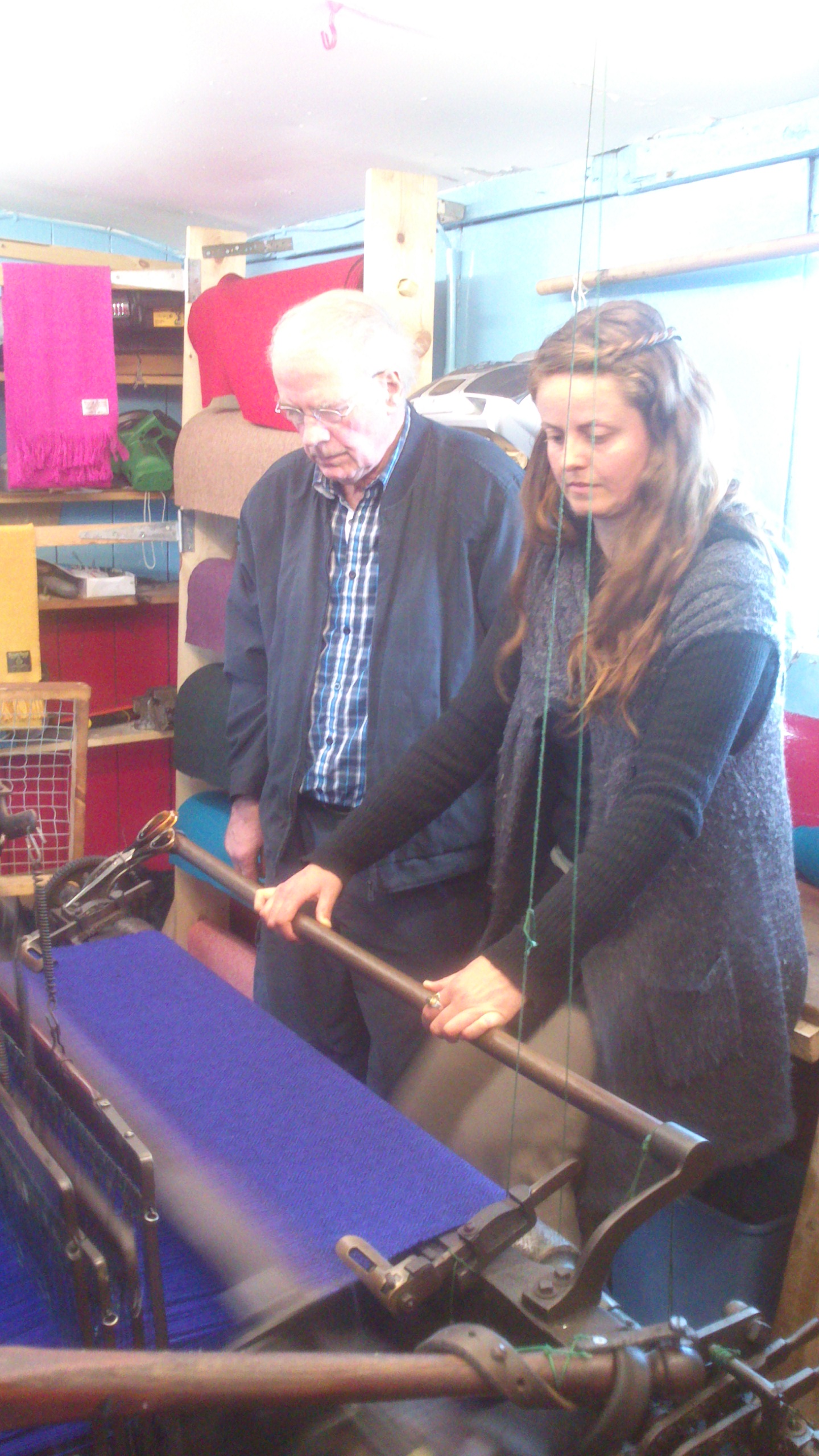
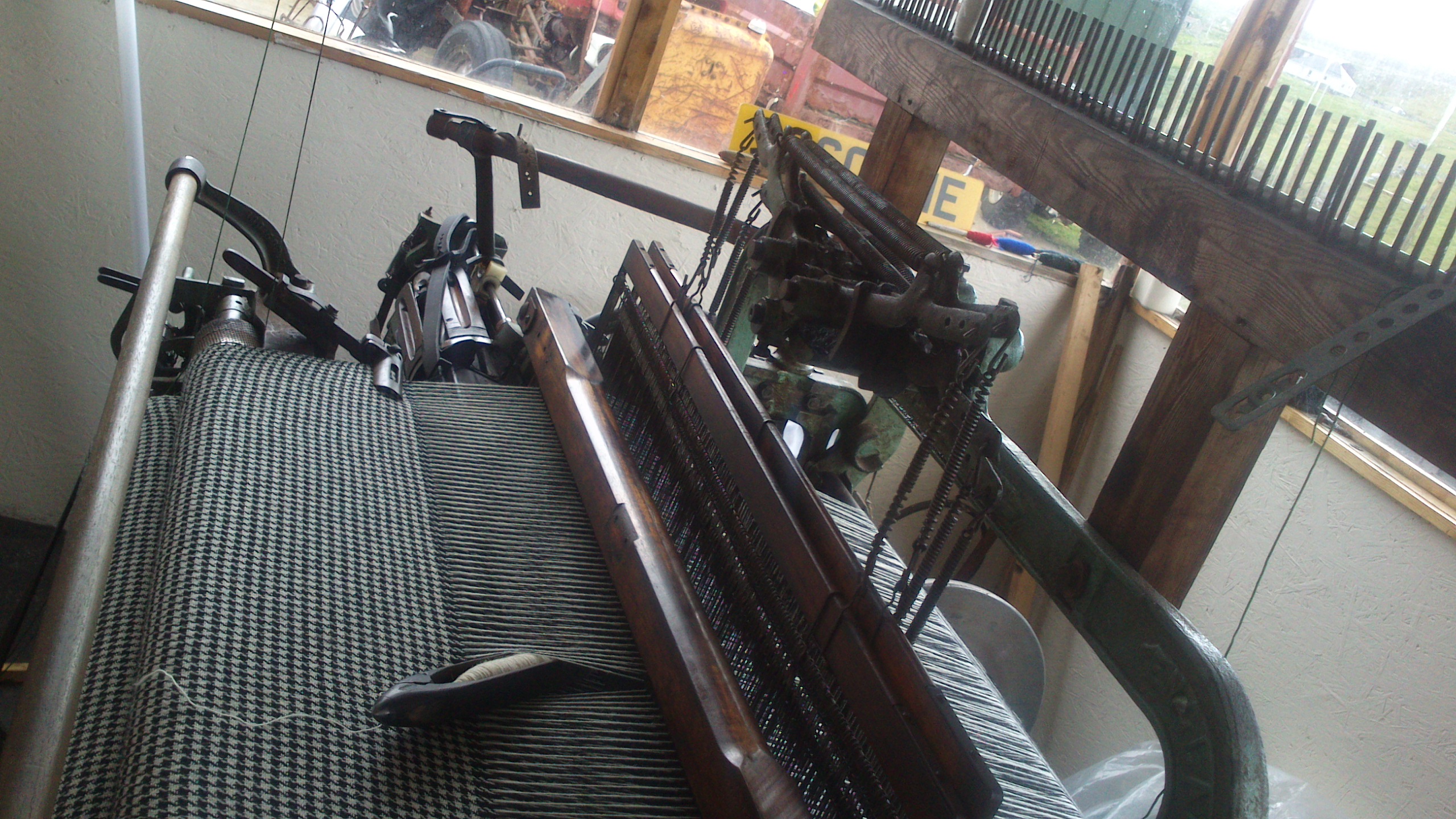
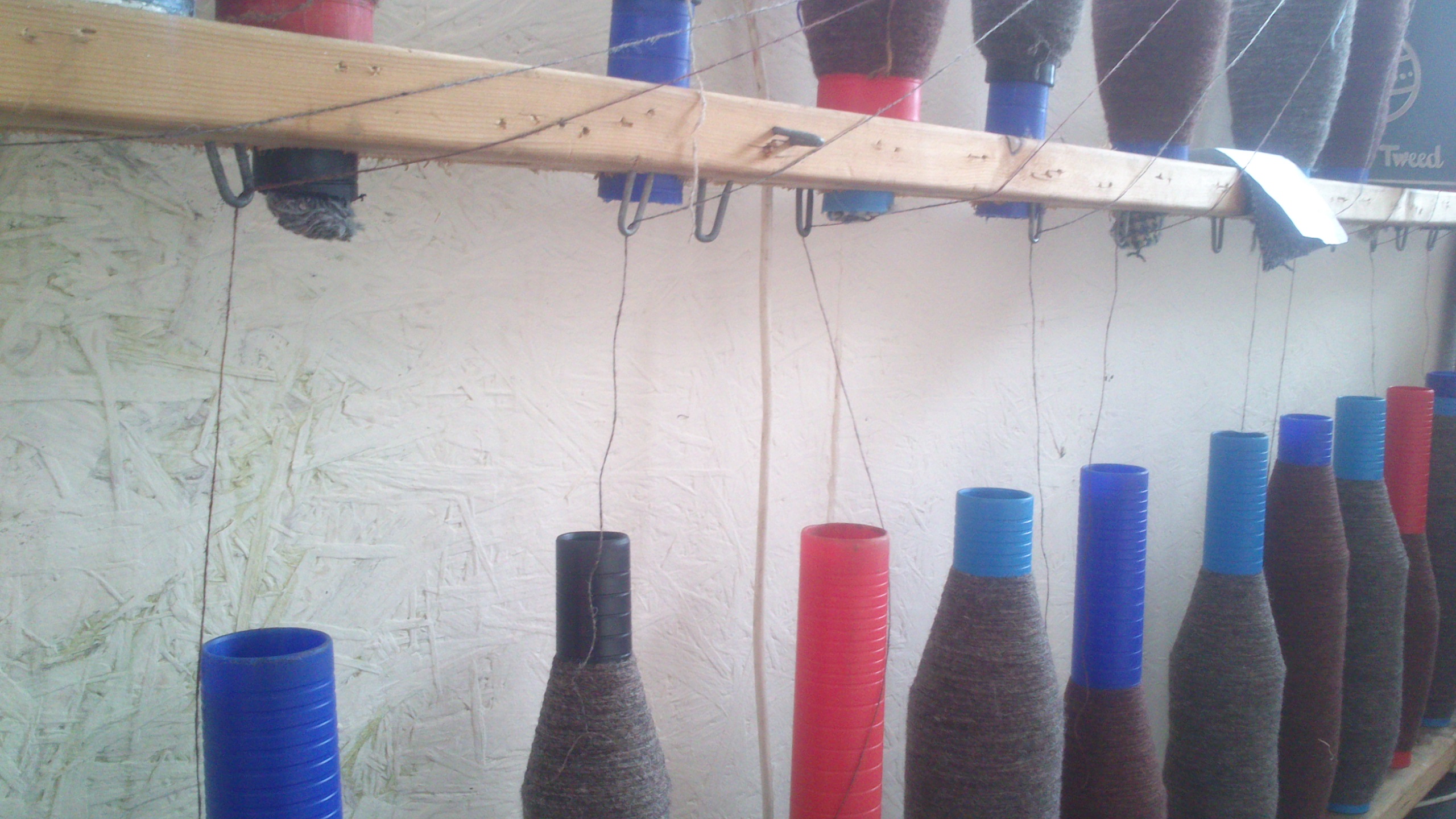
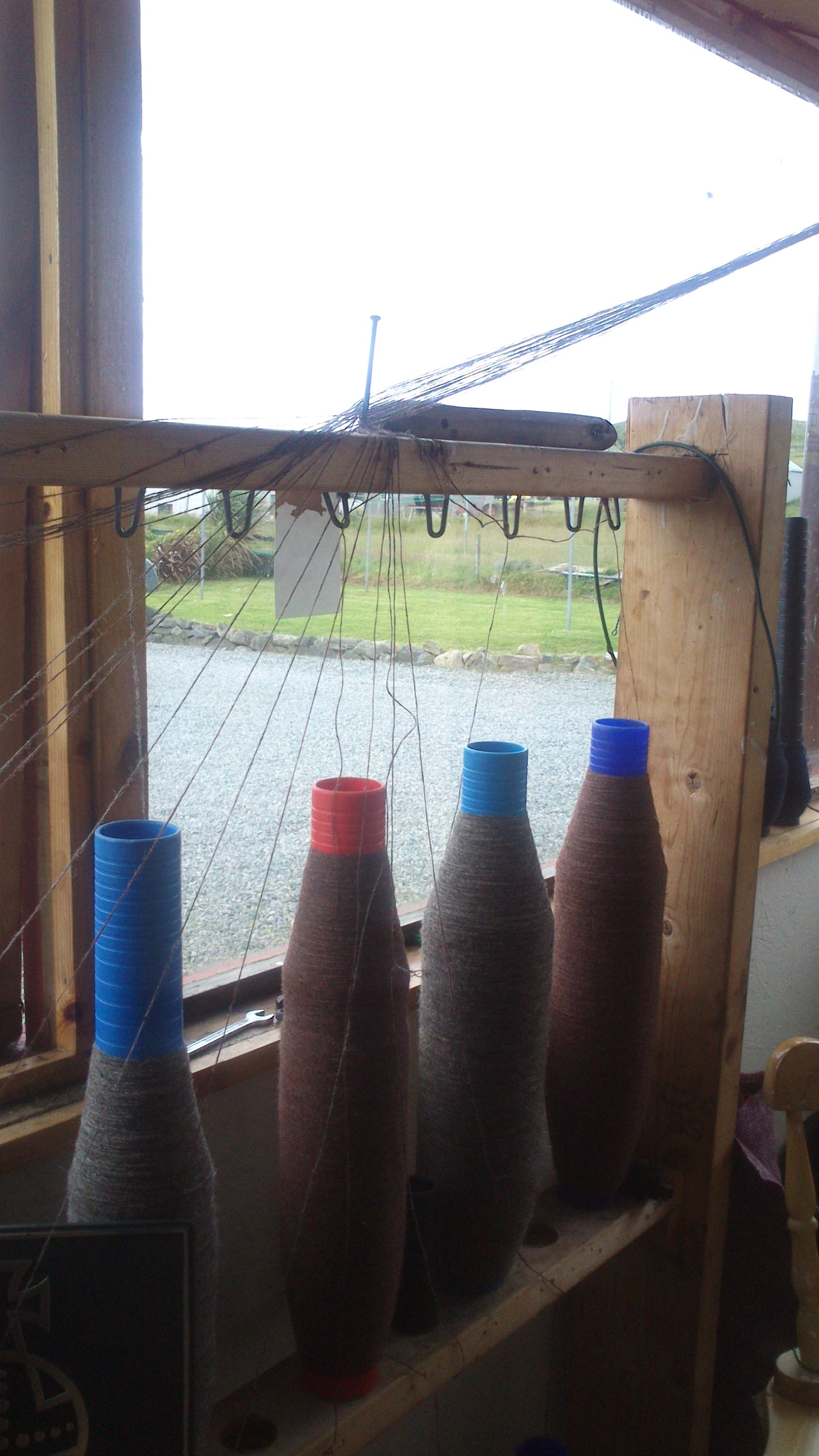
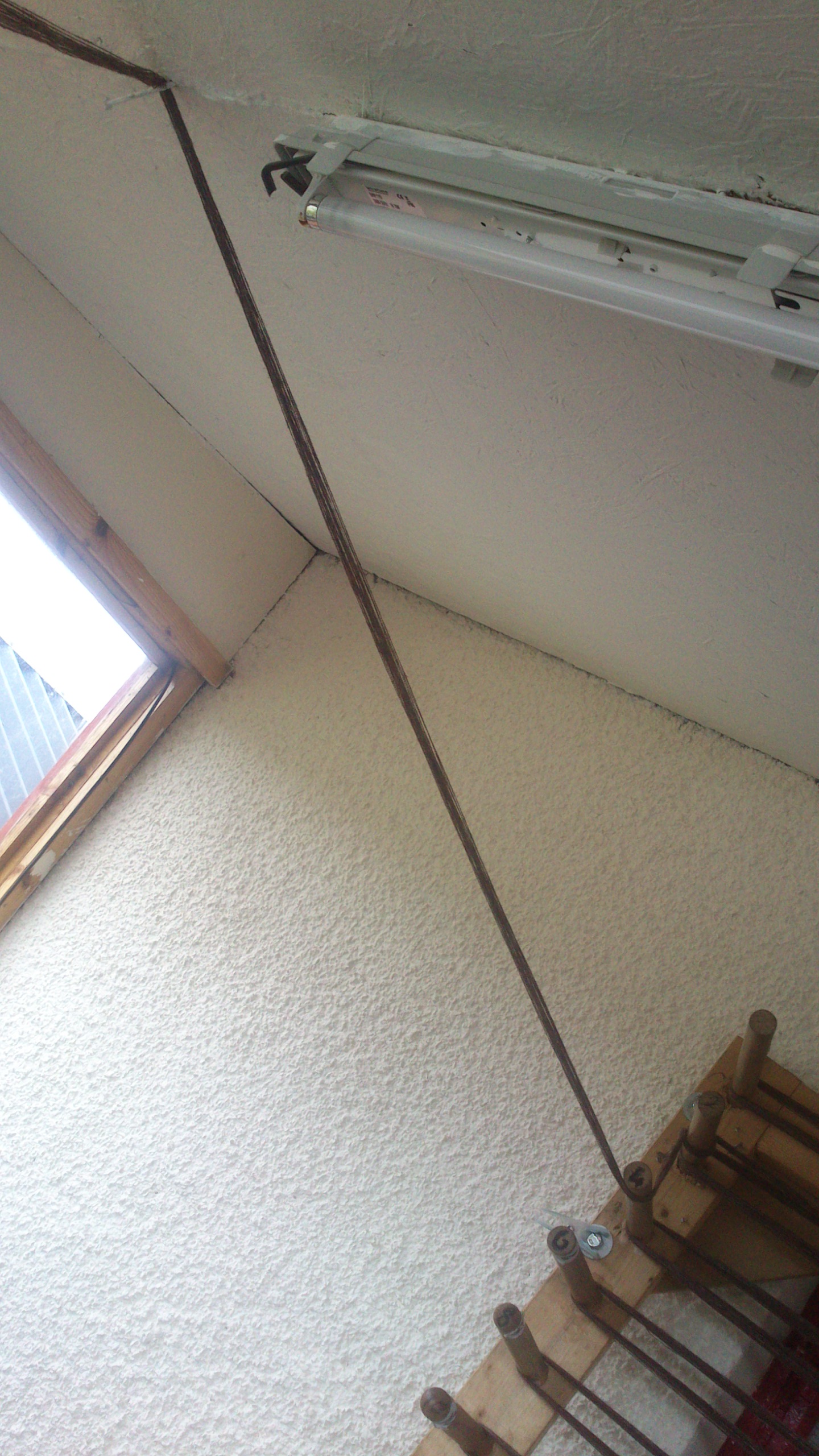
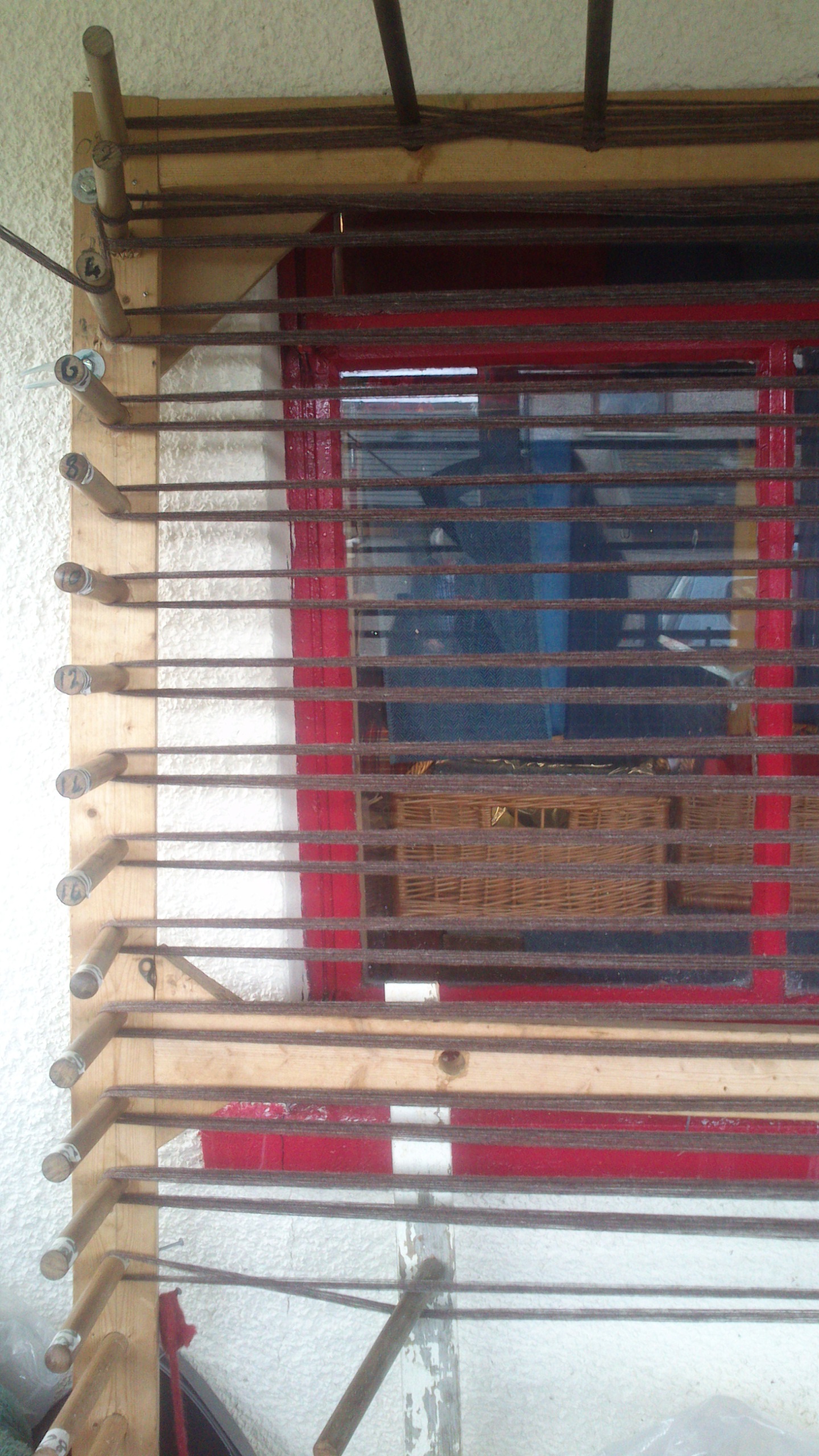
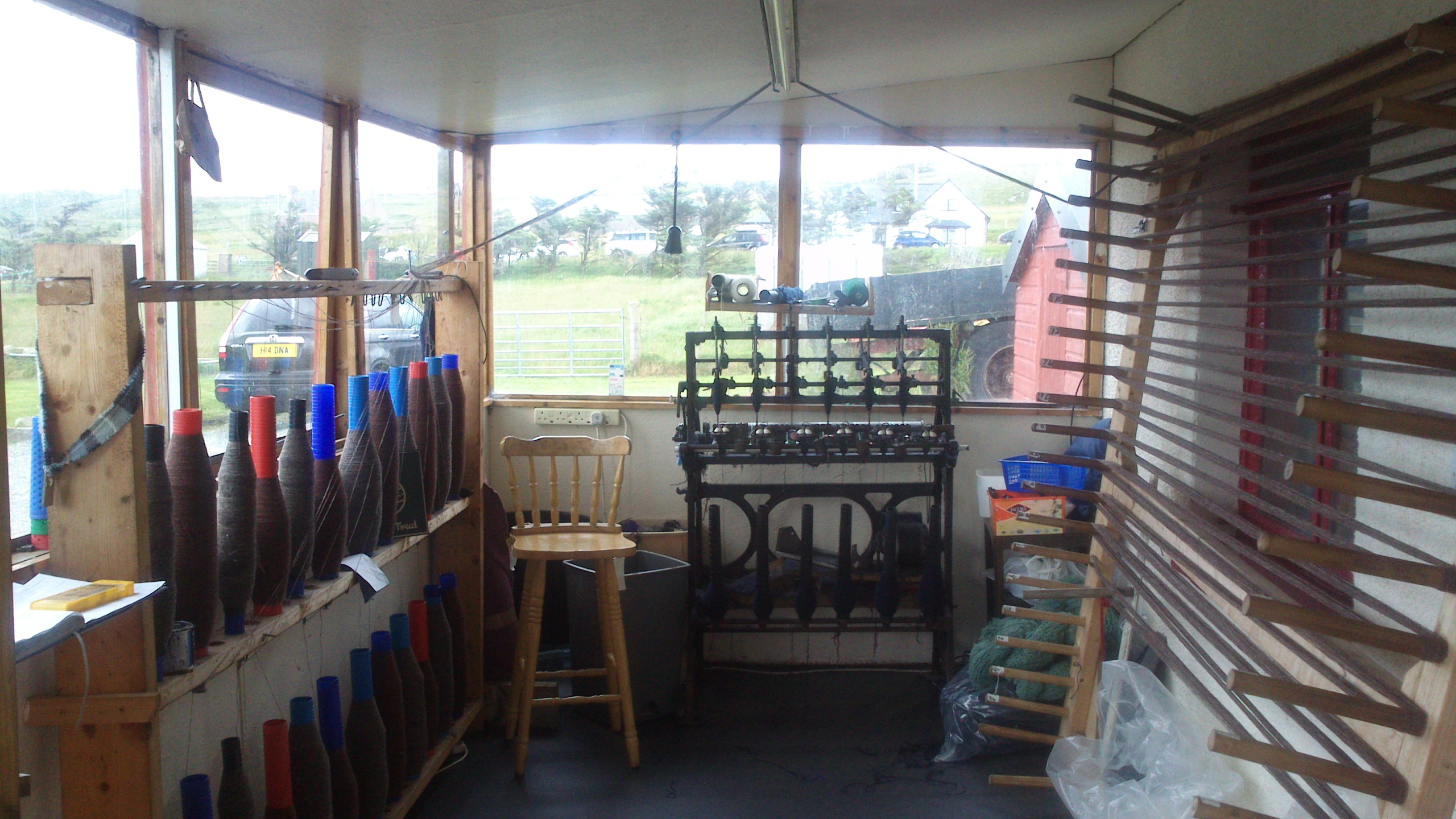
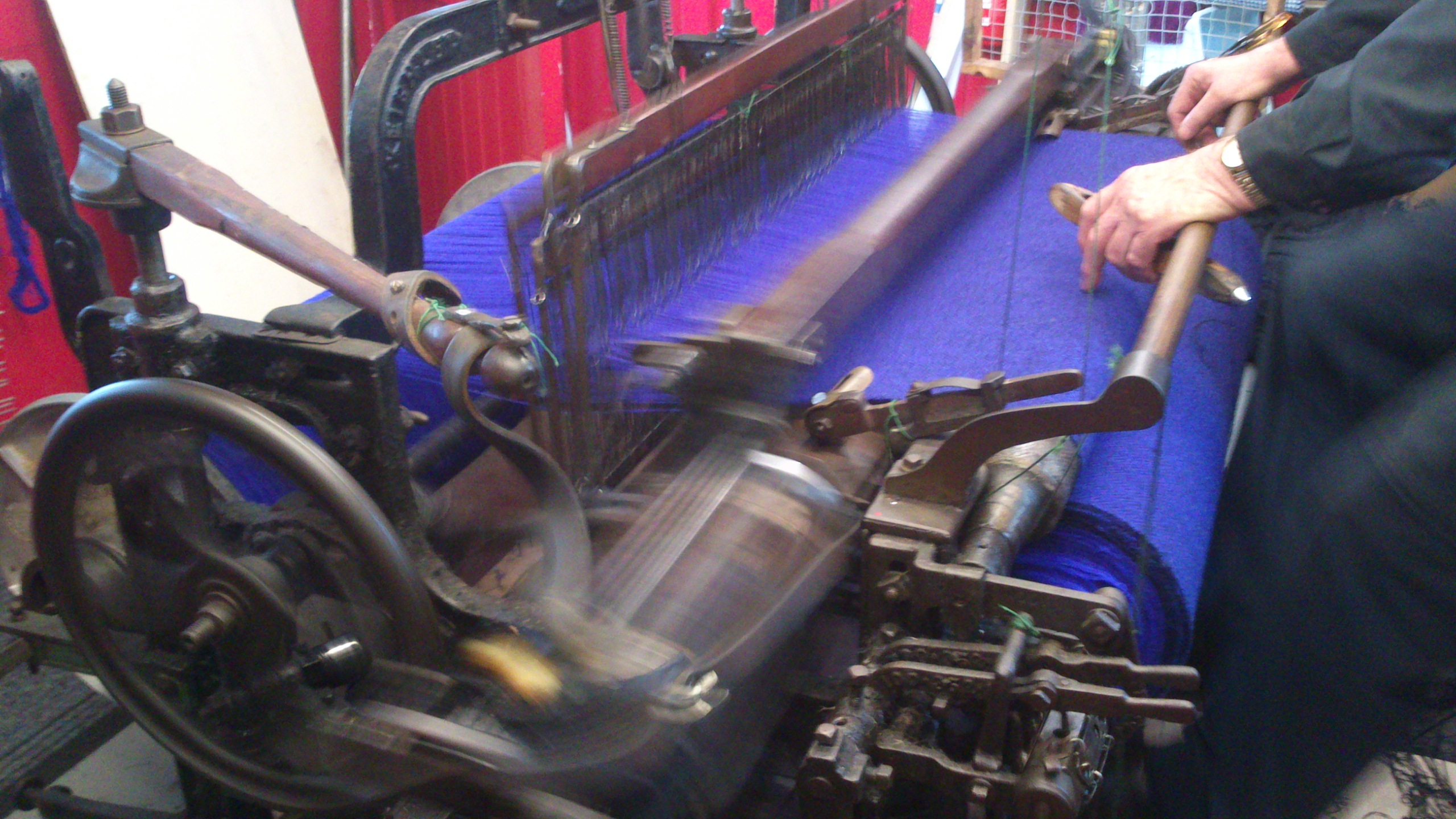
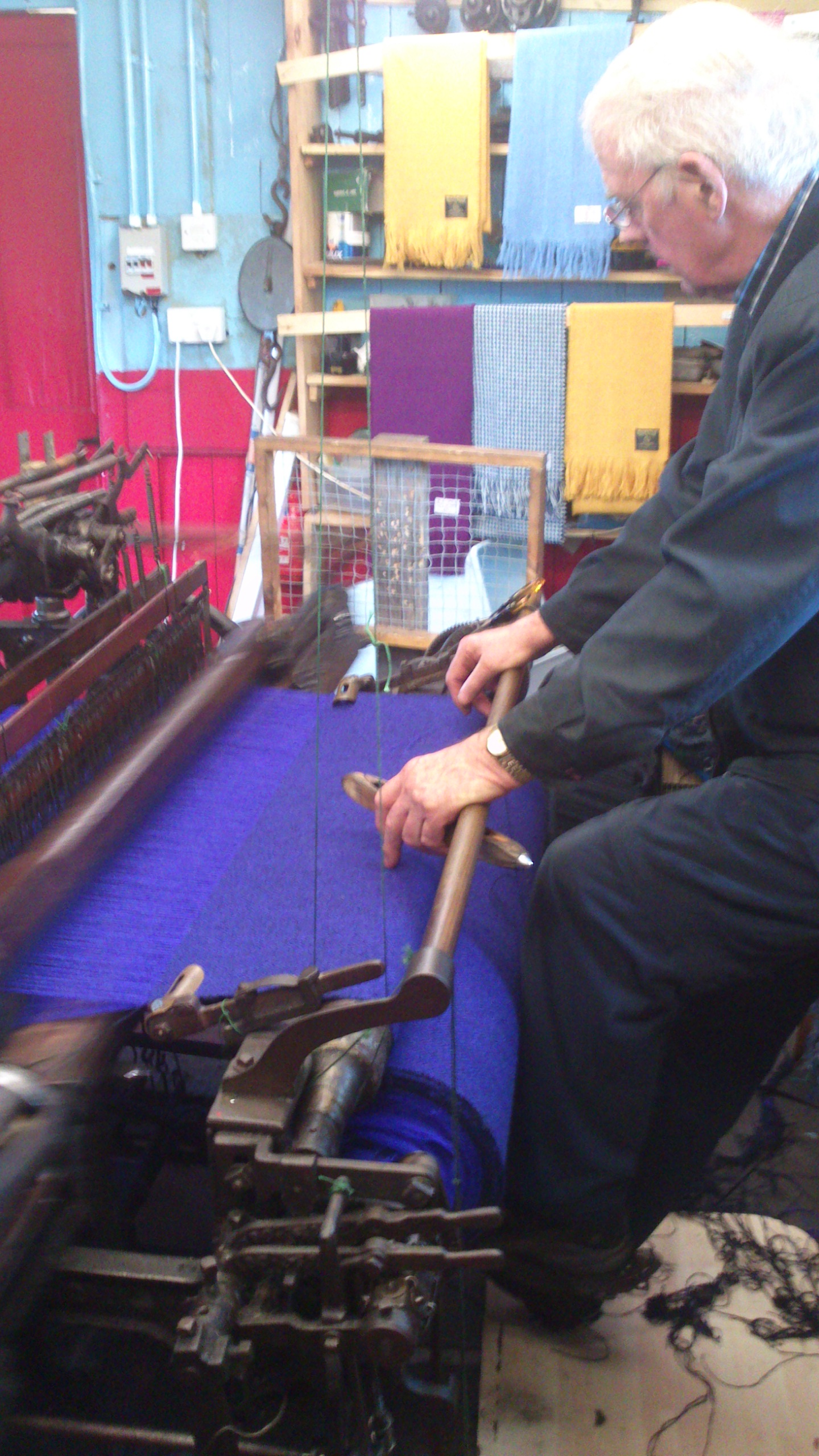
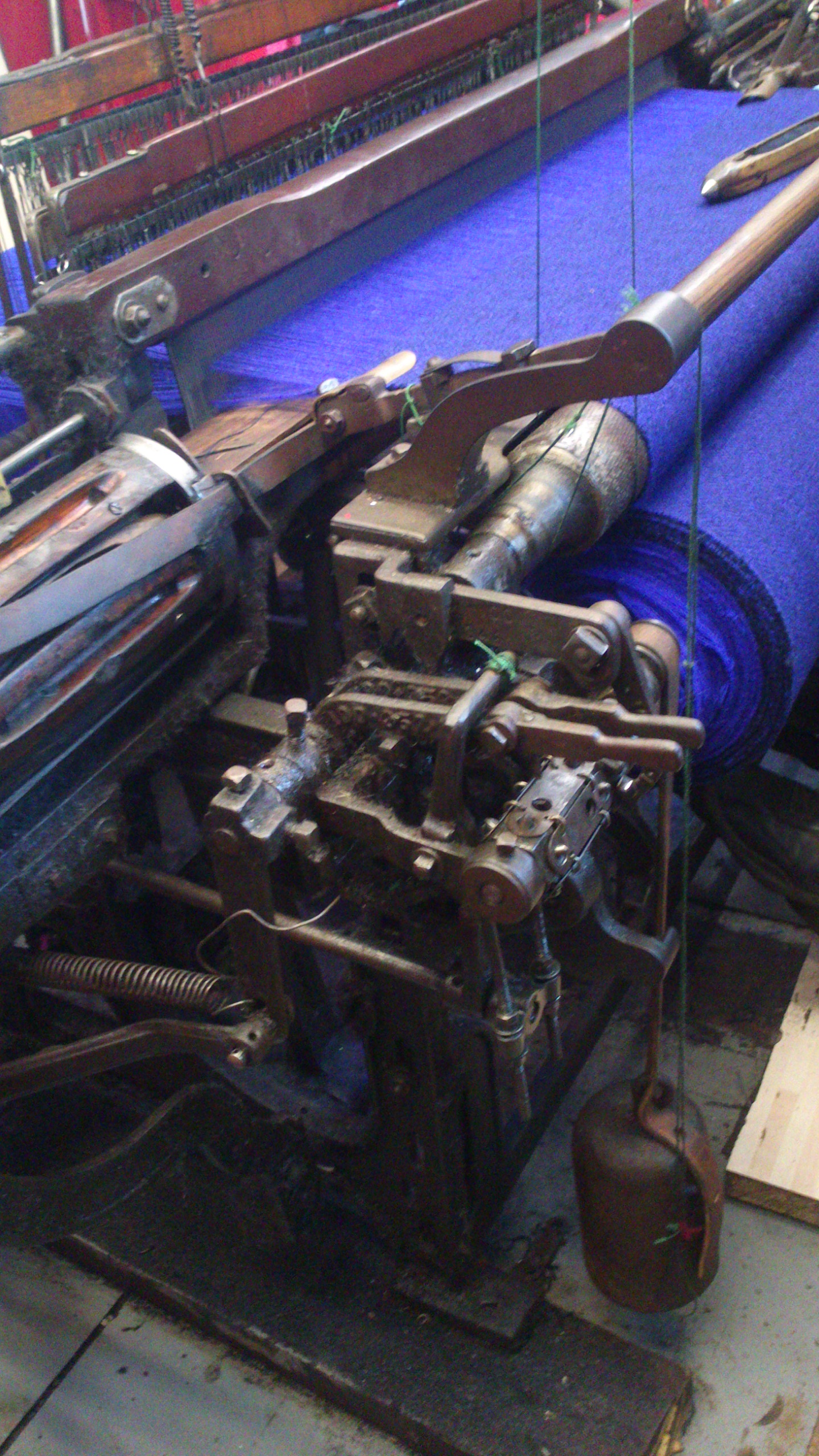
Today I finally visited a proper weaver. A Harris Tweed weaver. Norman Mackenzie is independent, which means that although his tweeds achieve the official orb that marks the provenance and quality, he does not weave under instruction from the mills. Where 98% of the weavers receive ready-wound warps for ready-planned designs that they must follow to the letter, he has creative freedom, but has to do his own buying and selling, rather than being paid by the metre. For sale at £17.50/metre, as I’m told it is all across the island, this certified, quality cloth is surprisingly affordable. He is a hobbiest, he says, though his workshop looks serious and his tweeds handsome. Fancy weaving 90 metres of the same cloth for fun! His warping frame is the size of one wall, and makes mine look like an Early Learning Centre toy, as does his beautiful 60 year old Hattersley loom. It is made in Keighley, Yorkshire, and I like that I have been there – and been there when their hills were as yellow with buttercups as the machairs are here. He shows me the weft winder filling the bobbins, answers all my questions, and even lets me have a go when I cheekily ask. I perch on his too-high stool, but the bar on his loom takes my weight on my hands. My knuckles are white and he tells me to relax. The loom makes a violent sound and I fear jamming up his machine or wrecking his bolt of cloth or catching one of our fingers in some heavy slingshooting bit of steel. But I get into some kind of rhythm and enjoy it, and watch intrigued as he fixes stray threads (even as he weaves, not just when I do) quite frequently and easily. This is the vintage Mercedes of the textile industry, with well oiled heavy parts and the odd thick, sturdy, supple leather strap. If I settle as a weaver with a fixed workshop I’d like one of these Hattersley looms.
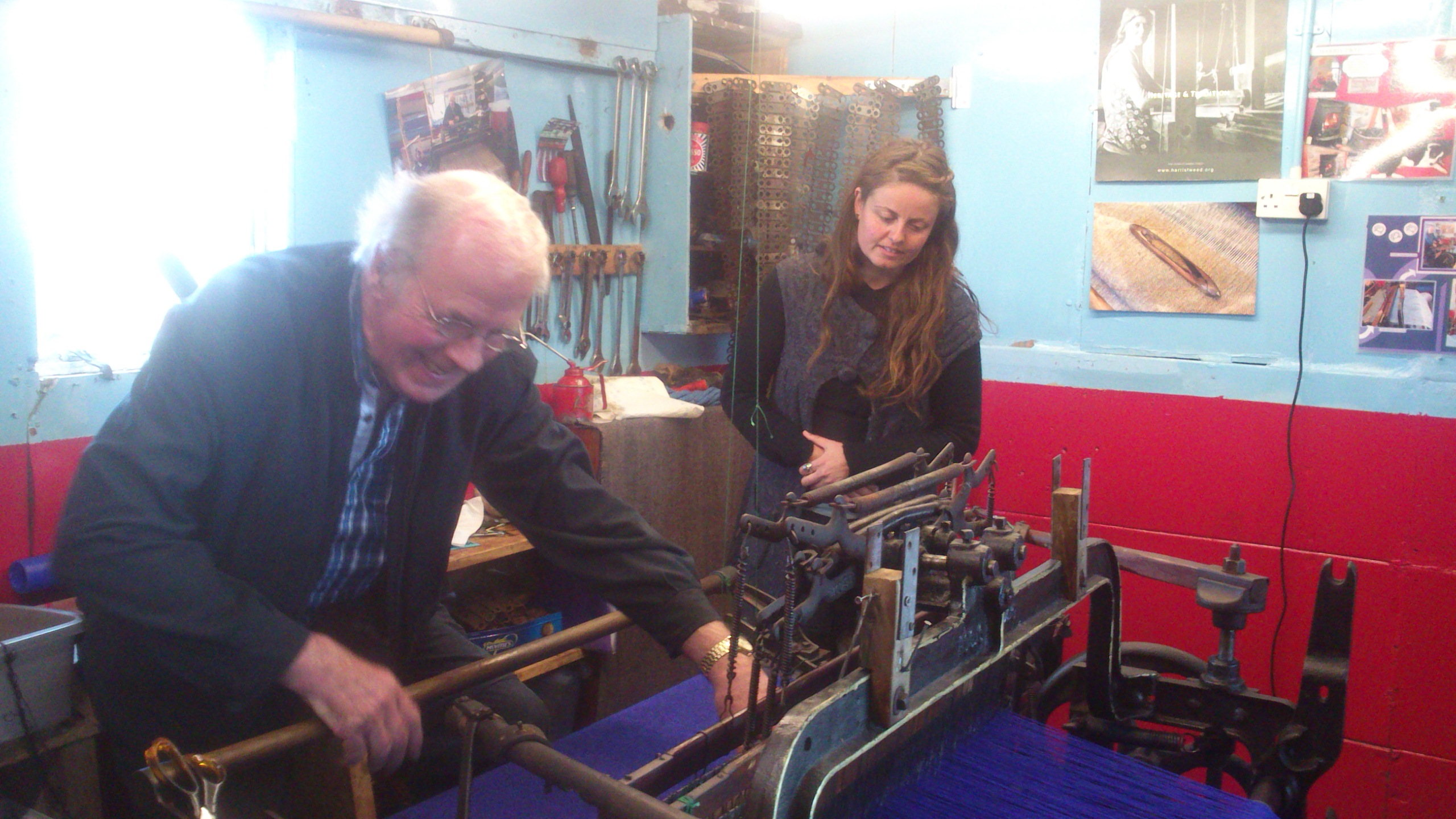
Norman MacKenzie can make cloth to order and can be contacted on 01851 643 413 or nmmackenzie@aol.com
Tomorrow I go to the old blackhouse village and will probably see its wooden predecessor. I also hope to persuade the nearby mill to let me visit. Meantime there is a very golden light over the sea, a very leaden sky over the land and a rainbow over the both.
 These Isles
Loved this. And my favourite phrase: ‘Summer people with the camaraderie of rain.’ Good to picture it all. You didn’t tell me it was a BROCH that you visited! Yay! Remember the Skye ones?
Wish I was up there too.
Your last blog: oddly, I was writing about the Criminal Justice Act last week too! Your statement re testing embryos seemed unclear to me, though, unless at my great age I’ve become thick (other than round the middle) and doddery…
xx
LikeLike
Thank you! No, not a broch I don’t think, that’s a fort rather than a dwelling isn’t it? At least, it’s not referred to as that – I haven’t been to any brochs yet, though funnily enough the postcard I sent to you was of one and I remembered the Skye one to you! xxx
LikeLike
Pingback: I LOVE BEING IN THE ARTS WORLD! Barter, media, cross-fertilisation and creative enquiry | These Isles
Pingback: Conversations with craftspeople II: sound, colour and designing by ear; weaving by accident but with meticulous care | These Isles