
Last night I went to an inspiring talk at Schumacher College, Dartington. Schumacher, named to evoke the author’s principles of ‘small is beautiful’ and ‘economics as if people mattered’, was founded by a forefather of the UK green movement, ‘earth pilgrim’ Satish Kumar. As I’ve said here before, even though I was brought up relatively poor and firmly anti-capitalist, his decades-old contention that wealth, not poverty, is humanity’s great problem, struck me profoundly as a threshold concept that I return to more and more.
Visiting Austrian economist Christian Felber began his talk by proclaiming Schumacher one of the world’s only ‘true’ universities. It is tiny, but its programmes are wholly holistic: systems thinking reveals the interconnectedness of all things.
Felber offers an economics for the common good: an economics in which goods and services are rated and incentivised for sustainable and ethical production. He posits that this requires a democracy for the common good: a democracy in which we, the people, are sovereign. One of his tennets is a monetary system for the common good: a monetary system in which we, the people, can issue money. Another is a legal system for the common good: a legal system in which we, the people, can initiate or block laws. (I note, sadly but proudly, that my father’s native Italy is the only country in which the people have one of these rights – the last one. Note to self: obtain Italian passport.) He proposes that we, the people, begin writing a local constitution which could eventually become a building block for a national or international constitution. (In case this all sounds impossibly Utopian, see here for the extent of his organisation and its research base.)
So as with every idea that I get really excited about, the take home message is:
Be the change!
Last year in a moment of magic in e-conversation with fellow craftspeople Richard Toogood and Allan Brown, I hit upon the idea of a Green Cloth Fair. On the face of it this could be the textiles equivalent of a wood fair, but now the idea has gestated I know that my initial excitement was for the deeper meaning I glimpsed then: ‘Green’ to me means ethical and sustainable. ‘Cloth’ to me means craft in general and its place in the fabric of society. ‘Fair’ to me means gathering, community hub, exchange of goods, ideas, practices, skills, favours, hardships, joys. The Green Cloth Fair is a political micro-movement methinks.
The social, political and cultural significance of the marketplace is a richness I’ve known as a trader both physically and digitally. And my personal gain from this richness means that I cannot truly commit myself to anti-capitalism. As says Bordieu, capital takes many forms and each of us has some at our disposal, whether that be in the form of time, skill, labour, talent or material resource. Greedy or fearful accumulation of capital results in a race to the bottom. Neoliberal capitalism orchestrates for this. But careful use of capital is natural and wholesome, and I want to be free to use it wisely. Said Felber at Schumacher, and so says a common folksong, the difference is in the emphasis: it’s not what you have that counts; it’s what you do with what you have.
As per populist movements of right and left across the world, the gallingly-winning Brexit slogan of ‘Taking back control’ resonated with so many. To a Cornish fisherman it may mean taking back exclusive fishing rights in Cornish waters; to a politician it may mean devolution; to a factory worker it may mean reviving manufacturing; to a student it may mean learning how to question; to a parent it may mean growing the family’s food; to a farmer it may mean shaping a local agricultural policy; to an activist it may mean exercising the right to protest; to a writer it may mean freedom of speech; to a musician it may mean keeping the old songs alive; to the landless it may mean making cloth from the fibre found in wild-growing plants.
It may mean as many things as there are people. The principles are autonomy, self-governance, self-sufficiency, interdependency through fair trade, and the political freedom to make the most of and care for our individual and shared heritage. For me, it is about crafting a low-impact livelihood that sustains me in a new order of producerist economics for the common good. And I know I am just one of many.
So I invite all serious and political artisans, whatever your medium, to join me and fellow makers worldwide in forming the Green Cloth Collective: an online (initially) community of professionals, would-be professionals and activists whose resilience lies in the good that we have the power to make with our hands. Let’s see what we can make together.
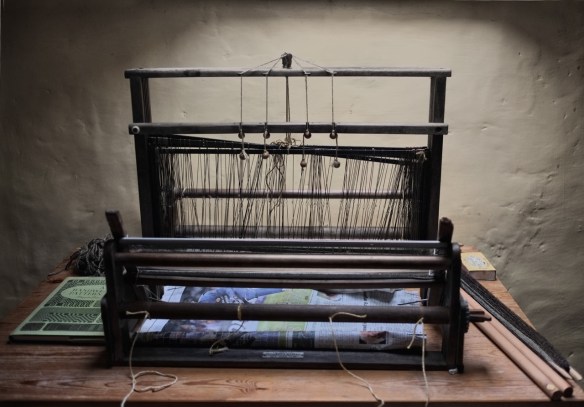
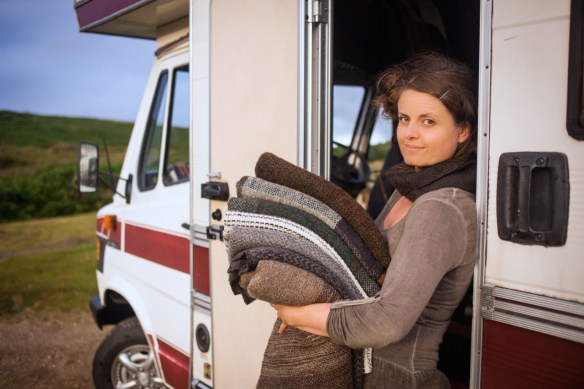
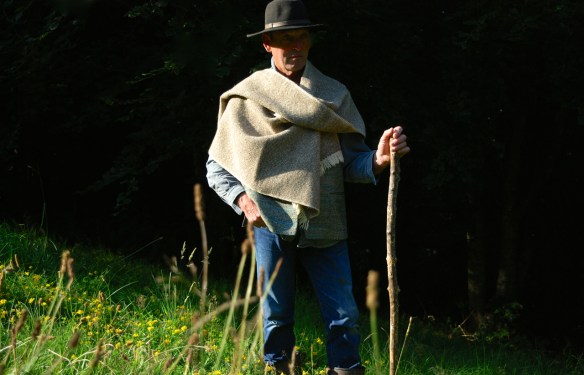
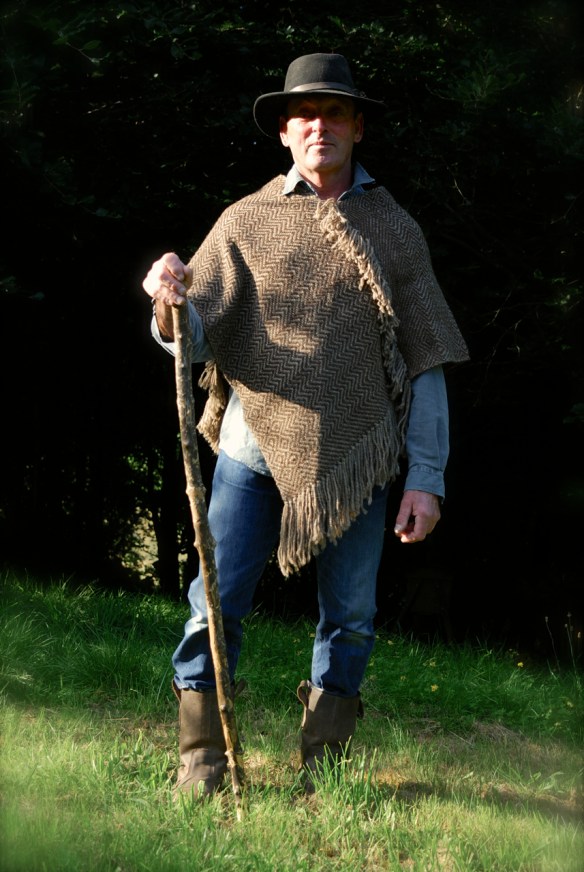
Photograph by Beppe Calgaro
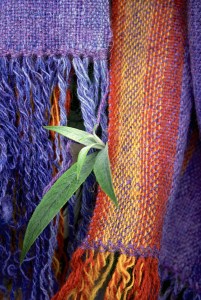
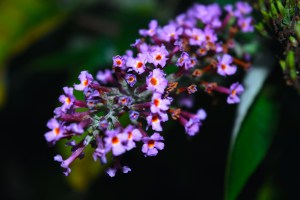 Buddleia, like nettle, is another one overlooked: a lurker in decaying industrial landscapes, abandoned dwellings and railway sidings; a post-apocalyptic pioneer; resistant; home always to a million butterflies. (Vive la revolution!)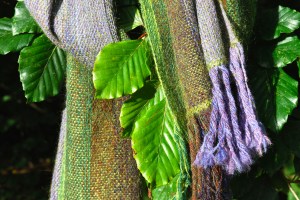




 These Isles