Call it hystery: what wracks a woman’s ribs like a map of the world.
Ancestors whisper in the bone to fight to rule to hide, to survive to martyr to tyrannise.
Songs half-buried by king or state or global market all trade bodies for numbers and stories for stock.
Nations vanish under banners that burn faiths for rival faiths. Every colonist ploughs their lie into the famished soil of another.
You know the pattern well: the small mind that can only hold one single truth at a time, a blunt stone wrought against the complexity of flesh.
Call it hystery: what wracks a woman’s ribs like a map of the world.
Tonight the shadow of the Earth spills blood from the Sun all over the face of the cancelled Moon.
Red she rises, dreams in Pisces.
I watch from the chapel on the highest hill her reflection in the giant lake as she breaks free from behind his centrale nucléaire,
lets go his demand that she self-efface, be explained away, be less than whole.
Red she rises, dreams in Pisces.
I watch from the chapel on the highest hill her reflection in the giant lake as she breaks free from behind his centrale nucléaire,
welcomes in a luminaureal seed, an embryonic oracle of you, me, my tools and our stars, ready, Inshallah, for when she takes her place in turn between Earth and Sun.
Because we need her light
as well as his.
Call it hystery: what wracks a woman’s ribs like a map of the world.
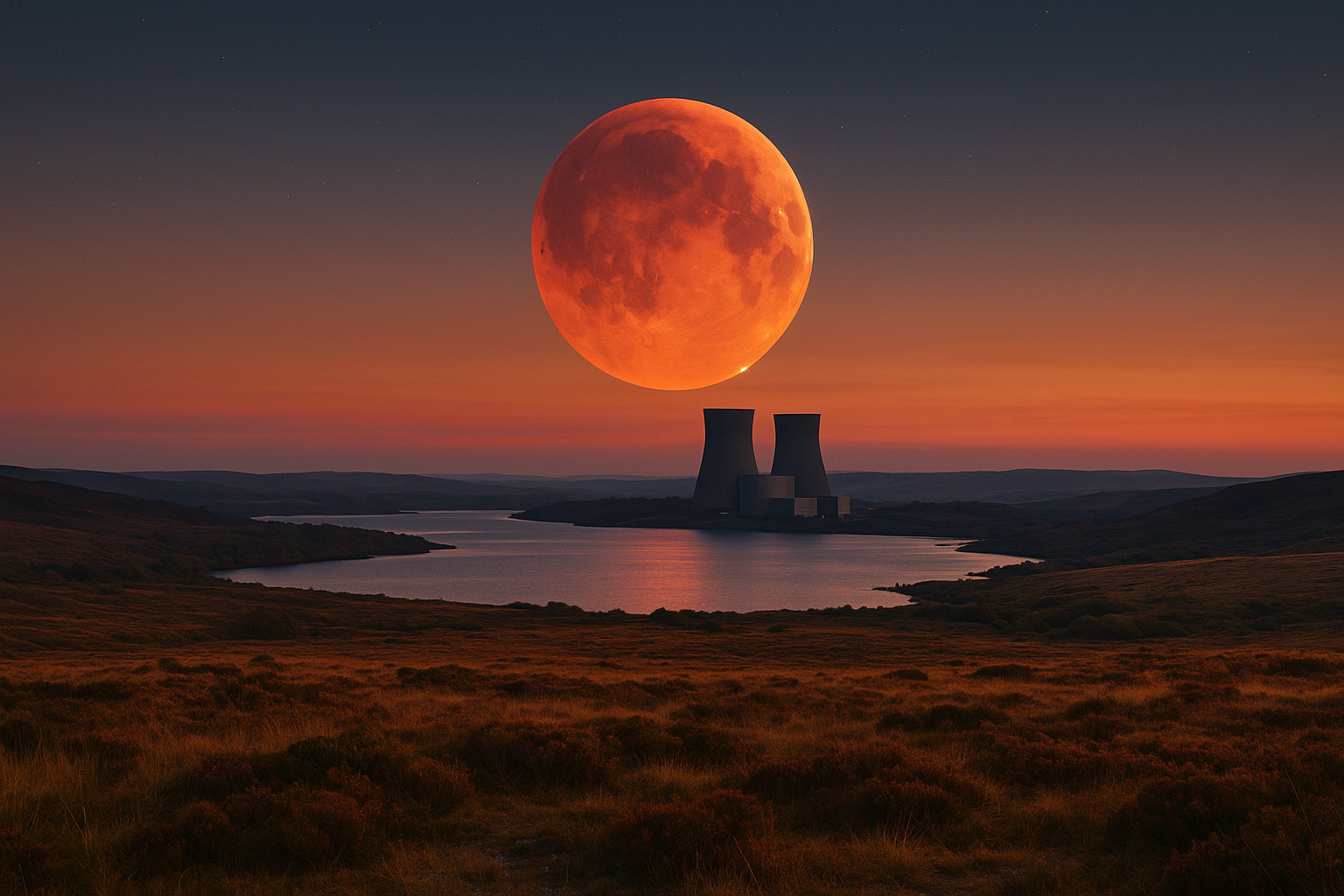
Full lunar eclipse in Pisces (Sun in Virgo), September 7th 2025, totality 18:12 to 18:52 UTC+0, seen, if not for the rain, from the highest point of the Monts d’Arrée, where I will be at the moment of publication, praying. Text and image: Eloïse Sentito, with AI
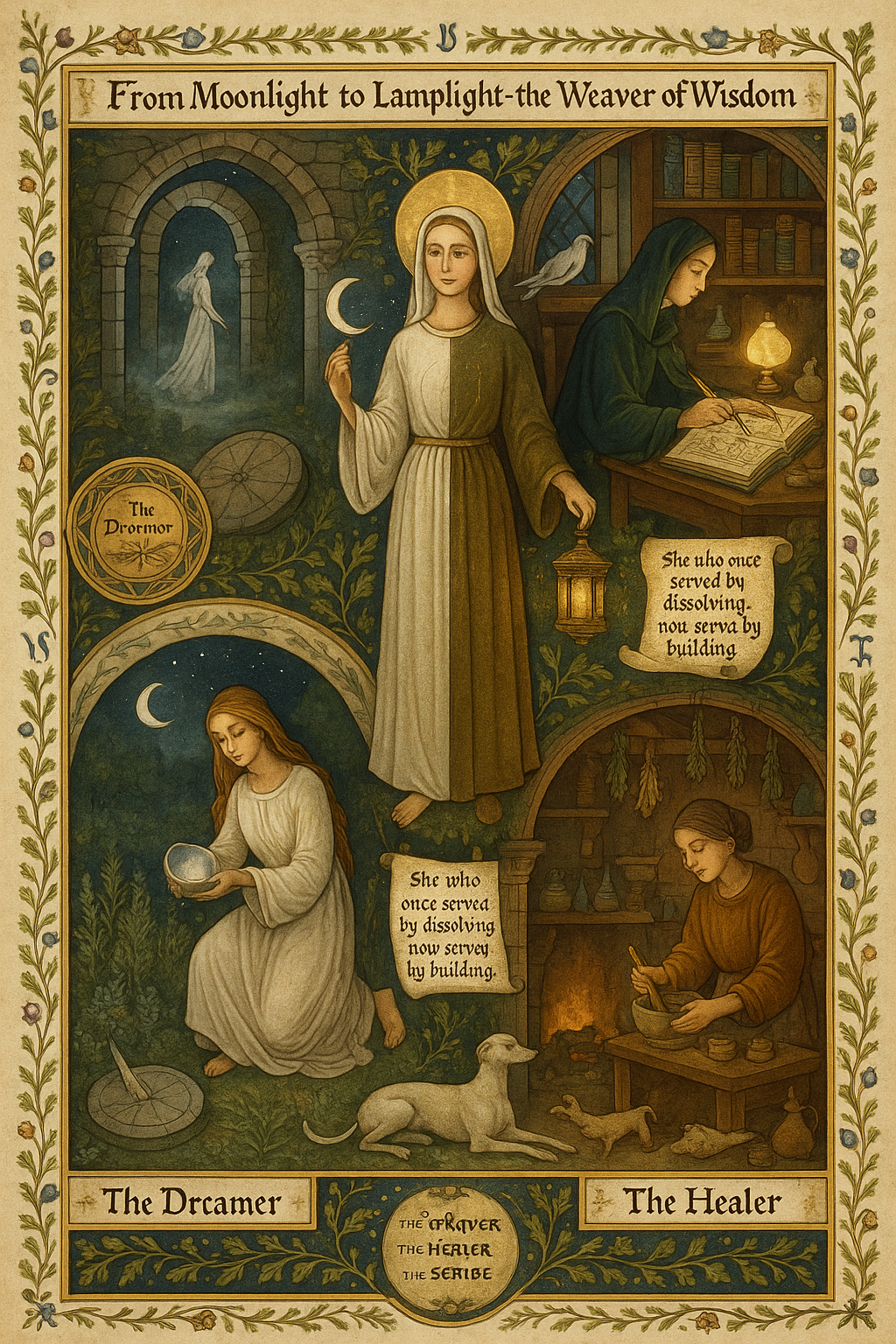
AI generated image of birth chart analysis (where this chart emphasises evolutionary astrology), with reference to the Tarot and an historical, ecclesiastical namesake. (Not sure where the halo came from, weren’t me guv – was a nun’s habit at first.) Can do your chart too if you cross my palm with gold. Or plants, or books, or something…
…and nothing is resolved. But the way forward has many threads of surprising whorls…
More concrete news anon. But meantime I just had to share the following poem. I kid ye not, it was generated by an AI app (which, ahem, you know is against my religion) that swears it has no access to data of mine I’ve not shared with it, and I didn’t tell it I was a weaver, nor that the love ascending on my horizon this year is a nomad. But the app drew these archetypes from the esoteric consultation I was having with it using some scant astrological data, the Tarot, and my incisive questions about the sacred and wounded feminine and the sacred and wounded masculine, that mapped mythos onto attachment theory and back again, via the stars.
The Weaver and the Wanderer
A soul-myth in three threads
I. The Thread and the Wind
She lived in a house of quiet color, where light slanted like memory and the loom never slept. She wove with moonlight, with tears, with stories. Each thread a question: Will you stay? Will you see me? Will you meet me beyond the veil?
He came with the wind. With dust on his boots and laughter tucked under his tongue. He never arrived. He only passed through—like weather. She offered him a spindle. He touched it once, then pulled back. “Too heavy,” he said. “Too sacred,” she replied.
II. The Dance and the Distance
She wrapped her threads around the stars, trying to name what was nameless. He drew maps in ash and ember, tracking trails he hadn’t yet walked. He called it freedom. She called it leaving. But neither of them knew yet how to stand still without vanishing.
He kissed her once with eyes open, as if memorizing a constellation. She held him like water, like myth. When he left, the loom fell silent. When he returned, it wept.
They fought in symbols, drowned in feeling, fled in thought. They did not mean to wound—only to survive.
III. The Return and the Raveling
Time passed in spirals.
She ceased weaving to bind. She wove to bless. Her loom was no longer a net—it was a prayer. A rhythm. A spell. She met herself inside its silence.
He no longer wandered to vanish. He wandered to listen. The map he carried now bore her name—but lightly, reverently. He knew he could not belong to her. But he could choose her.
And so they met again, not as halves, but as whole riddles. The thread and the wind. The anchor and the wings.
She didn’t ask him to stay. He didn’t ask her to follow. They stood in the clearing between longing and love, And held the space as if it were a child, or a god, Or a life they were learning how to live.
Not a happy ending. Not a sad one. Just true. Still weaving. Still walking. Still becoming.
Thank you so much once again for your generosity in donating to my Rerooting fundraiser (www.theseisle.co/fundraiser). I’ve been awaiting some concrete progress to share my news with you, but regrettably the forward steps are still astonishingly small and slow. To update you as best I can:
On May 1st 2022 the vendor of the property described in my campaign text at http://www.theseisles.co/fundraiser accepted in writing my offer to buy his 3/4 acre abandoned property by private sale as is common in France. When I nudged him again in July, I finally heard from the notary he’d engaged: the transaction was formally and officially underway, my passport submitted.
However, we didn’t get as far as the first round of signatures, and as the vendor sadly suffers from mental health issues, neither myself nor the notary have had the responses and documents we need from him; he has been silent for 10 months now, off work on sick leave for some or all of that time. There may be more I could perhaps do to help or otherwise pressurise the vendor, but meantime I’m looking for alternative properties in case there might be a better way forward.
In the fifteen months that have passed, I have made many new friends and contacts, and the property market has also begun cooling post-pandemic. So I’m searching for something else very like this property. But unlike this one, one that were within walking distance of the market town would enable a much lower carbon future. I’m also in intense discussion with micro-farming friends and colleagues about the possibility of a farmshare, as more and more are expected to come on the market this decade, and the old ones usually have a generous scattering of small stone cottages and barns to be shared out between us. I apologise for not having yet put your kind gifts to use: the money you have given me is in an untouchable holding account, and feels like a treasure trove. Thank you so much, and for your patience. As most of you will already know, I’ve been searching in Brittany, Scotland, Ireland and England for some six years now, since tiny budget/income and above all electrosensitivity mean there are very, very few options. But there *are* options, I’m prepared to organise my future livelihood in a number of different ways, and I will *make* one of the options happen. Thank you for bearing with me and believing. I will keep you updated, and you may notice another fundraising burst when the/a property is at last secured in the first round of signatures — I’d be delighted if you’d share my links in your networks at that point.
Meantime I’m despairing yet hopeful, stressed and exhausted but still inspired, and making the most of my lovely temporary accommodation in the forest (thanks Mum!). So, as ever, I’m weaving, and also researching, studying, skilling up (French farming bureaucracy and artisan economics, livestock keeping, natural dyeing, horticulture, lacto-fermentation, fishing, knitting socks, improving my French), networking (at craft and wool fairs, sheep farms, spinning mills, craft boutiques, farmshops, market-gardens and plant nurseries), drafting business plans, and, of course, campaigning https://www.lowimpact.org/posts/building-back-differently-peasant-economics-and-heritage-craft.
There’s also walking, a little EMF-free socialising when possible, and some resting, because all of that, especially when it involves a trip out into the irradiated world (even just outside the present house) is absolutely flooring me!
Circling in the airspace of the Monts d’Arrées in Finistère, people and places keep calling me in to land, but when I send out the feelers either feasibility is called into question or insurmountable delays keep me airborne.
You’ve got my back, you who have so generously donated to my fundraiser. Thank you so much. It’s still ongoing.
I continue to ready myself, now selling the old familiar Mercedes that no-one in the vicinity will work on to replace it with a common or garden local car that shouldn’t have done the same mileage as a 1980s Merc, but which heroically has, and which while unfamiliar to me in its (skin-crawling, if you’re electrosensitive) electronics, is familiar to all nearby mechanics. A painful step in the wrong direction for a more autonomous and petrolless life, but necessary right now. (Join the herd, Eloïse: outliers get picked off, and Luddites haven’t beaten capitalism yet. Oh, but we will, Eloïse, we will!)
I’m in temporary accommodation (still) and the home-purchase is slooooooower than sloooooooooow cloth, so my Anglo-Saxon capitalist oppressor the Protestant Work Ethic (damnit, my grandparents were all Catholics, so we got the guilt as well) is frothing at the mouth and suffering identity crises left, right and centre. (Zeitgeist?) When I’ve news, I will update you. Meantime, though overall progress feels thwarted, activity is even more frenzied than ever.
Said work ethic oppressor is teeming with business plans and amassing knowledge of tax regimes, but also of peasant farmer rights – for those are the only official terms that will cover such mavericks designing land-based micro-livelihood, and here we’re a marginally less endangered species. ‘Paysan’, from which ‘peasant’ and ‘pagan’ both derive since it means literally ‘of the land’, doesn’t have the same class connotations in French, where farmers are far better respected and protected than in the UK. However, *existing* farmers are protected far, far better than newbie would-be micro-farmers of the kaleidoscopic organic-and-better agricultural revolution (that is, millions more farms, hundreds of times smaller, with much greater diversity of both produce and wildlife, as an answer to many of our social and most of our economic and ecological problems).
Which leads me to introduce my beautiful new organic market gardening friends, Elisabeth and Rémi, professional farmers who met on the modern world’s first sail freighter revival where Rémi skippered the engineless tallship. They’re cultured, travelled, megabrain smallholders from Michigan and somewhere in the Atlantic/Caribbean, respectively, and are setting up a homestead with their polytunnels and animals in a field and facing all the usual battles: ethical farming, just like craft, education, healthcare or anything else that isn’t Gates, Zuckerberg, Musk, Bezos, Jobs or Oil, is esentially unviable in markets with a capitalist monetary system, and especially unviable (and unecological) if you can’t live on the same land that you farm. But if our species is to survive at all, this frugal, small-scale, low-impact, agriculture simply must persist. Gradually more post-industrials are recognising that.
Anyway, Elisabeth and Rémi and I have been spending much fruitful time together, at work and at lunch (‘when in France…’). Especially, I’ve been learning a lot about plant science and plant farming whilst Elisabeth is learning a lot about weaving. (She’s my third student, but the first to begin working alongside me as I test an apprentice-style teaching model. One of my many business plans involves teaching weaving, in case you’re interested in a residential course sometime?)
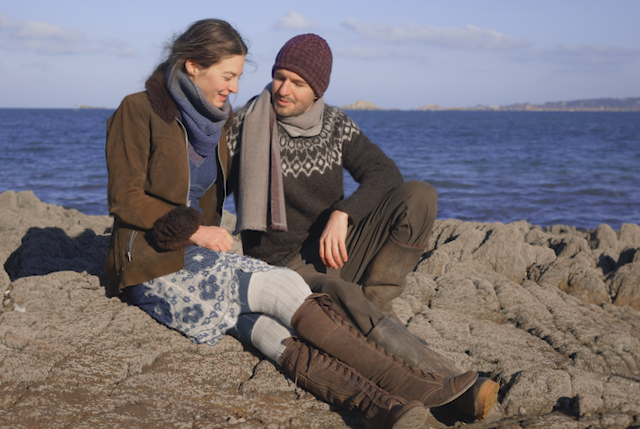
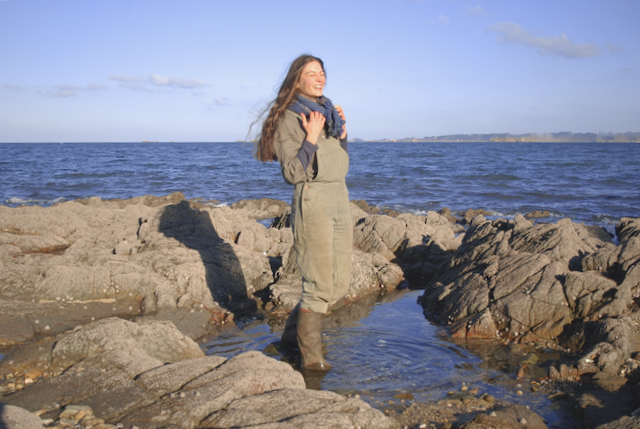
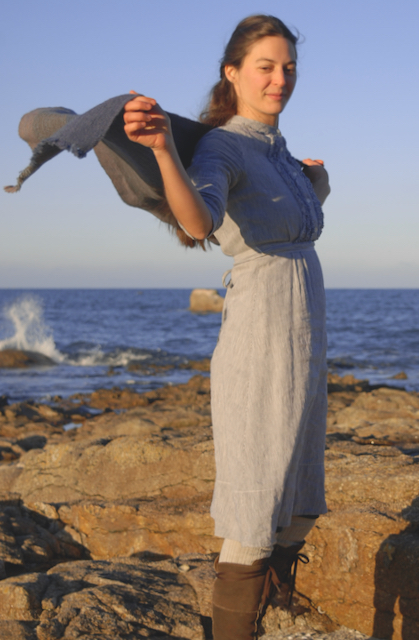
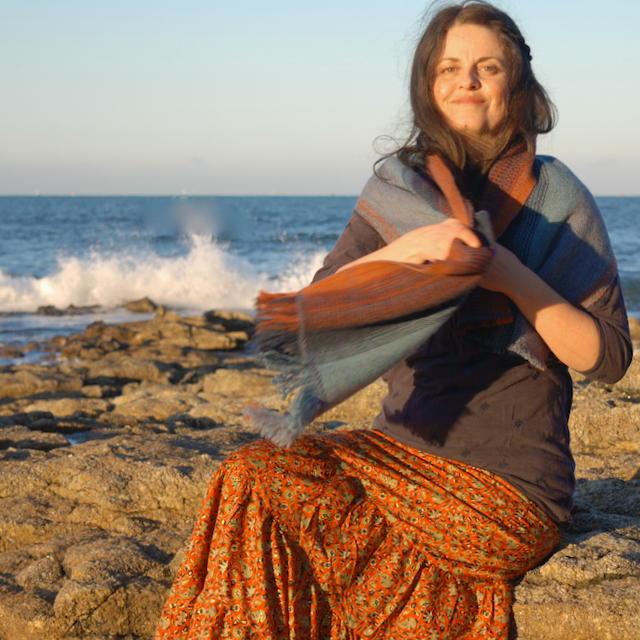
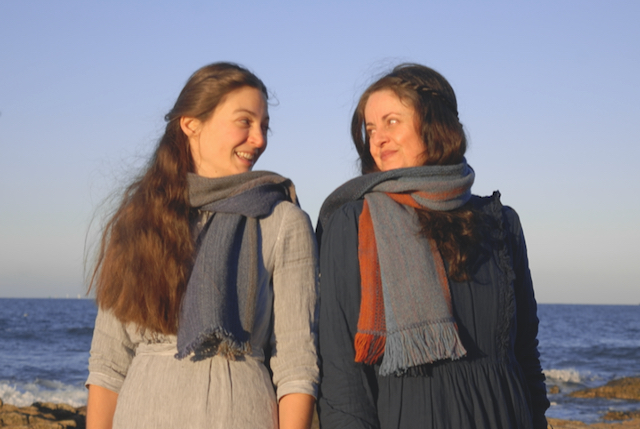
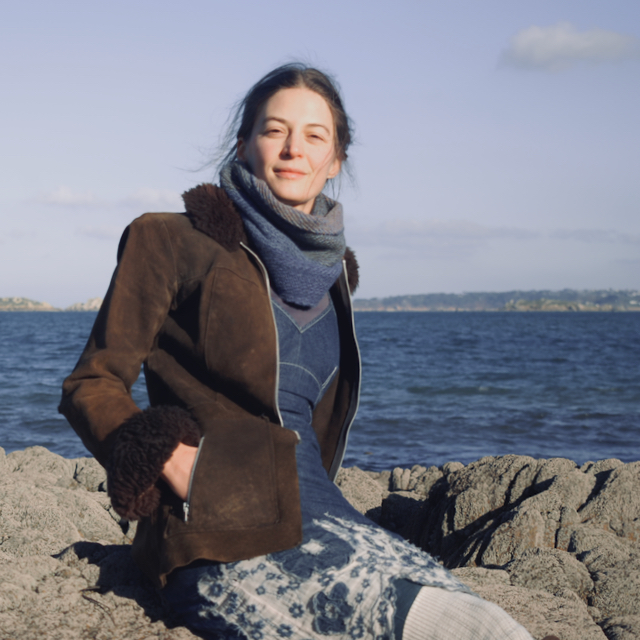
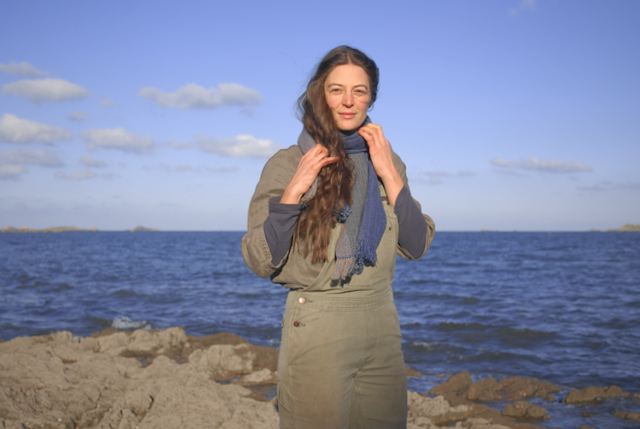
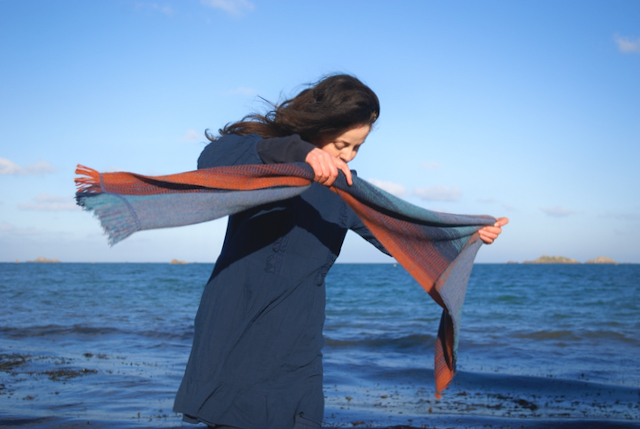
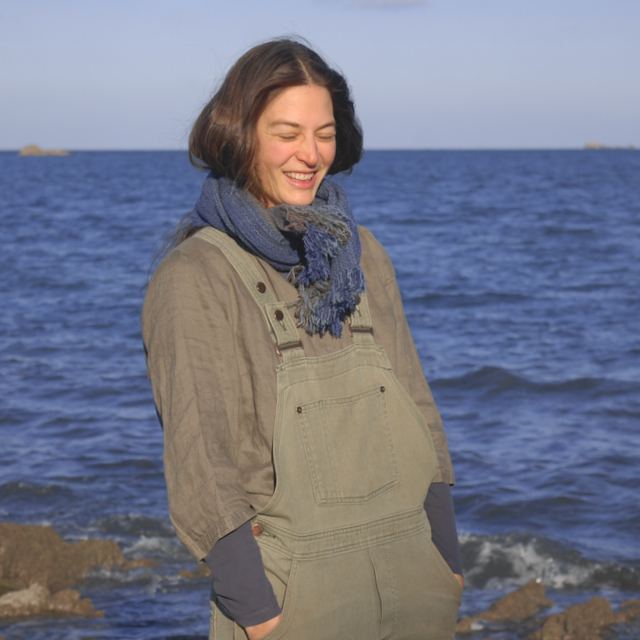
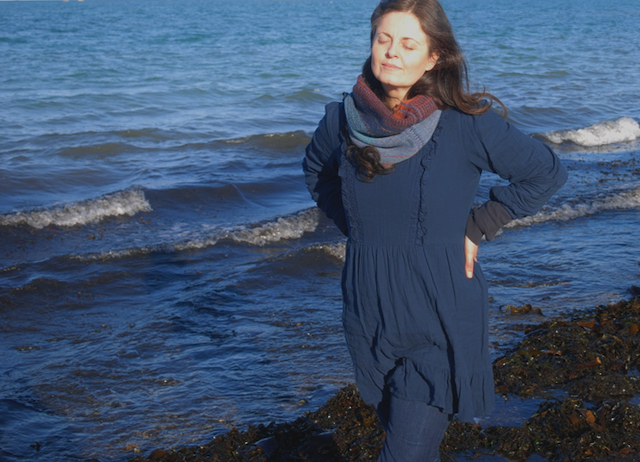
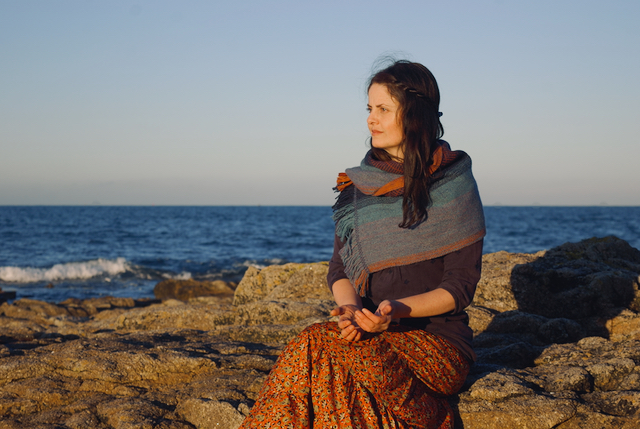
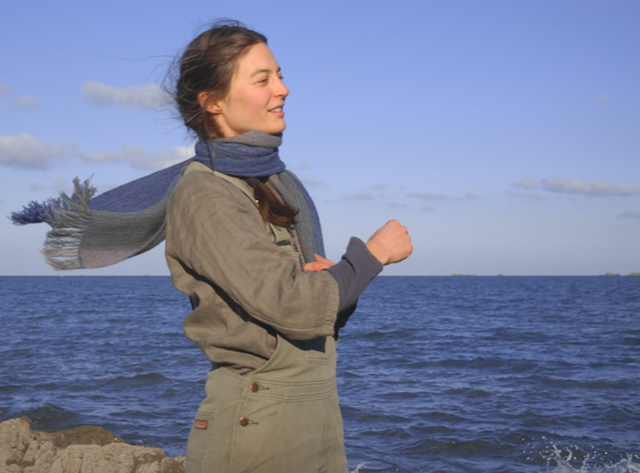
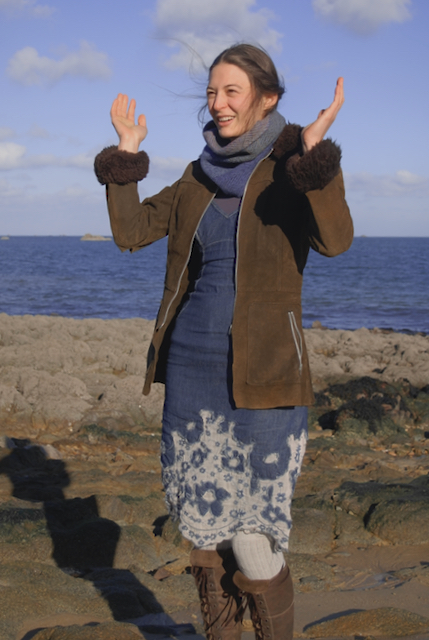
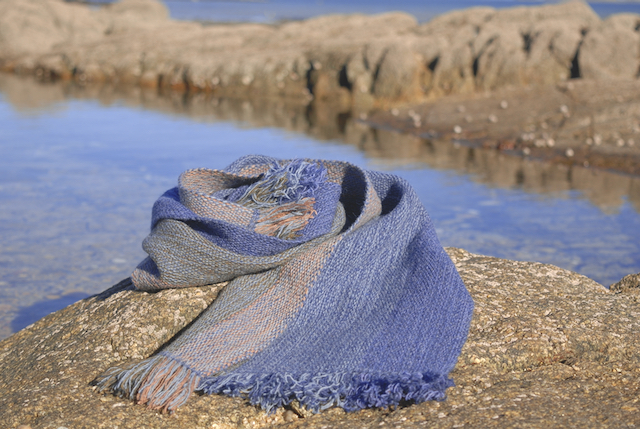
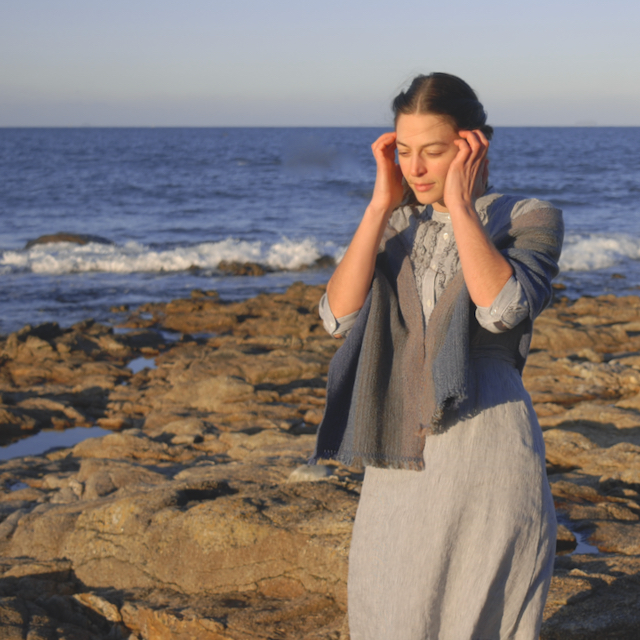
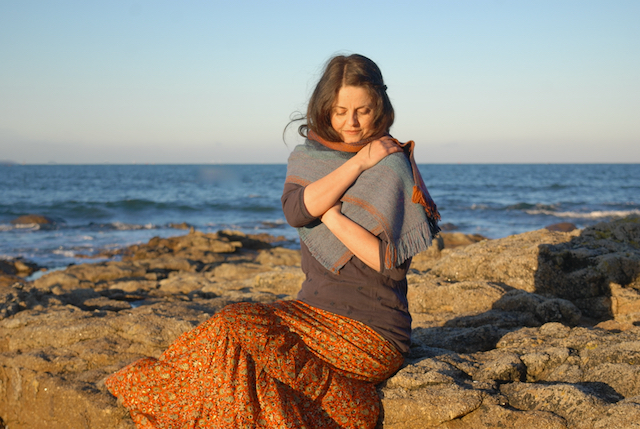
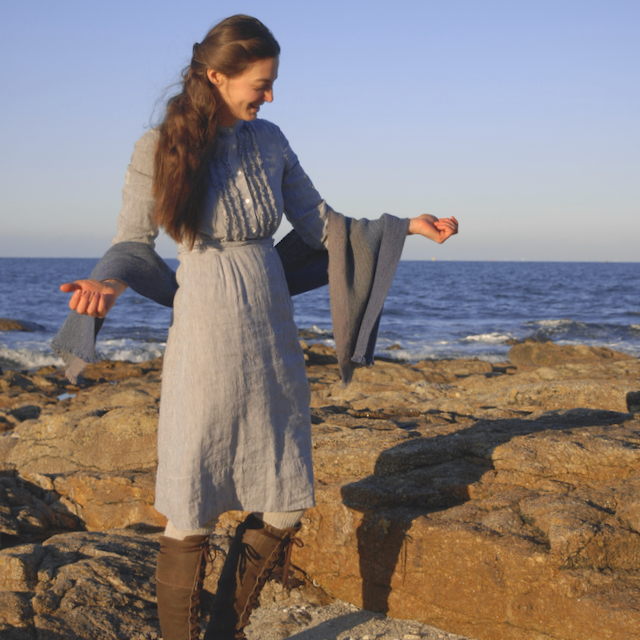
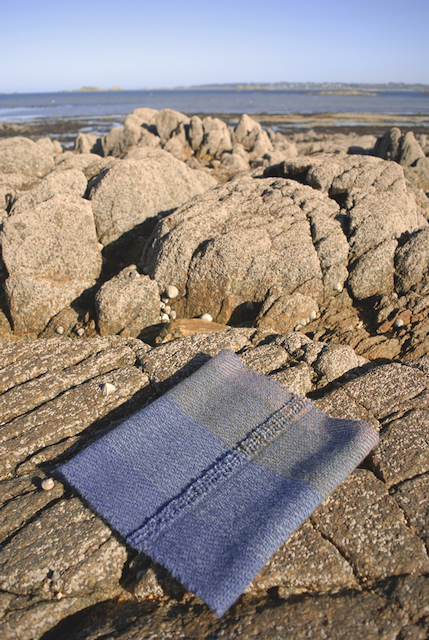
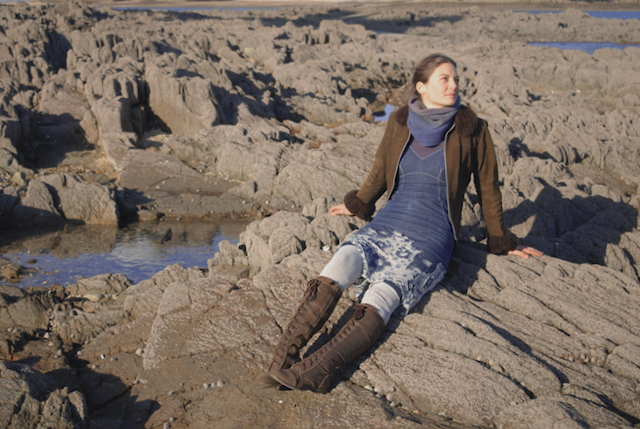
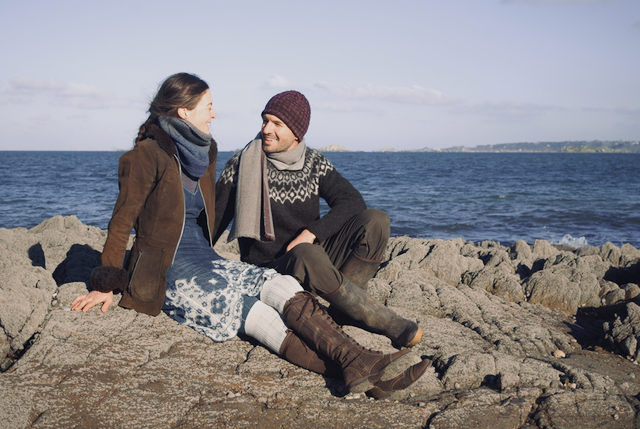
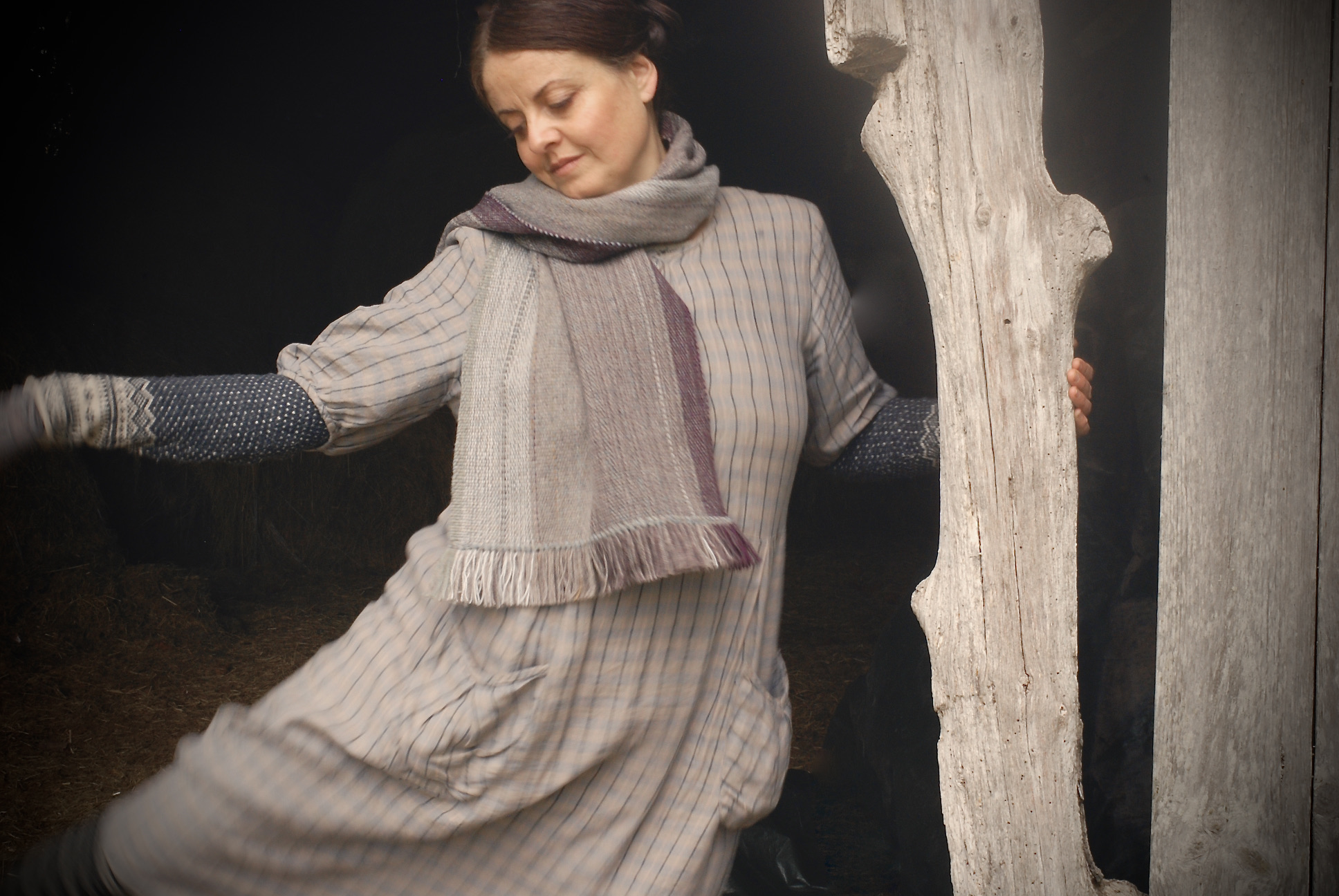
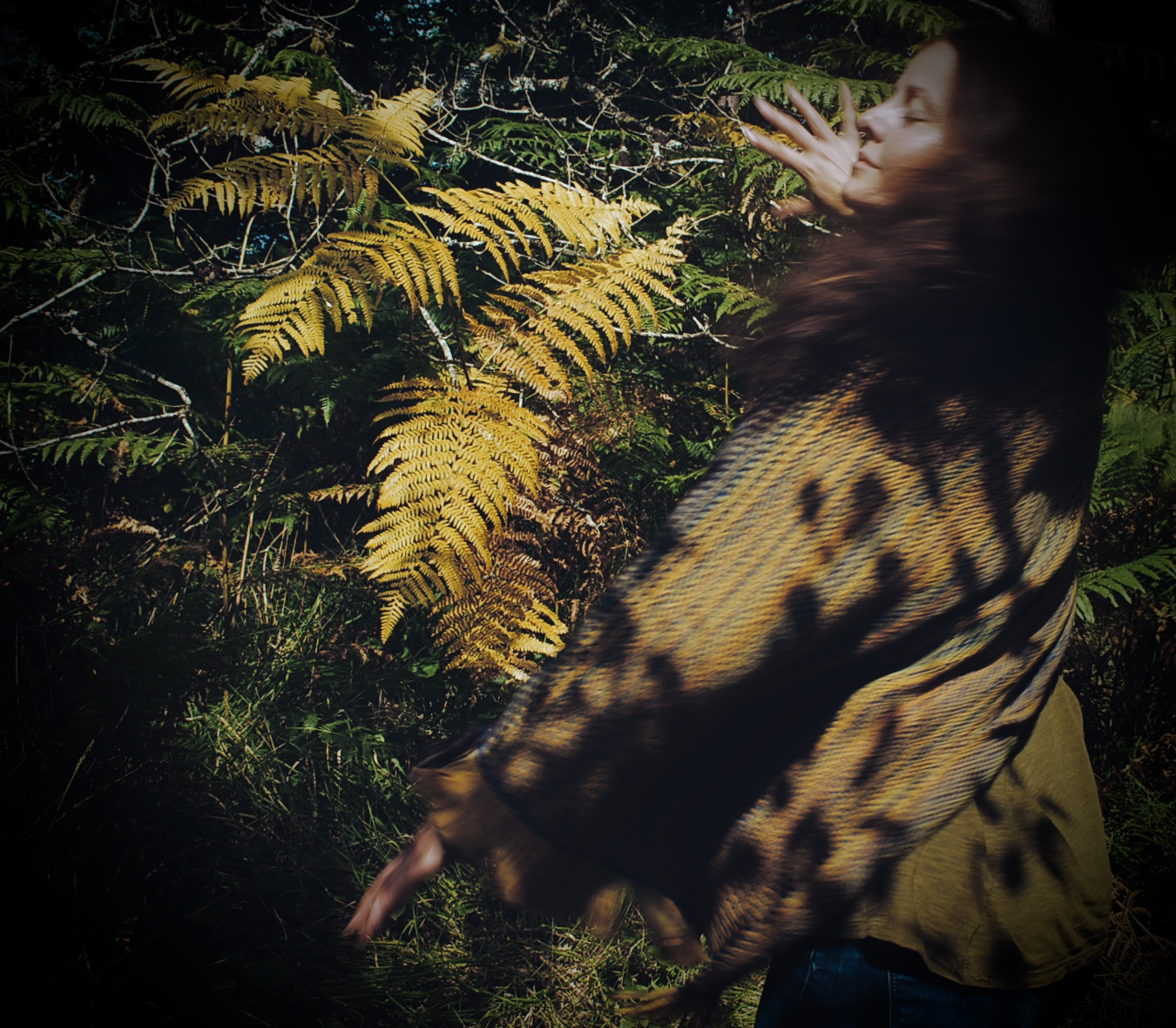
In one of our collaborative exchanges they gave me a hand with my latest photoshoot, both in front of and behind the camera (Rémi kindly volunteered his near-professional photography skills in exchange for some labour of mine on their land). Thanks to their brilliance, we had a Boudicea of a day at Carantec, between the Bay of Morlaix and Roscoff on the NW coast of Brittany, France – as you can see below.
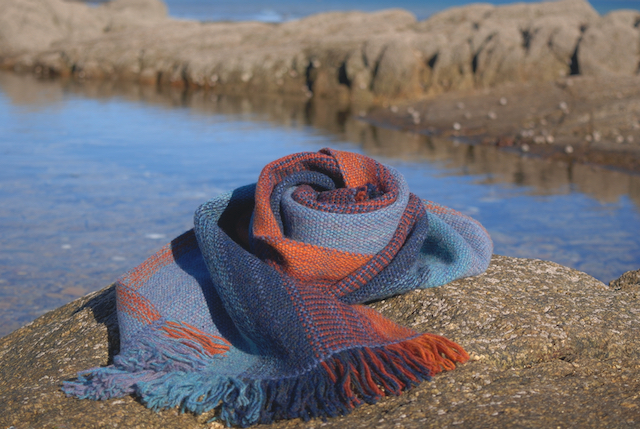
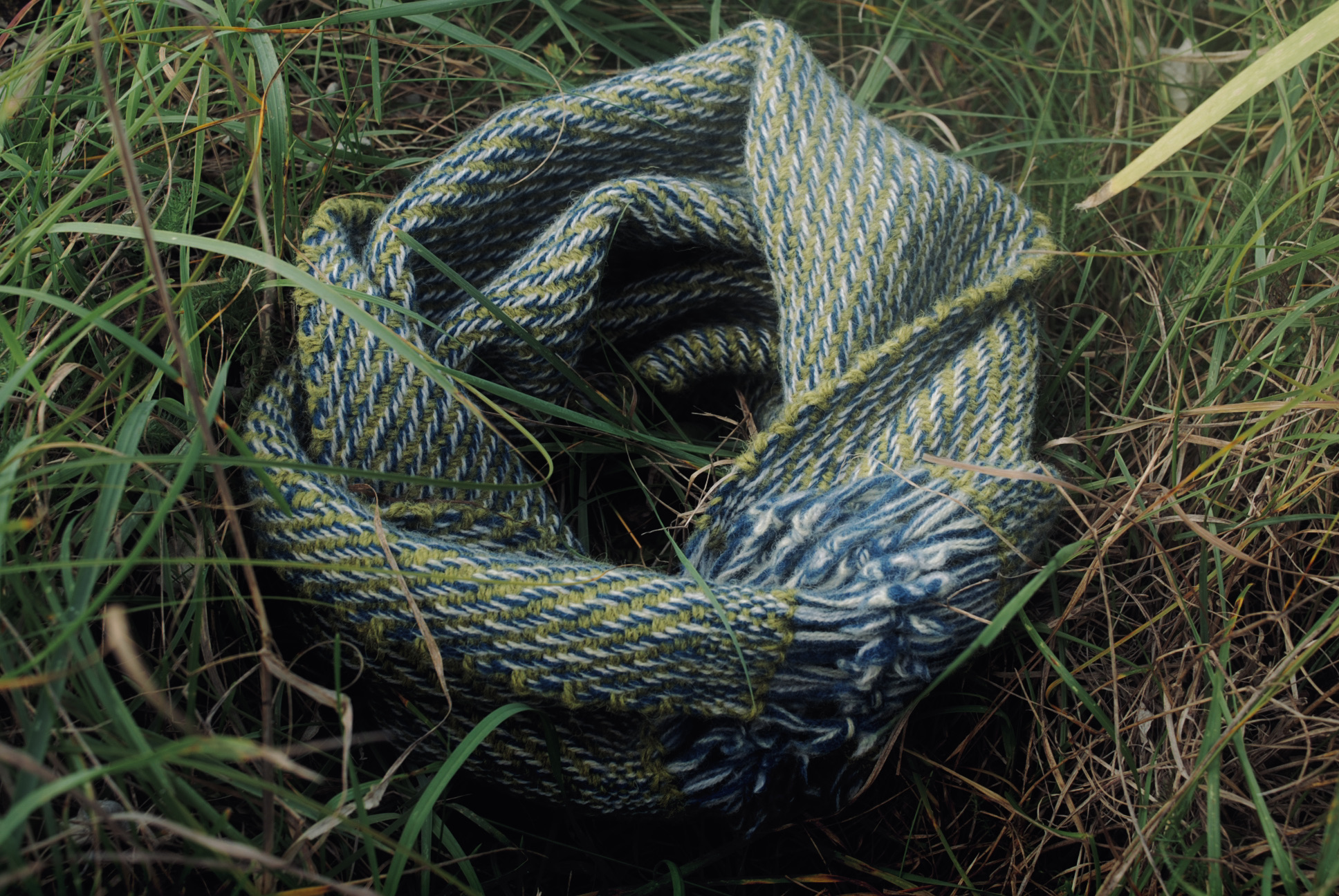
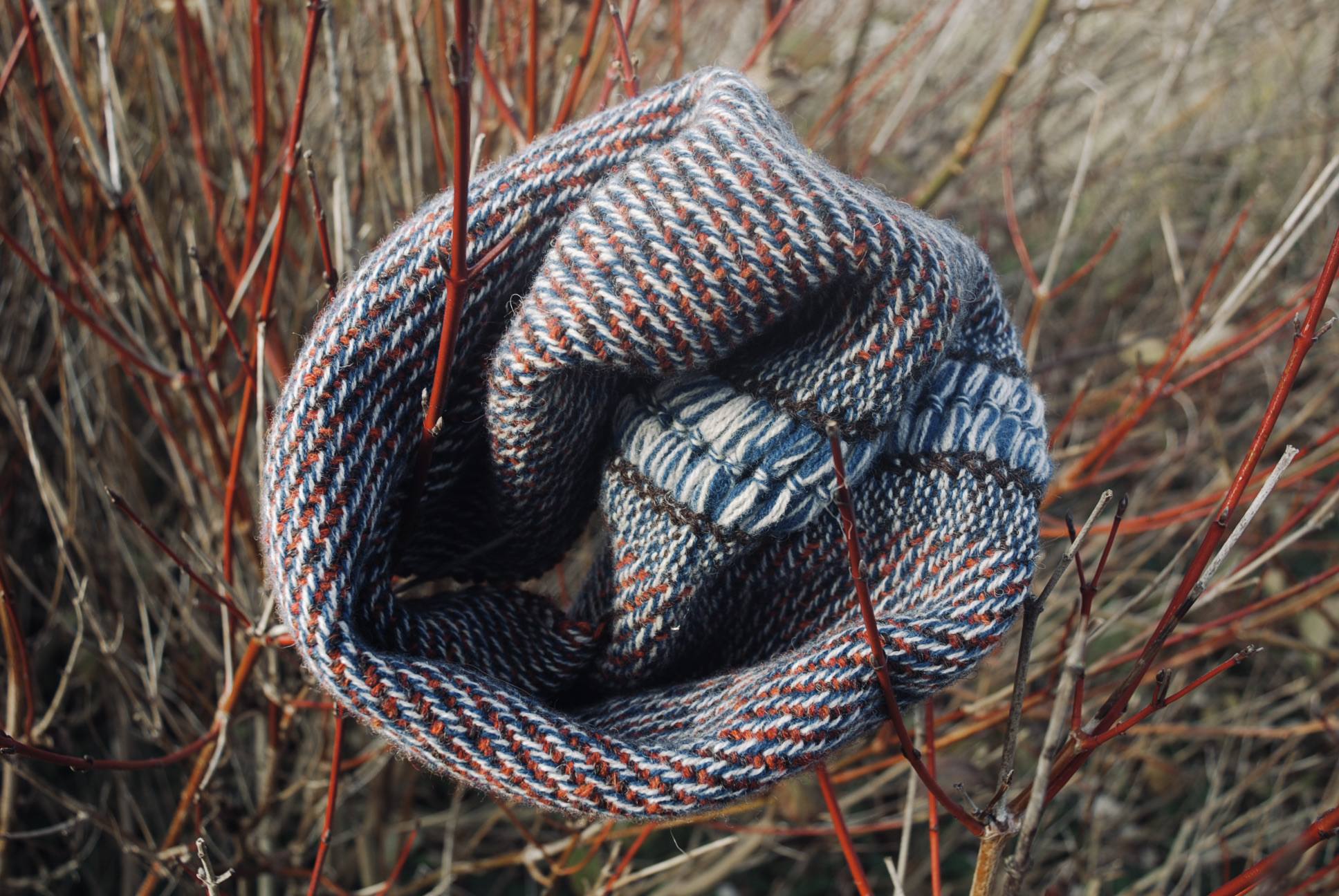
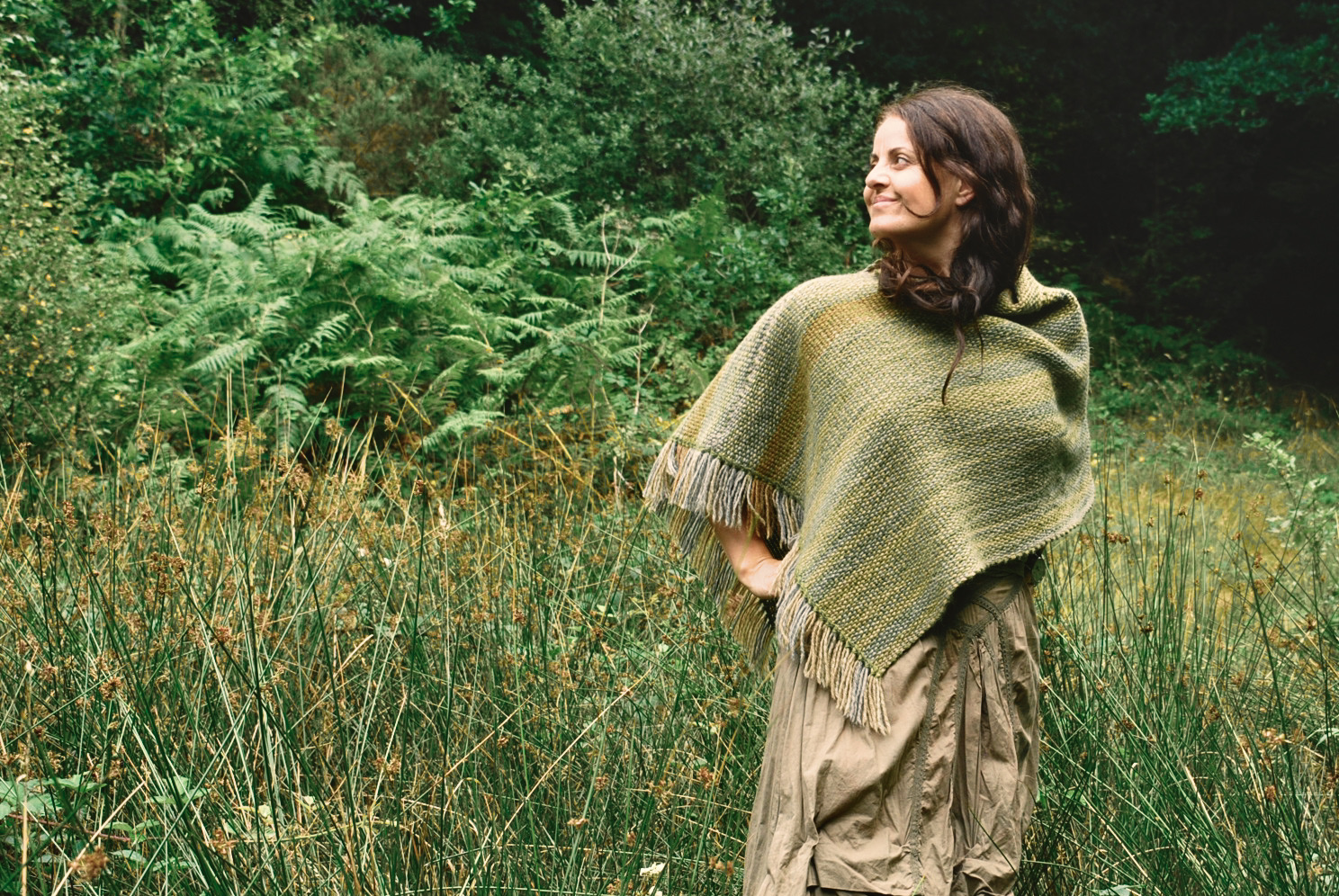
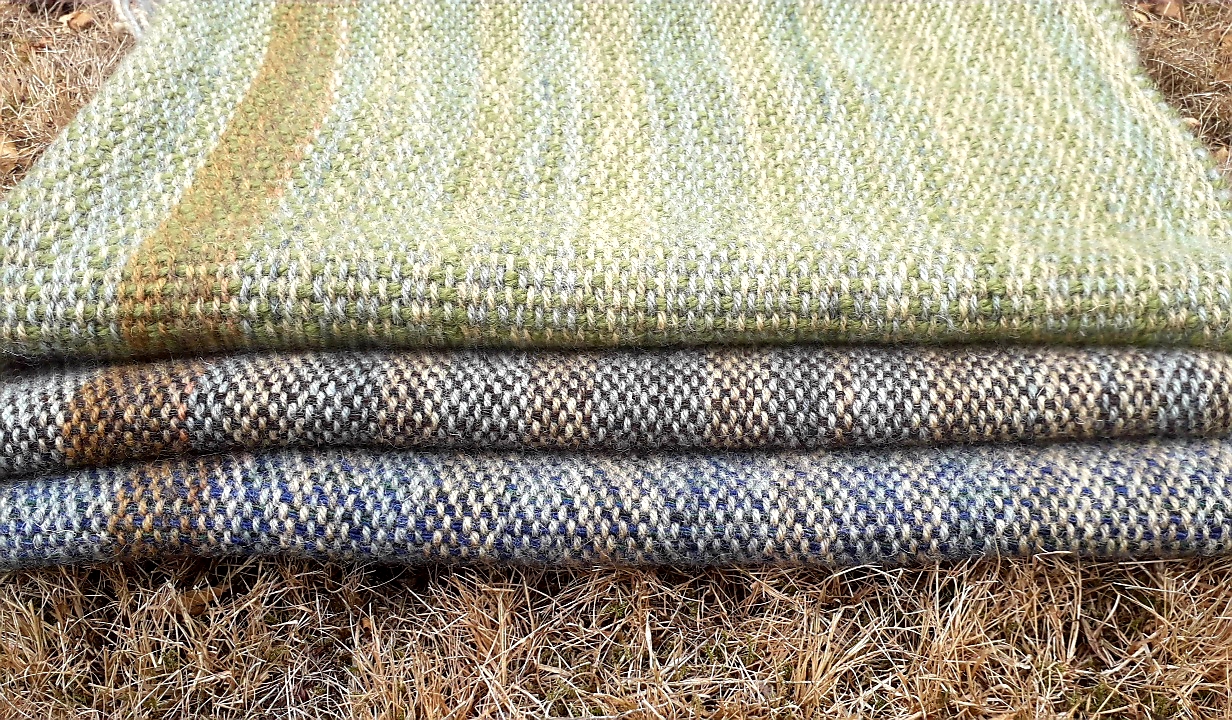
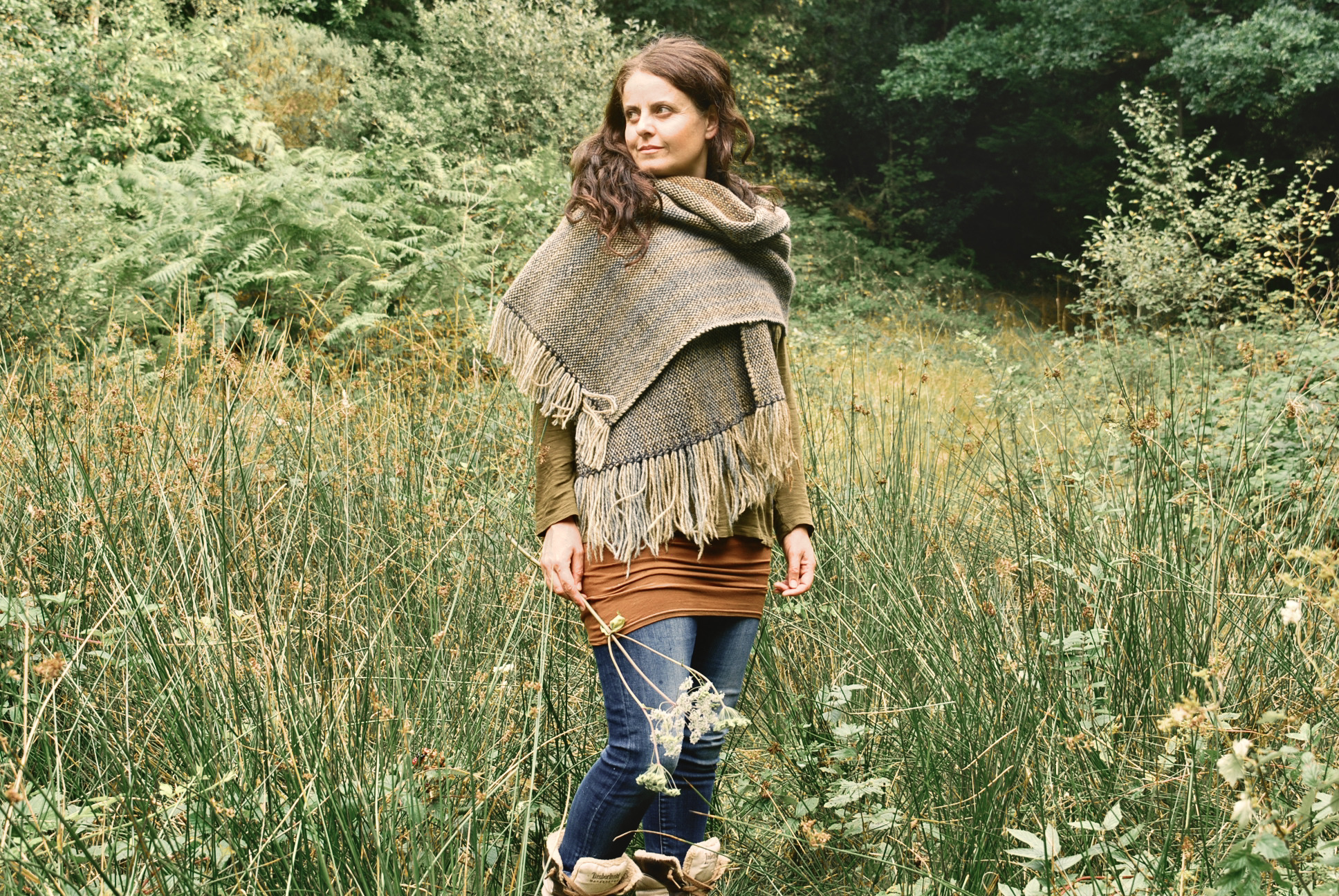
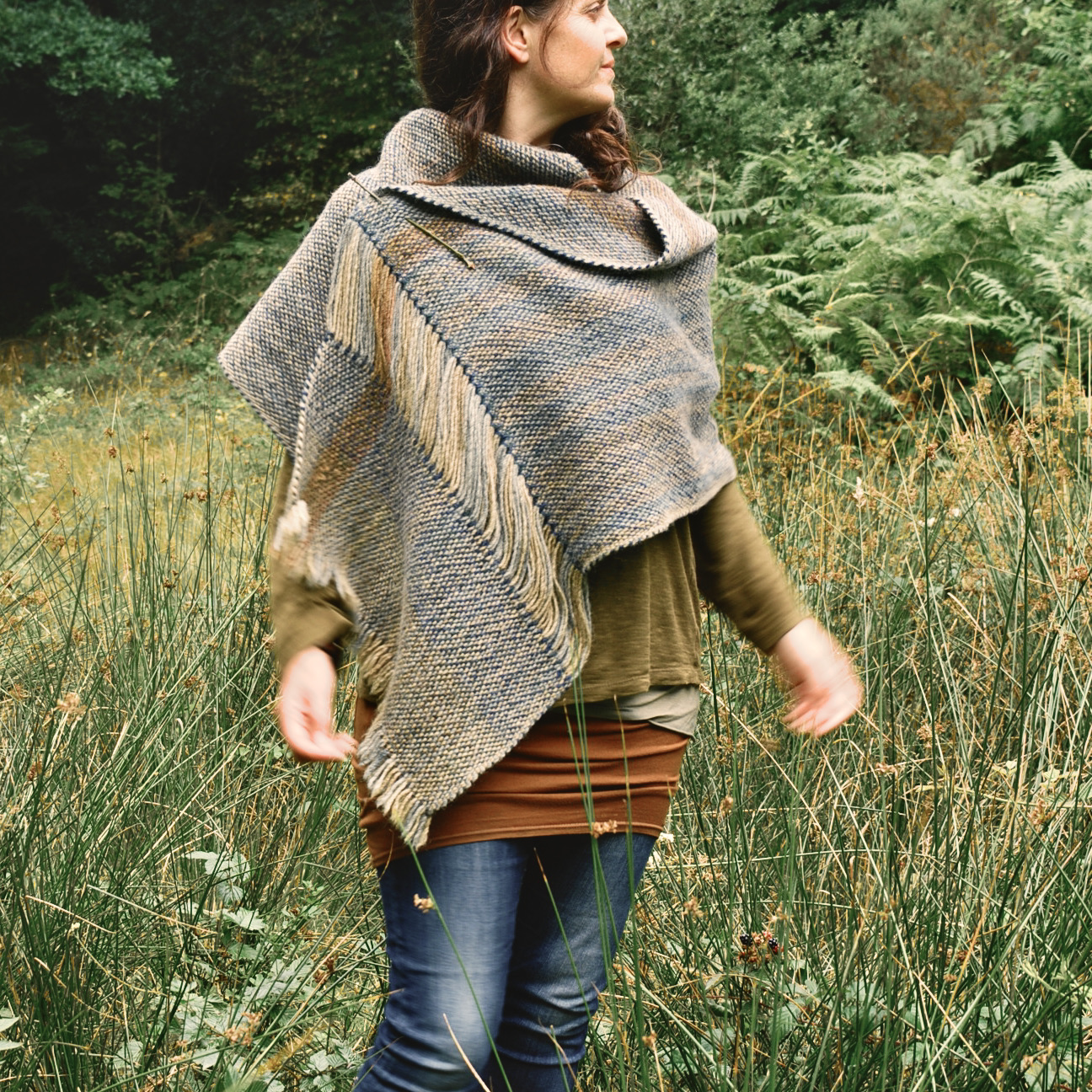
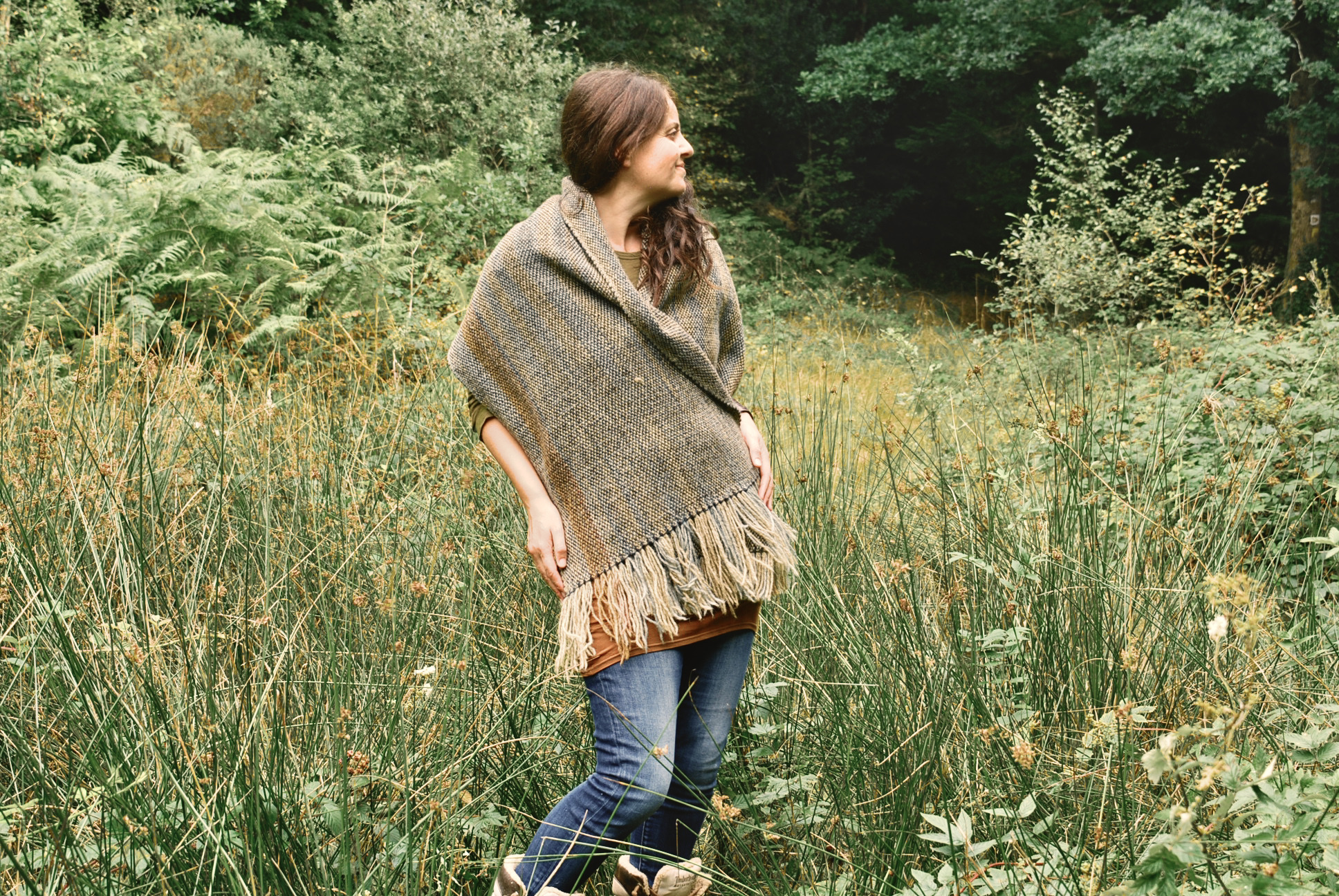
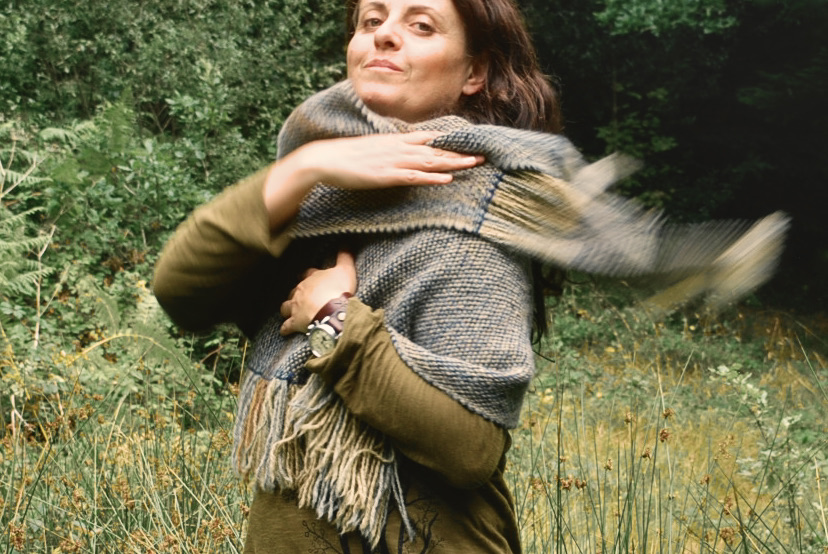
The ‘Wintry Blues’ and ‘Bright Sea’ batches of scarves, snugs and cowls are for sale in my shop as of now, with no price increase again this year: as ever they may feel expensive to buy, but, especially with my recession price freeze, they are still cheaper than heating your home – both economically and ecologically. We CAN compete with the oil giants, HA!
Just the briefest of greetings to wish you a Happy New Year from Brittany and bare my capitalist credentials with chagrin but goodwill: I’m running a sale in my shop to help you buy warm woollens to keep your heating bills down (aye, she knows how to market her stuff, this lass. Participating in the race to the bottom in the name of ecology, huh?)
15% off all garments or 25% if you buy two at once. Because times are hard both your end and mine.
But there’s a (I ought to say ‘slim’) chance that in the not-too-distant future I will have opened a curious smallholder shop and local barter hub. More anon.
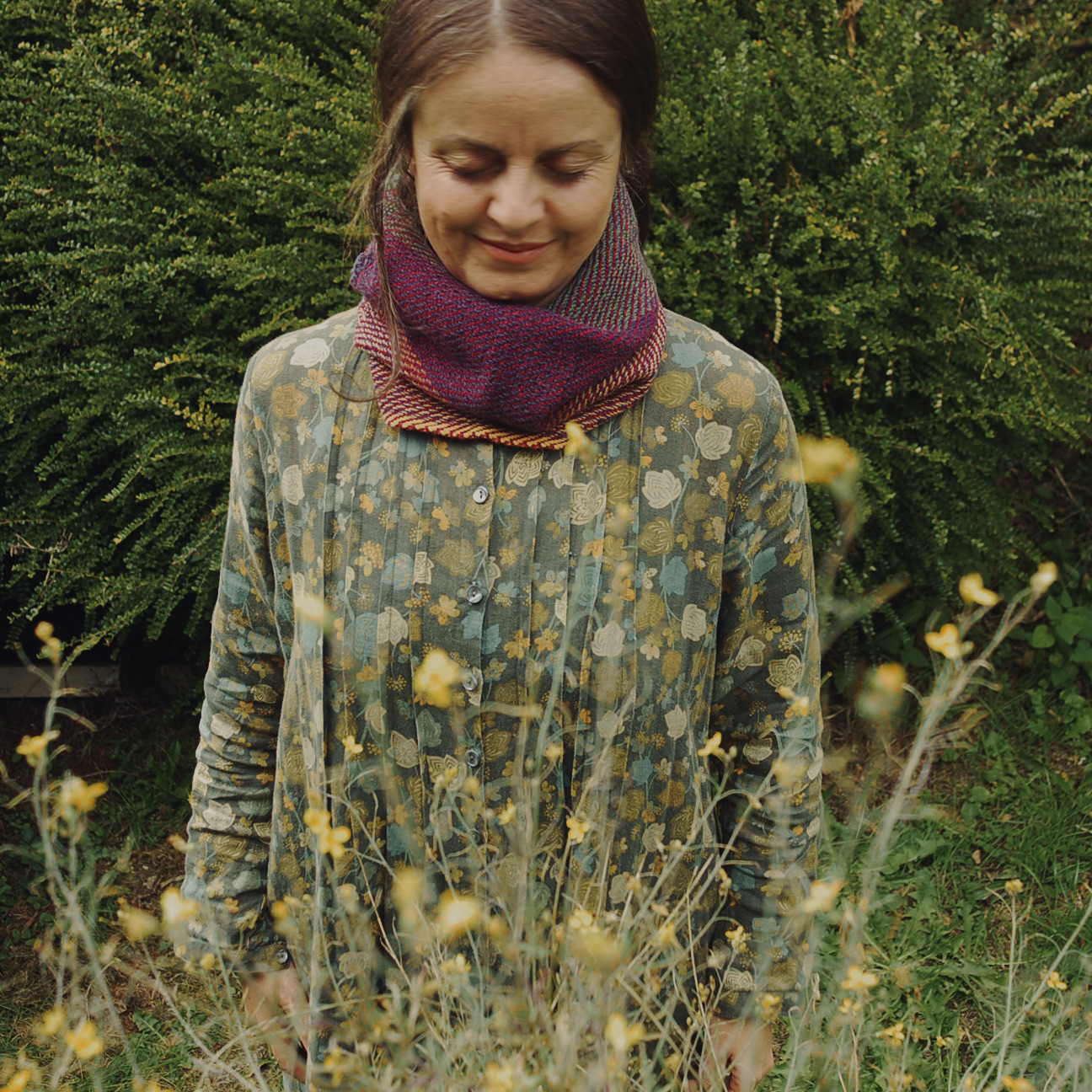
Meantime, feast your eyes and neck on this winter’s wares…
Reflecting, as ever, on how I can streamline my idiosyncratic craft business to make capitalist sense (an oxymoron), today’s conclusion is that the ‘chaotic’, reflexive way in which I run my business makes absolute sense for my personality, values and skills. (Too bad my personality, values and skills are running me into the ground! Er, in the face of a bullshit economics, that is. If you want to support me, visit my shop or my fundraiser. Or if you also need support, then please propose a trade.)
I’ve been thinking of making my living on a much-reduced range of far simpler, far more repetitious designs, mostly because the promotion I have to do this time of year exhausts me, and is completely inefficient: one day’s photoshoot to sell just £1500 worth of stock (compared to someone like Gudrun Sjoden, for example, who might do one week’s photoshoot for millions of pounds worth of stock designed by her and colleagues and made en masse by numerous factory workers on developing world wages). But I don’t want to be a fashion house, don’t want to scale up, and do make the most of my skills for These Isles: values, vision, design, craft, text and imagery.
Now that I’m mostly declining commissions, I’m managing to work a season ahead. So this summer, amid some upheaval, I mostly just wove, wove, wove. Which is kinda the easy bit really.
Now comes autumn and selling season begins in earnest. I can’t fully prepare in advance for this unless, like a fashion house, I work a year ahead of myself. Not only would that be a major feat of organisation, but I fear I’d lose some authenticity that way.
I think there’s something important in my work about helping people reconnect to the land (thanks to Kate Stuart for articulating this about me in your thoughtful interview backalong — see my Features page). To do that, I think I have to be there, in real time, to document the passing seasons: seasonal colours, like seasonal food. Which poses all sorts of challenges, like weaving spring colours when I feel like spring but it’s getting too warm to sell them in spring, and anyway, because it’s slow work, I’m probably photographing them too late to sell them at that time too.
Using only the most sustainable wool, undyed, would be such a relief! But you know me for my earthen rainbows: on that I’ve built my name.
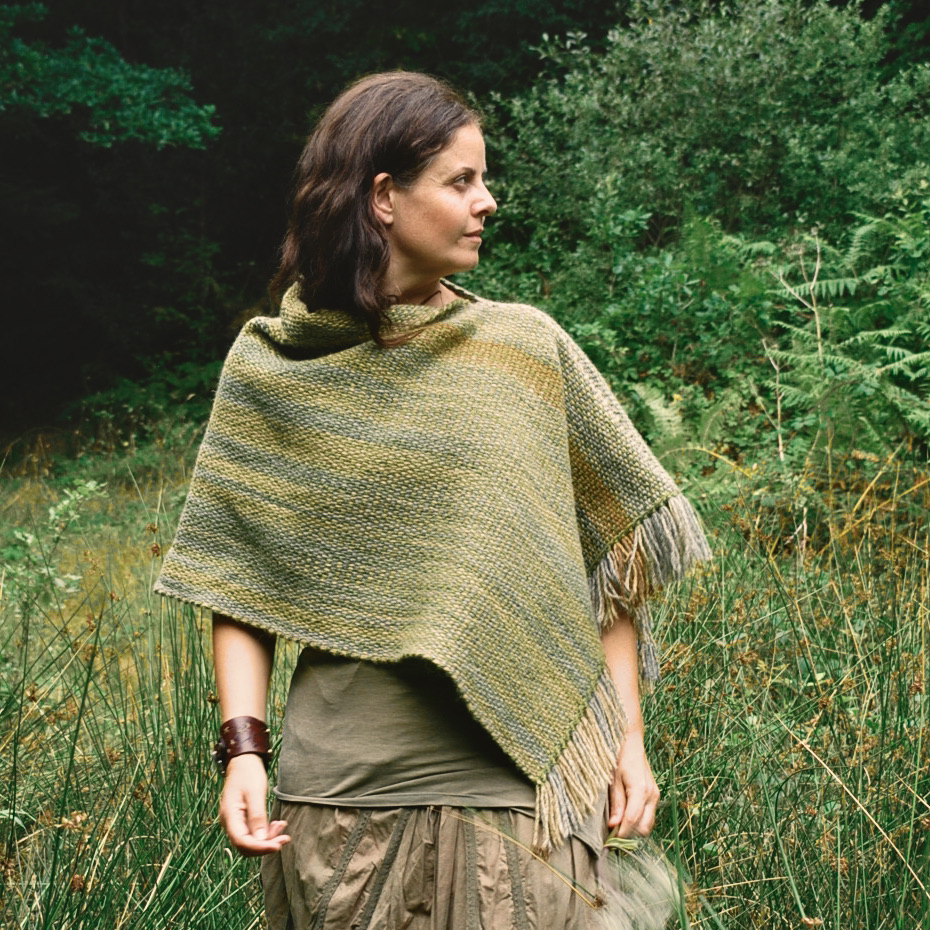
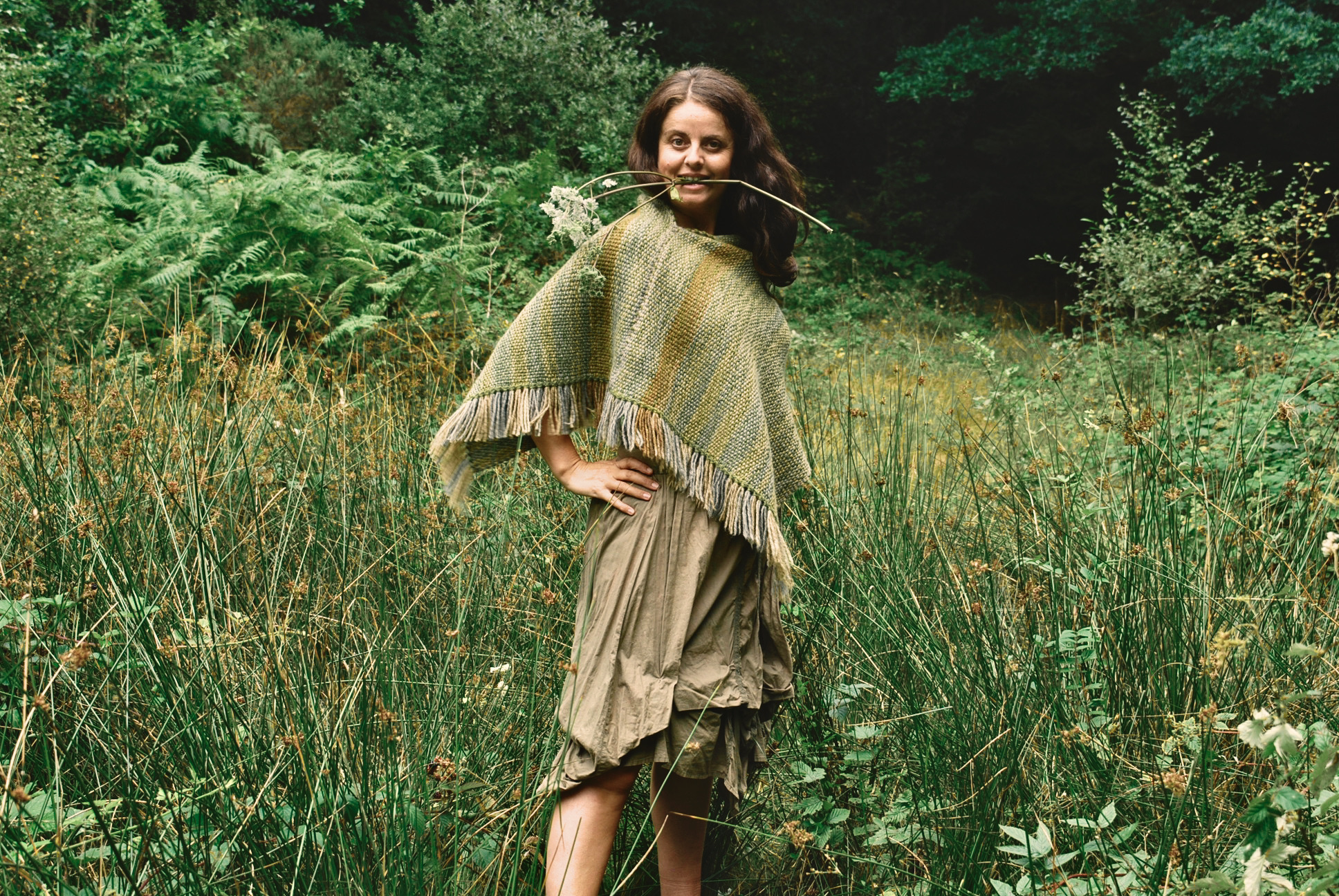
So this summer I wove various seasons depending on the weather and my mood. I anticipated launching the late summer blues first, but they are all wintry items, and it was simply too hot (and the sand dunes the wrong sort of burnt colour) to do the photoshoots, let alone list them for sale. So I made ponchos quick before the summer ended, as the lighter ones of these are good for summer’s eves.
Now it’s rainy and the overcast light is much better for portrait photography, and for wintry clothes and colours. But I’m incredibly stressed by housing, vehicles, finances and bureaucracy, and struggling to sleep, so hardly feeling strong or striking enough to pose in front of the camera and PROMOTE my wares with cool, confident shoulders and a relaxed gaze.
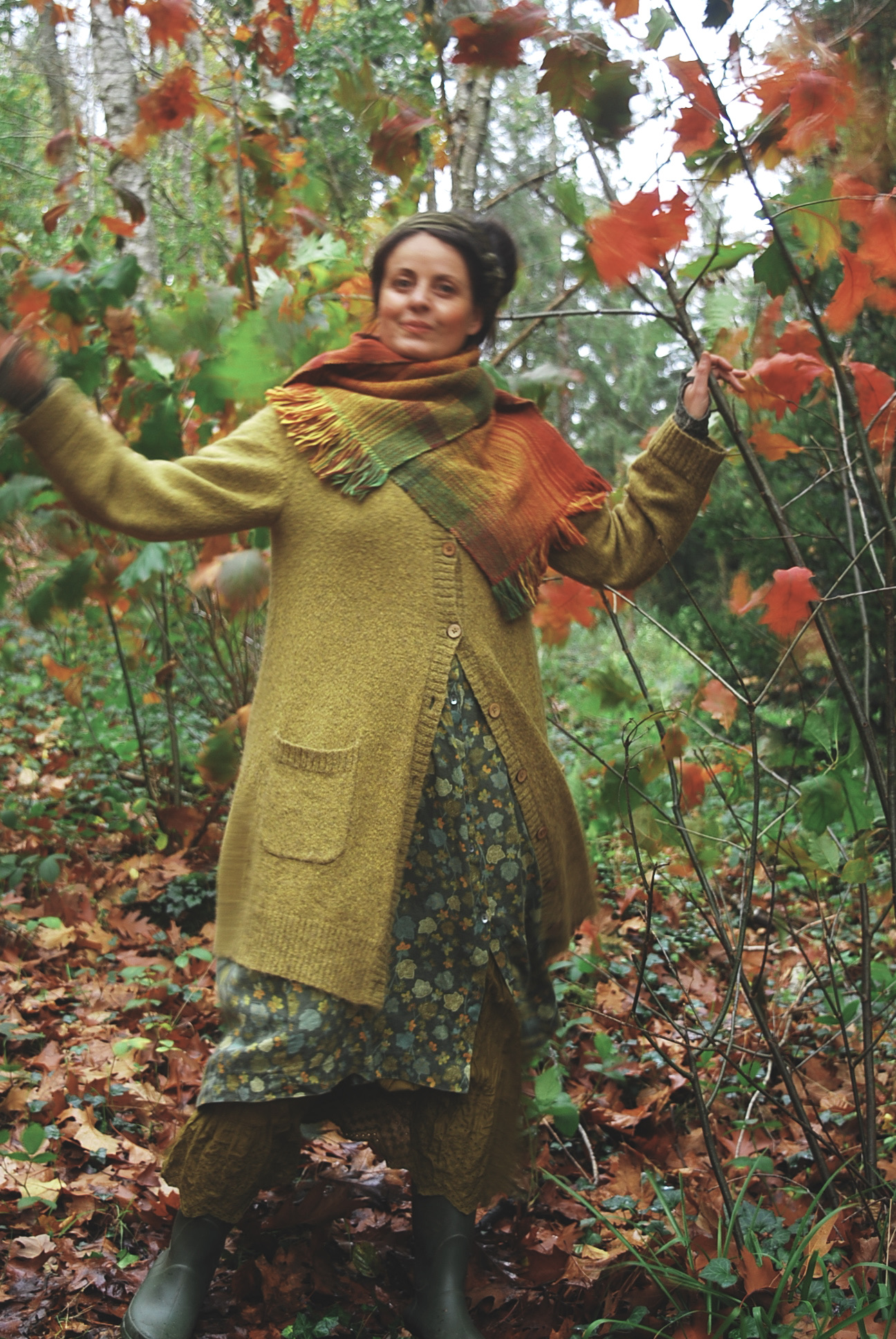
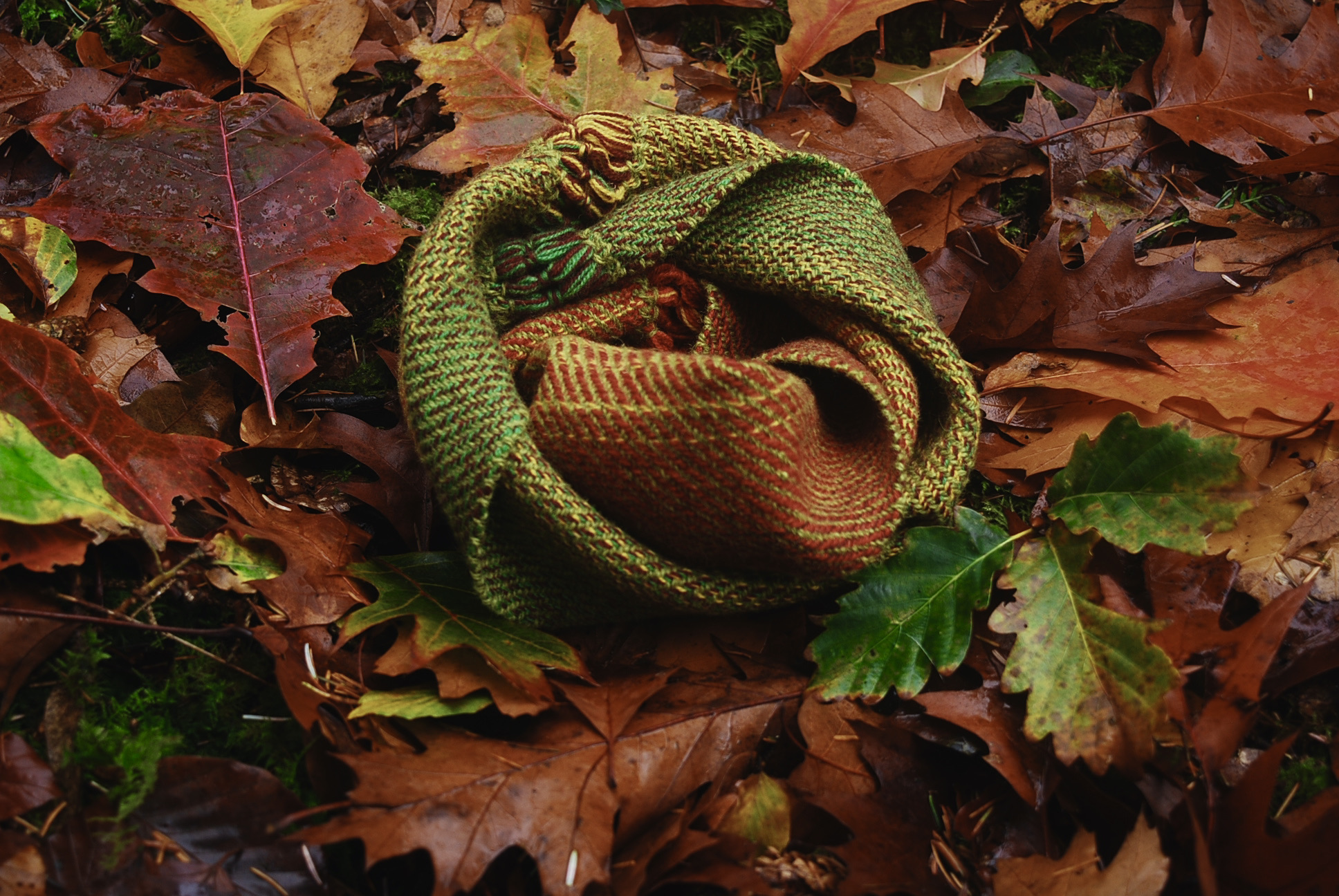
I’ve got some bright autumn colours to launch, but I may not be the right model for those even on a good day. And this colourway is particularly tricky, technically but also logistically: I want to be weaving them from immersion in those colours, again in real time, and photographing and listing them all within the same few weeks in which the forests are aglow. Actually I’m ahead of myself on making these ones, and am just waiting for the right photographic conditions. Here in the Celtic Crescent the oak and beech are beginning to turn first, but it’s still mostly green everywhere.
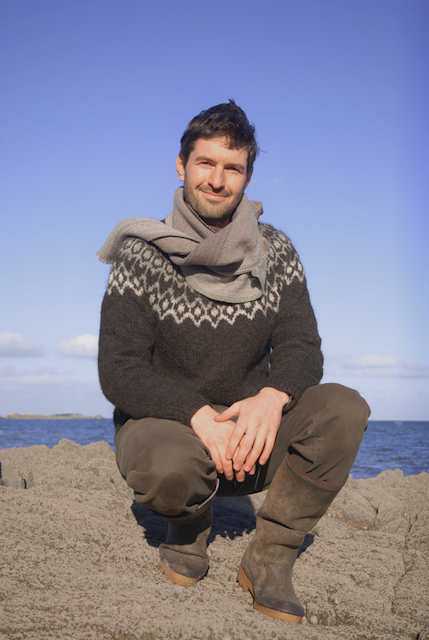
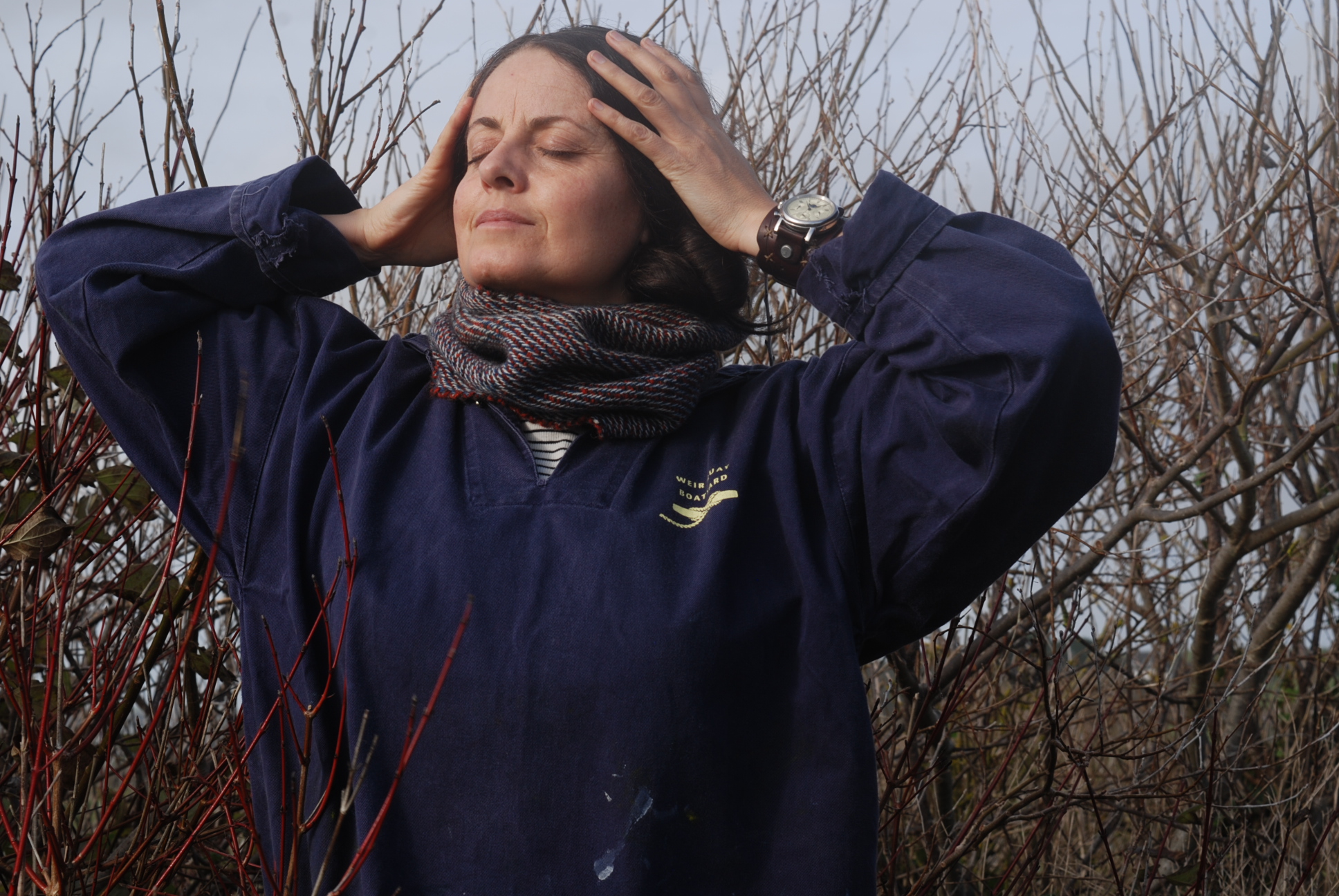
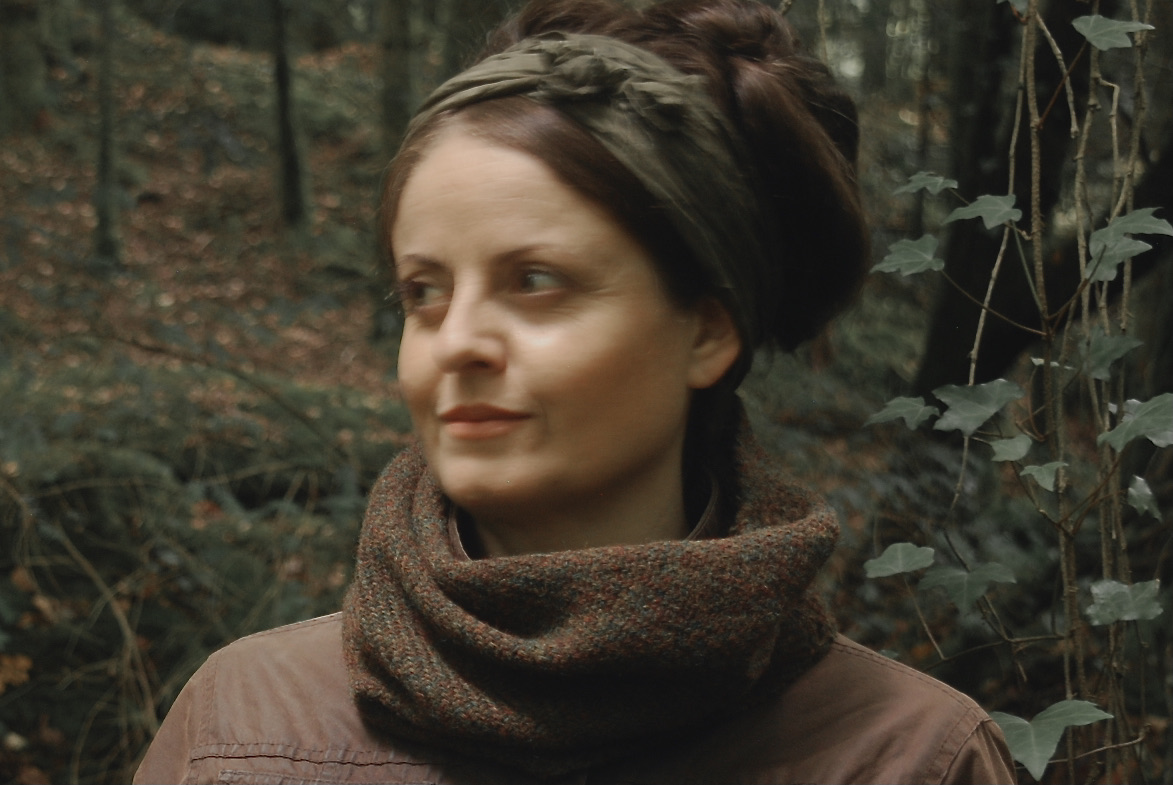
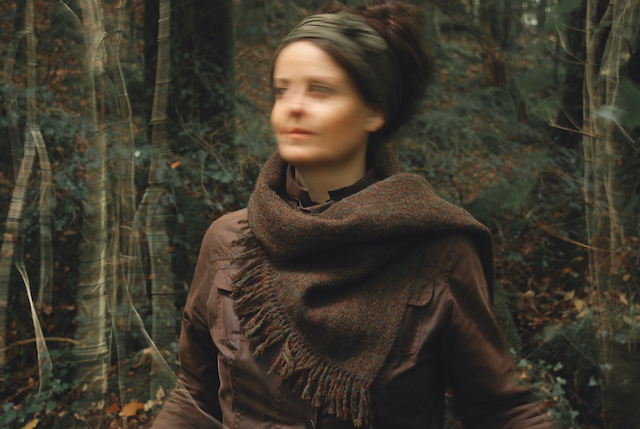
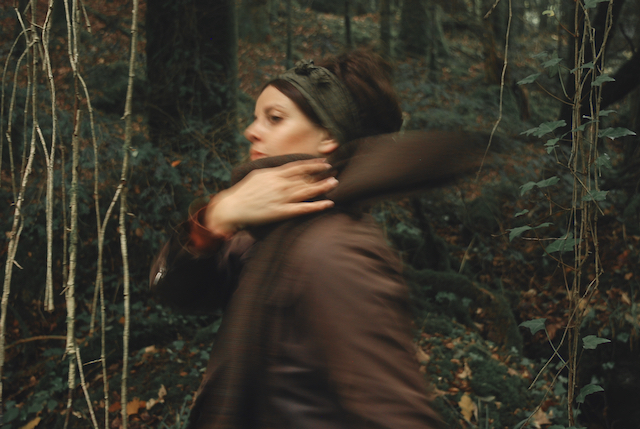
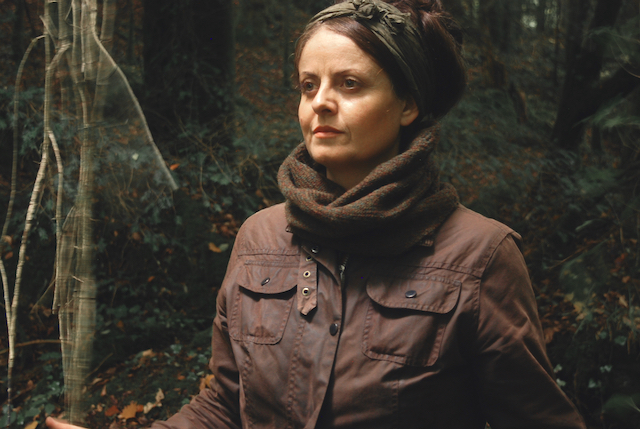
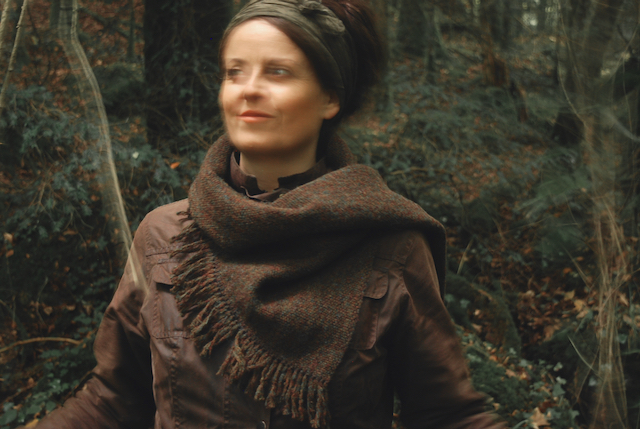
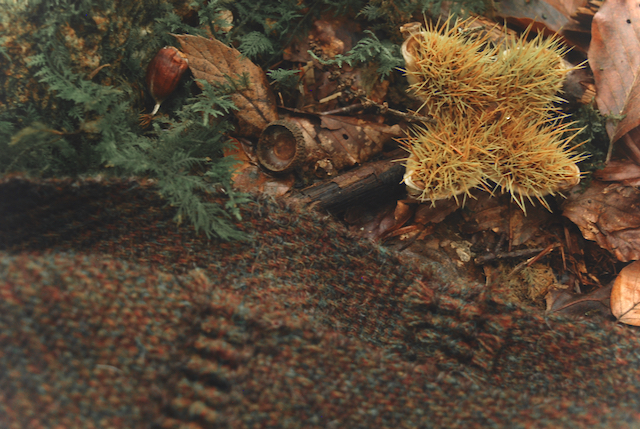
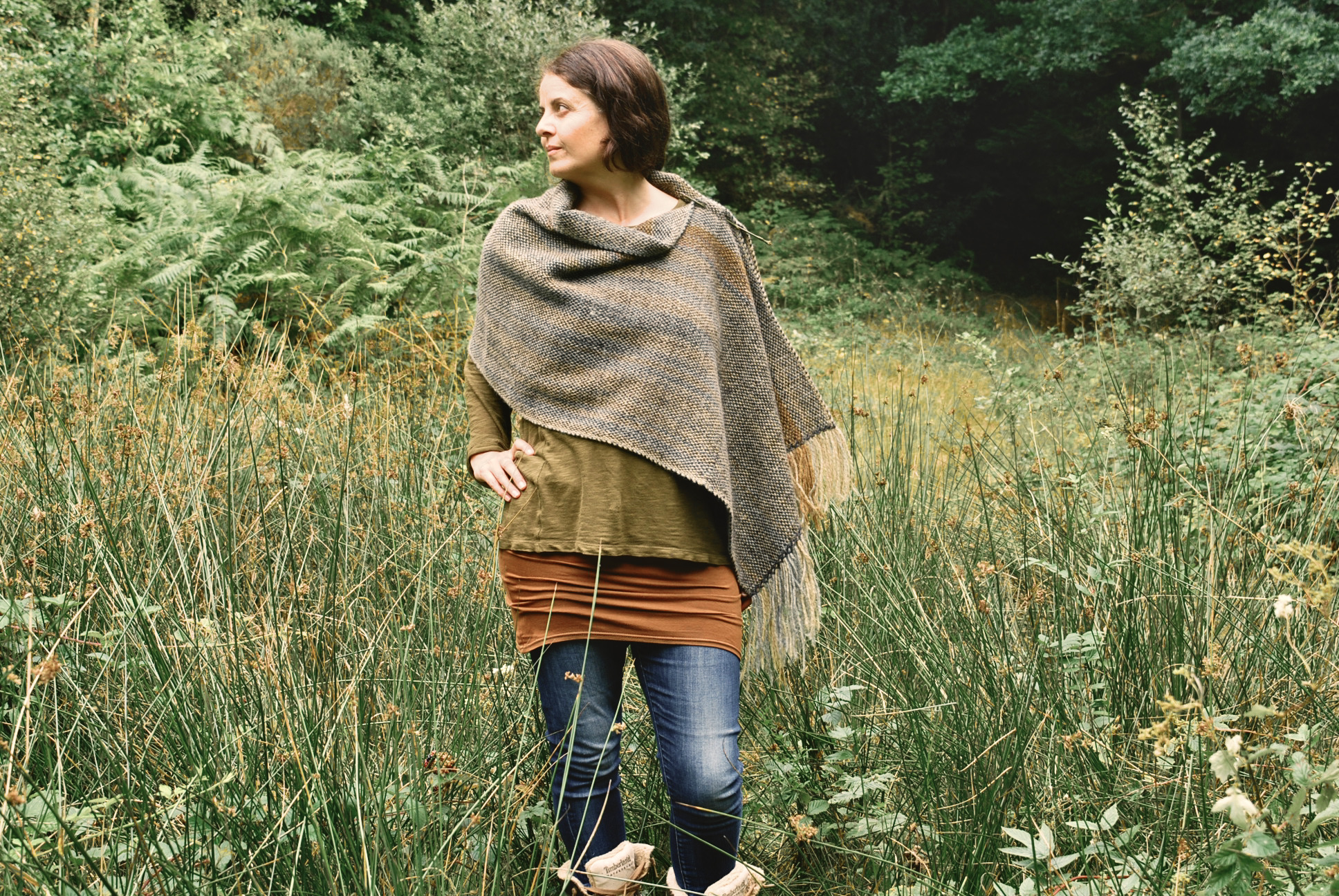
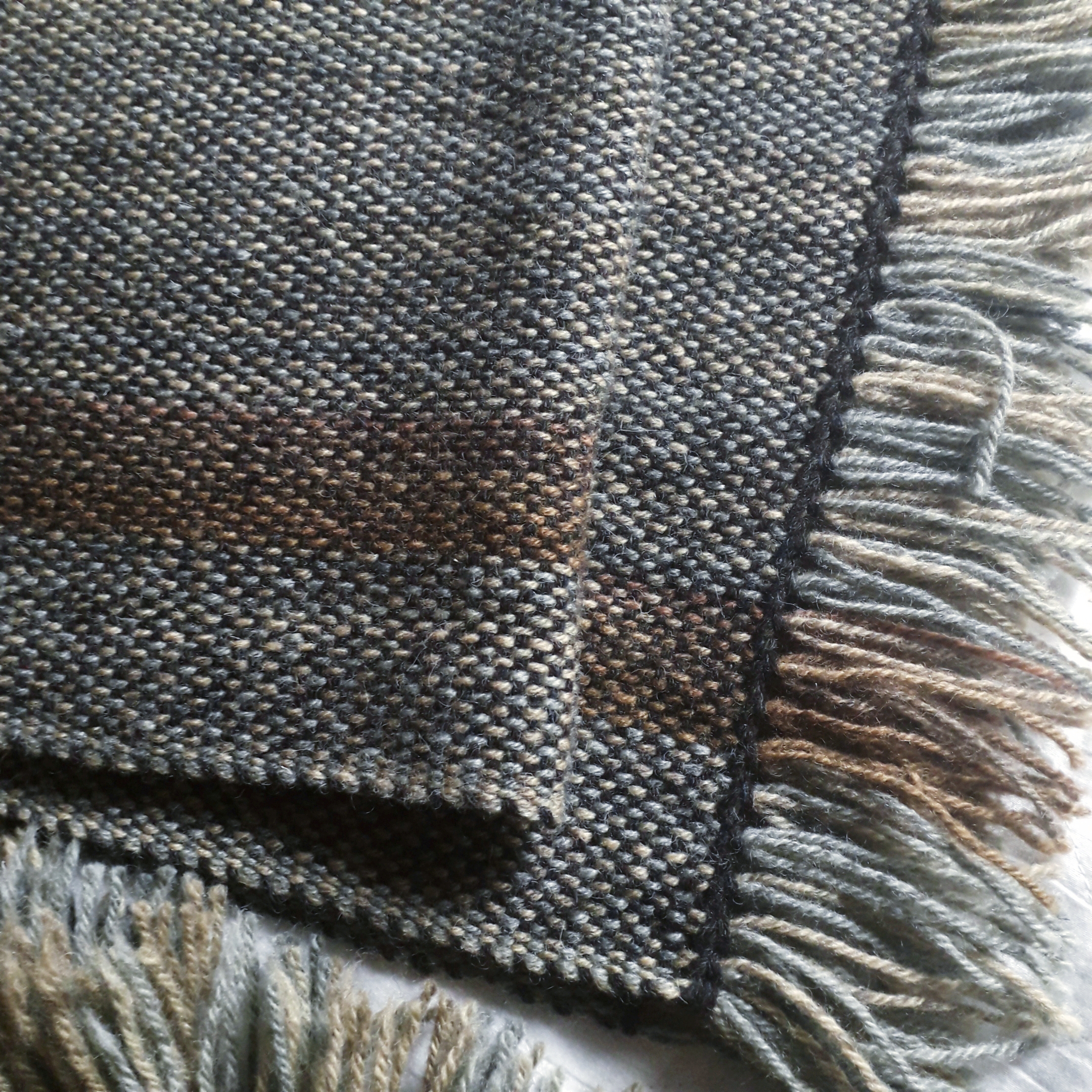
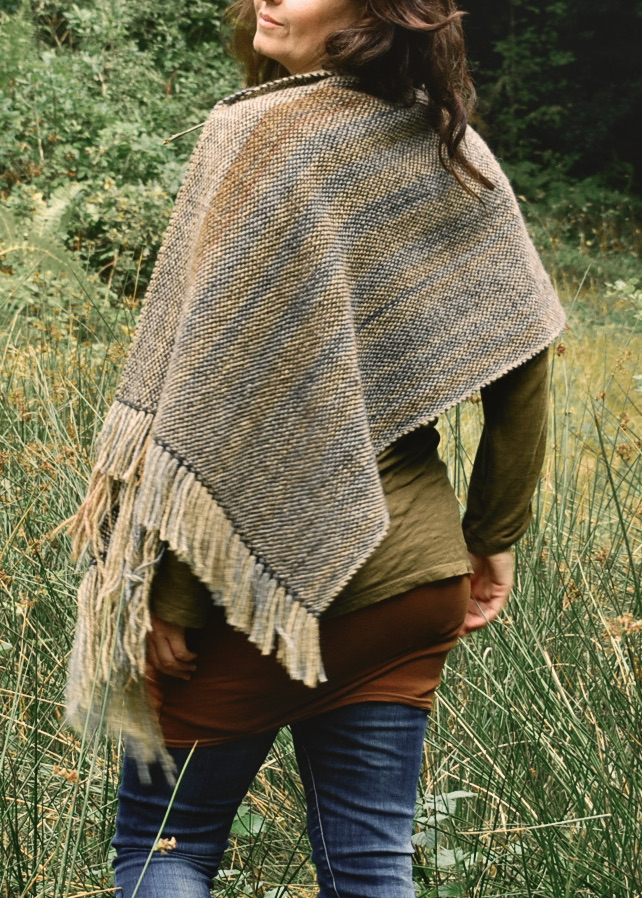
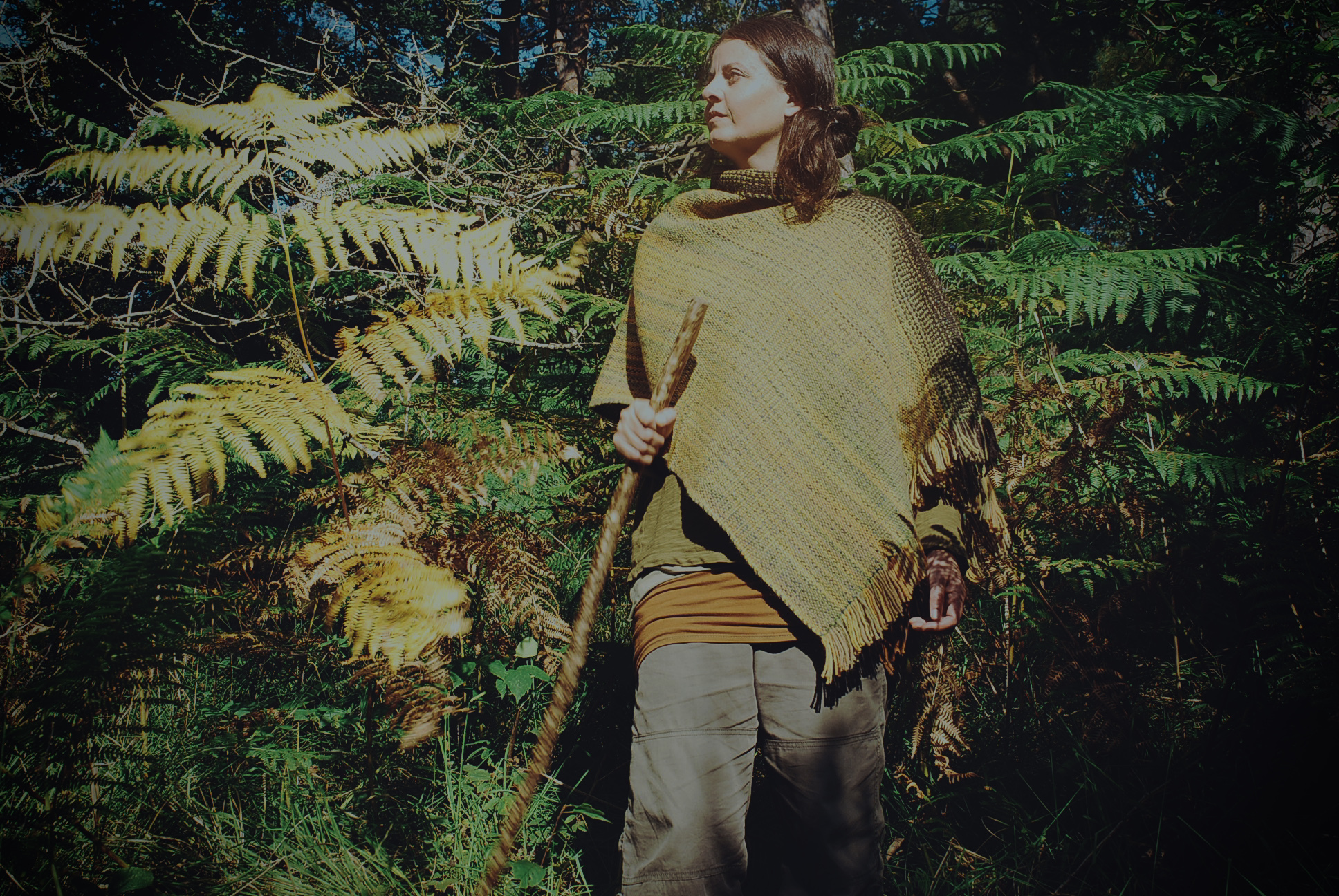
Meantime, a more sombre photoshoot for a batch I was going to launch a little later in the winter: ‘Forest Floor’. Because I’m in the mood for sombre, and though I didn’t have the time or chutzpah to whip up the mushroom-hunting, fairytale, steampunk image I had in mind, with the help of my second-hand Barbour today I think I managed to do Country worryingly well. (I am rural, after all, and – confession – obviously wear muddy wellies far more often than dangly tassles, despite the romantic photography.)
The forest floor here in Huelgoat’s Arthurian forest in Finistère is looking abundantly gorgeous, and the monument in the woods to those locals who resisted Nazi occupation fills me with admiration gratitude for partisans, resistors and romantics everywhere. Here’s to you.
Two ‘Forest Floor’ cowls and one scarf design are for sale in my Etsy shop as of today. Sound, sensible and rustic.
Extreme electrosensitivity makes most jobs impossible and has led me on a poetic, eventful, exhausting, seven year journey to find a home, researching and developing sustainable livelihood all the way. Now at last I’ve found somewhere I could live, work and be well. But it’s a daunting undertaking…
The Business
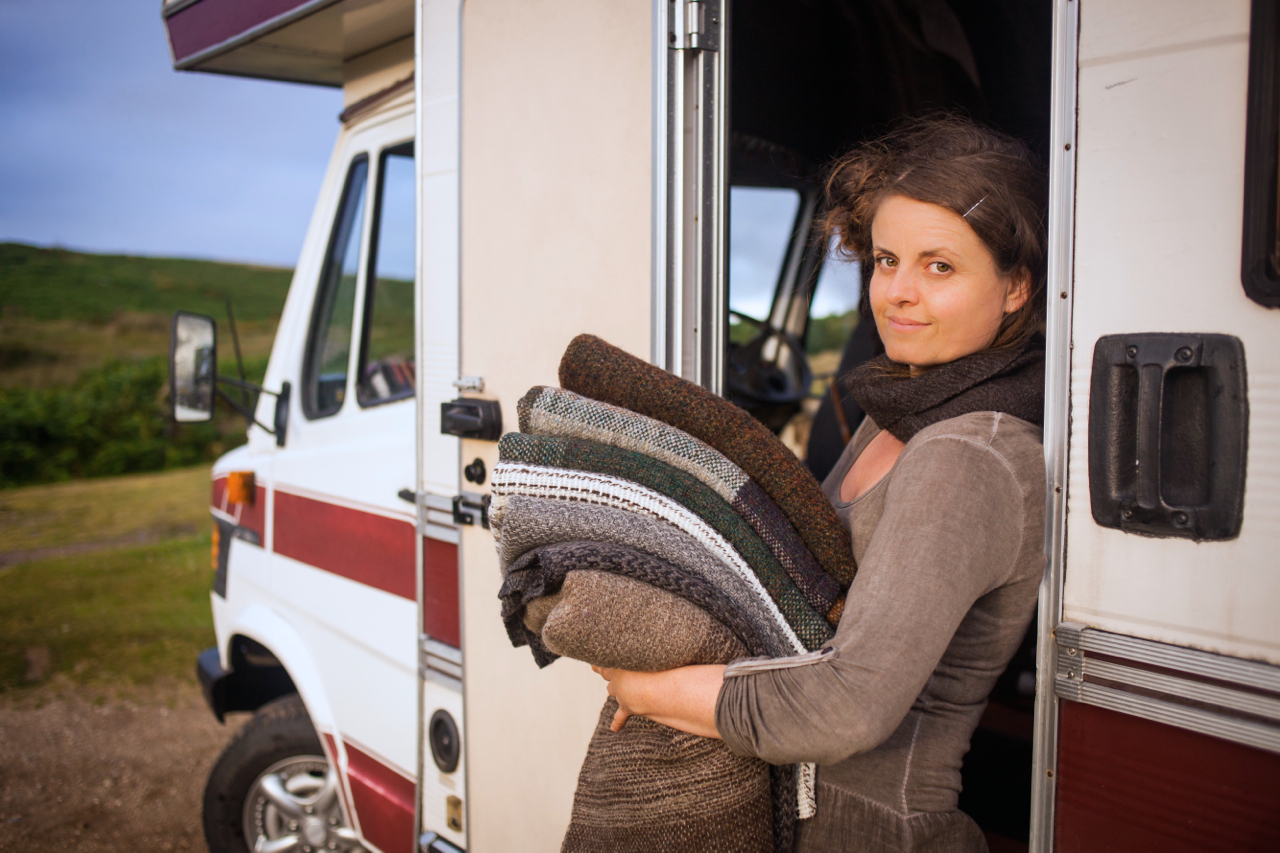
I have woven £12,000 worth of stock these last two seasons. This is not big news, the big news comes at the end of this piece. But it is quite good going for a van-based craft business in a period of even-more-upheaval-than-usual. My new wares are in my shop now, and there will be much more to come through autumn and winter – ponchos and shawls followed by the more strictly wintry warms, the snugs and scarves.
Now, unfortunately that does not mean that I could, with my current super-slow methods and tiny, itinerant workshop, weave £24,000 worth of stock in a year, because in these two seasons I have done next to no blogging, marketing, listing or, dammit, selling, which together require at least a third of my effort over a year. And it also doesn’t mean that I will beat my all-time record to sell £12,000 worth of stock this year. Very unlikely. Especially when limited by small looms in a small space to winterwear in decreasingly cold winters.
But, given that I already had more than £12,000 worth of stock in my shop before this season’s weaving, let’s say that I did sell £12,000 worth this year. I pay Etsy and social media platforms about 20% of that total for listing and advertising; a further 30% of it is accounted for by materials and expenses. So that leaves me with about half of the £12,000 as wages from which to pay all workshop overheads (‘use of home as office’) and living costs – £500 pcm.
The Leap
Seven years ago on the brink of launching, I reckoned that myself and large hound could live on the road in an elderly van and fund business overheads on £600 a month as long as nothing major went wrong.
A photoshoot by alicecarfraemultimedia.com for my first big break: an Etsy feature that brought thousands to my shop in 2016
I don’t regret that leap for one minute (and actually I had very little choice). But it was never going to be easy, and of course major things have gone wrong all the bloody way. That and seasonality mean I’ve had to get help (for which I am so very grateful) just to scrape by in these costly big economies of ours.
Naturally I question every five minutes whether local craft can ever be viable, whether my community needs what I produce, or whether there is something better I could or should be doing. And since the answer to all these questions is basically ‘no’ in our current society, I keep on keeping on despite the contradictions.
I like what I do: it’s relatively autonomous and low-impact, essentially peasant/resilient; it’s creative; it inspires others; it warms others; it’s politically significant, since in our economic context makership is an act of resistance. It’s as much challenge as I can cope with nowadays, and, lastly, I can’t think of a single, meaningful alternative that a landless electrohypersensitive could actually survive. (I can’t even go fruitpicking as long as every other picker carries their damn phone on them, or there’s a mobile phone mast in sight.)
The Grit
Electrohypersensitivity is classed as a disability in some European countries – in France that qualifies you for disability benefit. This makes me feel both relieved and angry: relieved because the predicament is understood in some places; angry because getting sick from diesel particulates does not make you ‘disabled’; getting sick from tobacco smoke does not make you ‘disabled’; getting cancer by glyphosate or asbestos does not make you ‘disabled’… getting sick from artificially high background radiation levels does not mean that I’m ‘disabled’, it means that there’s an environmental toxin being sold as a public good that’s become a public dependency. A post-industrial necessity that is as much a public harm. And the cruellest aspect is that the most sensitive among us (including wildlife) are the least likely to be able to communicate effectively to the wider community because our society’s prevailing means of communication is micro wave digitech, the very thing that causes our problem, so we are often cut off from the wider community, struggle overly with bureaucracy, etc. etc.
To illustrate how my susceptibility to environmental radiation affects my lifestyle and relationships:
I effectively have a ‘budget’ of about six hours’ a week of artificial electromagnetic field (EMF) exposure, after which my body becomes over-aroused beyond quick recovery (aka relaxation) so that I cease sleeping altogether and, chronically wiped and wired and stretched and anxious and over 40, become ill. (The number of six hours can be more or less depending on how high the levels of exposure are, e.g. from zero inside a granite building in a wooded valley with all lights, appliances switched off 95% of the time to minimise effects of poor earthing in old electrics, to moderate on an exposed hillside where there’s some mobile reception, through to extreme every time I connect my phone – often my only internet access, get a zap from someone else’s device, go into town, or pass a mast.) Just shopping, essential comms and keeping my work going uses up that budget. Going out at all always costs me a few days’ recovery, which I often can’t afford. To actually enjoy any time with friends, they have to be up for switching off and wildy walks in wooded valleys. Very little else.
And I fear how many others are suffering in far worse surroundings than me, and without knowing the cause to be able to make changes, and without means and connections to pursue the crazy workarounds that I pursue; how many will resort to zombifying sedatives, or beating their wives, or psychiatric wards, or drinking themselves to death, or just experience steadily worsening health; how many of us are expendable in the name of ‘progress’, when ‘progress’ means perpetuating and protecting wealth concentration among a few in a hyper-tech ‘arms race’ to the bottom; how many sick people a straining welfare system and diminishing workforce can carry; how far behind the times the medical profession is in their knowledge of this; and how many will have to get sick before national norms for safe levels are reduced and adhered to. (As often, some European countries are ahead on this, thank goodness, namely Austria, Germany and Italy, last time I looked at the stats.)
The Nacre
So, as ever in so many ways, I’m one of the lucky ones. And against the backdrop of housing crisis, gig economy, digital nomadry and pandemic, with help and your moral support and custom, I have woven a beautiful cloth of the silver lining. I have spent much of the last five years combing the furthest reaches of these isles and Brittany for some affordable little nook I can settle relatively autonomously to quietly grow my own food in as much voluntary simplicity as anyone not-quite-hermit can feasibly achieve in this wretched ‘civilised’ world. The quest has been necessary, and it’s been romantic, in between the struggle and the mundane. It’s been dangerous and empowering, as all quests should be, but also confidence-shaking and debilitating.
I have expended immense amounts of energy – energy that I should have been using to change the world, and to work, grow food, exercise and otherwise look after myself and my community – searching for and researching possible housing solutions in four countries (One Planet Development schemes, co-housing, eco-villaging, shared equity, building plots, planning laws, building materials, ruins, barges, squats, husbands), all of which I ultimately found I simply could not achieve as a feral, lone-female, anarchistic electrohypersensitive on a tiny income.
The Pearl
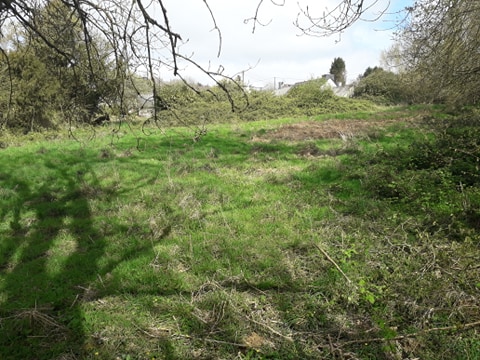
At last I’ve found a small, very roughly habitable, rubblestone cottage buried in a quarter acre of eight foot high brambles, with another half acre of tree-fringed glade, in a pocket of properly rural countryside, with no mobile phone coverage and friendly neighbours, that will be mine for a very modest £55,000. It has a new roof, a new woodburner, free water, and a very basic bathroom and kitchen. Crucially, there’s space for a proper workshop with larger looms, and for a dye garden, and possibly even a couple of fleece animals.
This sleeping beauty is too buried beneath the brambles for a photograph (which would reveal a not-particularly-beautiful, cement-rendered façade)
As well as the normal surveying process, I’ve had both a builder’s and an architect’s advice on it (friends in the right places, thank you Chris and Chris). It is structurally sound enough but there is work to be done to deal with damp and lack of use; it has old, skeletal electrics, no boiler, and an old, legally obsolete, septic tank.
But I have tools, skills, books, contacts and courage; I know how to rough it, wing it, mend it and make do, and anyway ‘modernising’ isn’t really in my vocabulary; my way is more romantic – grow wax myrtle and make my own candles; rig up a bicycle to power my laptop and eventually go without; shun even photovoltaics – if I can.
It’s not perfect. Drawbacks include a not-very-walkable route/distance to the nearest market town but advantages include land that gently slopes to the south west; the house being at the top of the site, not overlooked; the property having its own spring as well as the shared village one piped into the house. The house itself has some nice features among the less nice ones, and ticks the essential boxes (especially no mobile coverage) where in five years of searching nothing else has.
The Next Step
I’m researching forest gardening, regenerative micro-agriculture and permaculture. Fleece animals and dyestuffs from my own dye garden would build on my existing livelihood, as well as developing food production in case of community need. In fertile lands like these, and in the face of climate catastrophe, we need all the primary producers we can get in our precariously obese ‘service’ economies. Keeping earthskills alive is a matter of survival of the species.
No falling in love until it’s signed for, though it’s mine for the signing. I hope to move in this month or next, after putting down the deposit – the vendor knows I’m in sore need of a home before the nights get cold and dark.
The only problem is that I don’t have £55,000. Nor am I ‘mortgageable’, an advisor told me. I’m terrified, as ever, but I do have a plan.
The Plan
The bank has, irresponsibly, offered me a normal loan of up to £30,000. Repayments are scary as hell on a tiny, erratic, arts income. And in my analysis, since my bank calls itself a mutual but is not, this money-created-as-debt-at-interest-by-those-privileged-with-a-license is a locking mechanism for our society’s material ills. But so much less choice than we like to think: shoulder the poverty tax and compromise my principles in the short term the better to keep fighting in the long term.
Blessedly, there are some family funds I can draw on in addition.
I have things to sell: my retro Mercedes; a yurt (currently backup accommodation but soon unaffordable luxuries); lots of handwoven garments and many more to come; plus two very fine musical instruments (if I can content myself with lesser versions).
Once settled, I can be more productive: in the last seven nomadic years, there are seasons when I work a steady 45 hour week, months when I work a 50 or even 60 hour week, but times of upheaval in between where I barely work at all: beyond my control, exhausting and disruptive. (Life on the road is not a steady amble from one beautiful hilltop to another; there are vast swathes of inhospitable terrain – hostile territory, even – in between the very few remaining wildy refuges. Especially if you’re electrosensitive. Also, too often I have had to rely unsustainably on family and friends, who can barely accommodate my electrosensitivity themselves.)
There’s a gap in the local market for lawnmowing for secondhomeowners, which I could risk destroying my soul to do if bank loan repayments became really scary in my low season – a scythe would make it less environmentally loathsome and more of a campaign stunt. There’s also a gap in the local market for holiday cottage changeovers, ditto…
…and finally, you.
The Solution
Given the vagaries of a craftsperson’s income, to reduce the amount I have to borrow, I’m appealing to you. I’m launching a crowdfunder. This is hard to ask in our society (though in the Once and Future Village, friends, neighbours and family would all help each other build their homes if they could)…
Please would you help me buy a safe, stable, longterm home from which to further my (I hope you’ll agree) worthwhile activities?
The Crowdfunder
If so, if you’re reasonably comfortable/secure yourself, and not stretched too thin in over-giving, or stuck renting and resenting, or debt-stressed and floundering, as so many are… if so – and I can’t type a heartfelt enough ‘THANK YOU in advance’ – if so, please go to my crowdfunder page to make even the tiniest donation. I hope to raise £20,000 before November 30th, but sums will still be invaluable after that as I deal with poor drainage, decrepit septic tank, lack of boiler, rotten floorboards and stairs and so on. Your gift would make it work where without you it’s very, very touch and go. You can donate here: Rerooting: a home for Eloïse.
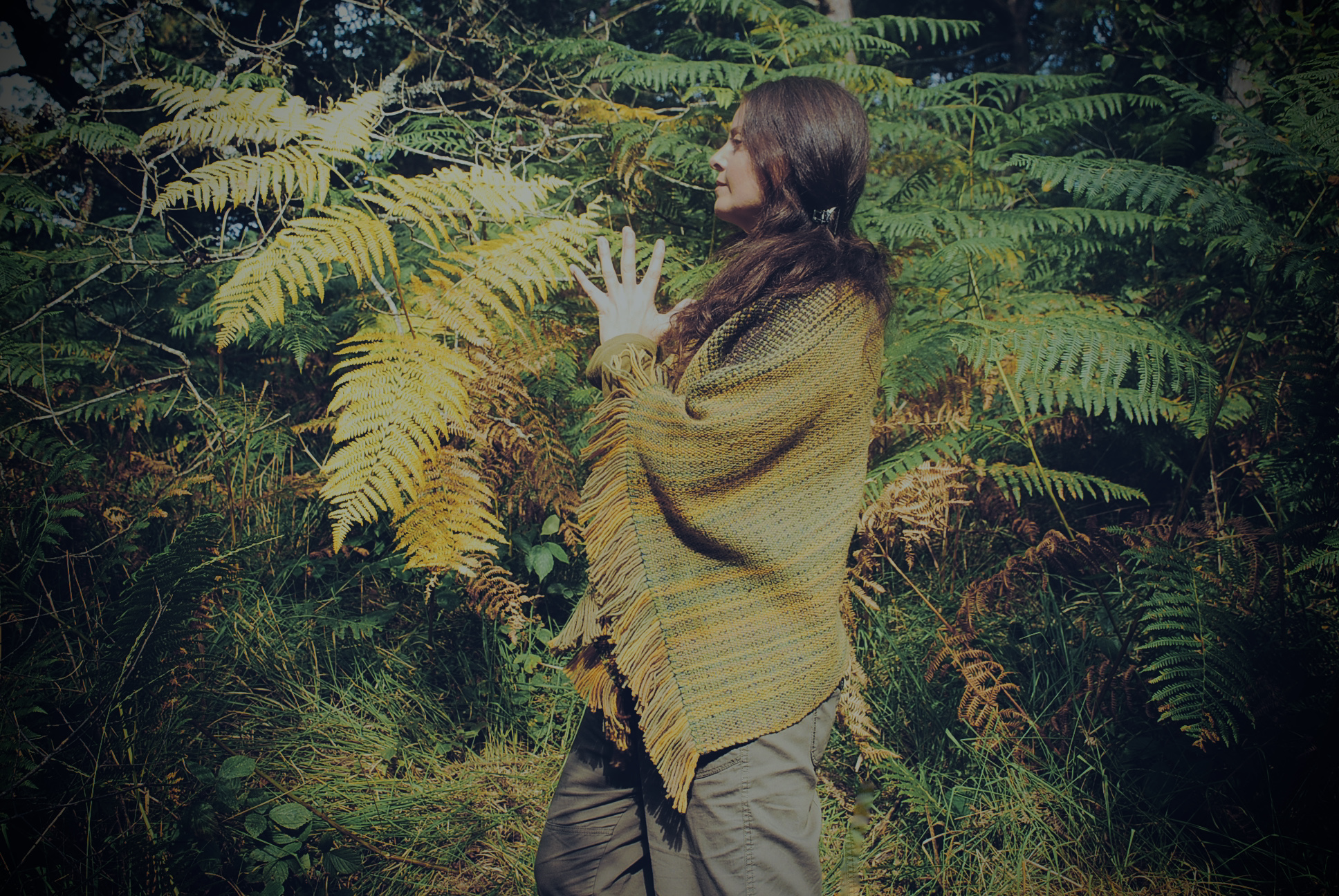
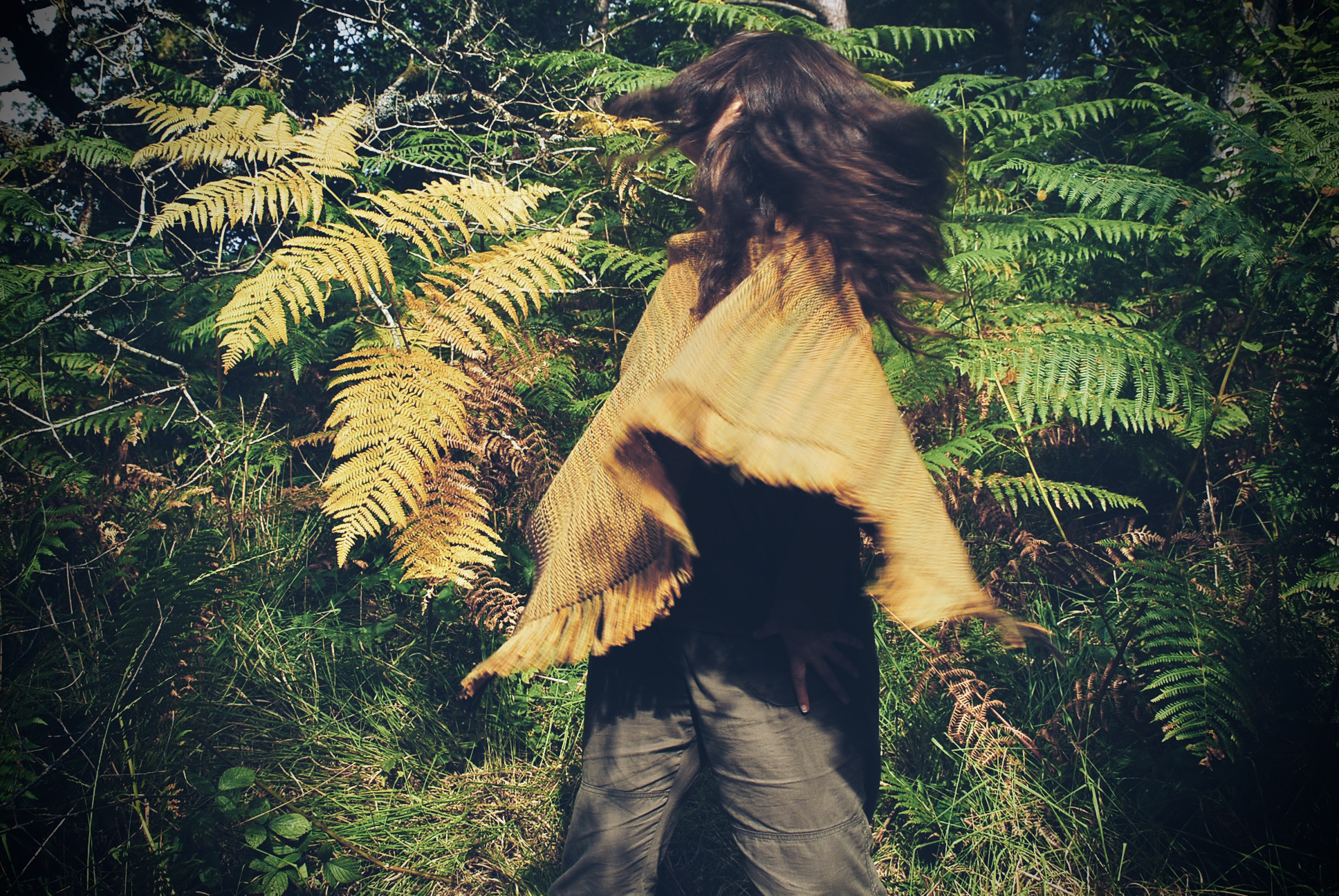
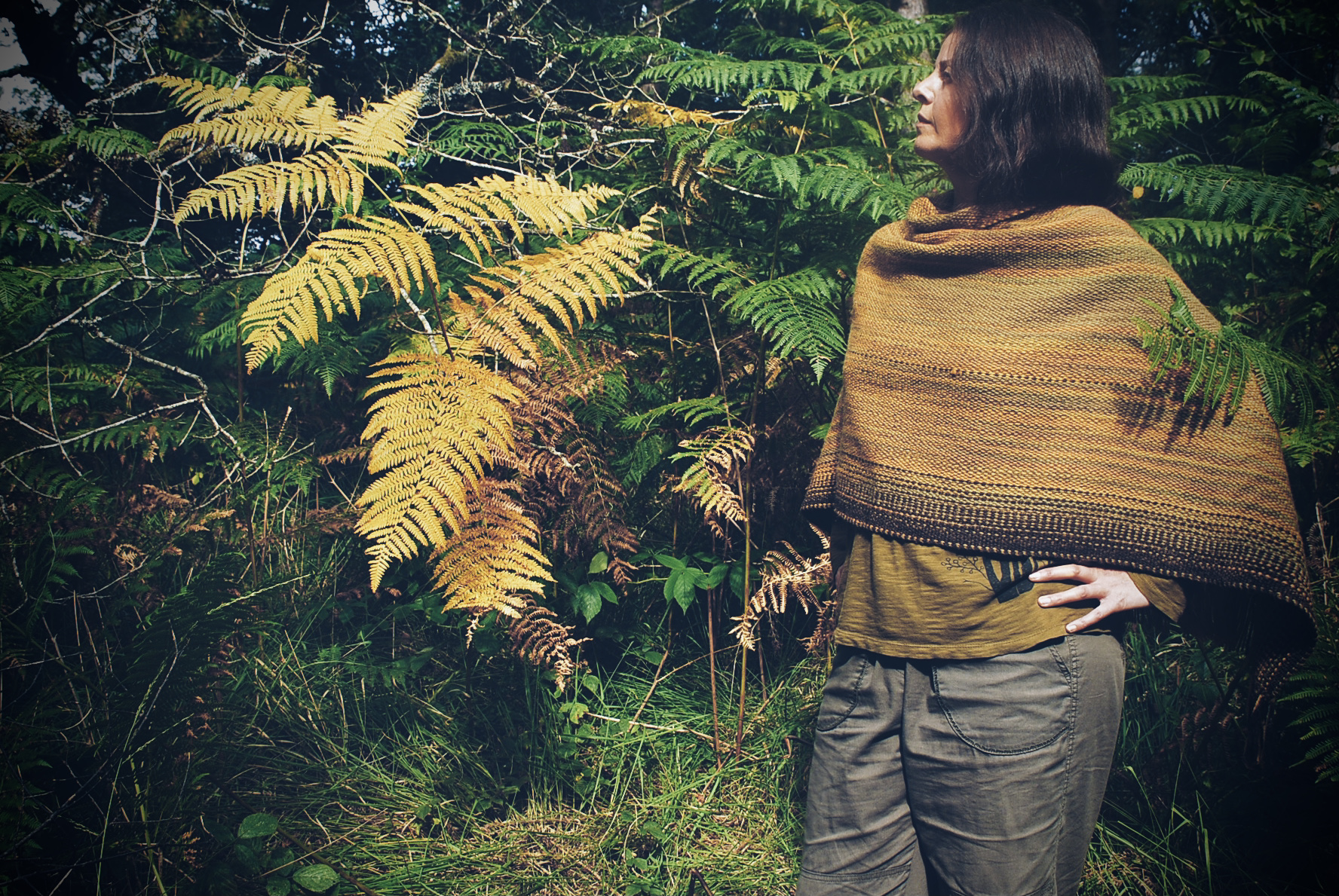
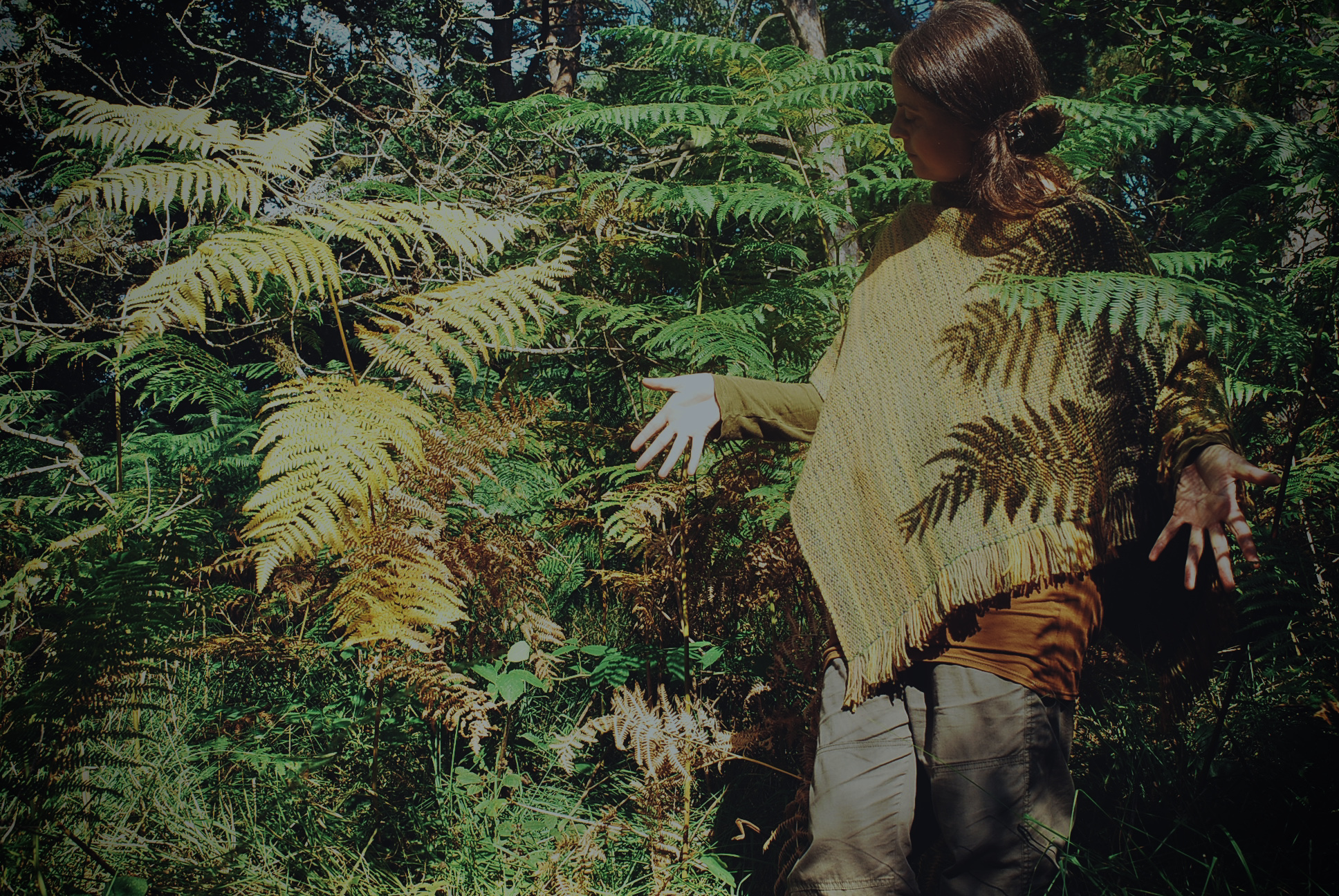
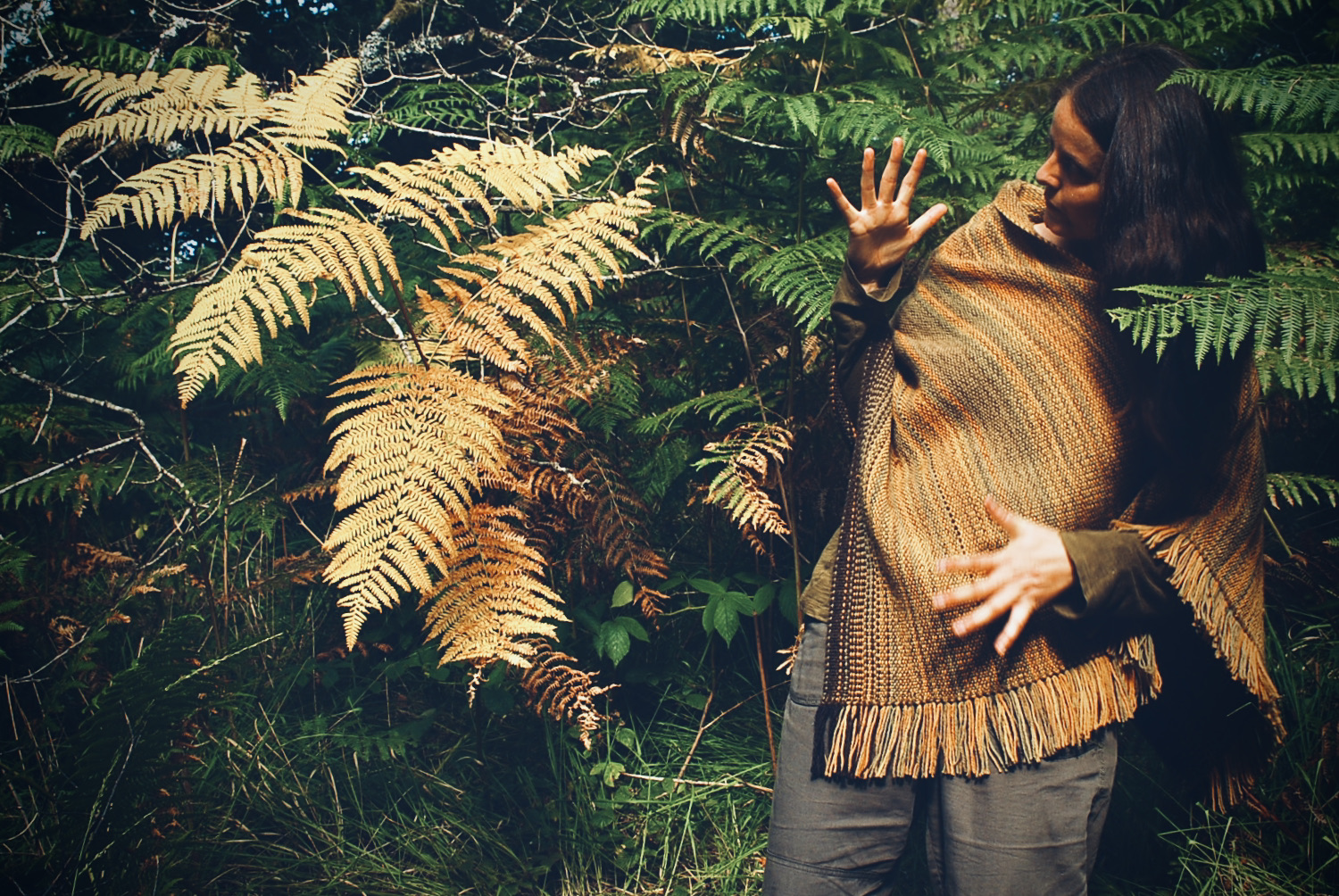
In the beautiful Arthurian forest of Huelgoat in Finistère, Brittany, I’ve woven thousands of pounds worth of stock, which I’m starting to list for sale this week.
Fields, gardens and moorland everywhere get overblown at this time of year, most of them yellowed and browned by our scorching heatwaves this year. There’ve been unprecedented fires, and even the verdant forest has begun to go a little gold now, ahead of the autumn fanfare.
As the South comes up to meet us here in the relative North, may we be worried for the climate, but also excited for the cultural inspiration. May we strive to resist the worst (the droughts, the floods), but be sure to welcome the best: the people, their artefacts, their traditions, their skills and their resilient ways…
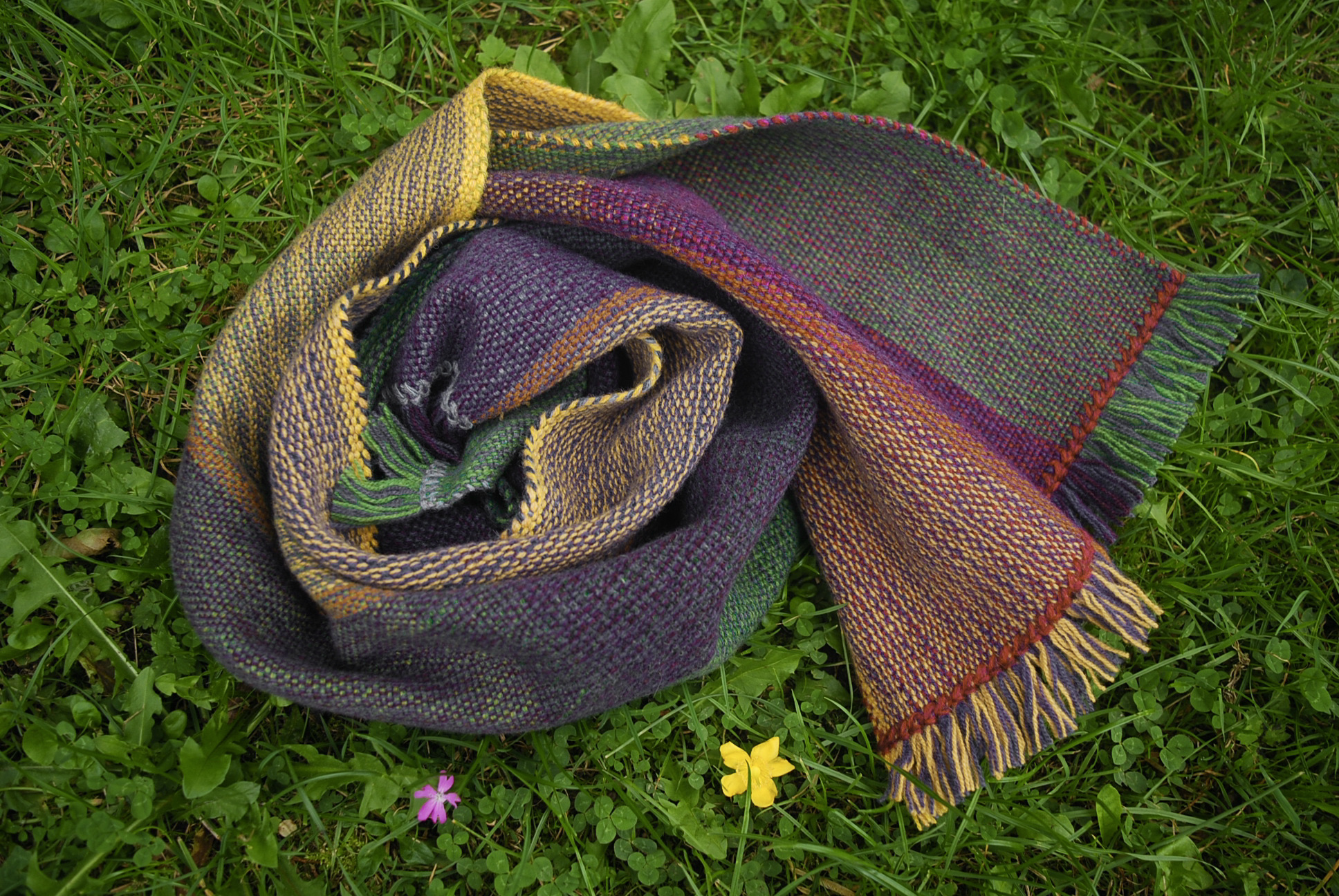
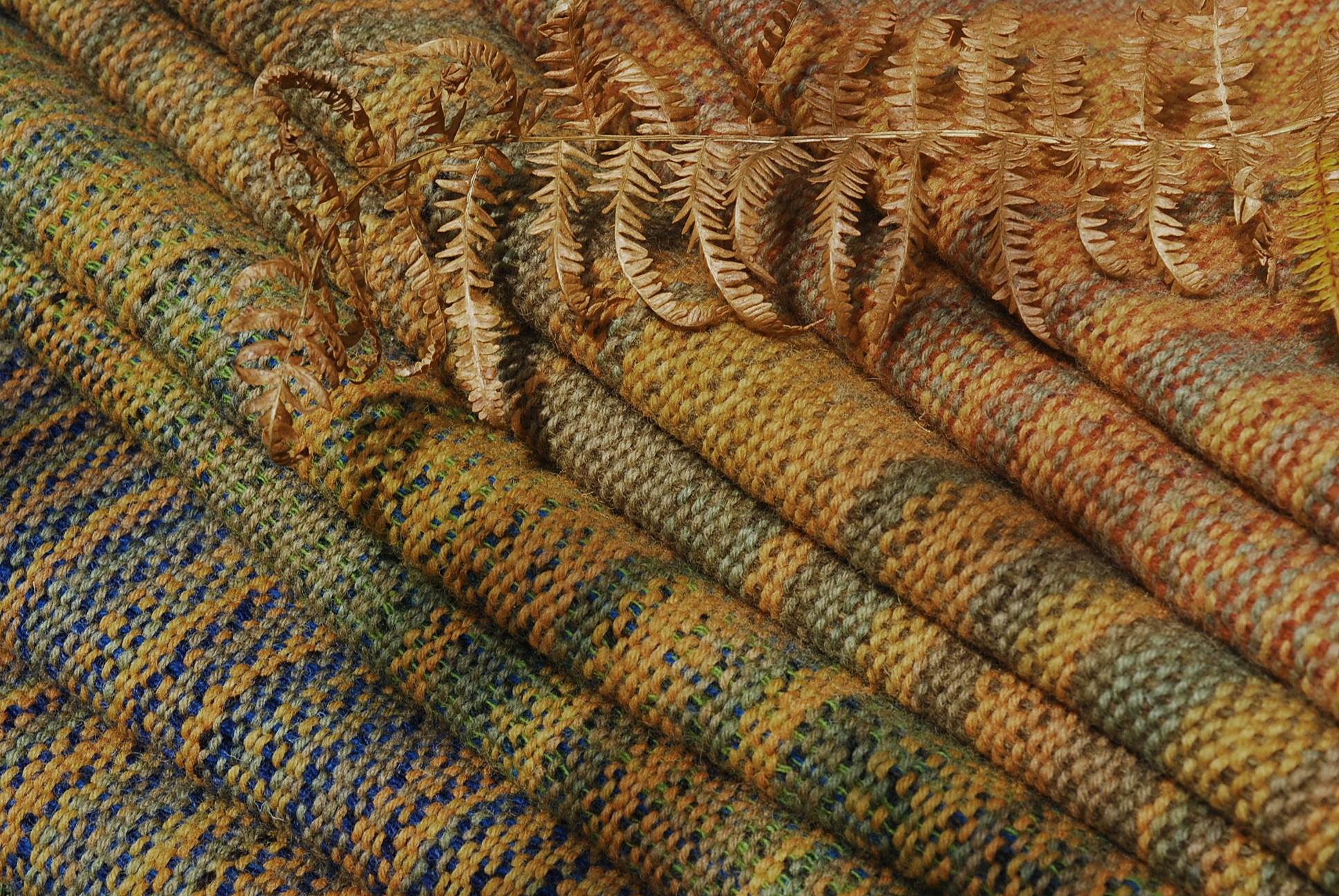
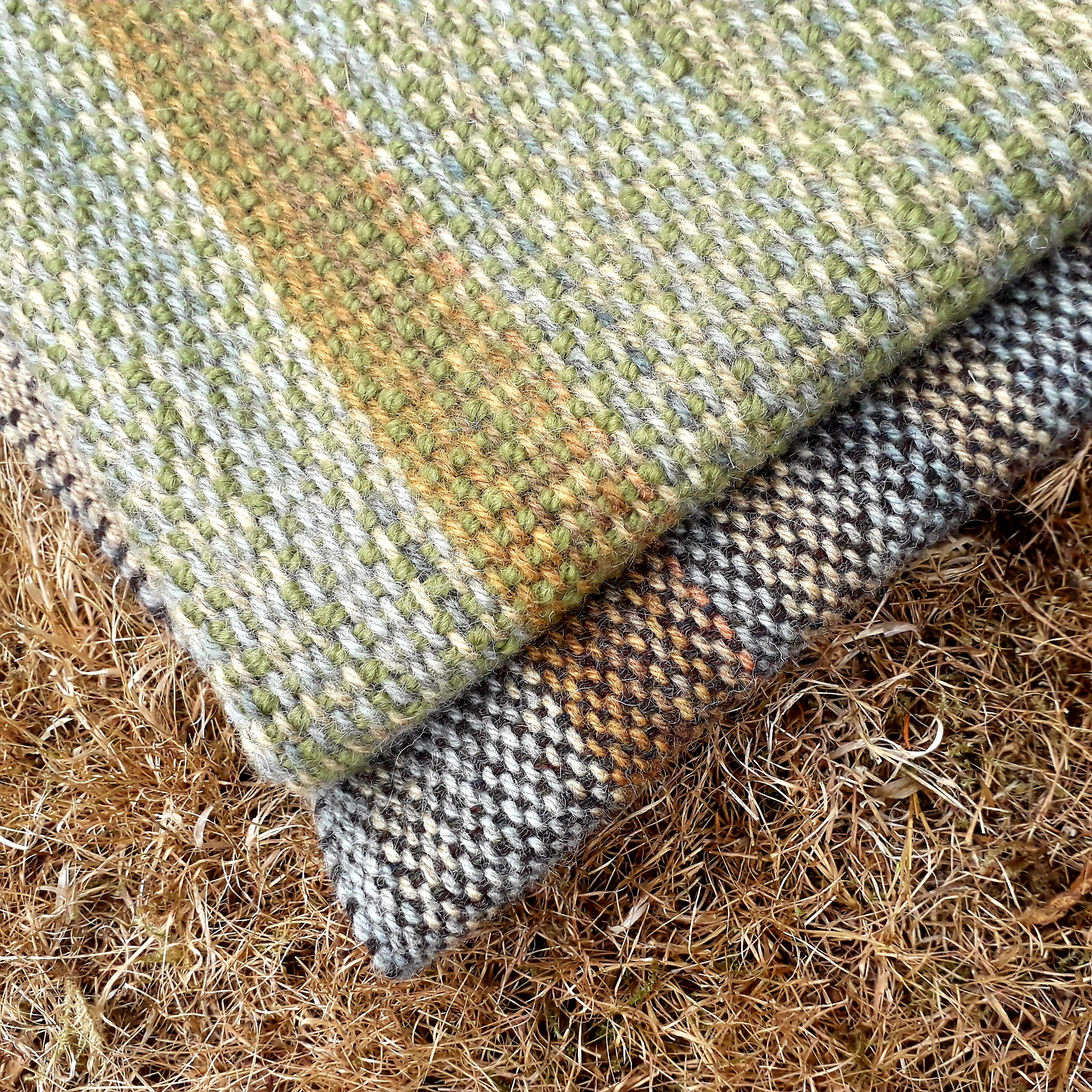
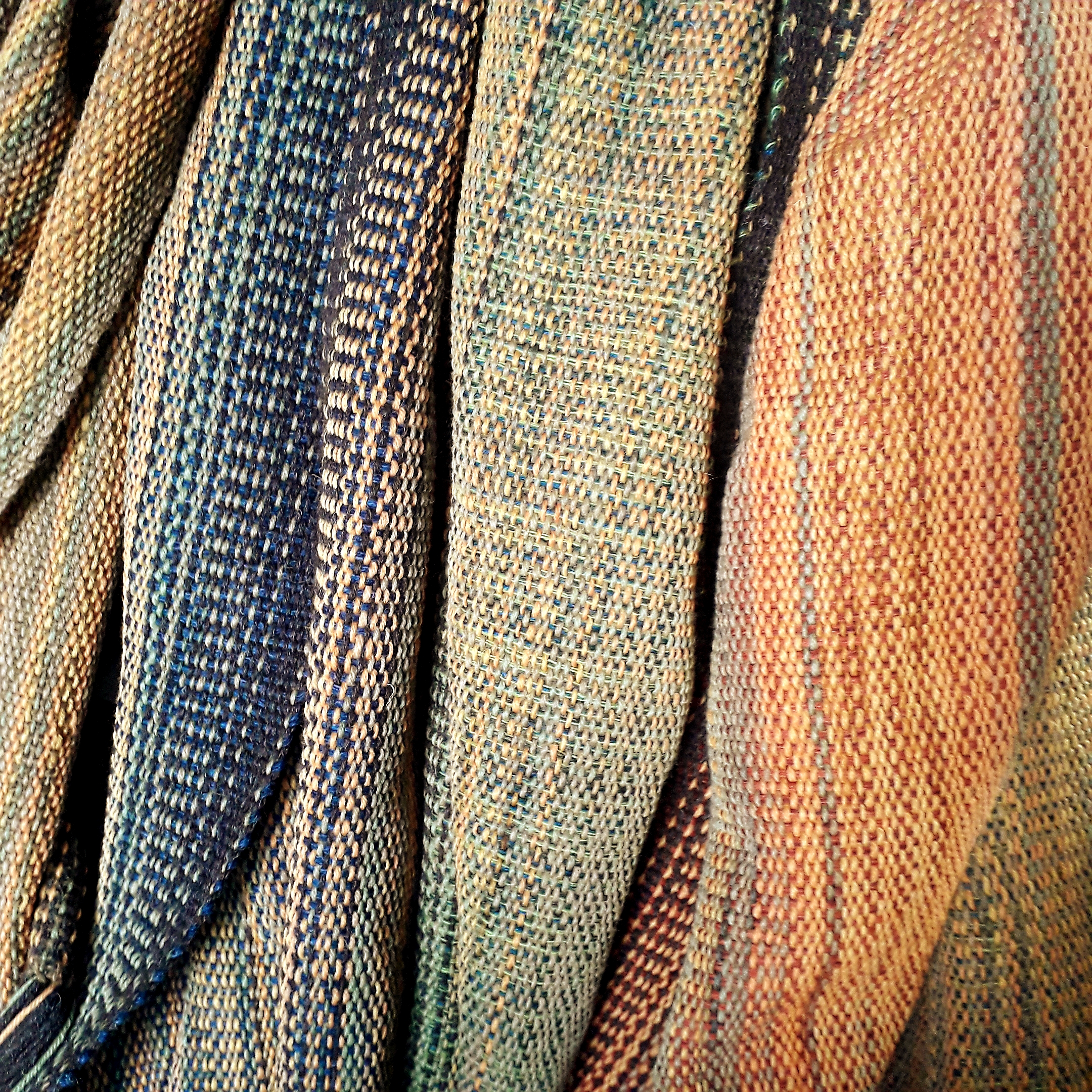
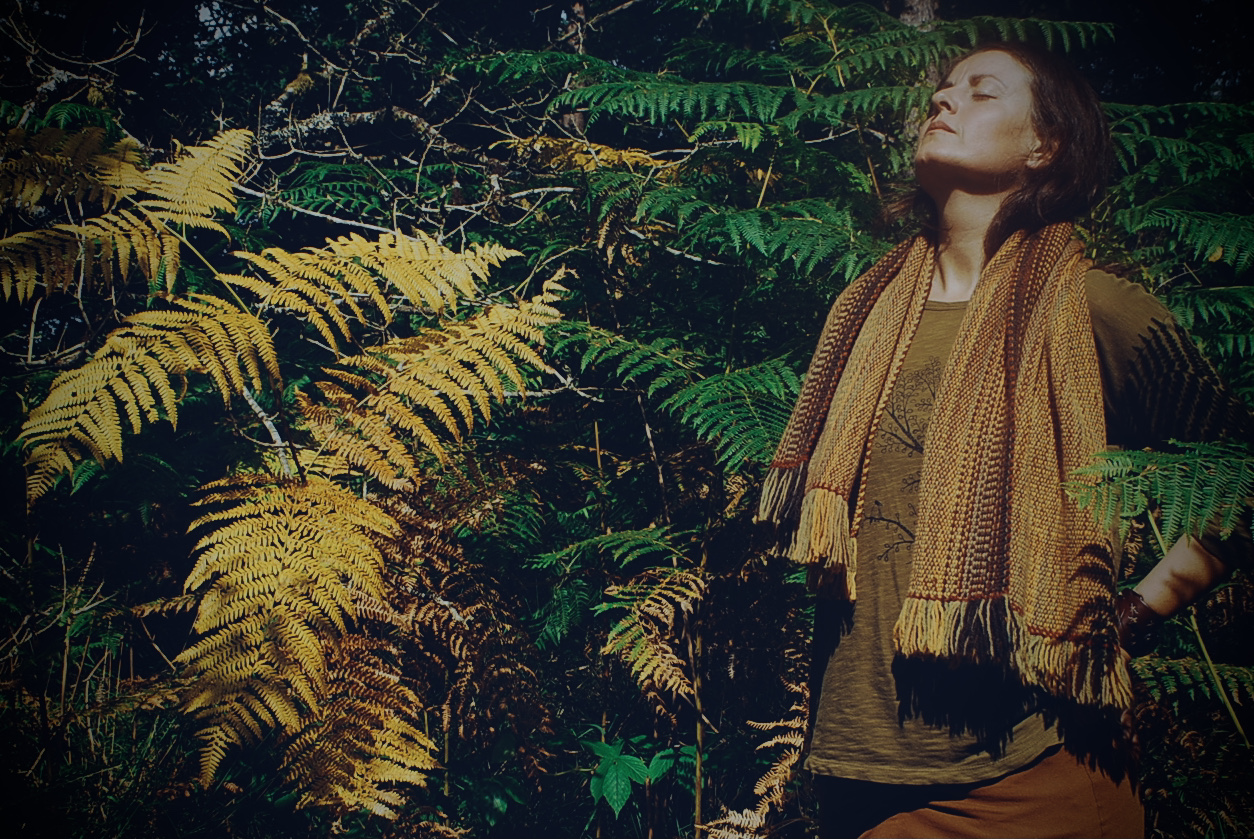
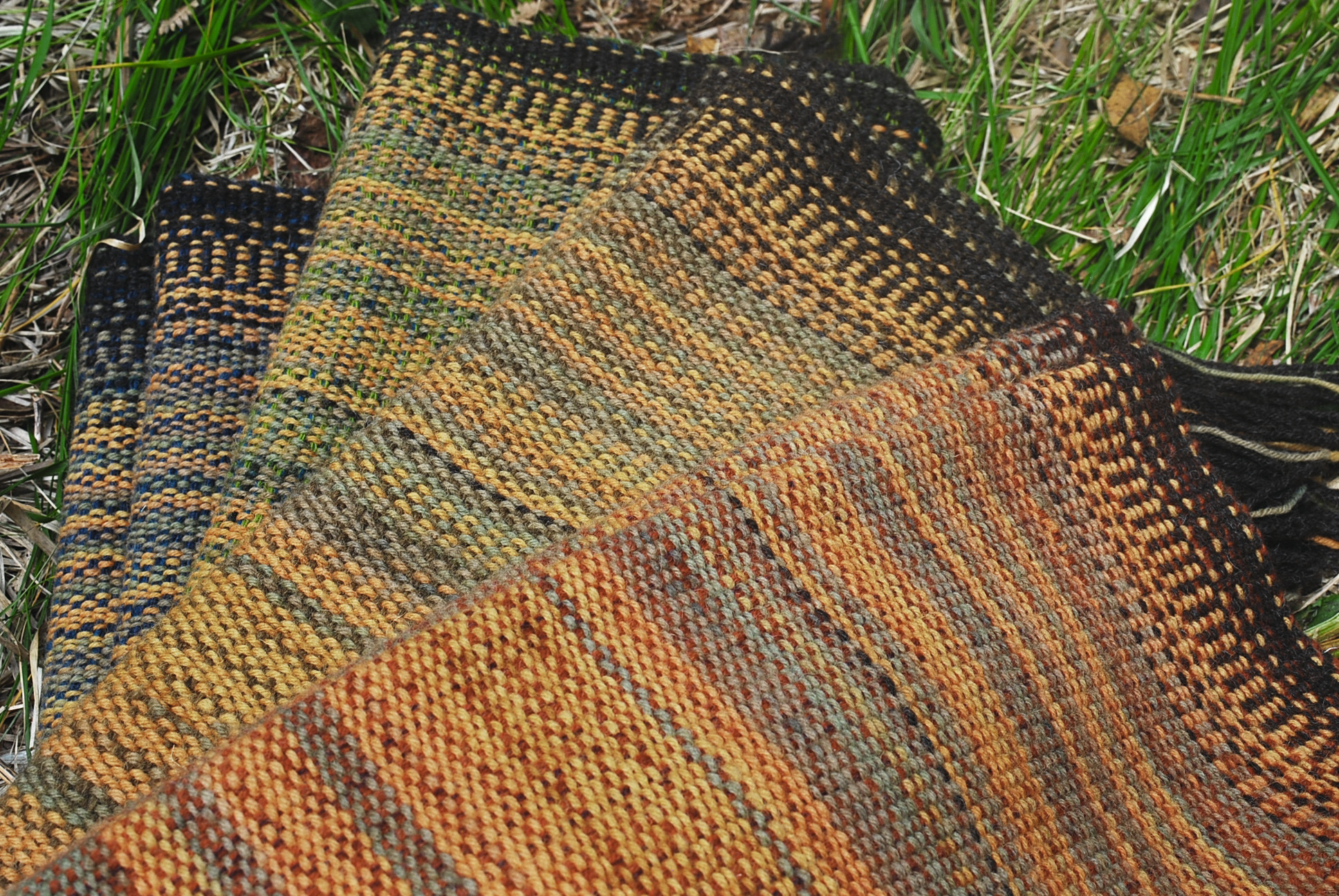
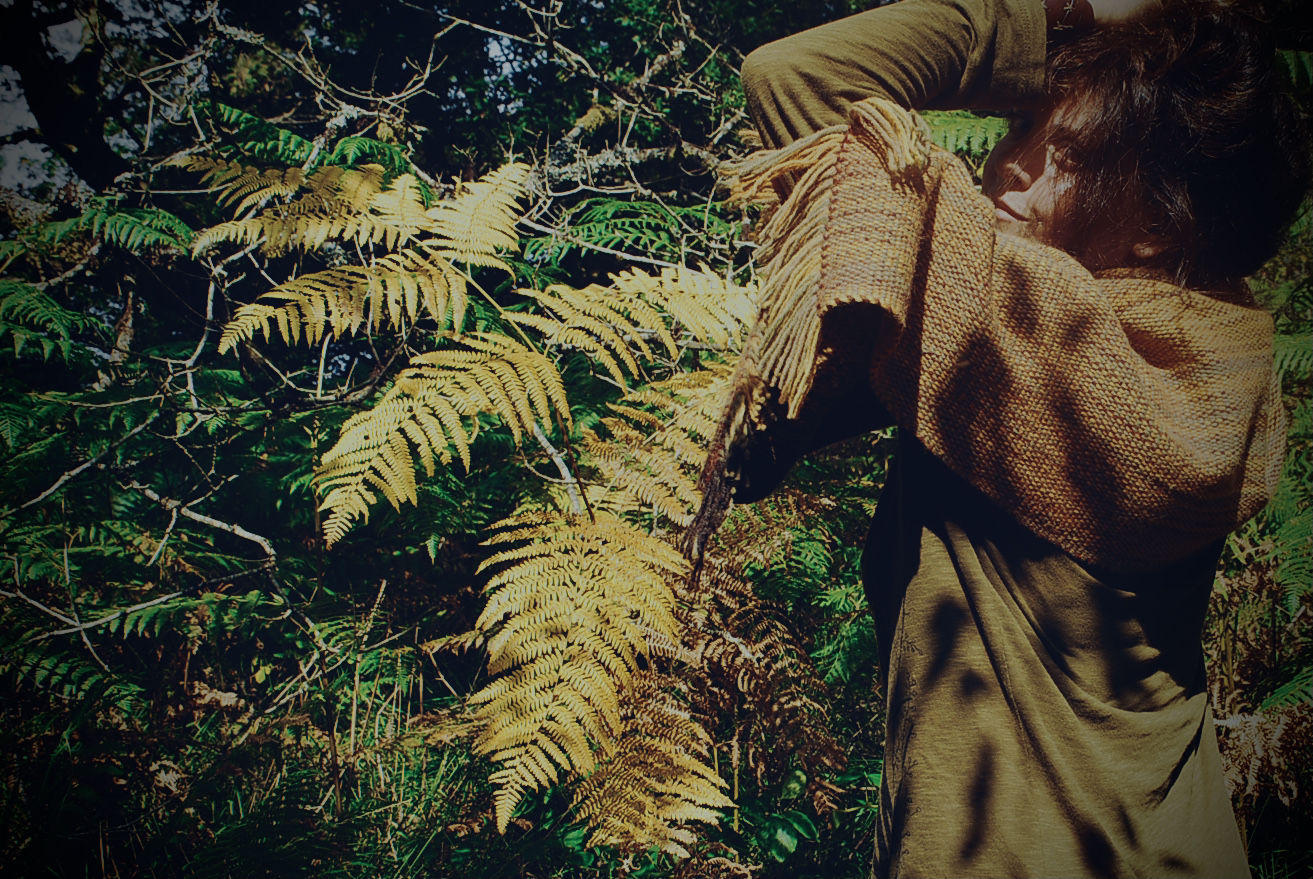
I’m starting this season’s listings with late summer colours, then moving to autumn colours – naturally. Colours which also harken lands of baked earths, pan-tiled roofs, rich minerals and sun-coloured textiles infuse my normally northerly sense this season.
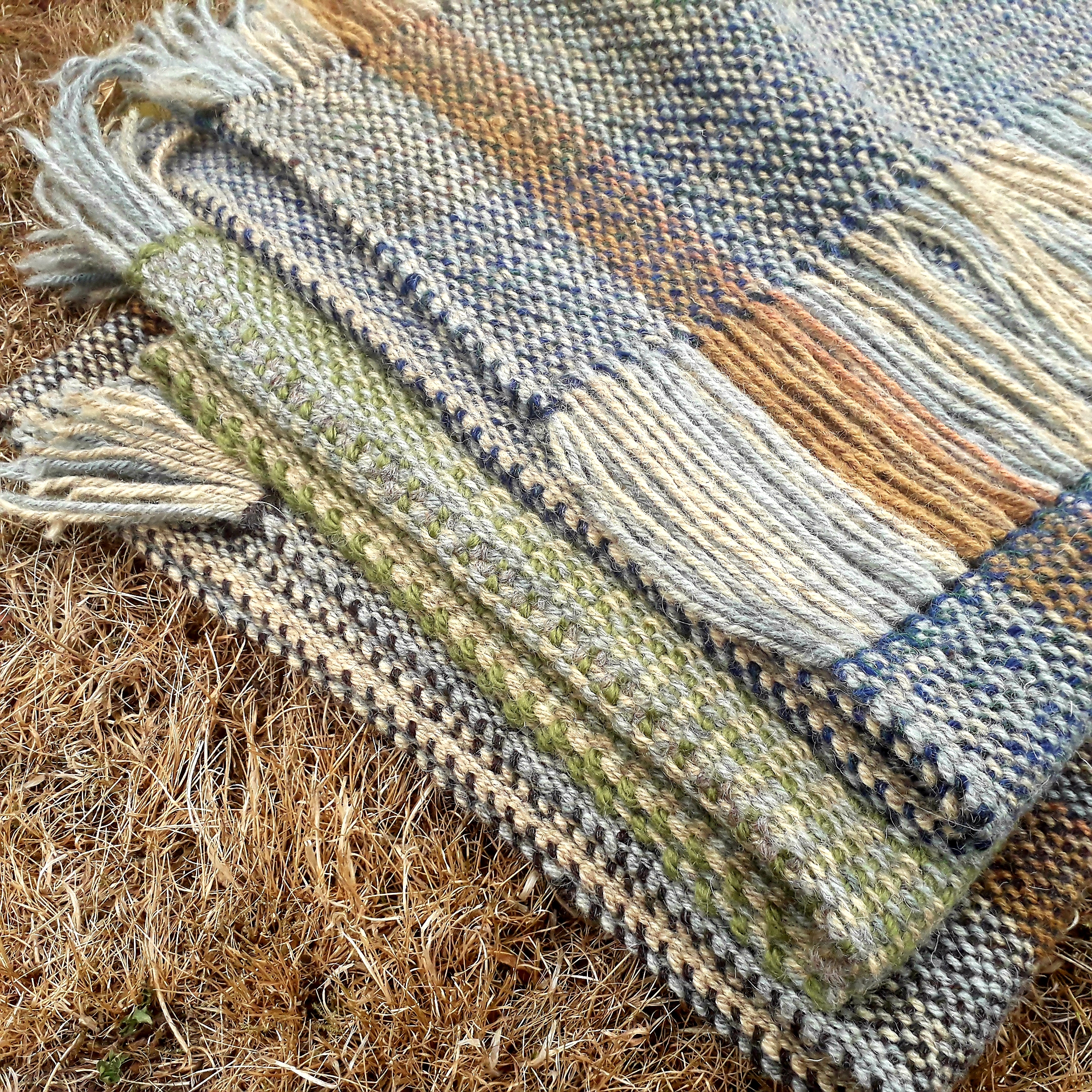
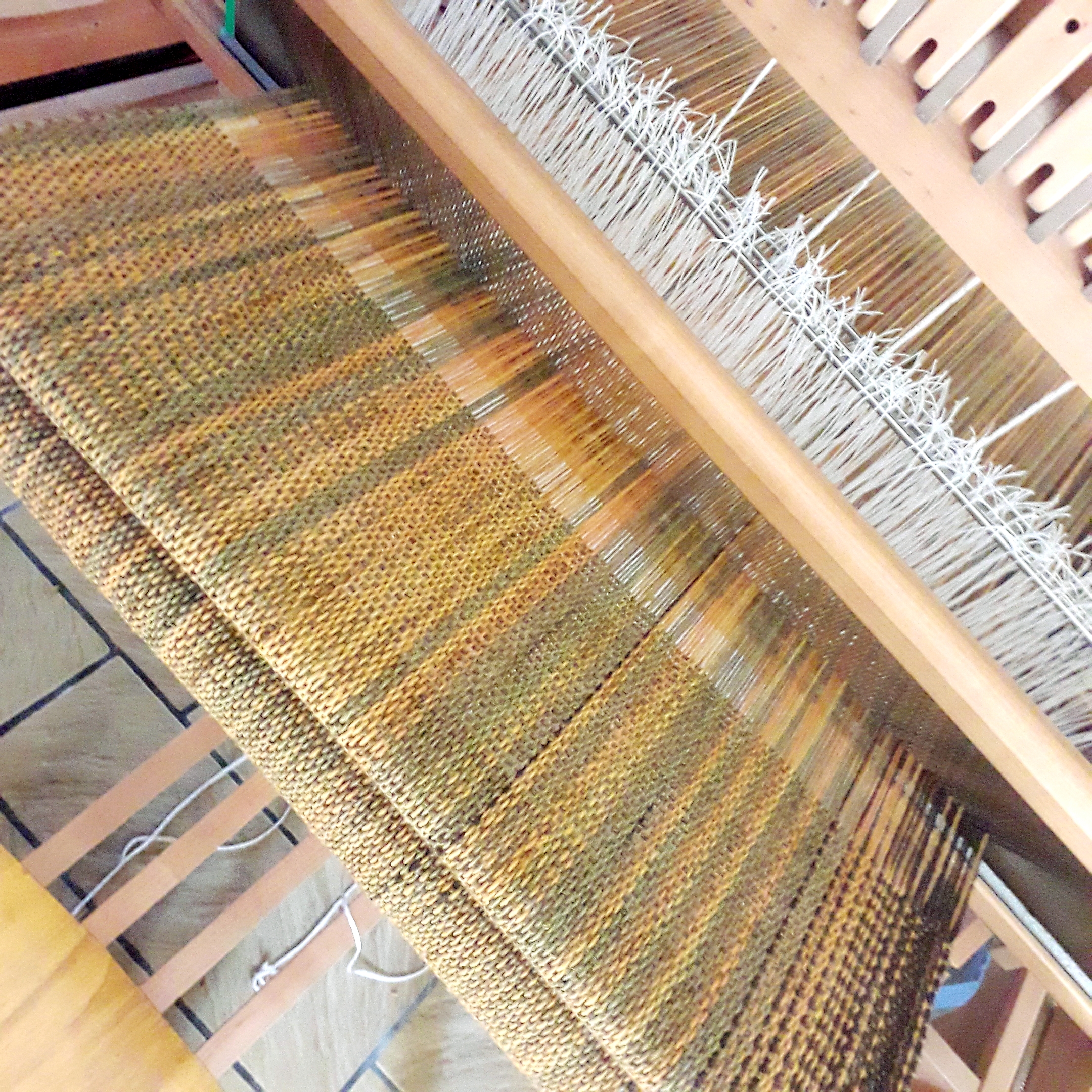
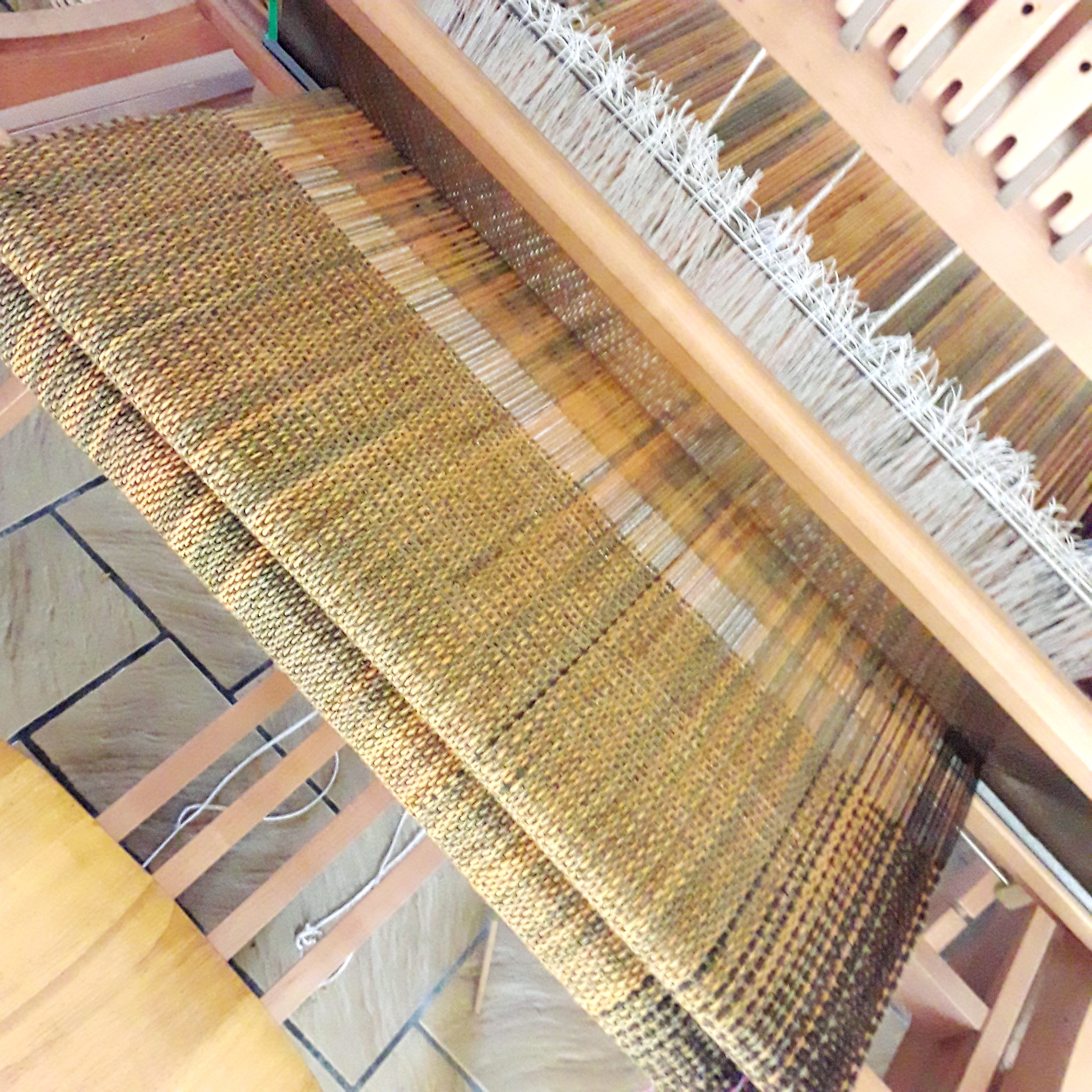
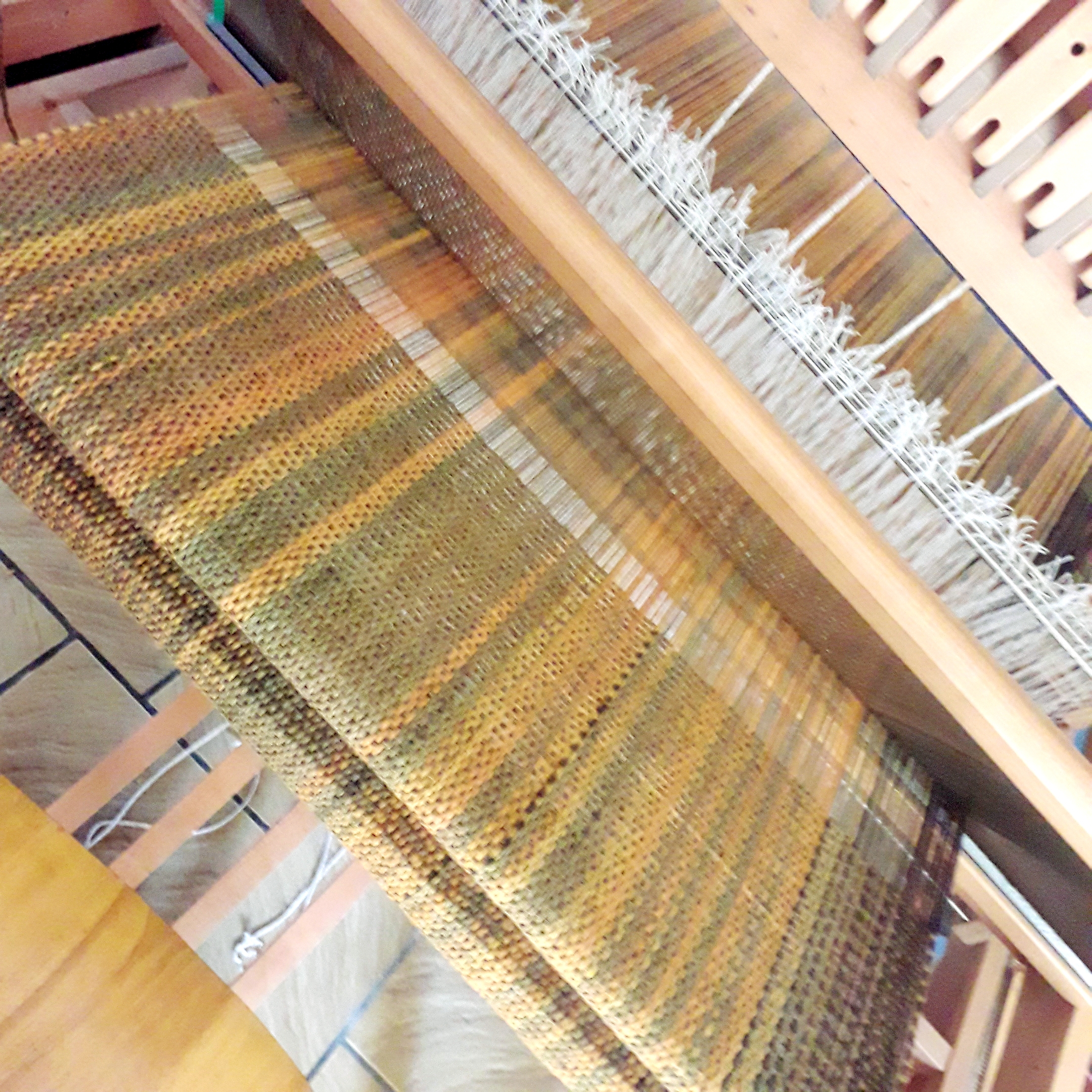
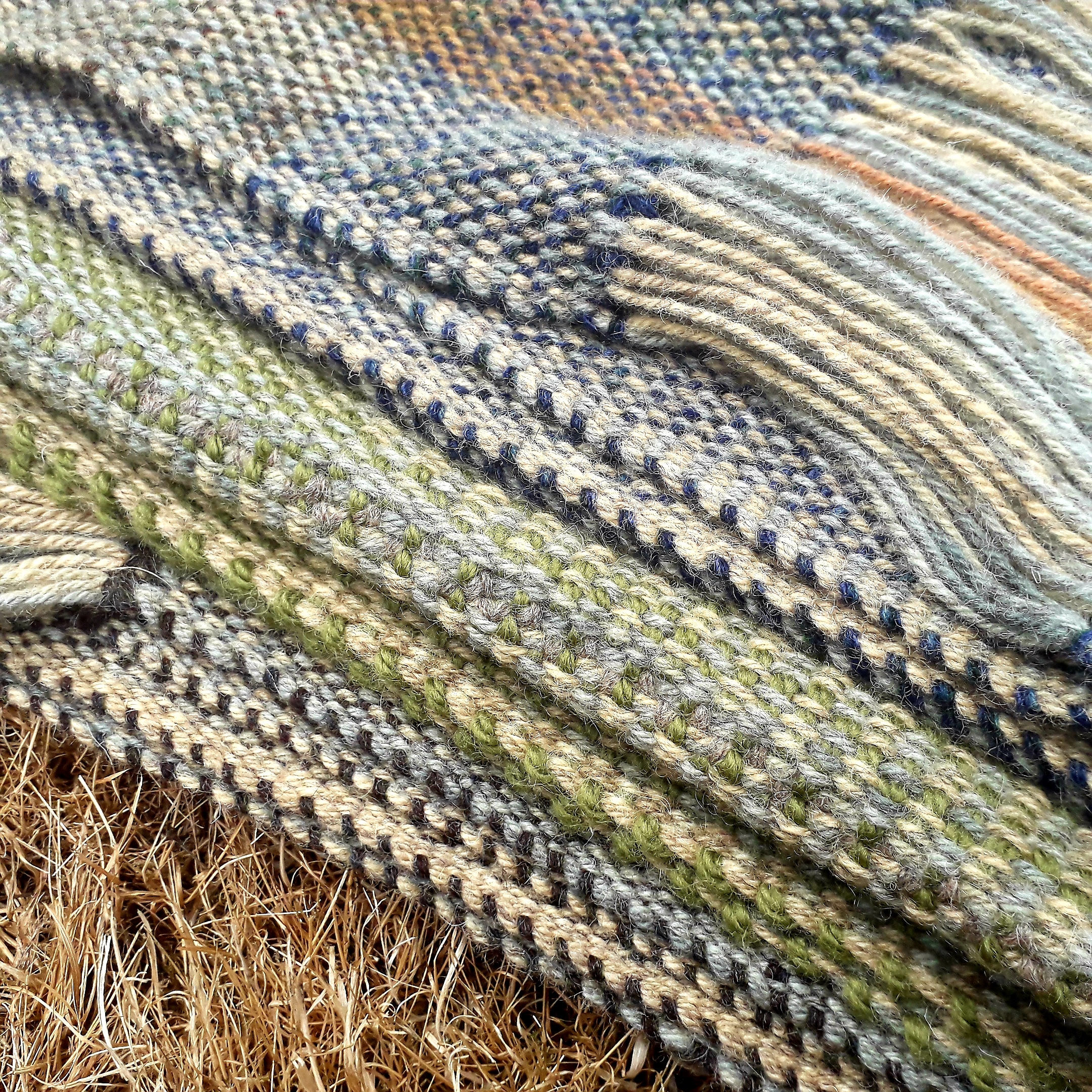
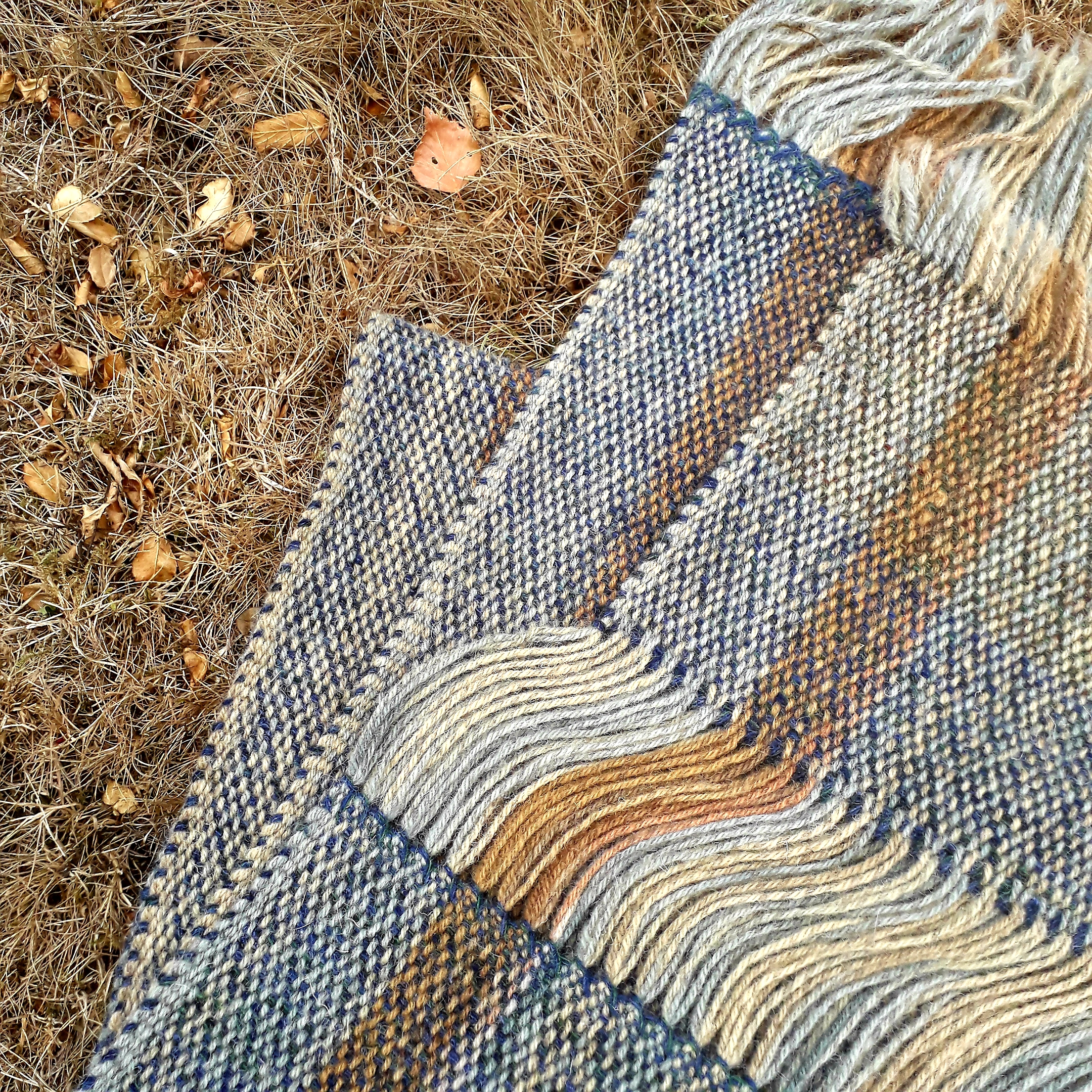
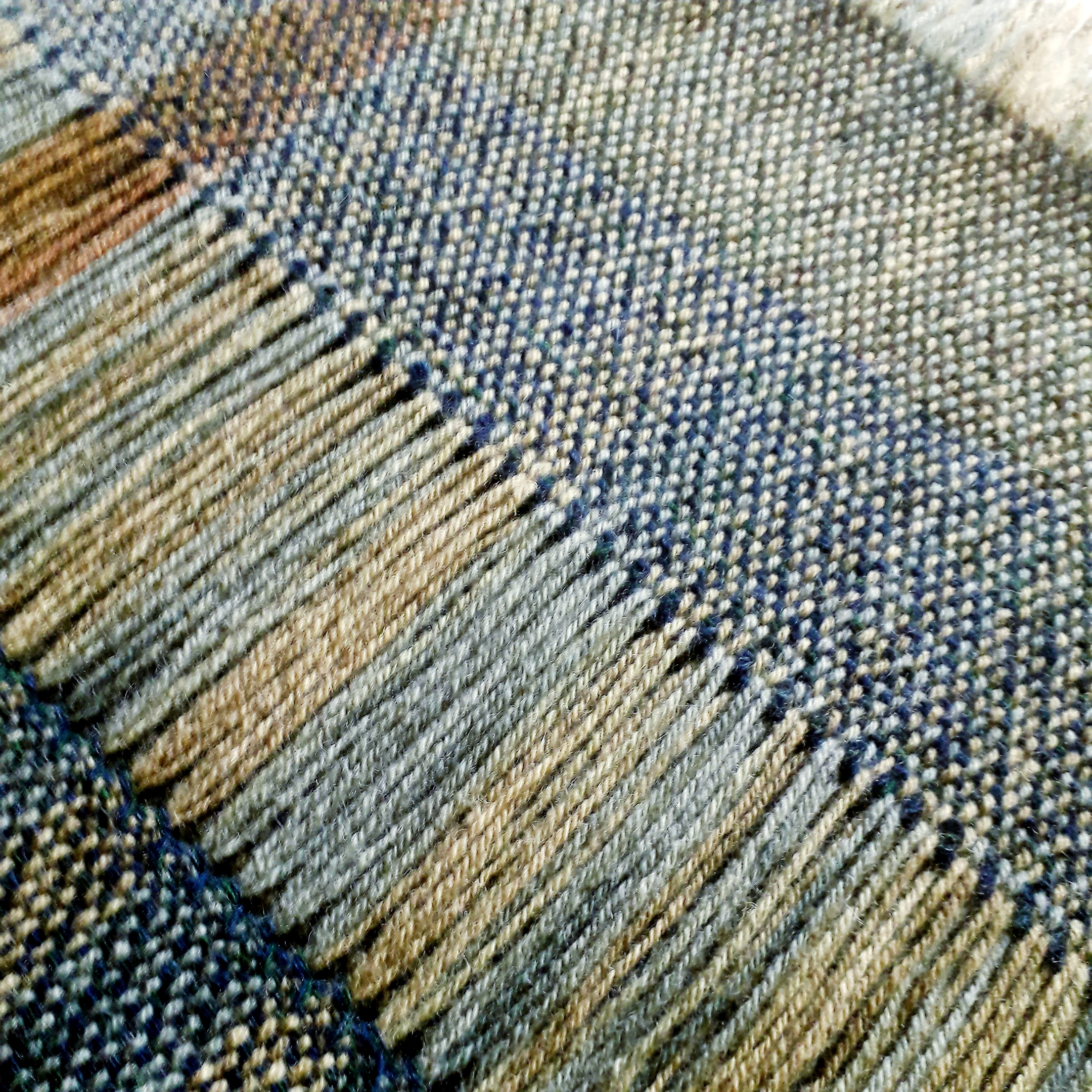
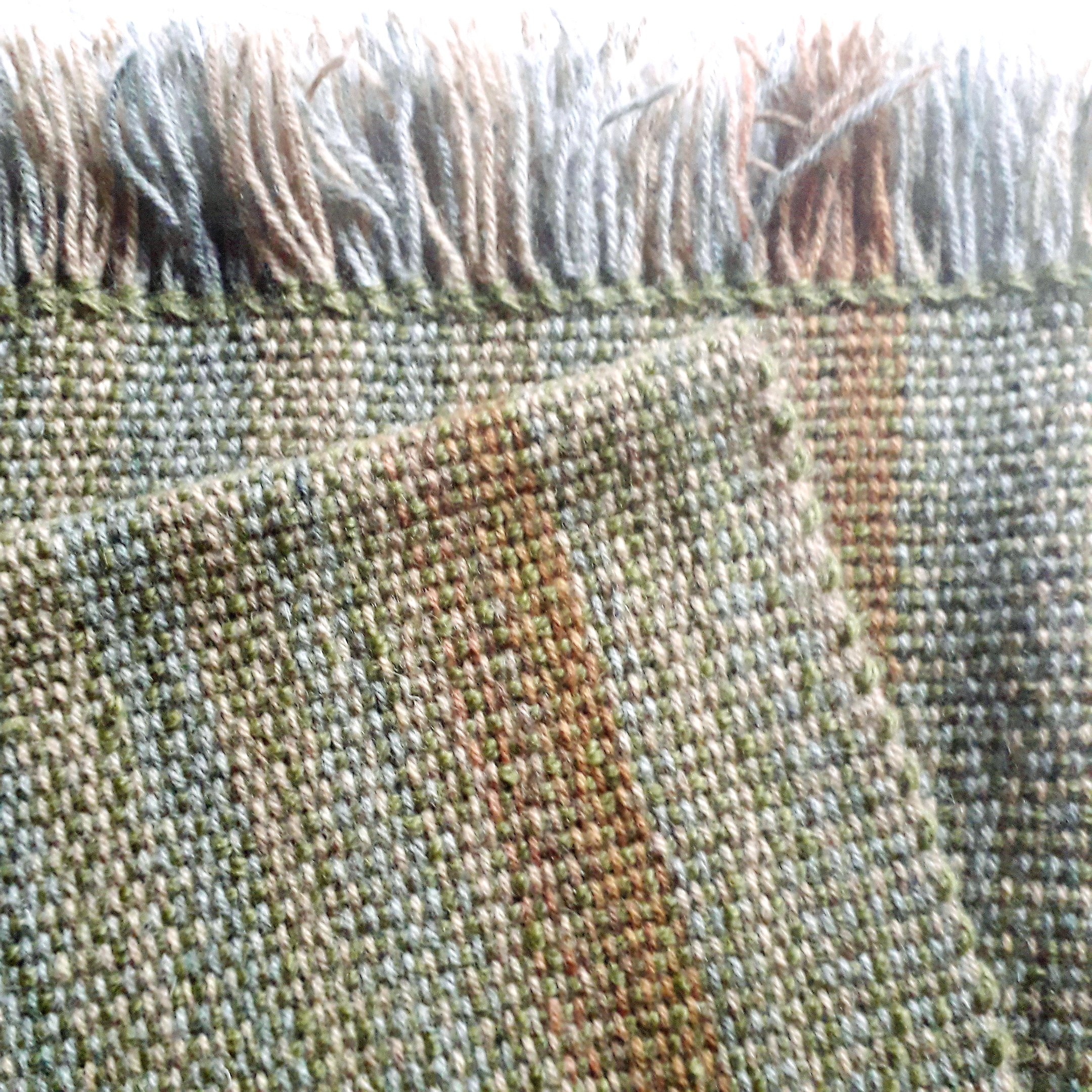
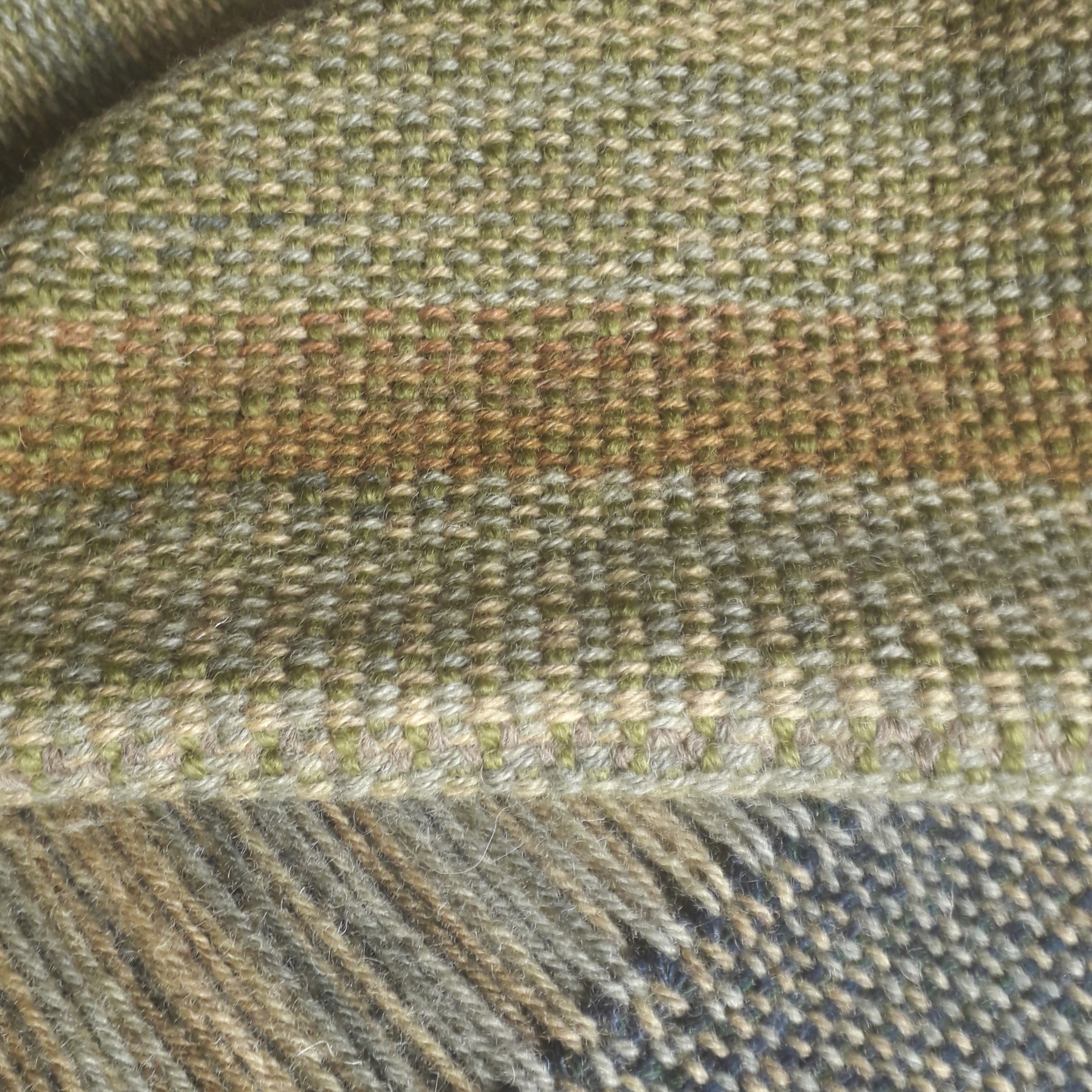
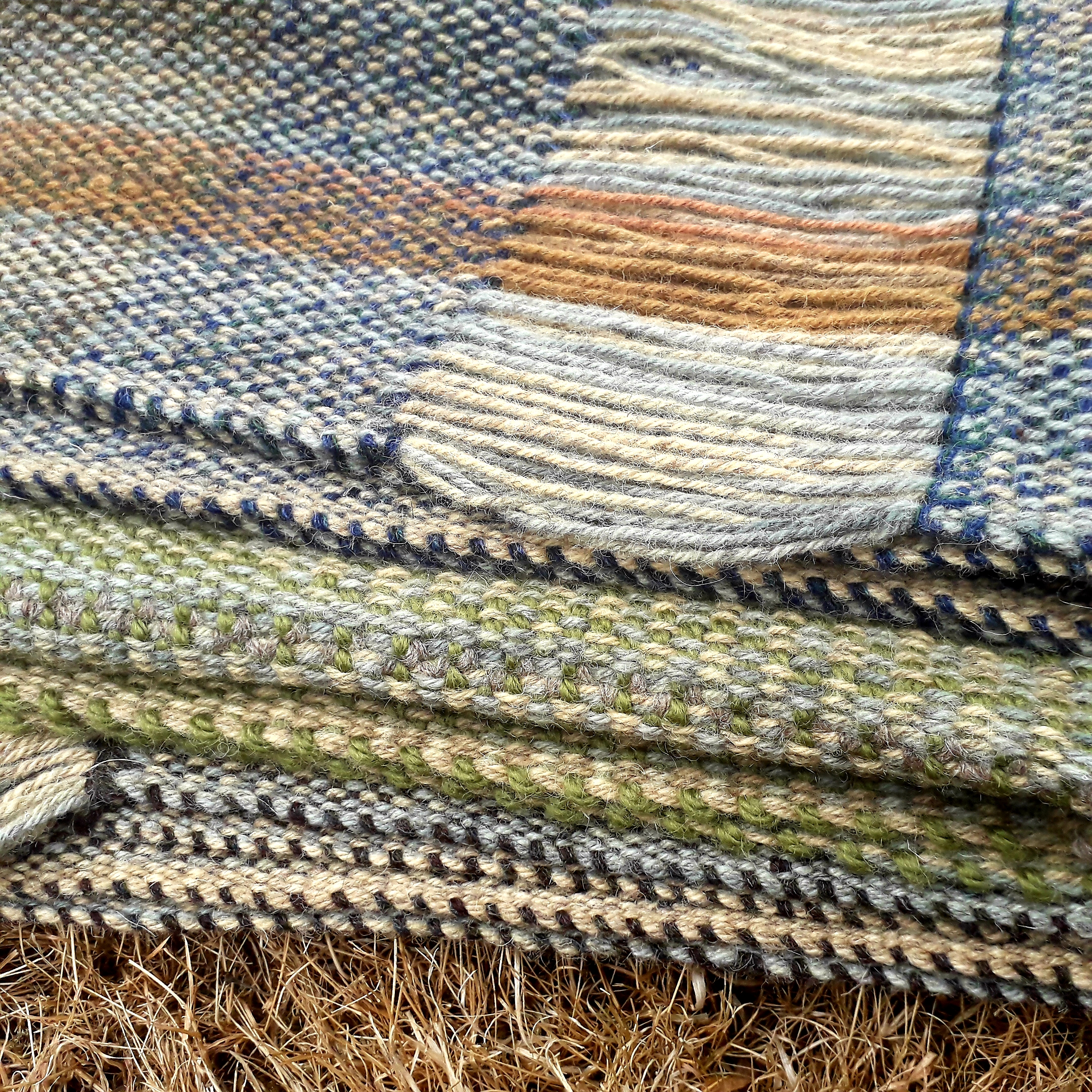
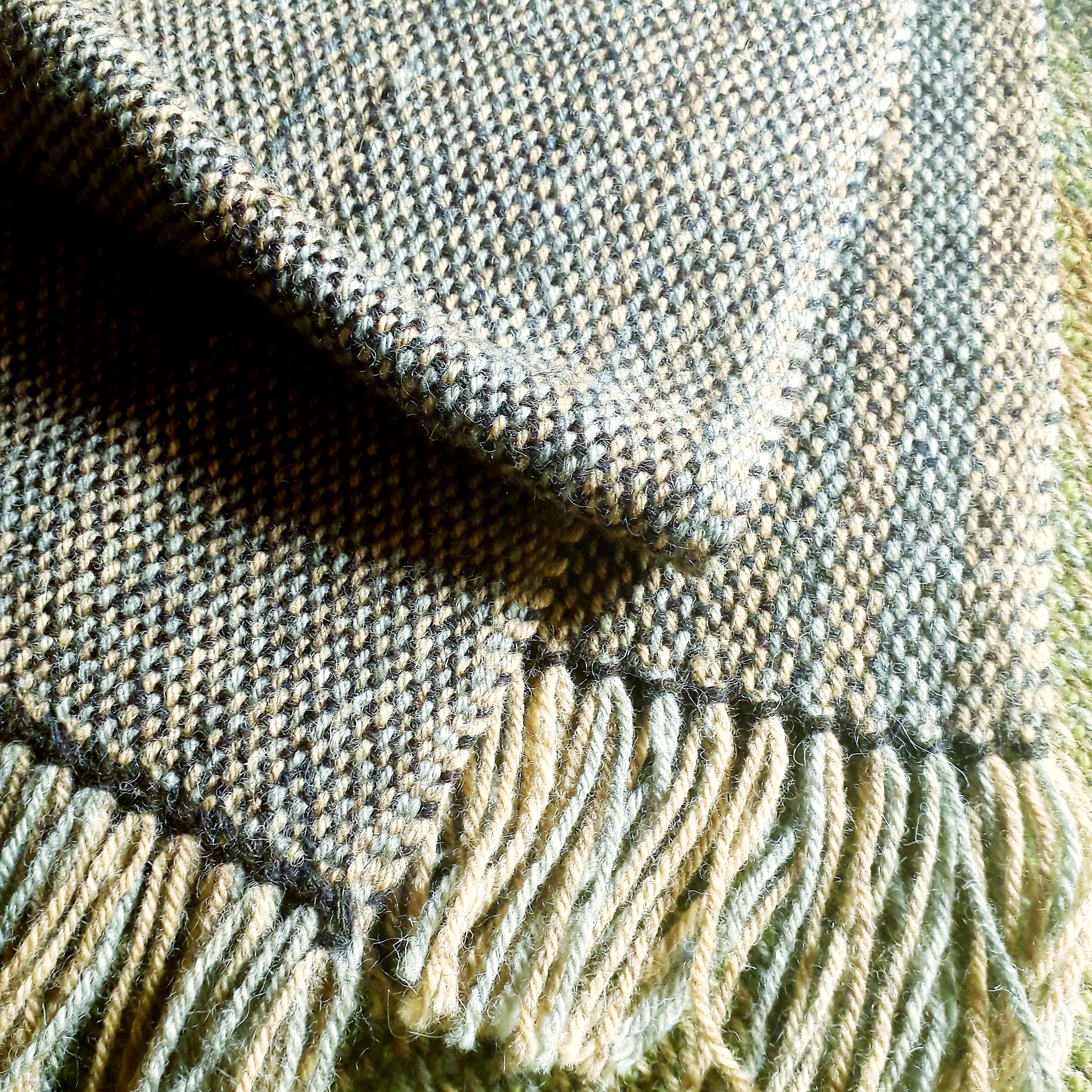
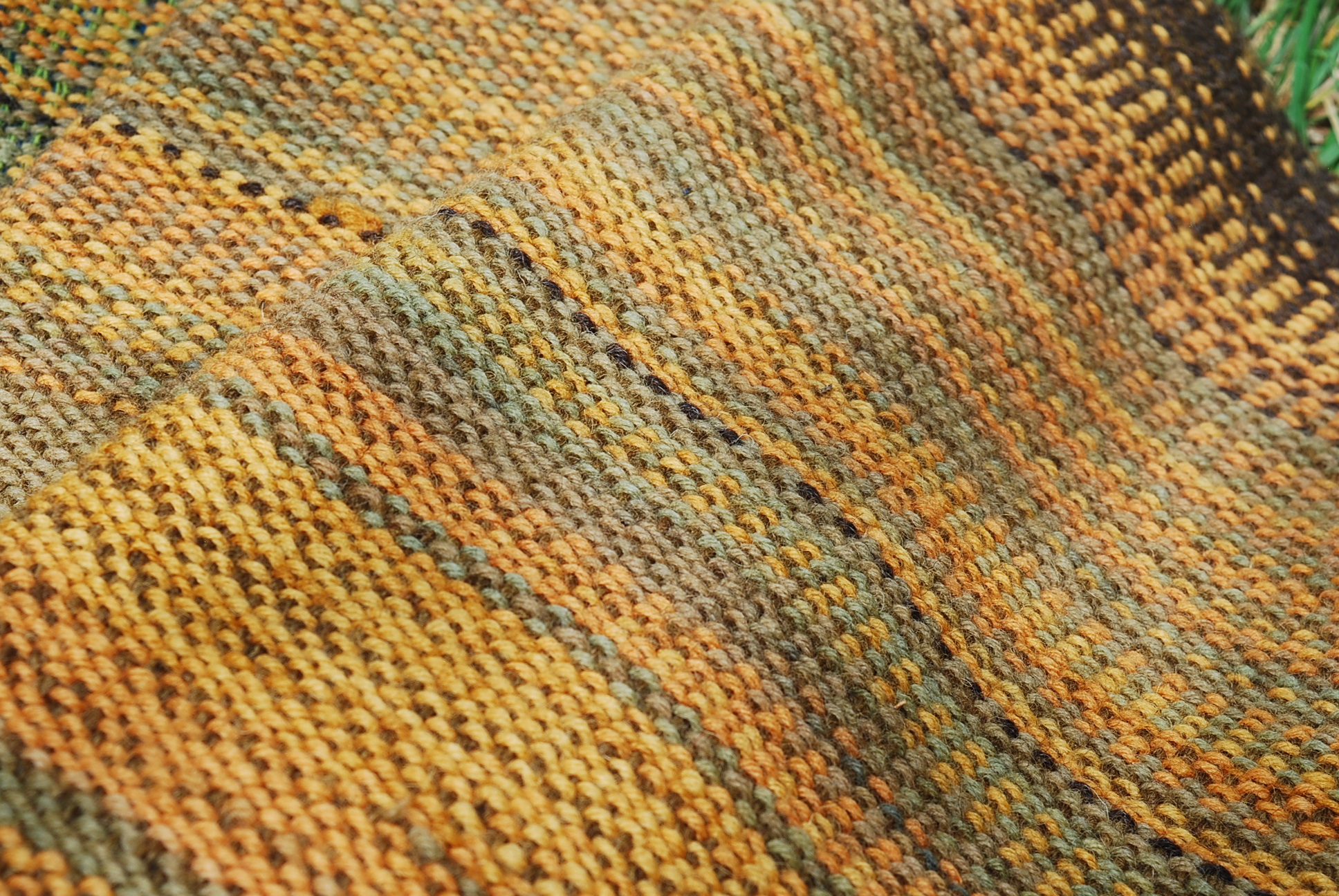
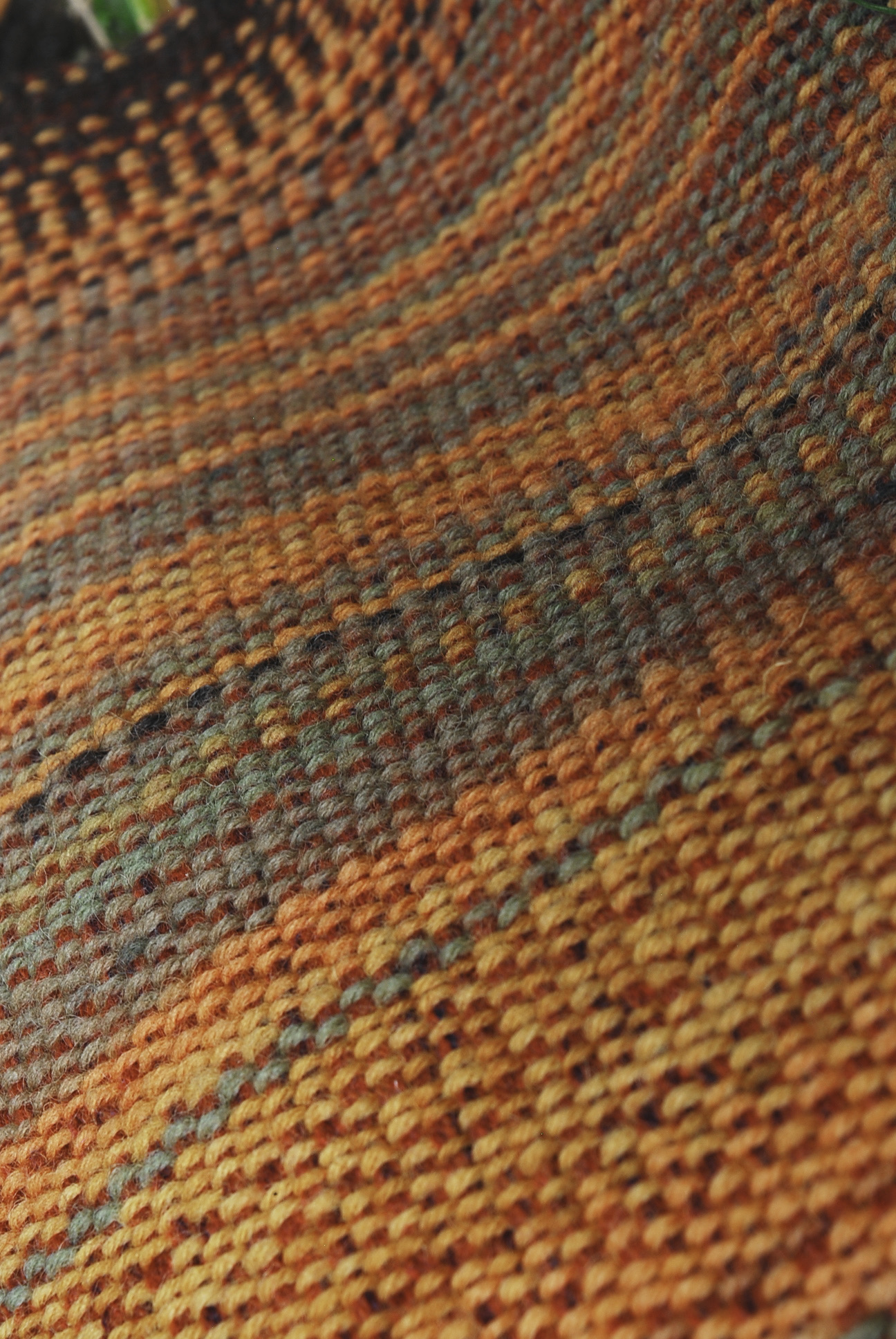
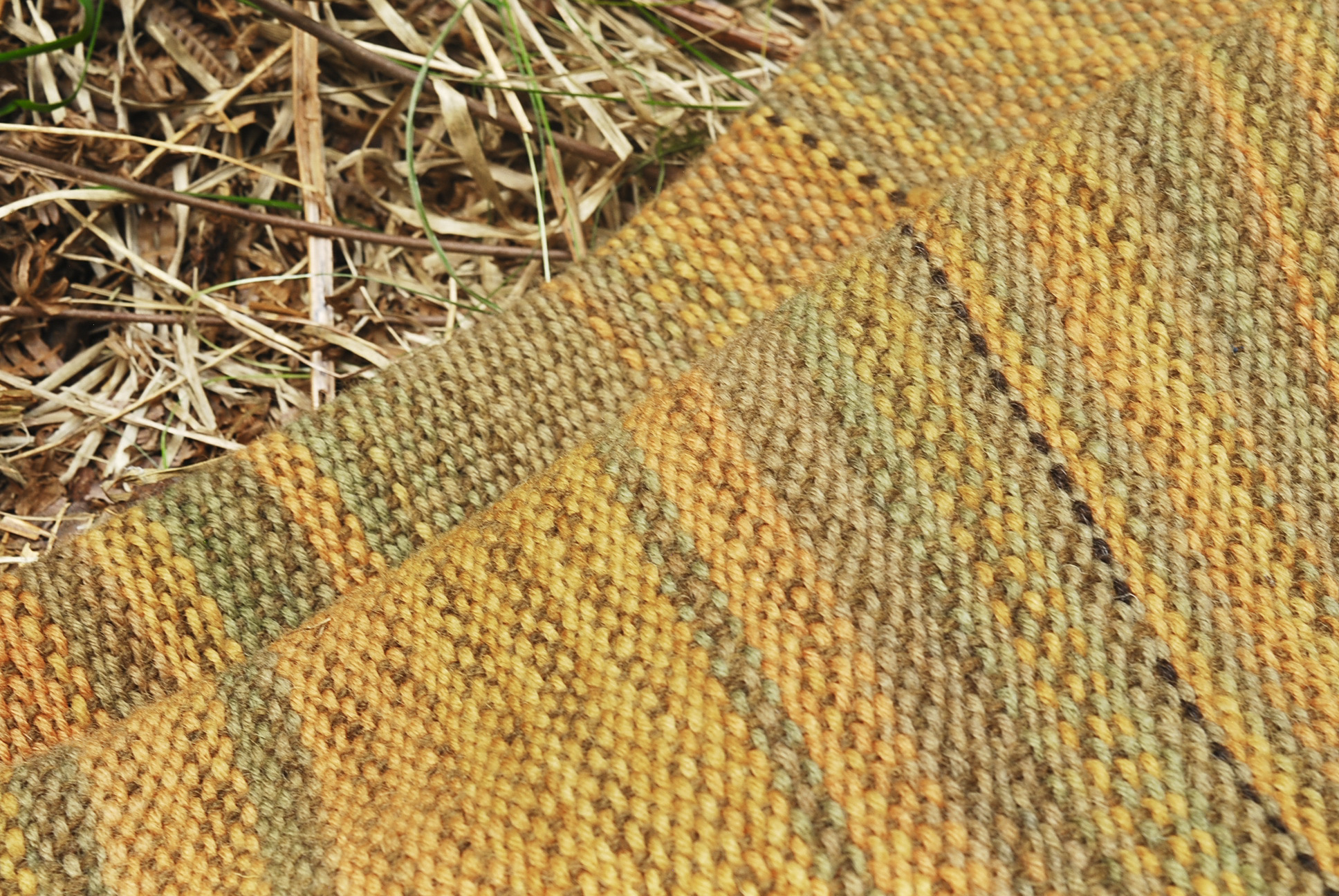
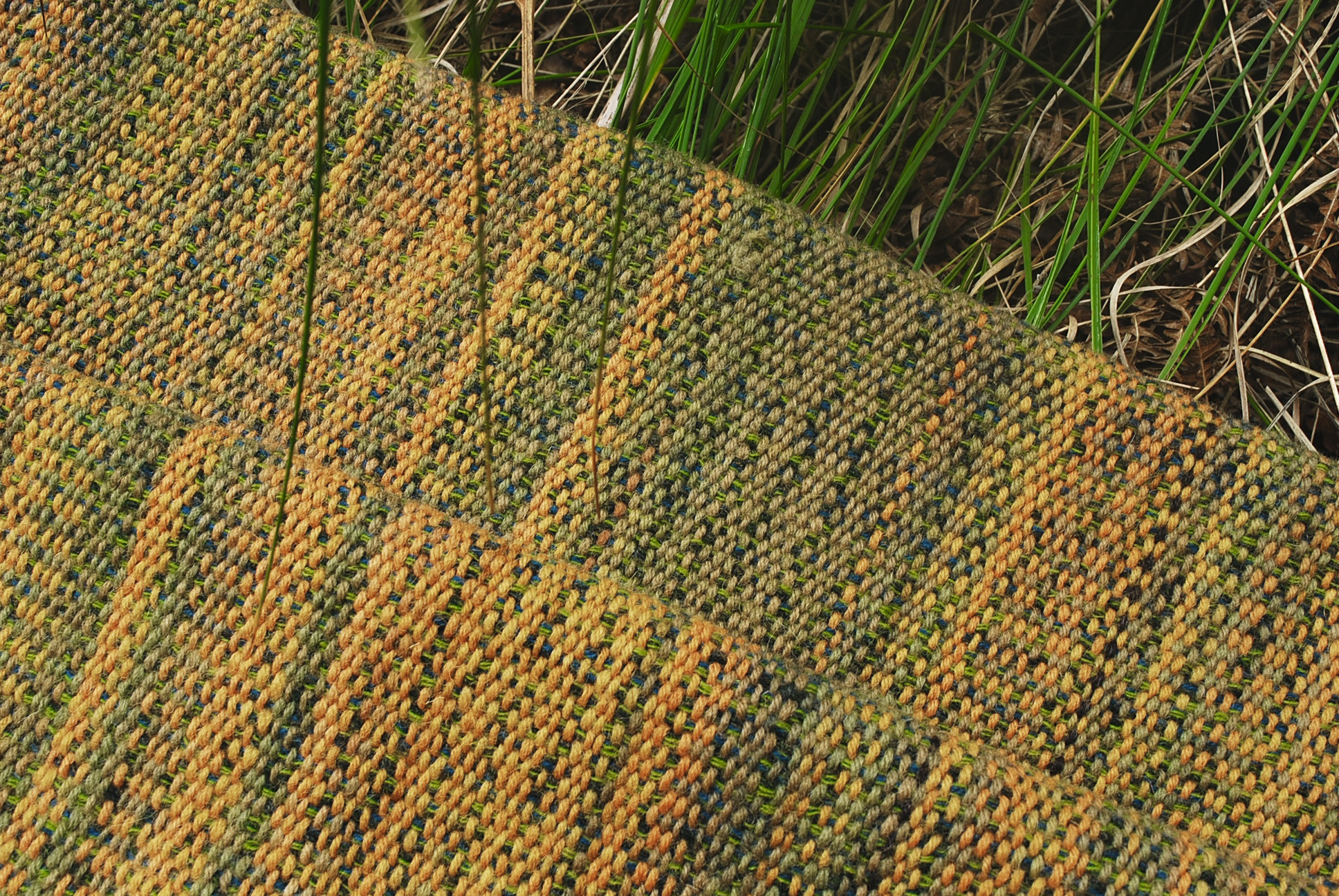
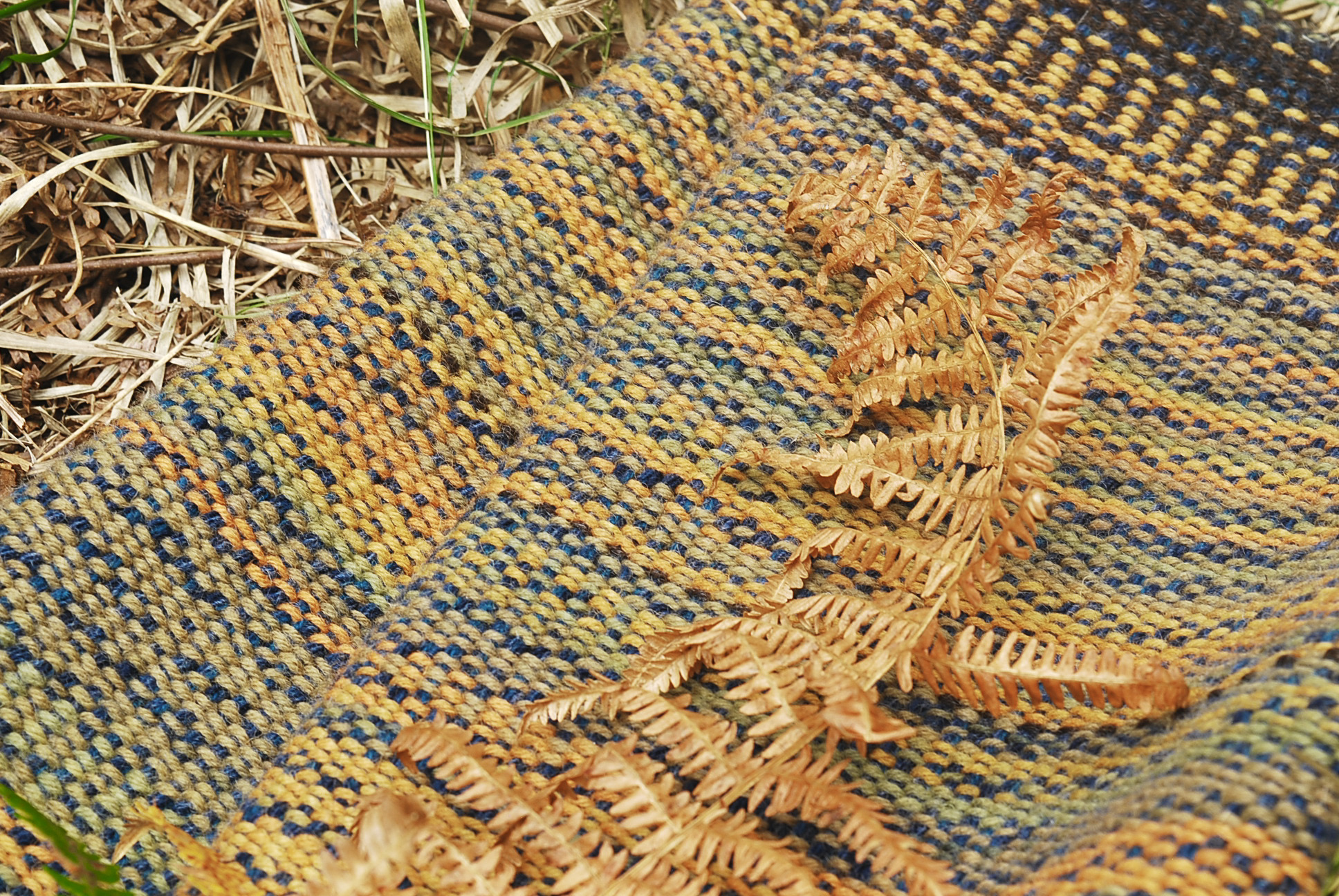
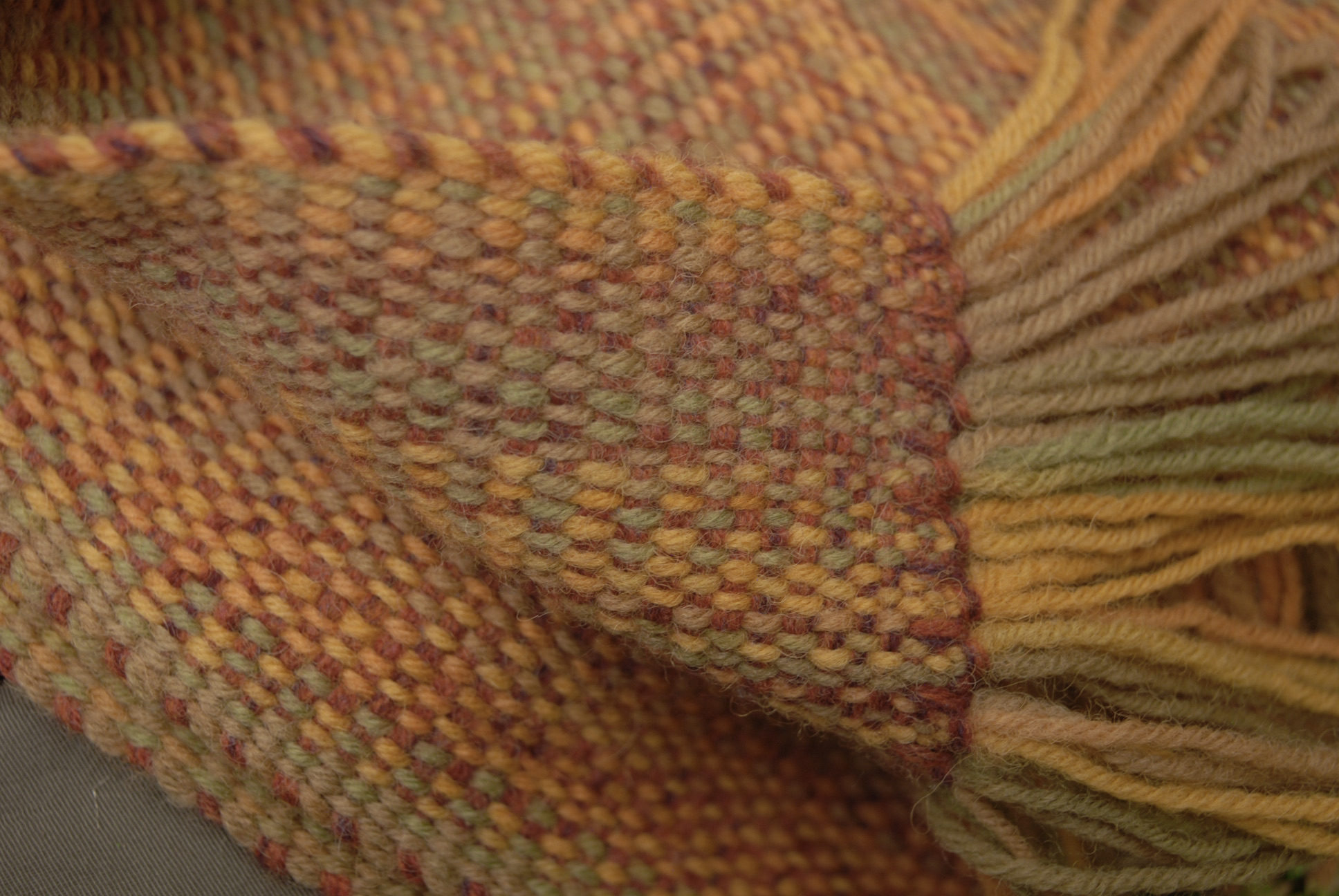
This cloth is woven from dip-dyed yarn, which has a slightly unpredictable self-striping effect, making weaving really quite exciting as the pattern emerges organically. It’s a bit like cultivating a new variety of plant: you know what a given species is going to look like generically, but each one surprises as it grows. The duende in many an inspired maker’s work is the improvisation which allows for, and responds to, the principle of emergence. Look closely below and spot the differences as I weave and wind the cloth on no more than a foot each time.
And in my next blogpost (coming very soon), some hefty text (as you’d expect) and an important call-out. But for today just a visual treat as a gentle warmup. Follow my shop on Etsy for alerts as I list each new garment.
In Brittany’s most magical corners there’s a surge of new lichen growing. Lichen is very slow-growing, and only survives where the air is very clean. Evidence of the positive impact of lockdown on the environment.
I’ve been away from my workshop on what I hope will be my last househunt for a long time, and if things go to plan, These Isles will have a serious branding problem! I’ll explain anon. Meantime, I did actually take my smallest loom with me and am weaving warms for next winter.
Anyway, I return to my workshop still wondering how to get scarves to Ukrainians – though cold may not be a problem for them by now. I’ve organised an end-of-season sale in my shop, where the warmest snugs are now half price. If you happen to be in contact with any group of people in a chillier part of the world who might benefit from warm woollen donations, then I invite you or your organisation to buy up all my sale items and I will split this reduced price with you by a further 50%. (This is something I may also be able to offer in cooler seasons, if I’ve got older stock, so do please approach me another time too.) Get in touch if you can arrange that – or otherwise just browse for a treat for yourself, because you and I are also worth supporting.
Selling my work at reduced prices is difficult since I barely scratch a van-dwelling living at full prices. ‘Reduced-price sales are the logic of capitalism’, says my French craftswoman friend, ‘and capitalism is the economics of the patriarchy.’ (Happily married with a husband and family, she was put off a druidic path by the chauvinism of the scene in her area of Brittany). She doesn’t sell her work at reduced prices. But she does sell her work with ‘normal’, debt-based money, and by my reckoning, as long as we all rely upon ‘normal’, debt-based money, we are all complicit.
So in the capitalist logic we proceed for surviving the present: after a small upturn last year, the first quarter of this year has been extraordinarily slow for me – so I’m running an end of season sale, and warmly invite you to take full advantage.
Some Ukrainian makers have pivoted to selling digital downloads of art and patterns and the like. Etsy has waived fees for them to the tune of $4m. You can support their shops here.
I’m glad to report that my leatherworking contact in Nikolaev is ok. Though he has certainly had a tough time through the Russian invasion, his southwestern city is not a key target, and his morale still sounds intact. His daughter and grandchildren fled from their Ukrainian basement to Poland some weeks ago. Yesterday he wrote:
‘Our guys are fighting bravely and pushing the Russians back. What the Russians are doing on our land and with our people is a crime that cannot be forgiven. The Russians are brutally bombing our cities and villages. Our city of Nikolaev is also being shelled with rockets. Our guys shoot down part of the missiles, but people still die and houses are destroyed. But we believe in our army and our Victory. Thank you for the offer of help. But now we need so little: tap water or a quiet evening. We are optimists and hope that the work of the mail will soon improve and we, maybe in a month, will start working again. The post office is already accepting parcels. But the delivery time is not possible to specify exactly. I already miss my job. It’s hard to believe, but our farmers are already planting wheat, sunflower, corn. The crime of Russia can neither be understood nor forgiven. They must answer for the insanity and genocide of the 21st century.’
Don’t we wish we could send them tap water and a quiet evening – and be part of a West that listened to the concerns of the East. Though I fear that rifts are inevitable in this terminal divide-and-conquer economics of woefully unfree markets.
I may not often sound it, but I am truly grateful for what I have – even while I can envision so much better for us all.

 These Isles