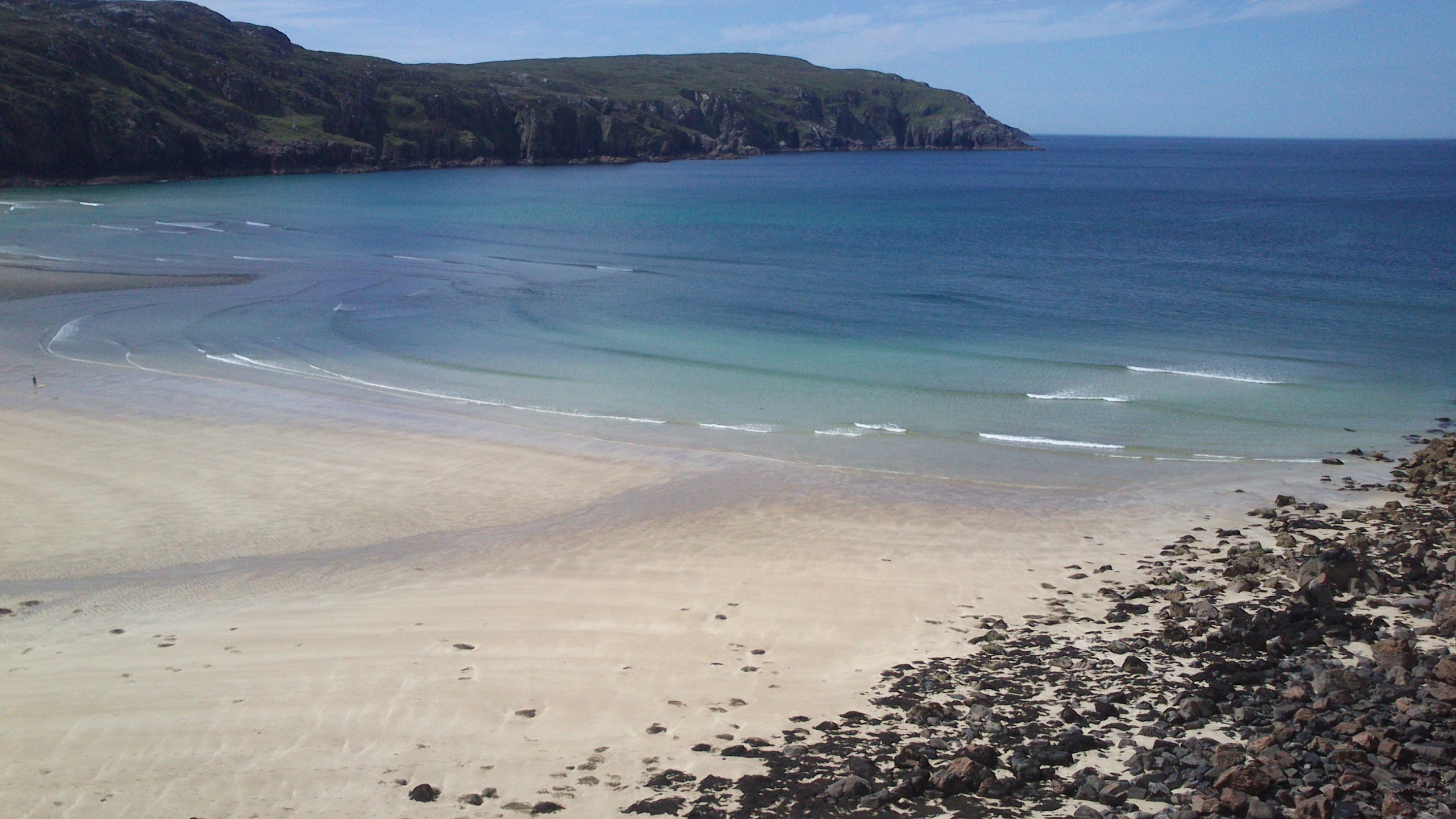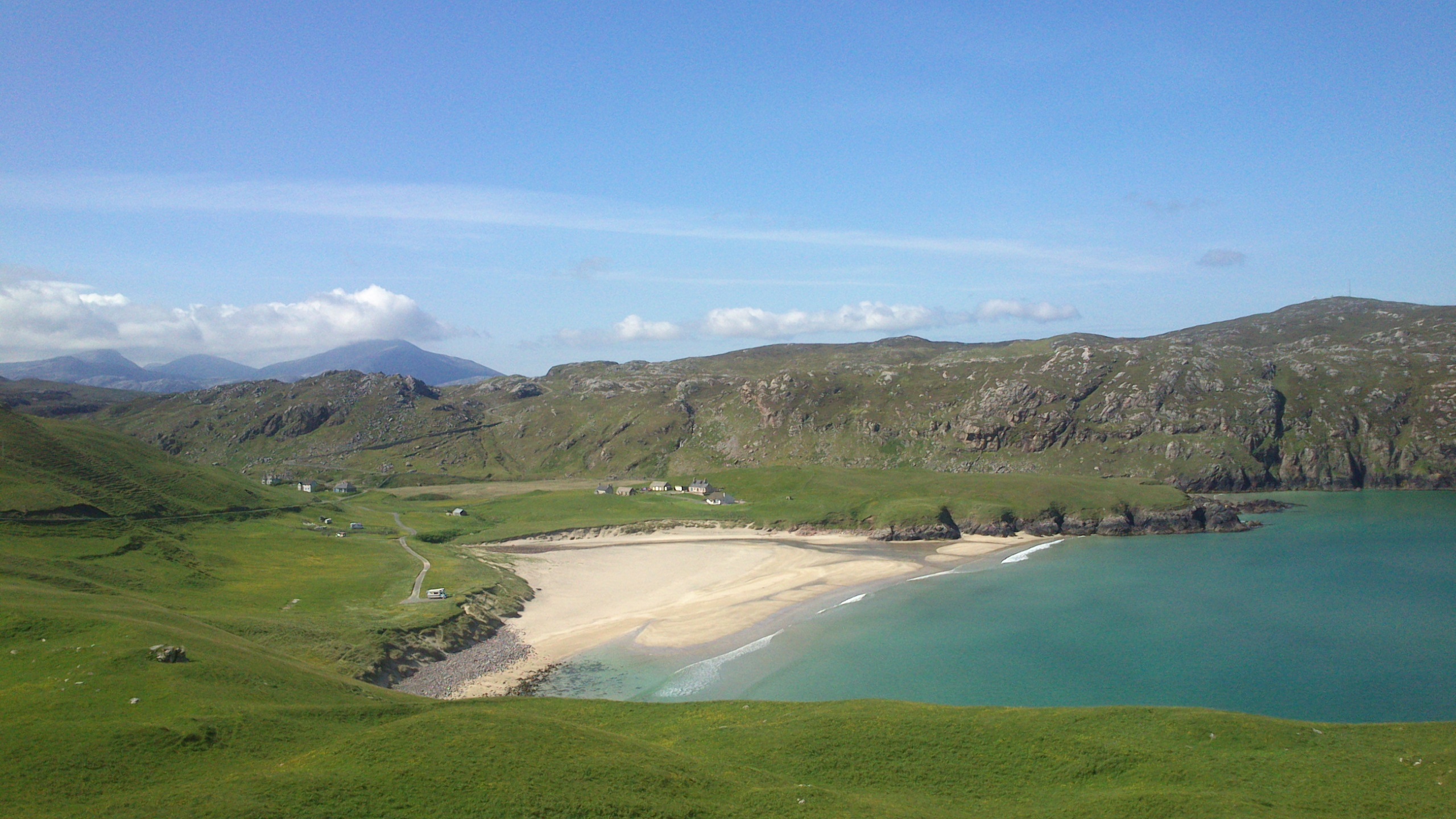
Week seven: On Icelandic blankets, Pictish dwellings and Hattersley looms

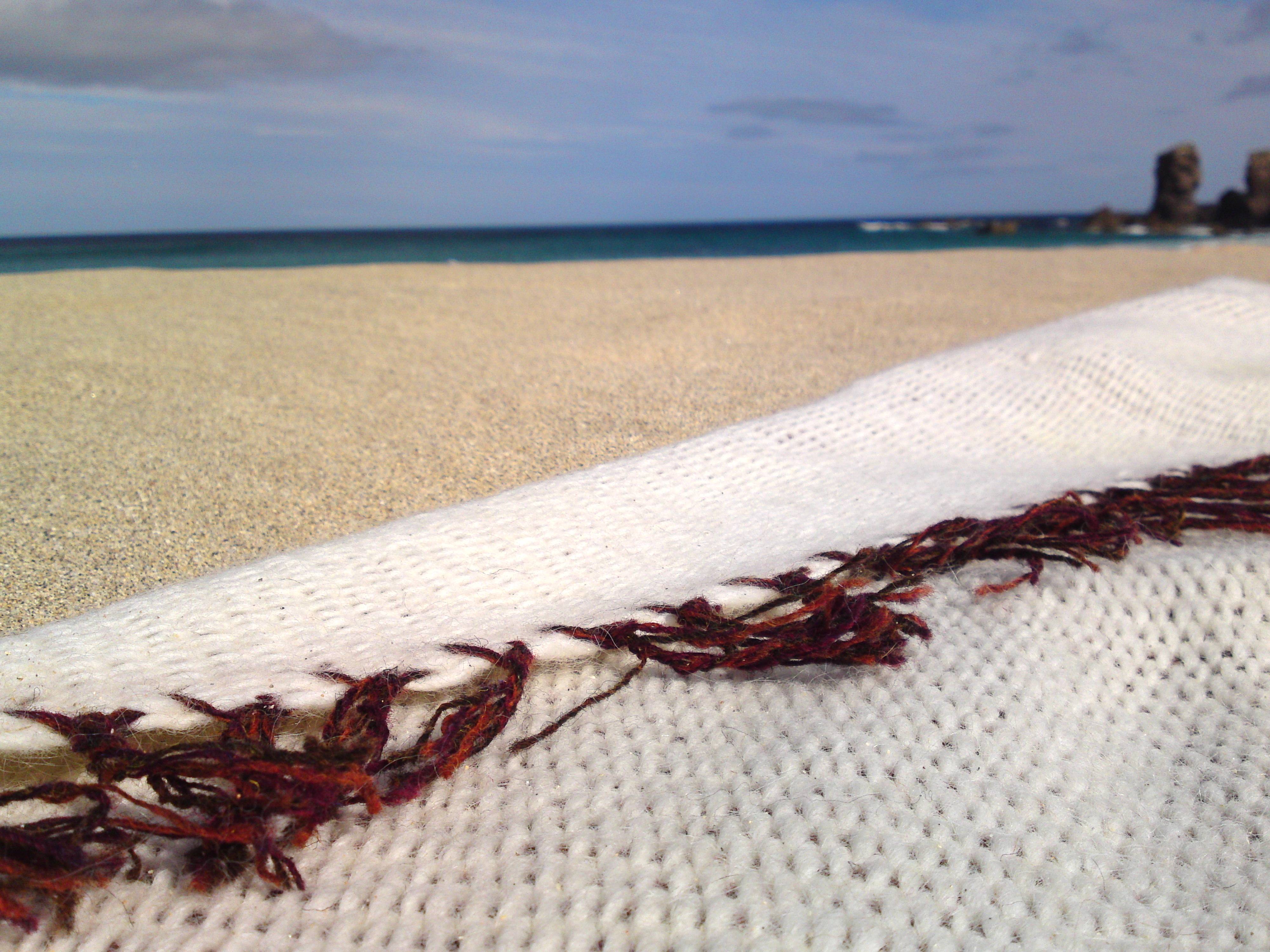
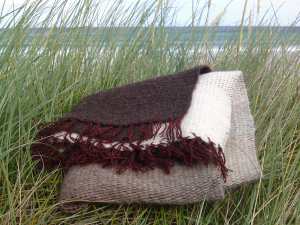
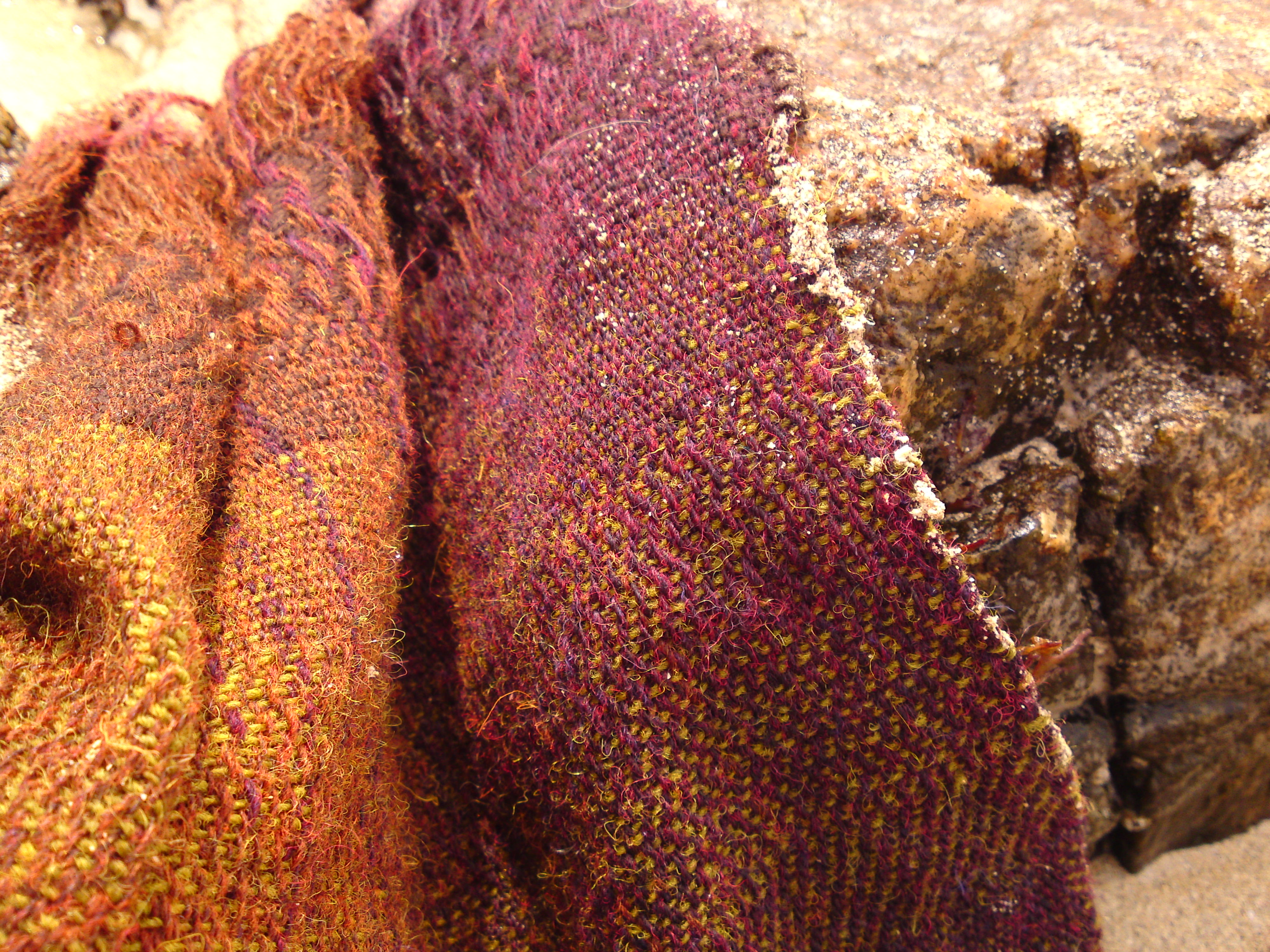
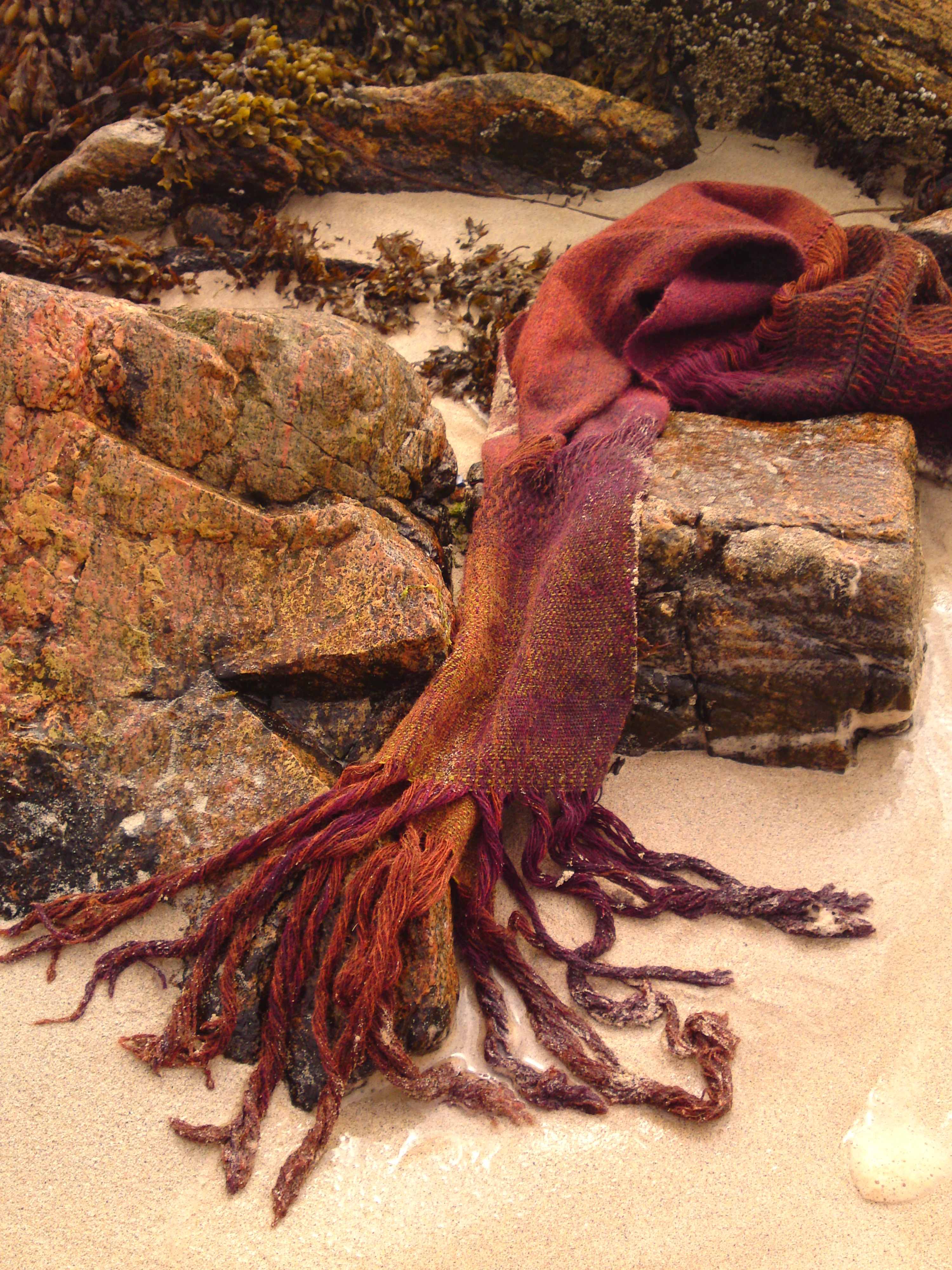
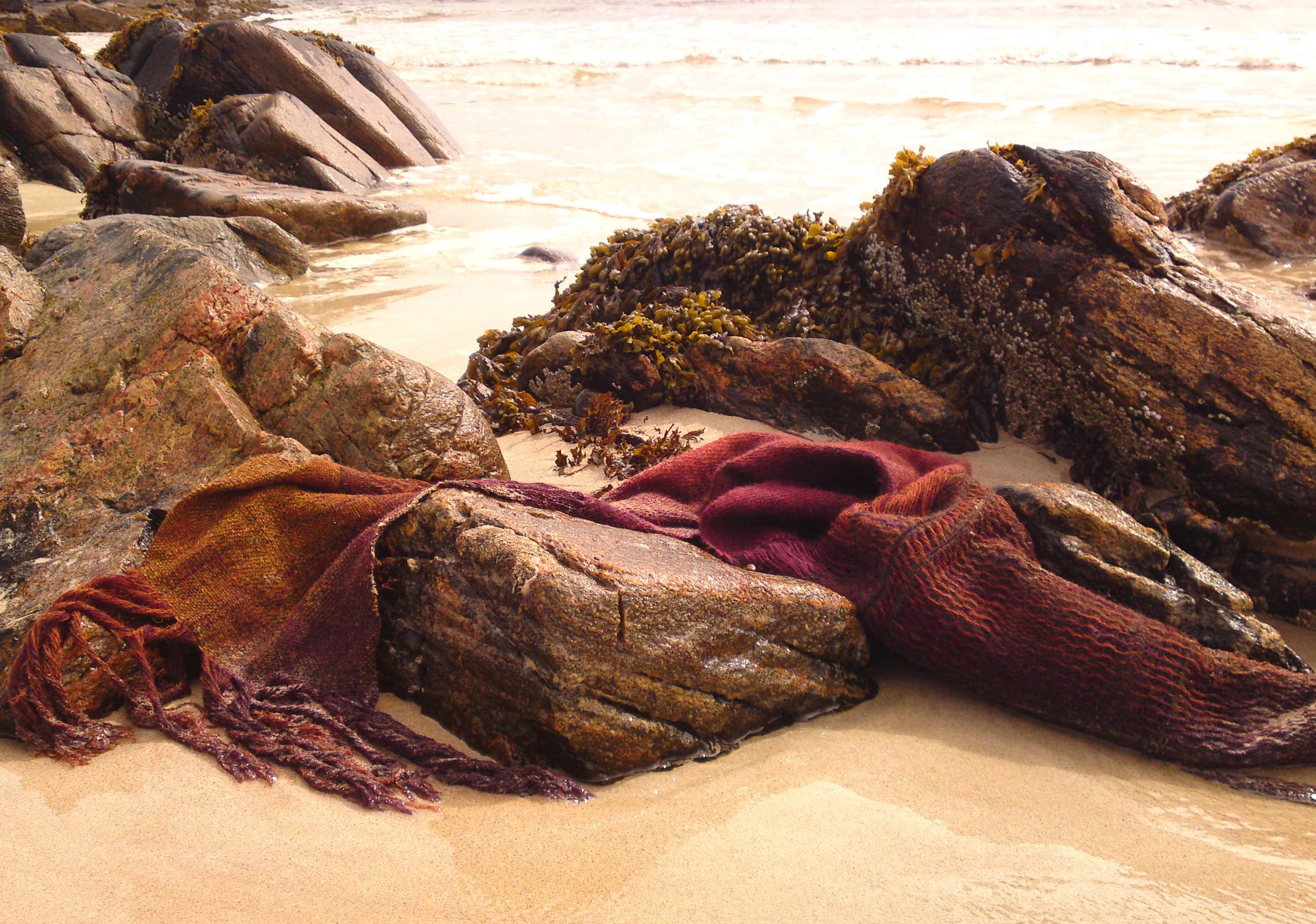
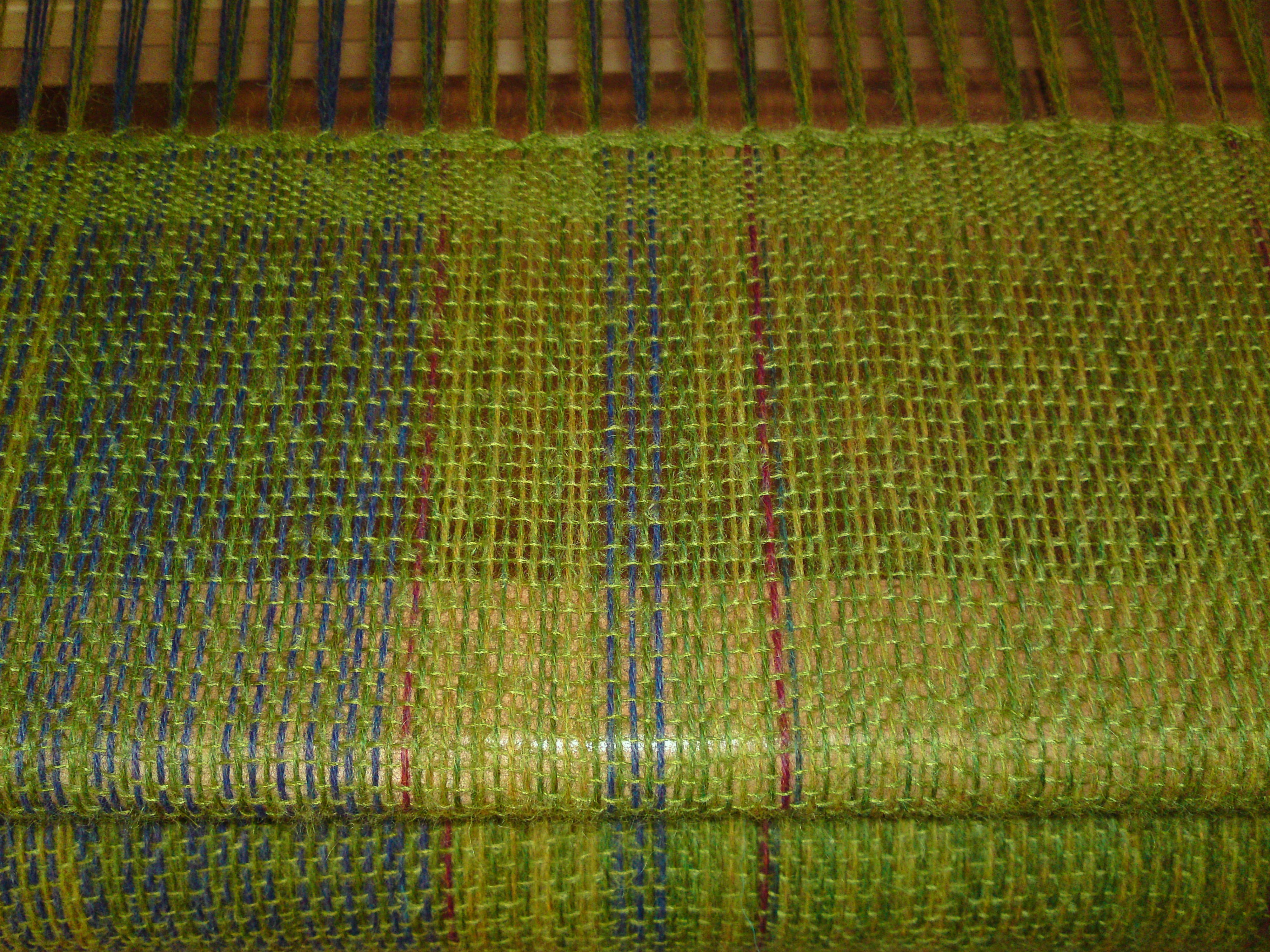
I wasn’t all that excited about my latest blanket, feeling it a waste of Harris tweed yarn to be engulfed by chunky Iceland with my too-wide sett that made for a weft-facing fabric with the peaty seaweed colours all but hidden, but as I take it off the loom it feels larger than I thought, and weighty and soft and light all at once, and the touches of bladderwrack burgundy offset the sheepy colours well. I’m now in the perfect photoshoot spot awaiting a blue day – which is happening about once a week here in the Western Isles this summer, if we’re lucky.
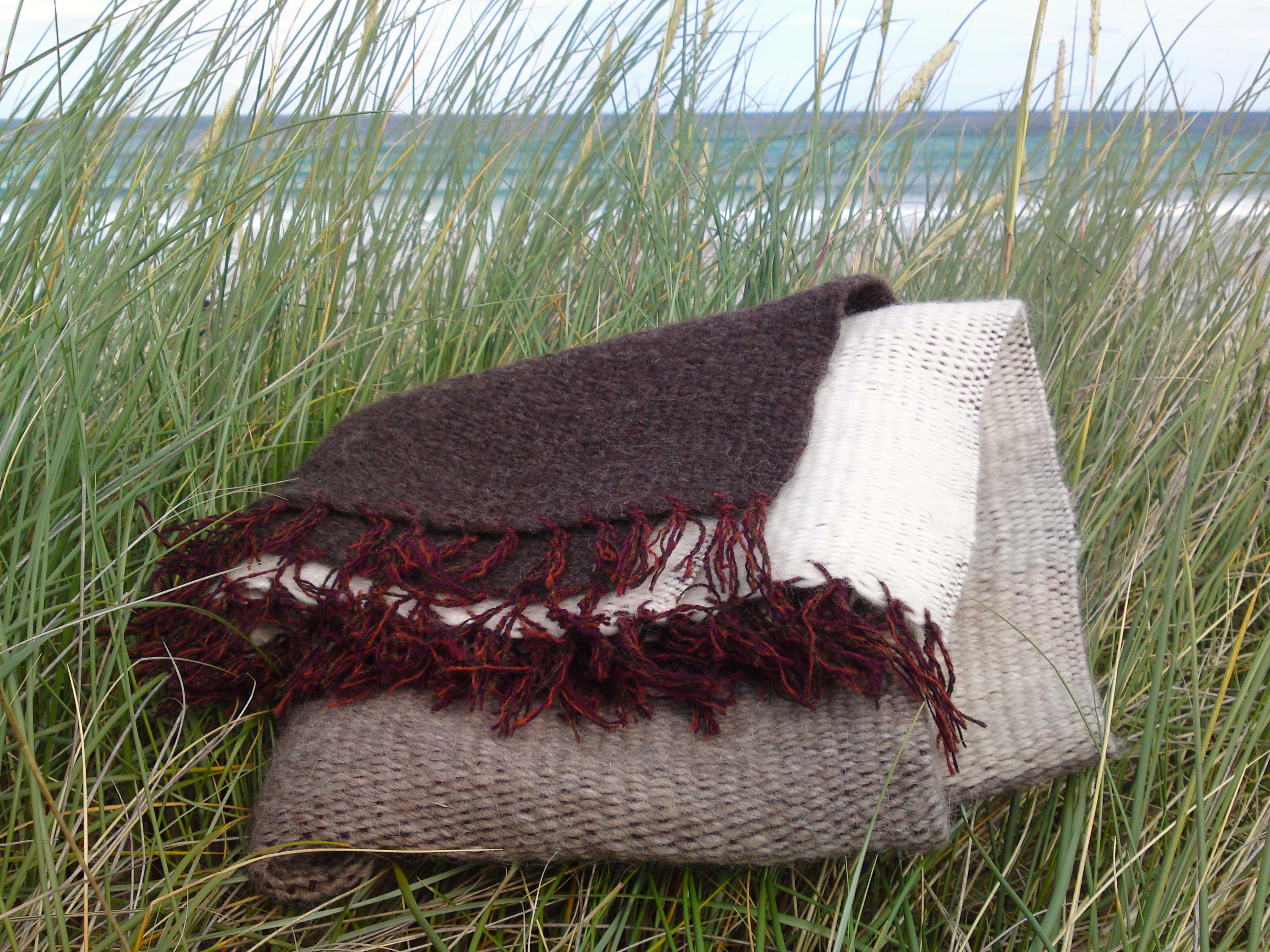
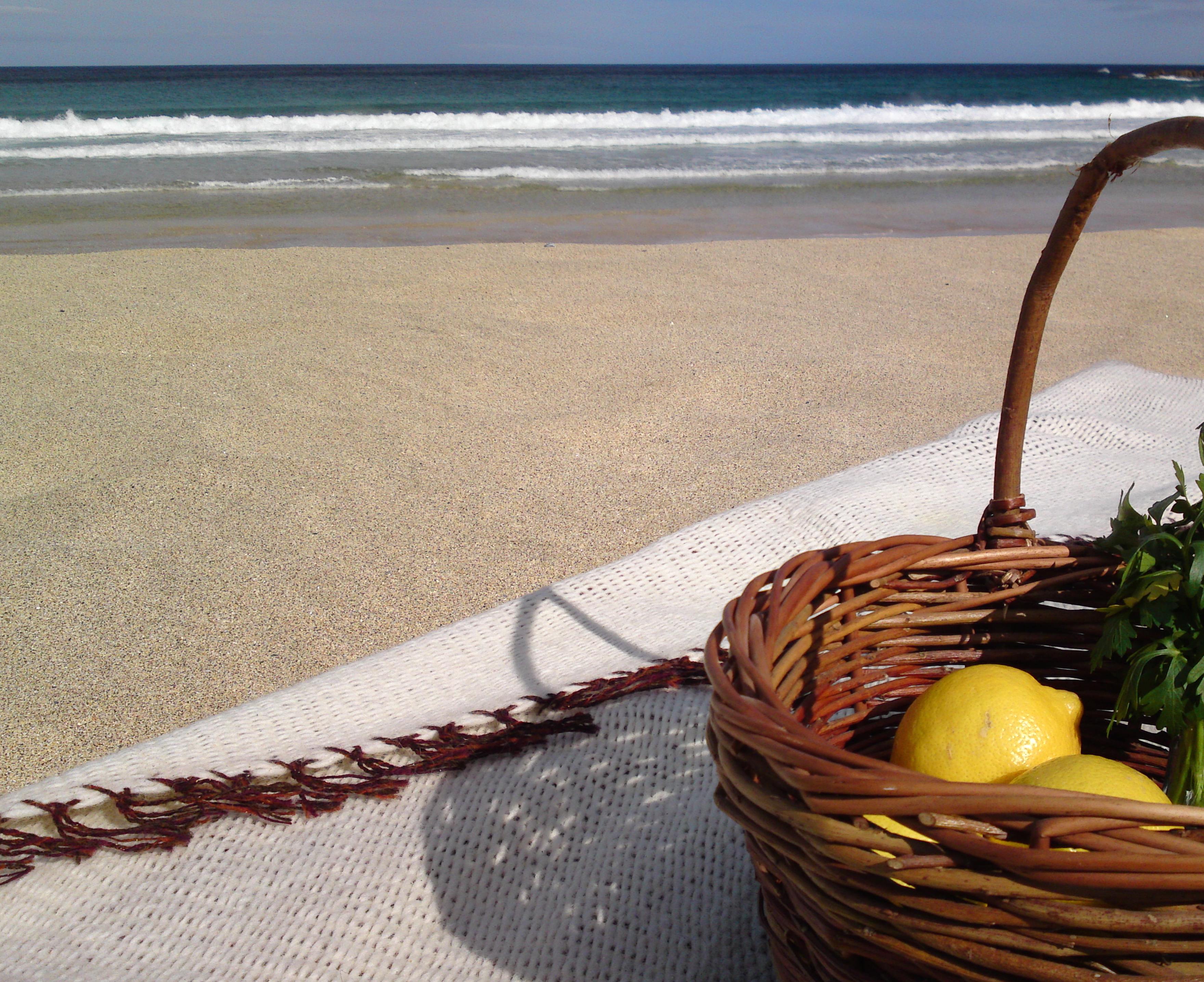
Icelandic Hebridean blanket

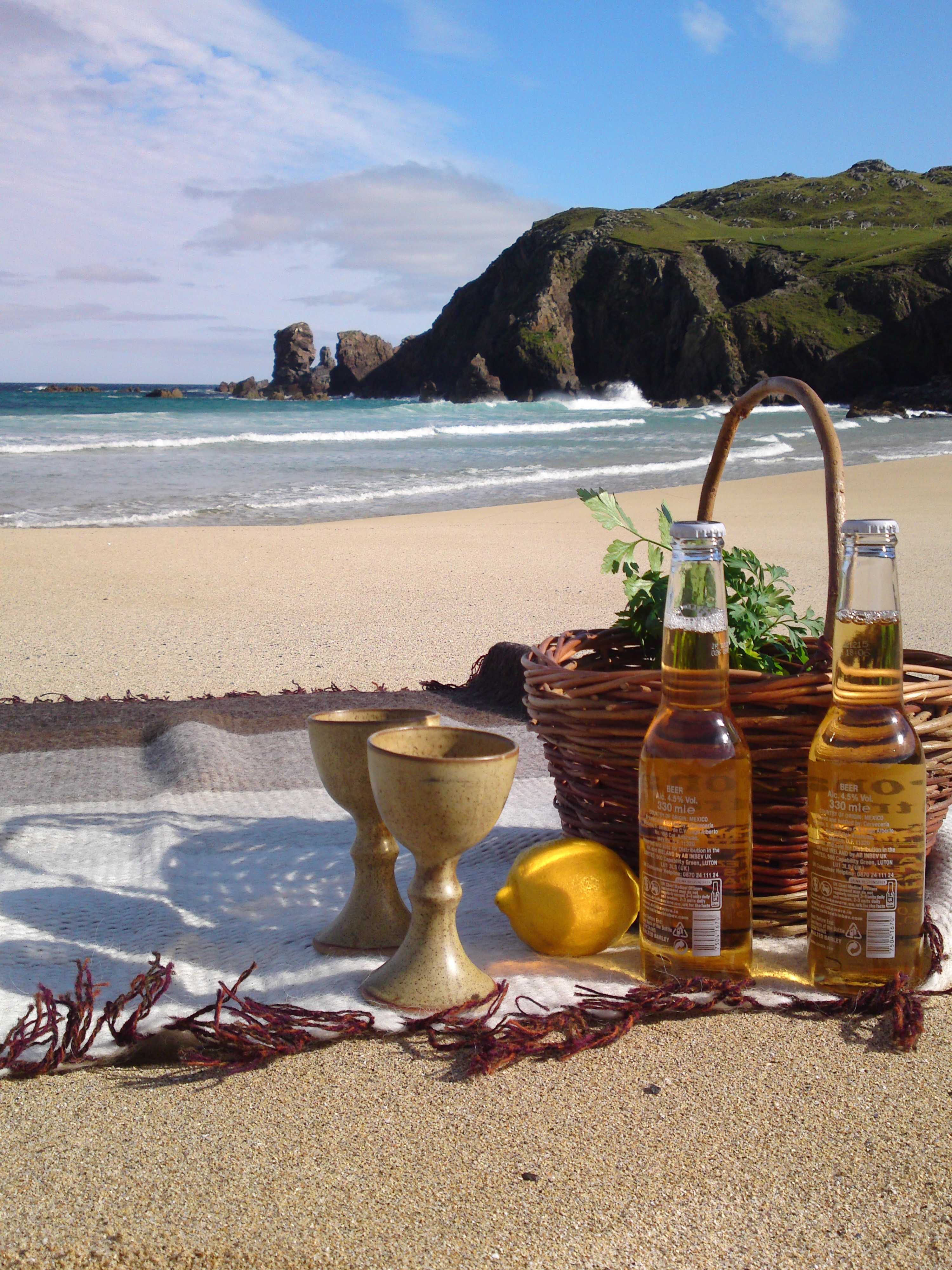
 Icelandic and Hebridean blanket with a basket of lemons and parsley. Of course.

Icelandic and Hebridean blanket, Dail Mor

Icelandic Hebridean blanket

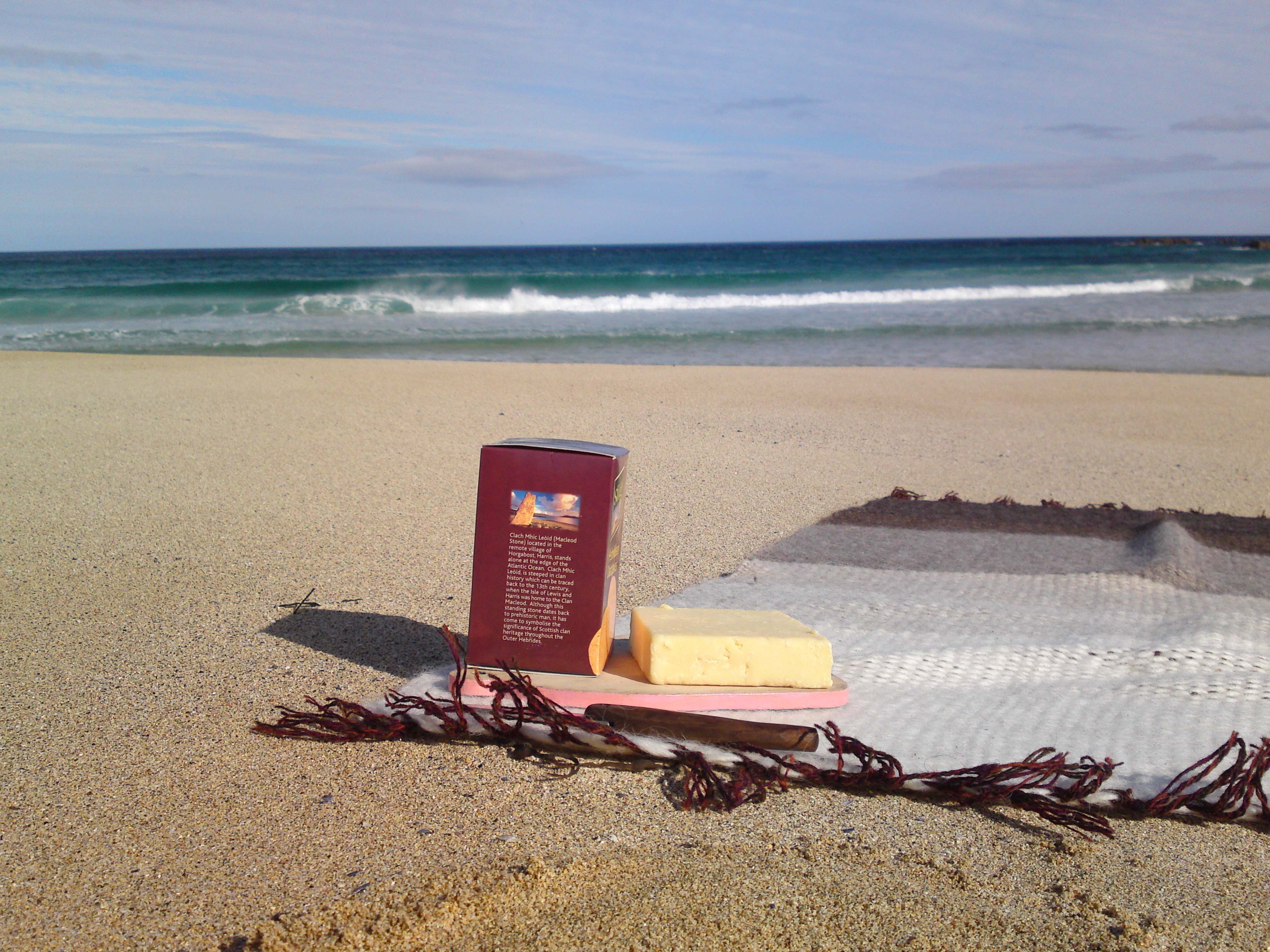
  Icelandic Hebridean blanket with pure Hebridean oatcakes

 Icelandic Hebridean blanket in the dunes

Icelandic and Hebridean blanket folded in the dunes of Dail Mor

However, we do seem to be lucky on the midge front for that – or else everyone is making a great big fuss about not very much. They should try living on Dartmoor. Indeed a local woman said the midge phenomenon only entered her consciousness recently as tourism has grown and grown. We natives of the wilder lands have worse things to worry about, methinks! (“Eee, when aar wer yoong…”)
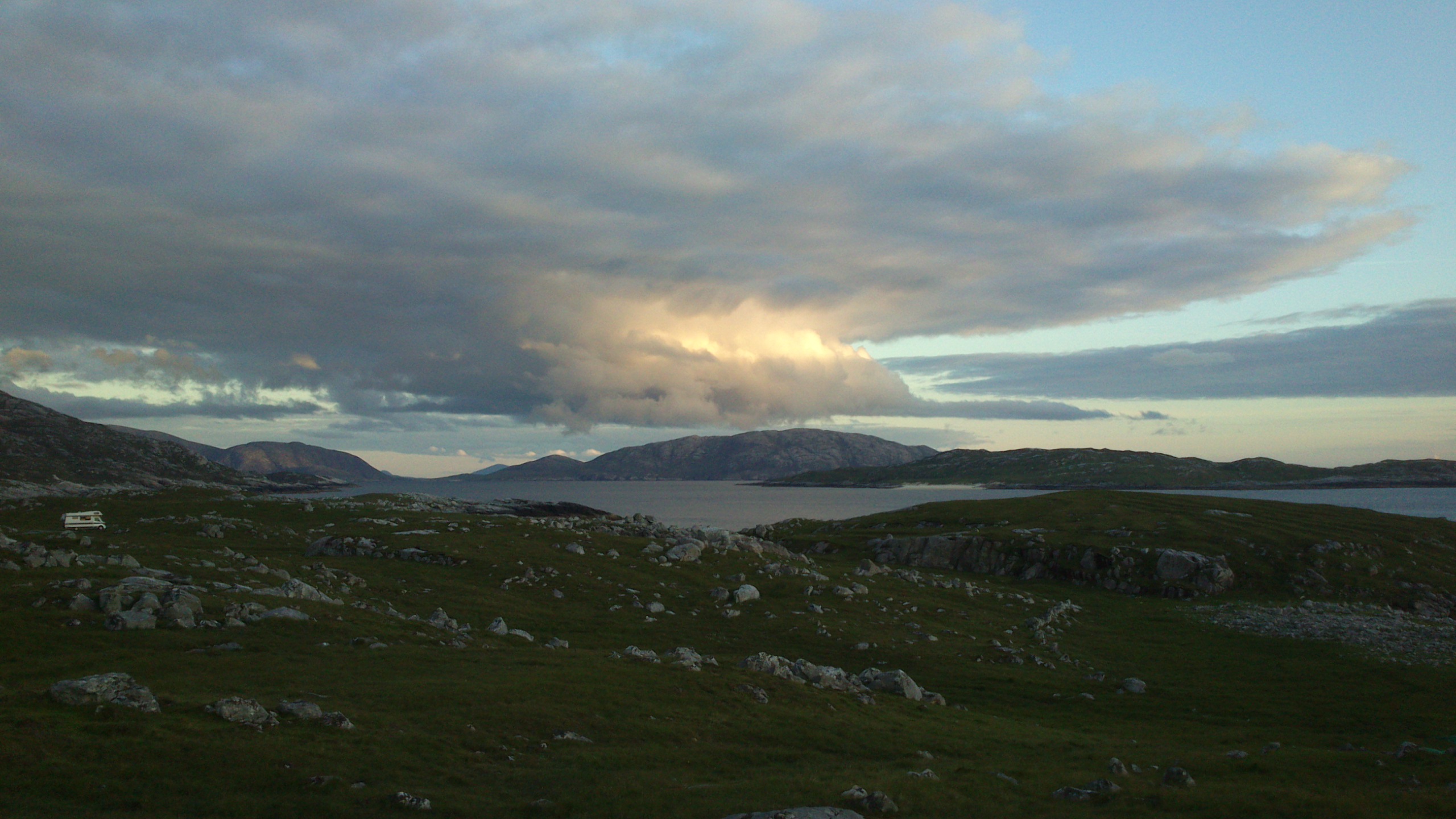
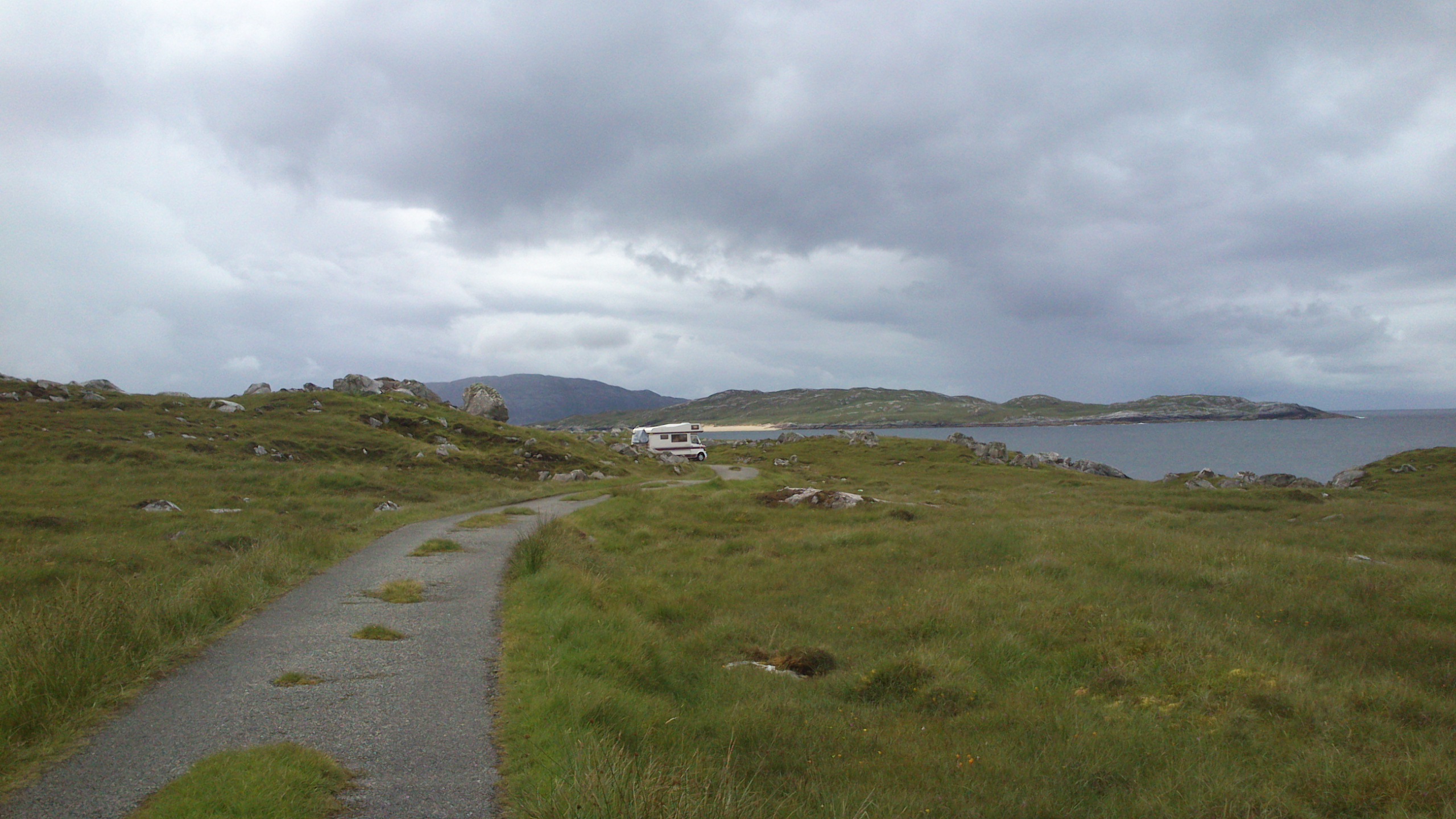
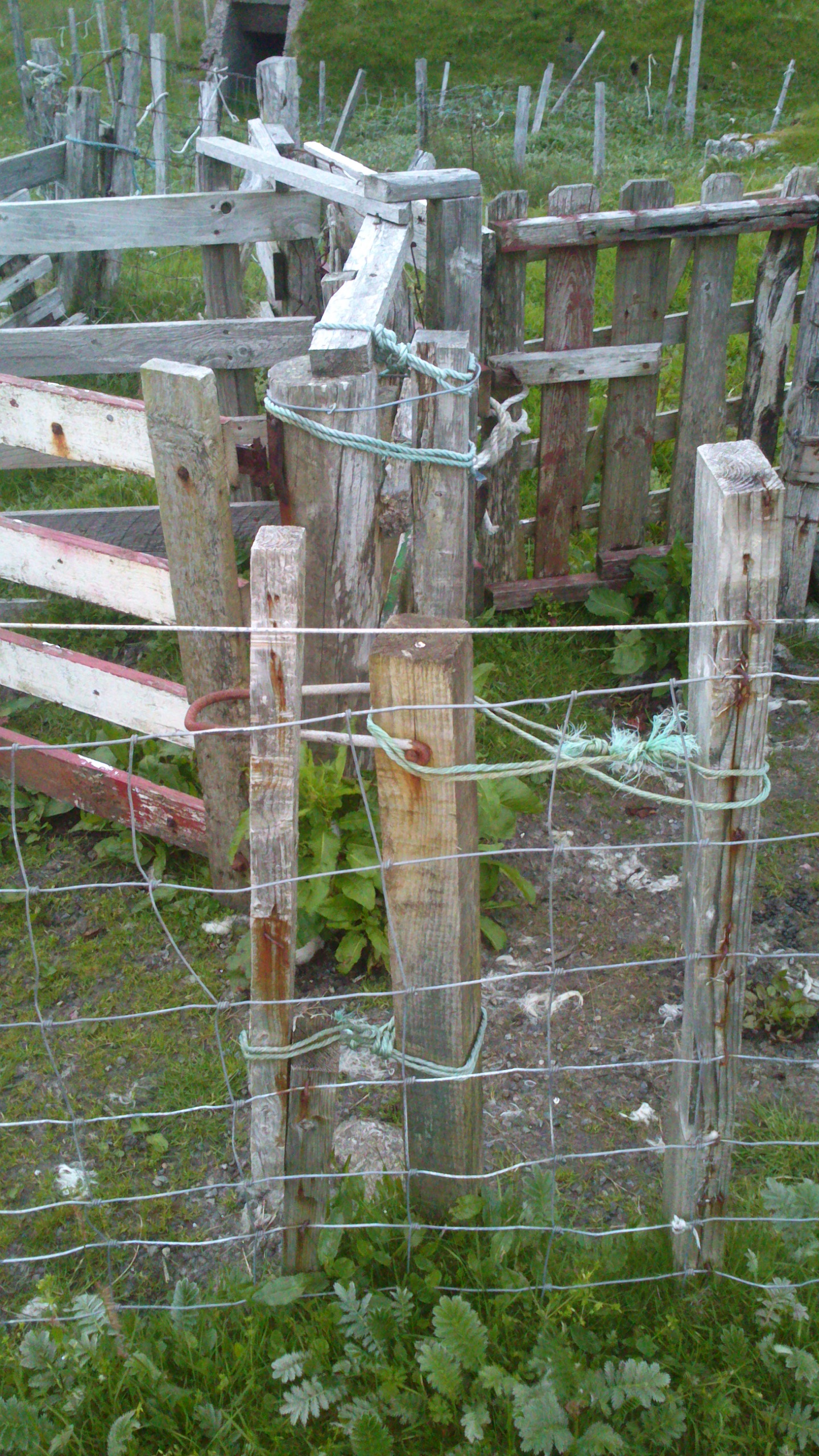
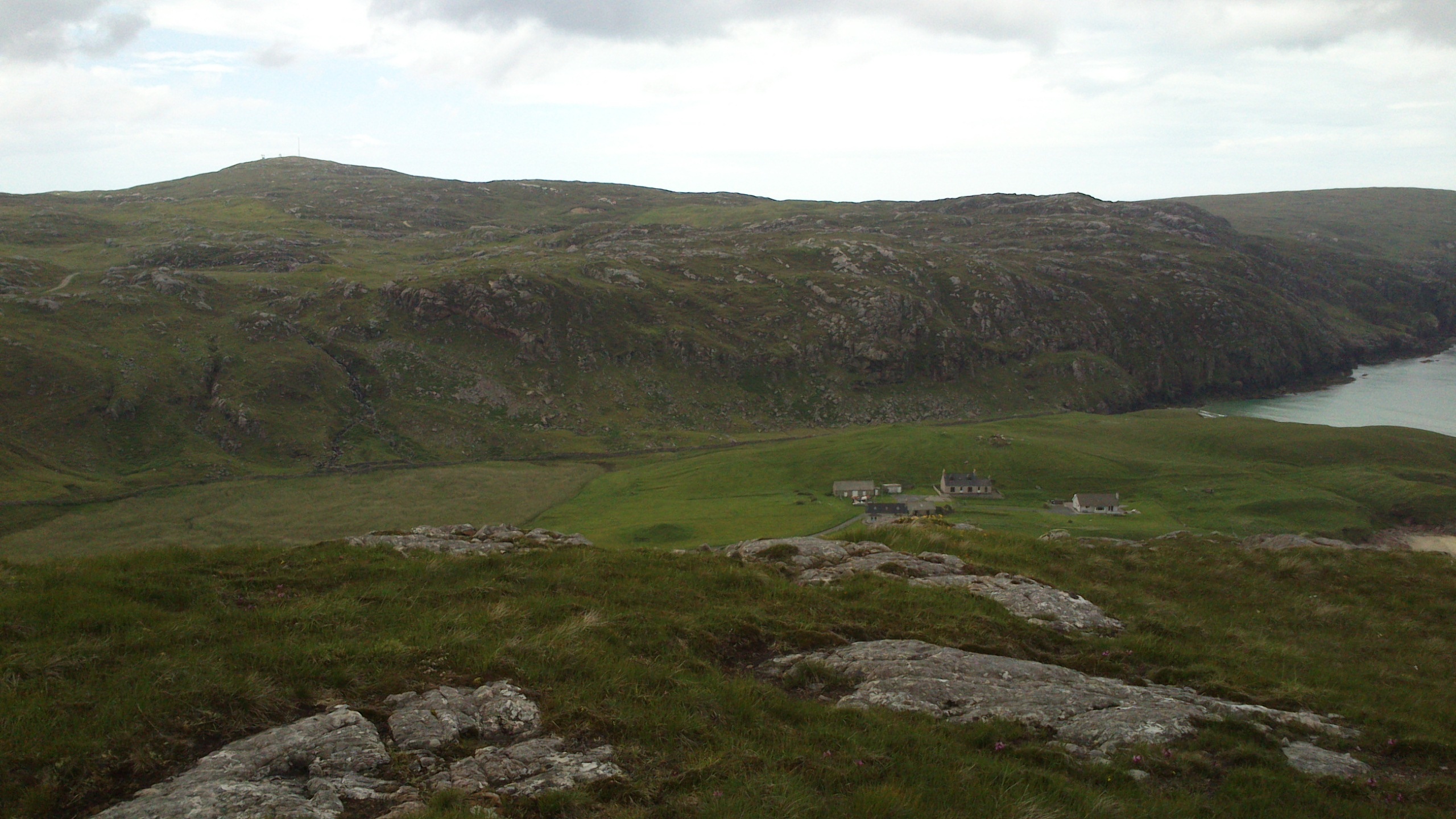
Gateway to Mhealestadh

 Another 'road to nowhere'

 Urgent ovine parliament

Mhealestadh and Scarp isles

After a brave week in the bare rocky spot where I’ve finally relaxed and stopped worrying (much) about armed or drunken men and re-staked my place in the wilderness, I head back to ‘my’ little bay. I plan to go via the community shop and do a good few hours’ work on their internet, whilst their industrial-sized washing machines do my laundry. On the way I pass the Abhinne Dearg (‘avigne jarag’ = Red River) whiskey distillery and have to stop for a little taste and a tour. What a way to start a day’s work!
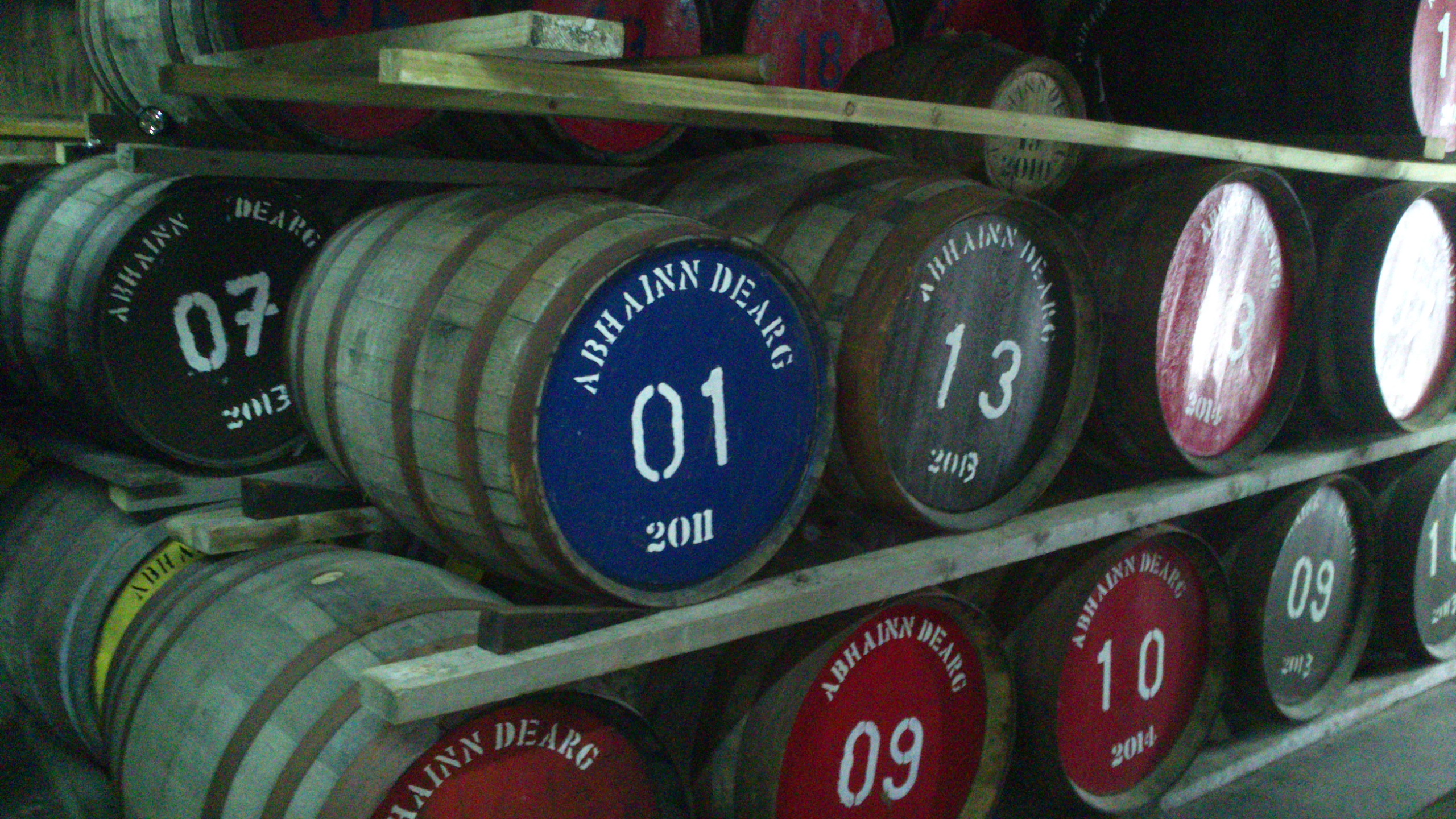
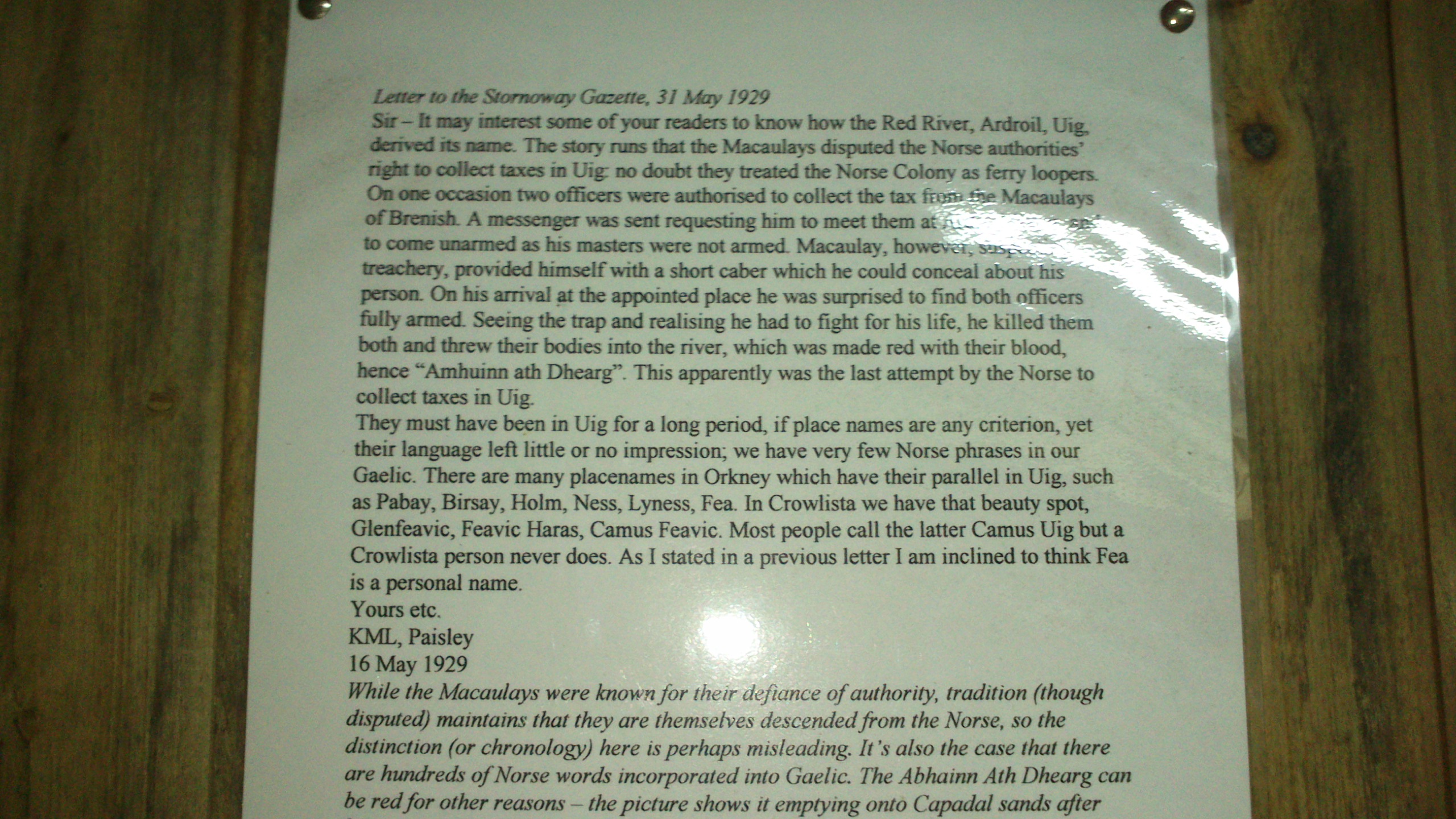
The barrels DSC_1252

One of the many mornings when I say over and over to myself, ‘Oh my God, I can’t believe how good my life is’.

And after the so-called ‘reality day’, on to ‘my’ little bay.
DSC_1255 DSC_1257

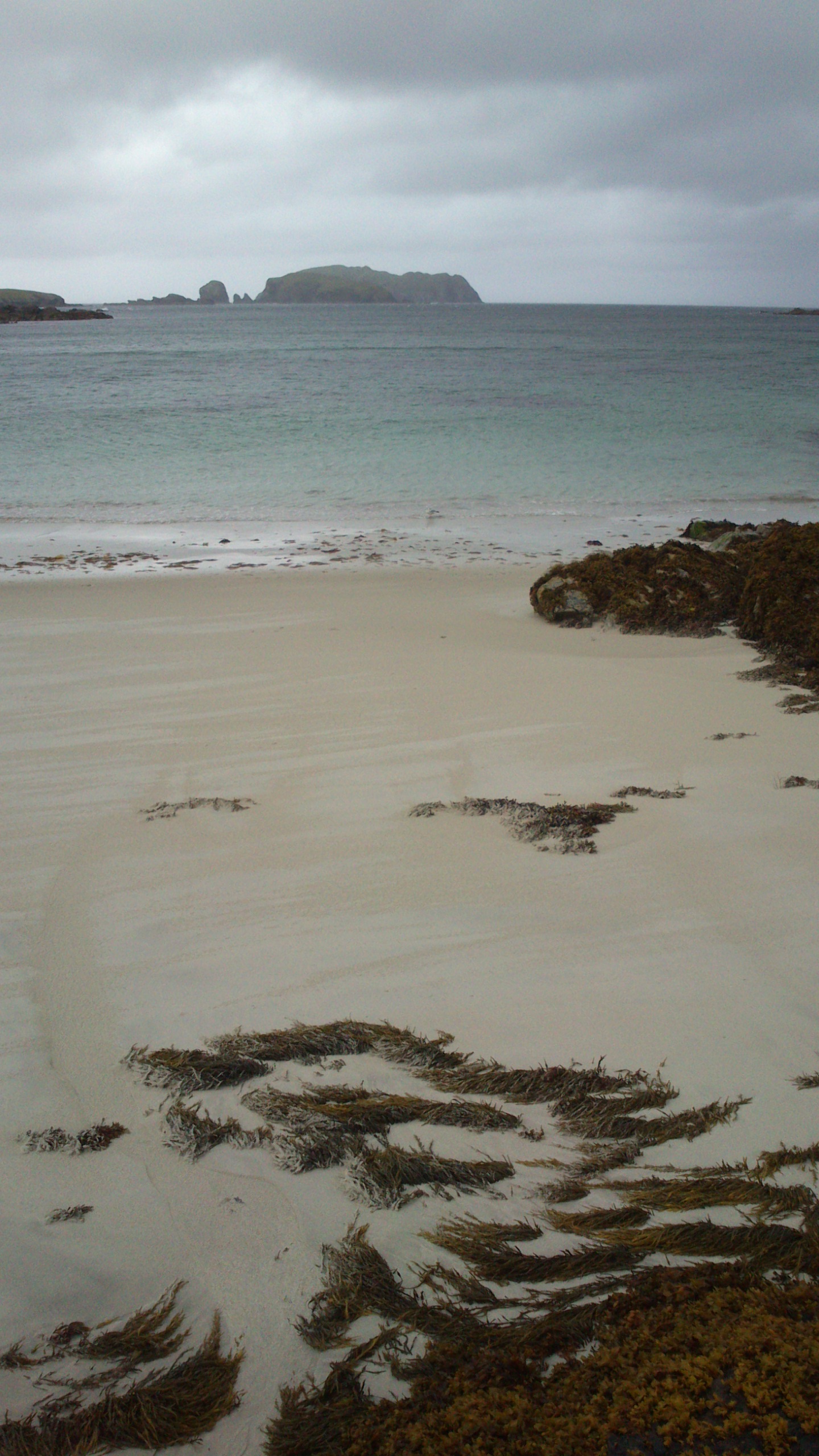
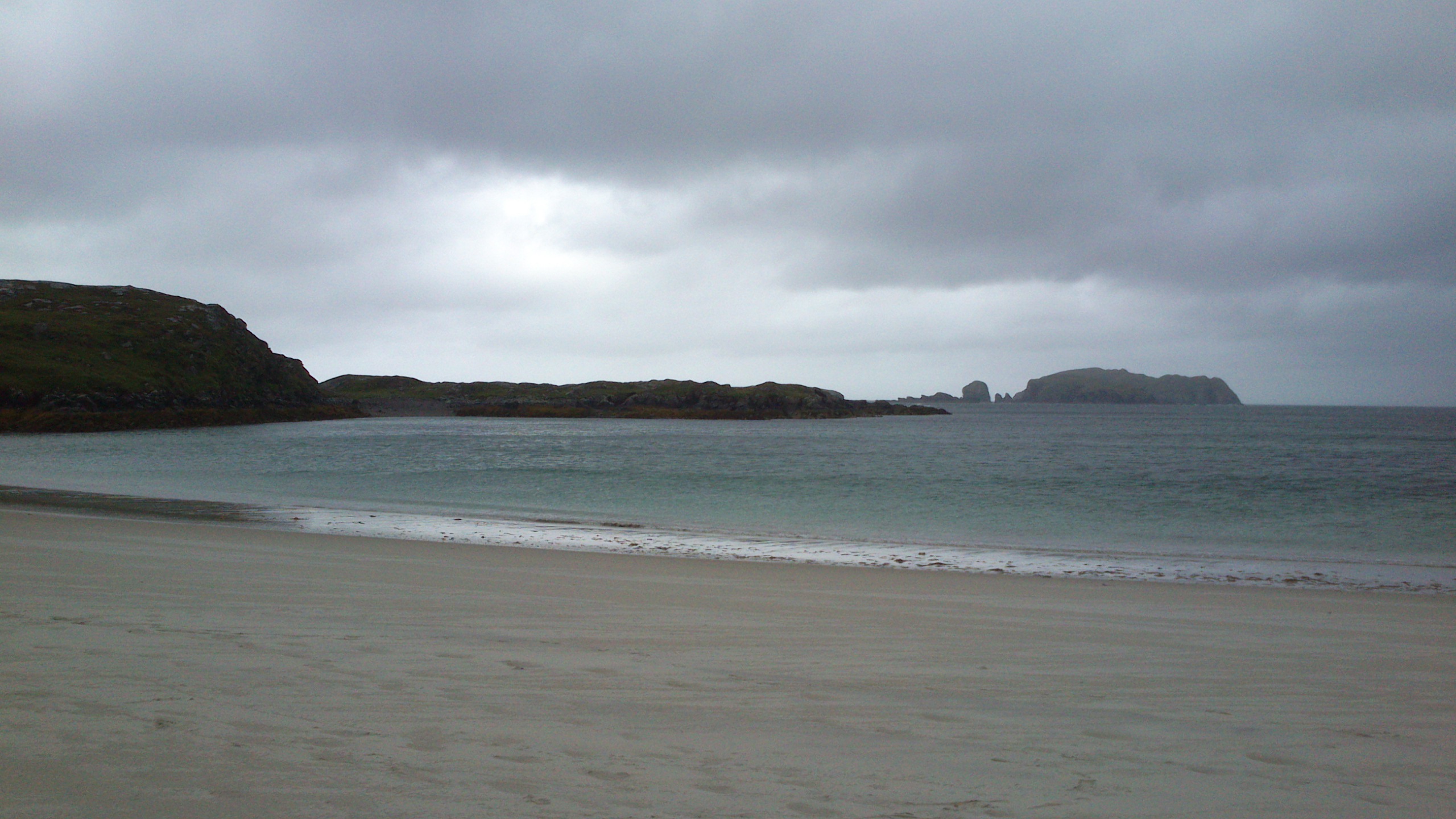
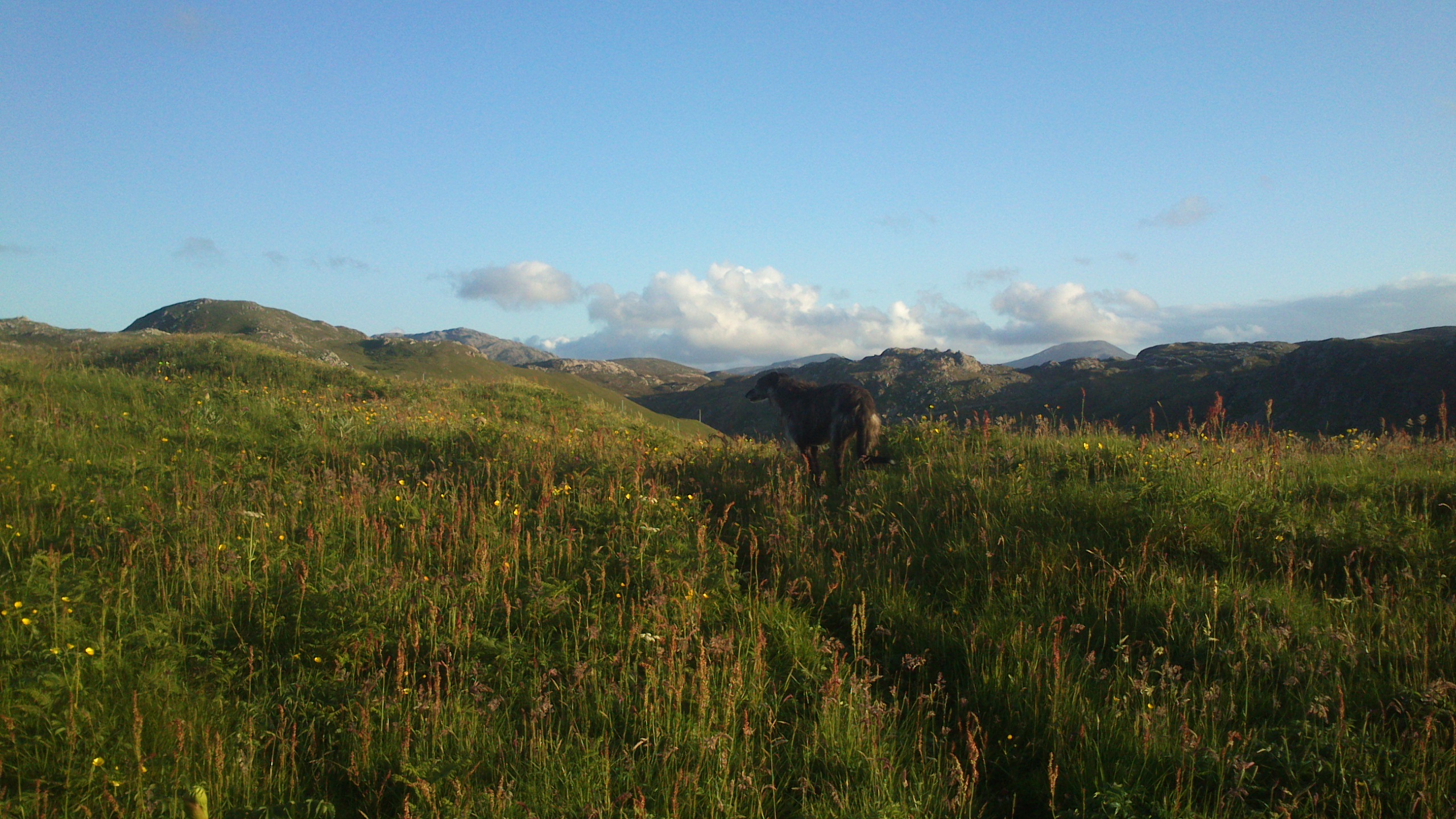
This place feels contained, familiar and very safe. I know the score: I know which spots offer shelter from the wind, and which are the more and less sociable. I know where the little fish reside in channels between the rocks. I know where the tide recedes to. I know my way up the rocks on each of the little inlets. I know where Murph will chase the rabbits. I know which pasture the sheep are in. I know where the fences have gates to go through. I know which rocks on the hilltops have a phone signal. I’ve had it to myself for one or two nights out of about 20, and apart from that there is always someone there. There is one other tonight, until a dark-coloured van pulls up at the end beyond me, and a wiry 50 year old cockily swings his leg over the fence to sit on the dunes with a can of beer and a fag to watch the sunset. Guess who. Dark is falling and I half pull curtains and, though I resent it, once again I skulk and hide as he drives back past, peering. The evening after next, there he is again, briefly, and hoots a hello, which I almost ignore, pretending to concentrate on keeping my *unruly* hound under control. (Smurf is being good as gold as usual, but if you see a very uncharacteristic picture of him looking like he’s about to rip somebody’s throat out, I’ve posted it to make myself feel better. He probably could if necessary.) Maybe I will leave this area tomorrow.

So the next morning I hit the road, singing my heart out to Christy Moore’s deep enunciations and Andy Irvine’s plaintive bouzouki, and go-karting from bay to bay over the yellow machairs and round the lochens and through the rocks and up and down the knaps and dales with a grey wet gale rocking the van I grin at the sadness of leaving and the excitement of moving on and all the wonderful Celticness.
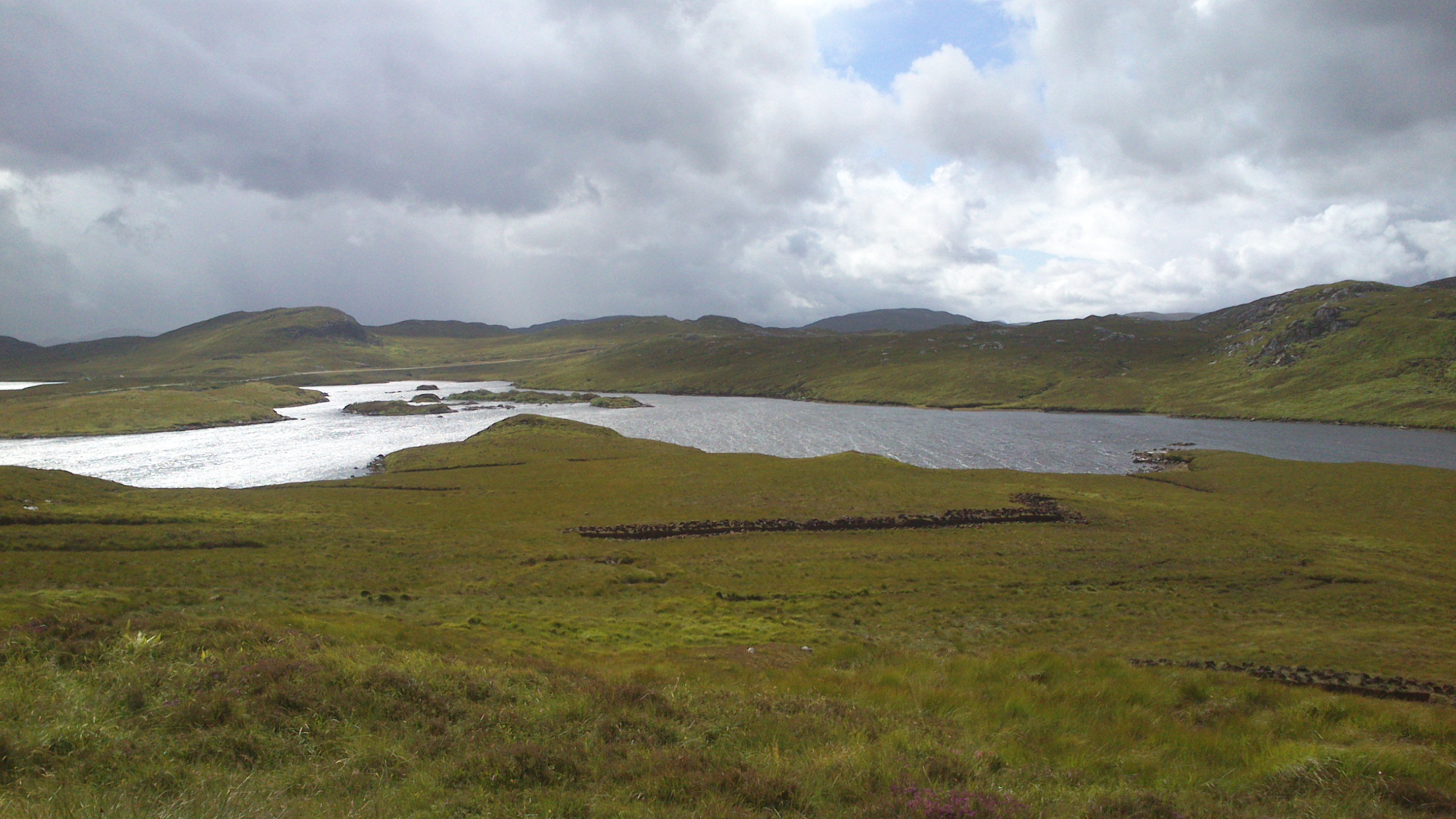
Peat cuts as I leave Bernera

I go all the way to the top of the little island of Bernera, off the island of Lewis, off the bigger island of Britain, run through the dunes in a downpour that is too horizontal to be called ‘down’, to the refuge of a peat fire in a 5th Century Pictish hut.
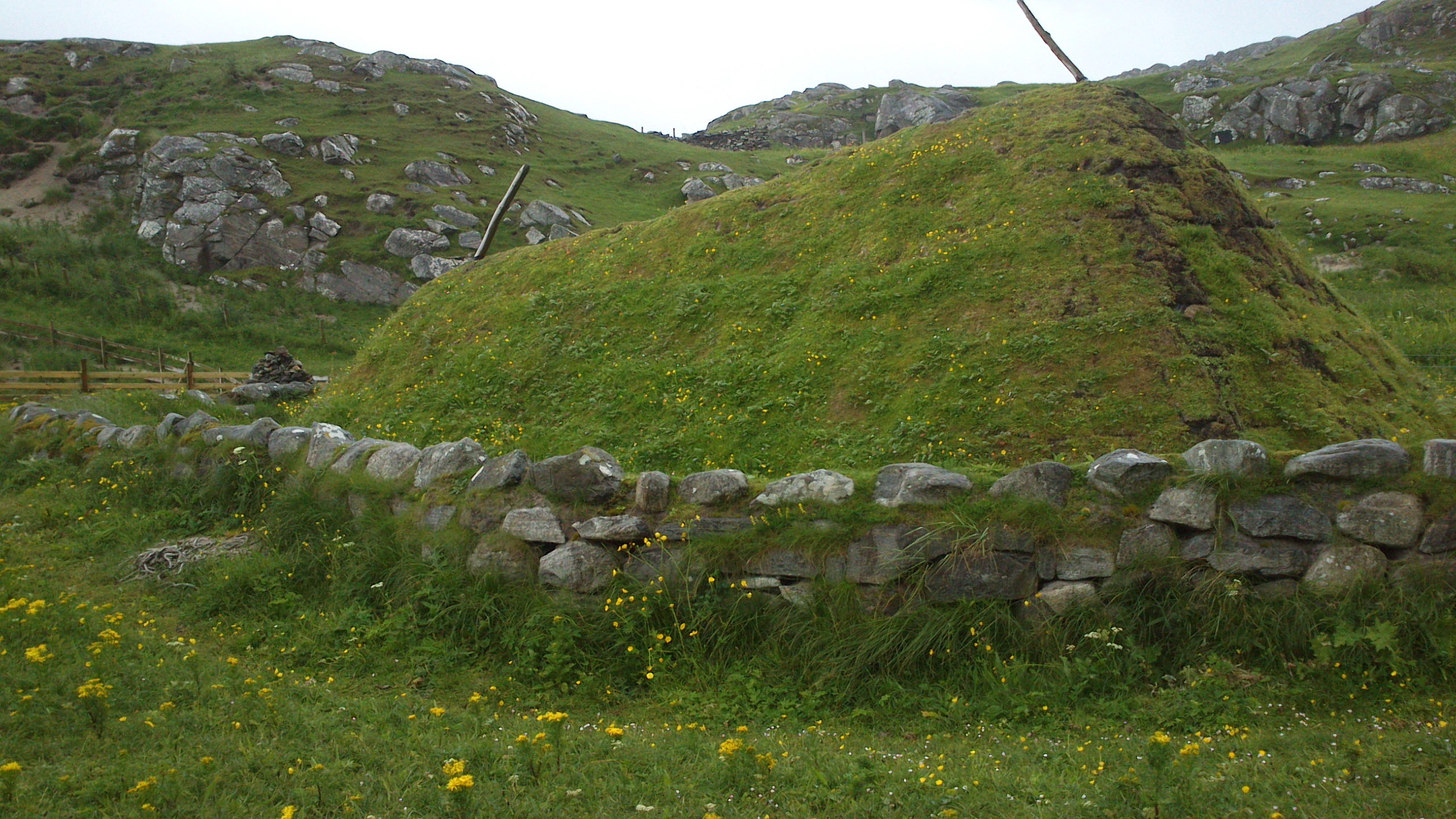
DSC_1276

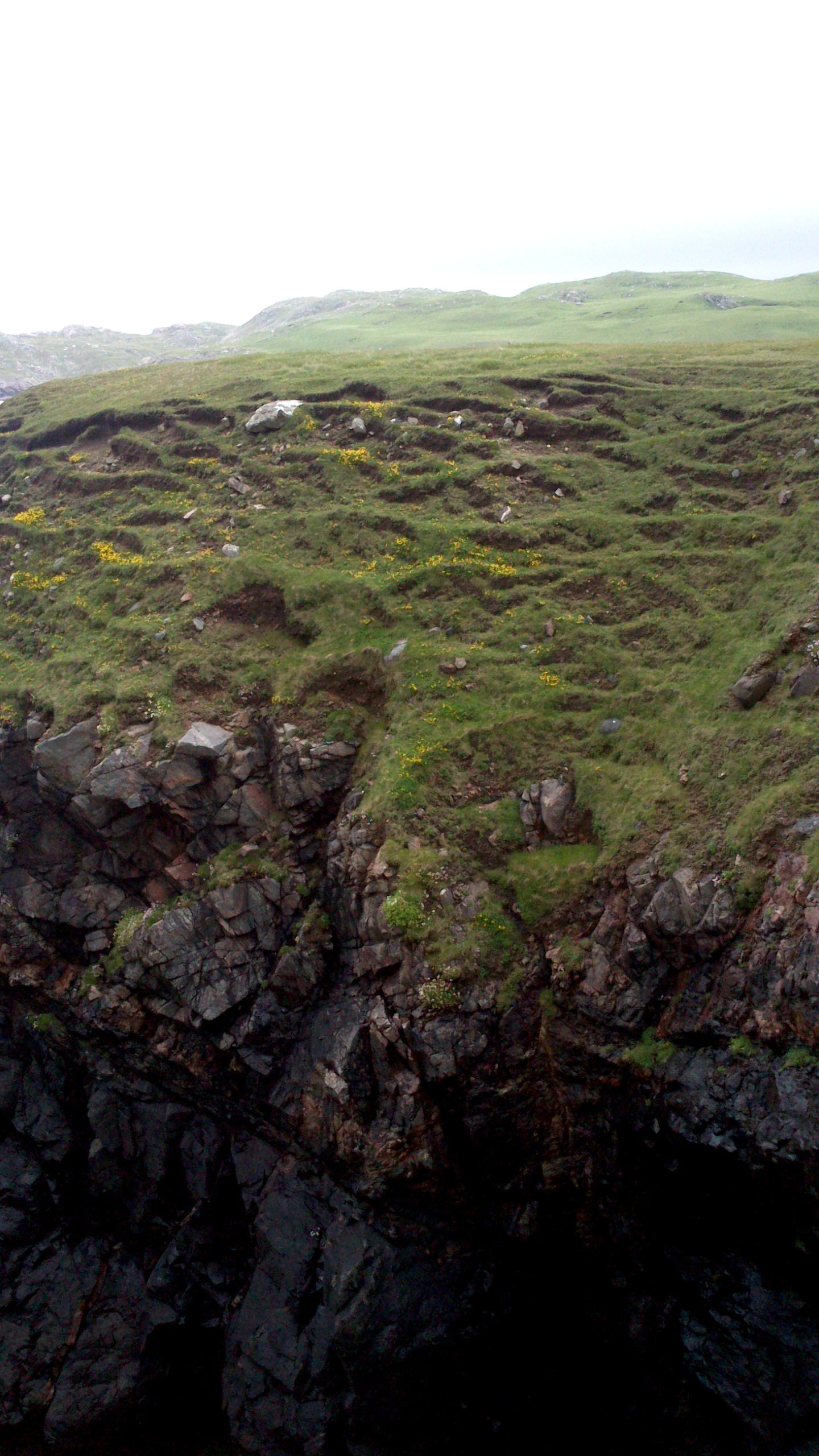
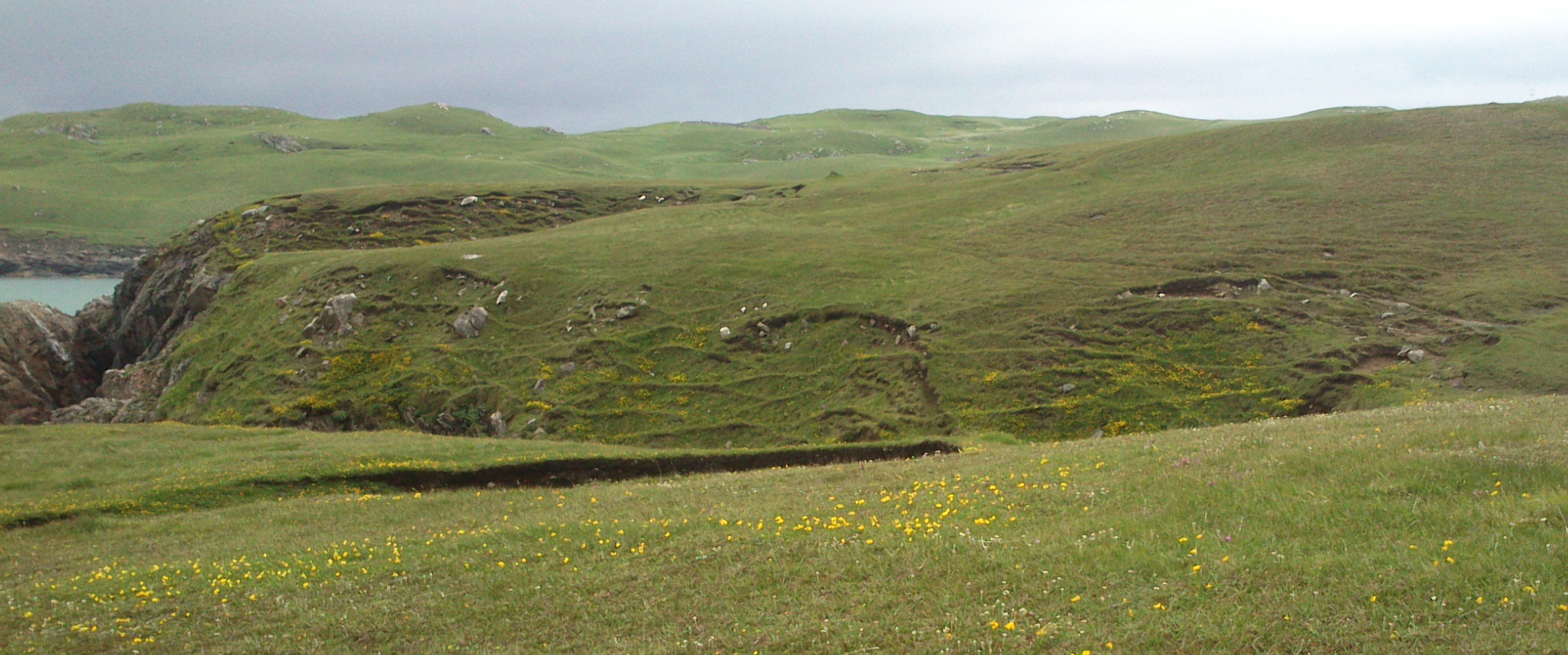
It is round, with double-skinned earth-filled walls a total of more than a metre and a half deep, half underground, turf-roofed. I think of Dartmoor hobbits, tangly low dark ancient woodlands, and my friend Alan Lee who recreated our landscape in New Zealand for the films. This house is a reconstruction on the site of an actual Iron Age house that would have been the same. Curiously, they took these stones from a slightly younger Norse-influenced blackhouse nearby, and found that there were exactly the right number of stones, lintels and all, to make the Pictish house – presumably successions of settlers re-used each other’s materials. It’s funny nowadays the number of croft-house shells that sit untouched with a new house in their curtilage made of very different, less beautiful materials. Apparently though some of the building principles have remained: most houses still have their backs to the north wind, their doors to the south and some even follow the old layout. In this roundhouse the entrance hallway is at a diagonal through the thick walls, with its own slight curve, seemingly so that the wind funnels clockwise around the room, where the earth floor is trodden to follow, so that the left side, the walkway from the entrance through the main room to the cold store at the back, is cooler and the draught curls around the central fire pit to send the smoke upwards and the warmth rightwards. There are sleeping platforms in the rafters. The hut feels low-ceilinged but is not. Elizabeth MacLeod, our proud local host who is young but who could have lived here for all the 1500 years, wiles away her hours in the dark house making the kinds of tools that the Picts might have made. Her prized possession is a smooth, flattish, black stone the like of which she says is commonly found at Irish digs, and which is rough at either end as if it’s been much used as a tool. She has worked with archeologists and scholars and though she is technically neither, her interpretations of things, when they differ from those of the scientists, are more compelling. Much is unknown, but she tells us that here there was a ‘Late Iron Age’ that the South didn’t have, because the Romans had moved us into the Dark Ages. (Thanks guys.) It seems as if the Celts played a much lesser part in shaping these isles than the Picts and then the Norse, whose language litters the Gaelic here. Elizabeth says that DNA tests on locals reveal often as much as 80% Norse blood. I ask her what she considers herself, and she answers ‘Hebridean, like the sheep’, and we laugh that they are a breed of black sheep. I haven’t seen any on Lewis yet, alas – they are among my favourites: dark coloured, pale-eyed, wildy and a little goatish, like the Soay.
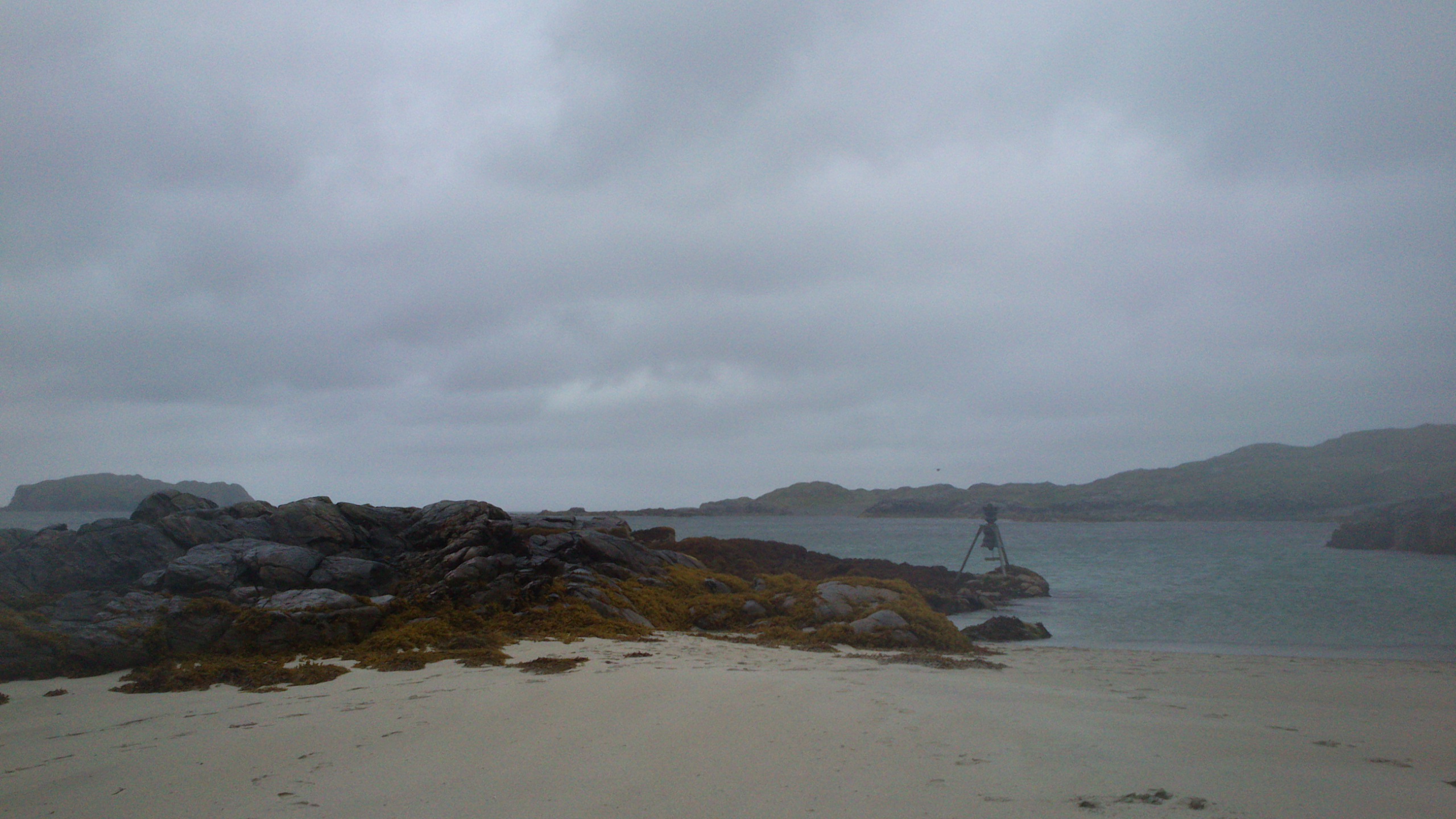
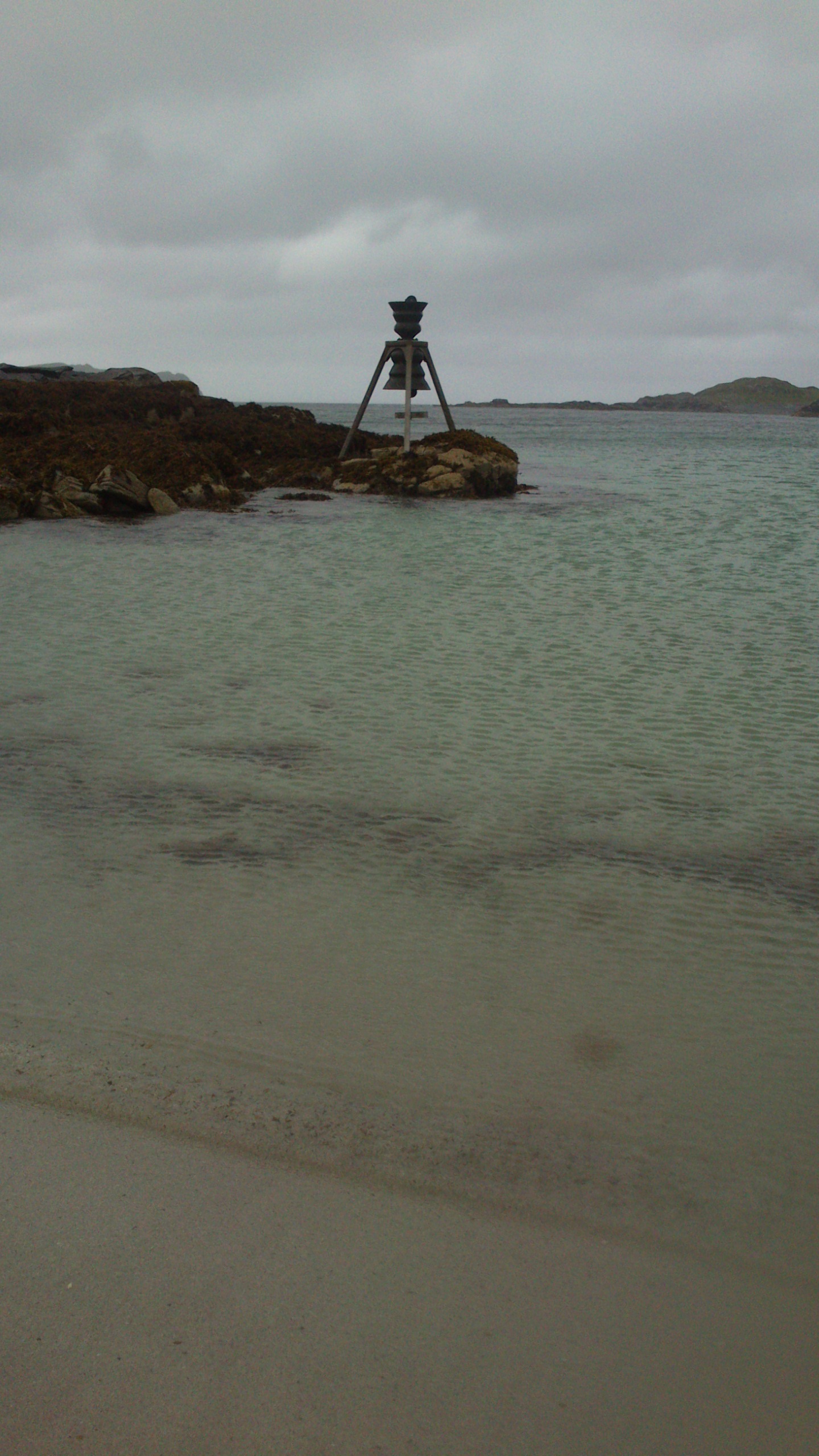
DSC_1278

DSC_1284

DSC_1282

DSC_1281

DSC_1280

Earlier my friend Angus and beach combing daughter, artist and environmentalist Violet spotted my van and made a detour to greet me and offer hospitality in the holiday cottage that they’ve taken for a week. For a bunch of introverts who seek the farthest edges away from hustle and neighbours and interaction, we have a lot to natter about, and it is great to see them, as it is every time. The following day at a local show (where I am lured by the Harris Tweed weaving class), I bump into some lovely young girls who have made good friends with Murphy, and we find ourselves together again in a new (to me) camping spot, reassuringly. Leaving the last spot I kicked myself at not having crossed paths with a young guy I’d not sought to greet simply because he was male and alone (and wearing a hoody – god, that makes me old – though my jumper has a hood, so please, not that old): when I left after two days we finally exchanged lovely smiles. It turns out that he is at today’s camping spot too. I like this travelling community. It’s like a market or festival scene, a kind of informal circus, a diaspora that moves like an undulating flock of starlings, sometimes closer together, sometimes further apart, sometimes landing in different divets, sometimes in the same one. Some we see again, some we don’t. Summer people with the camaraderie of rain.

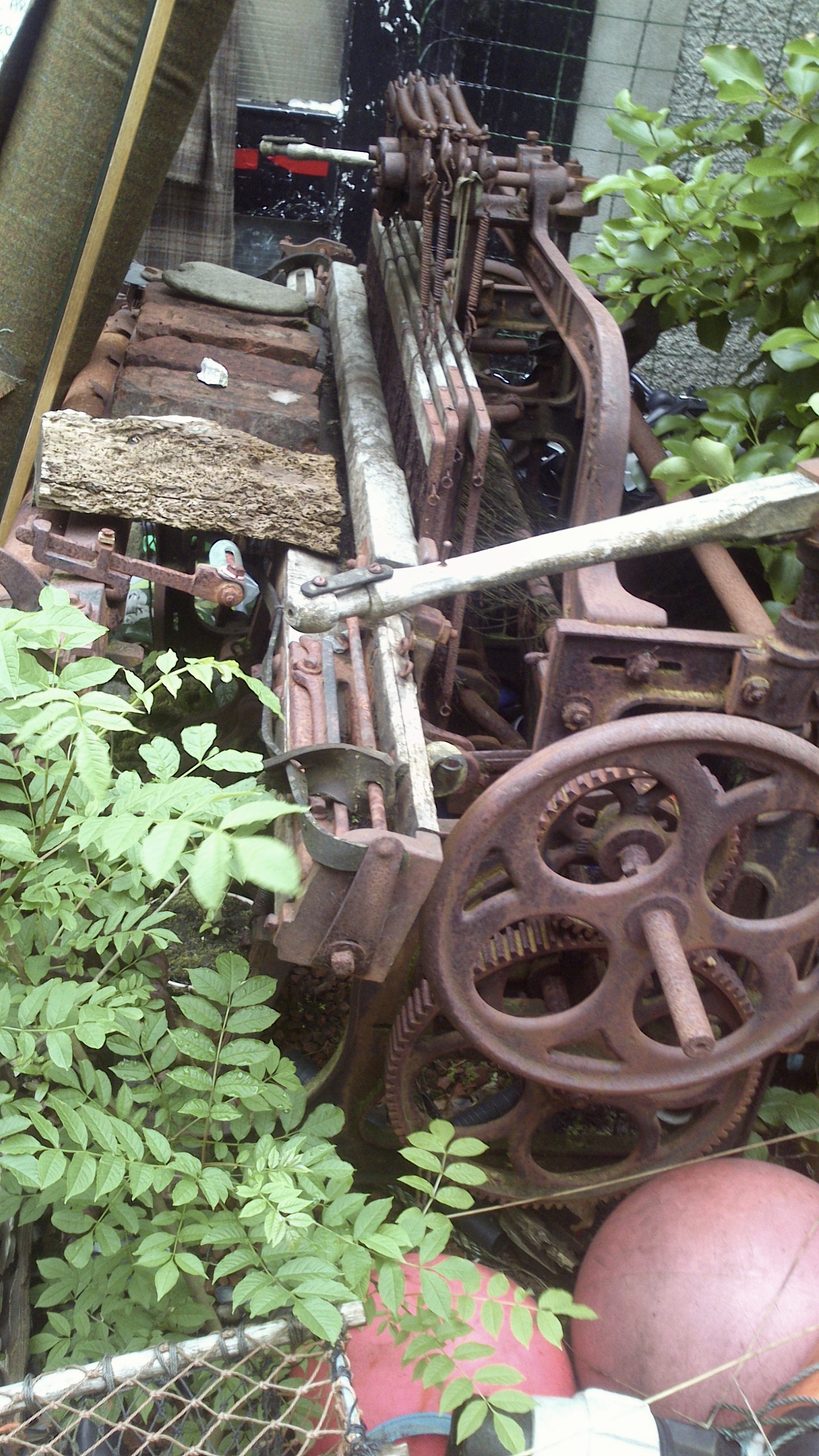
The Hattersley

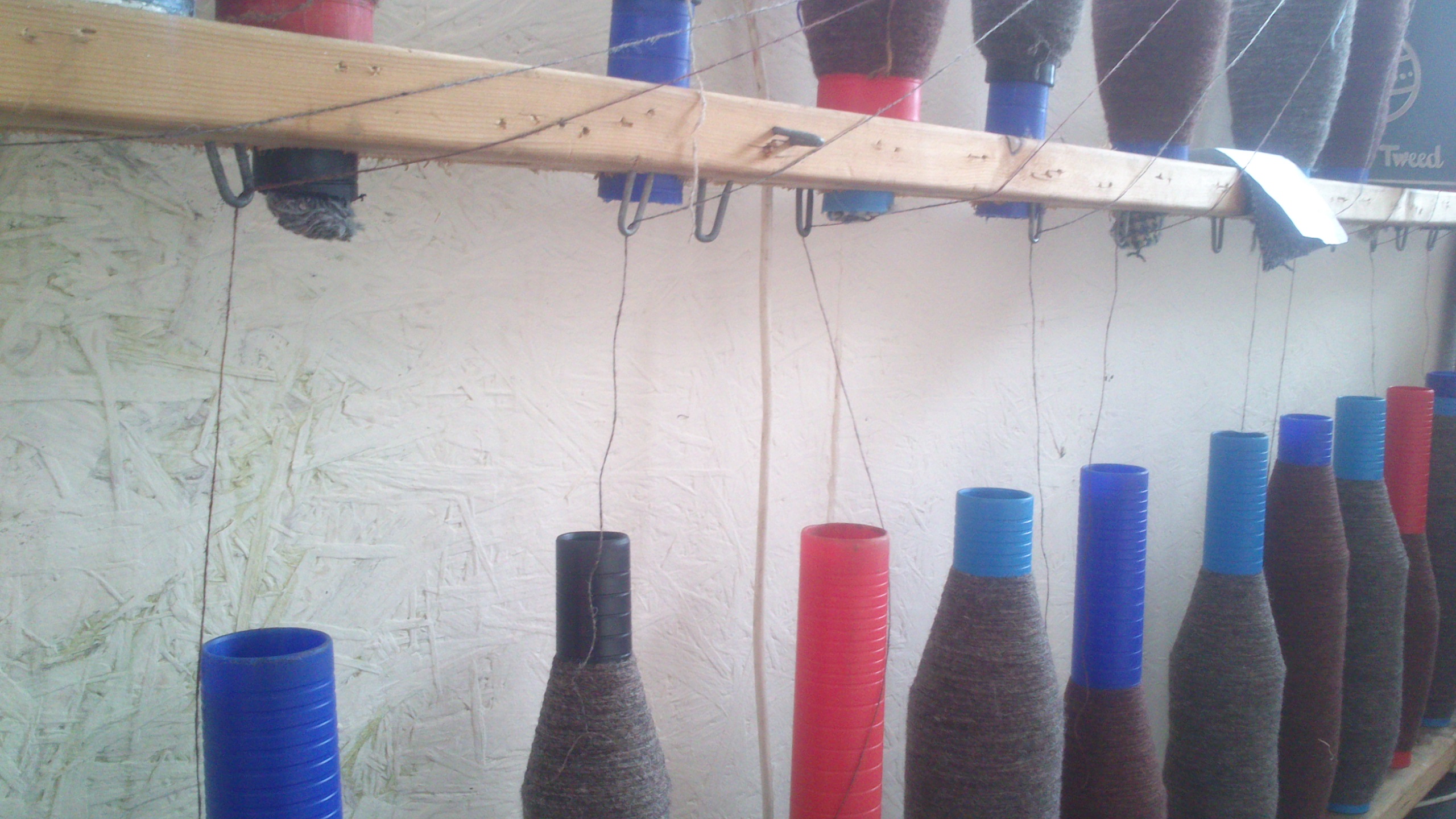
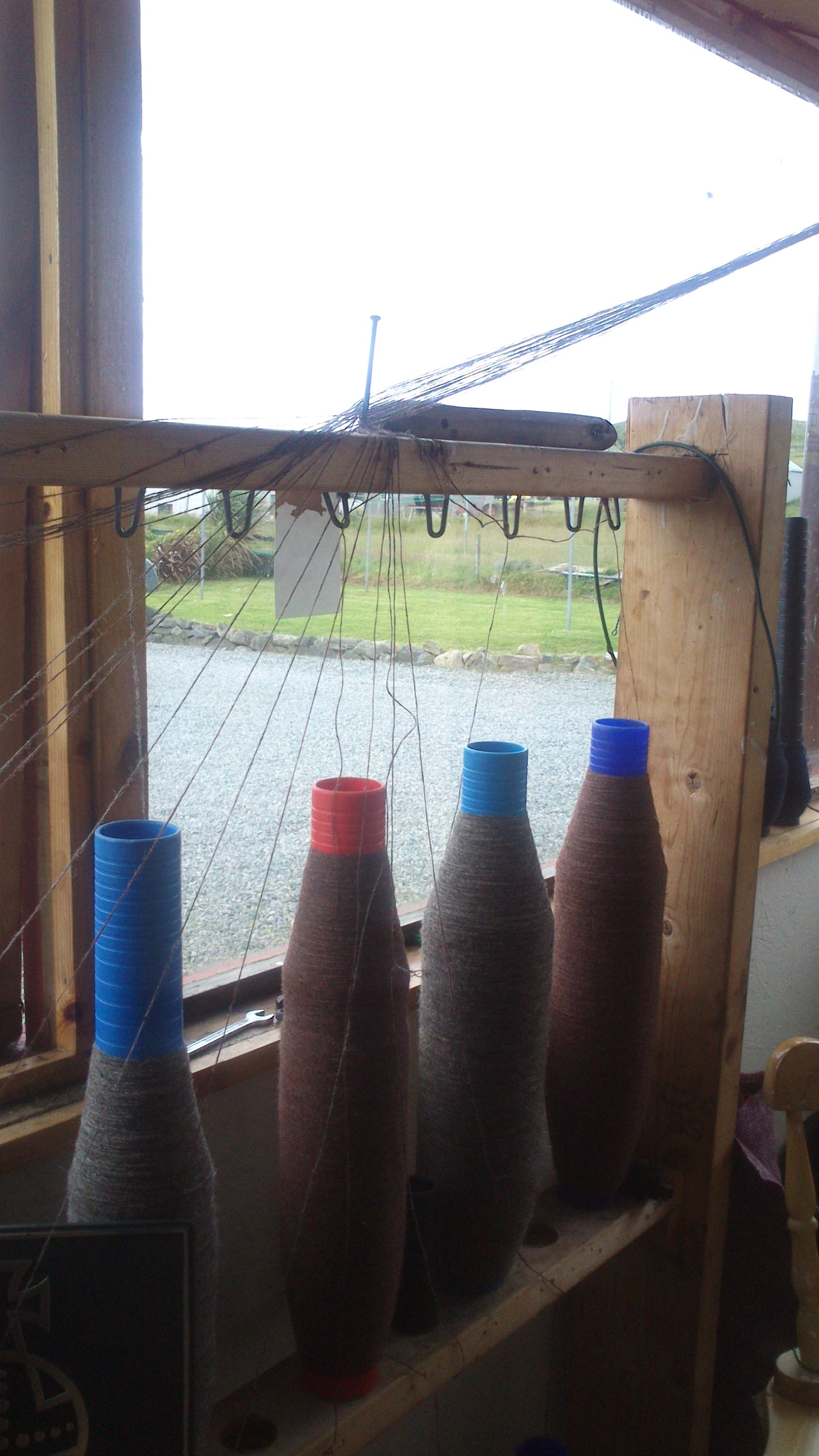
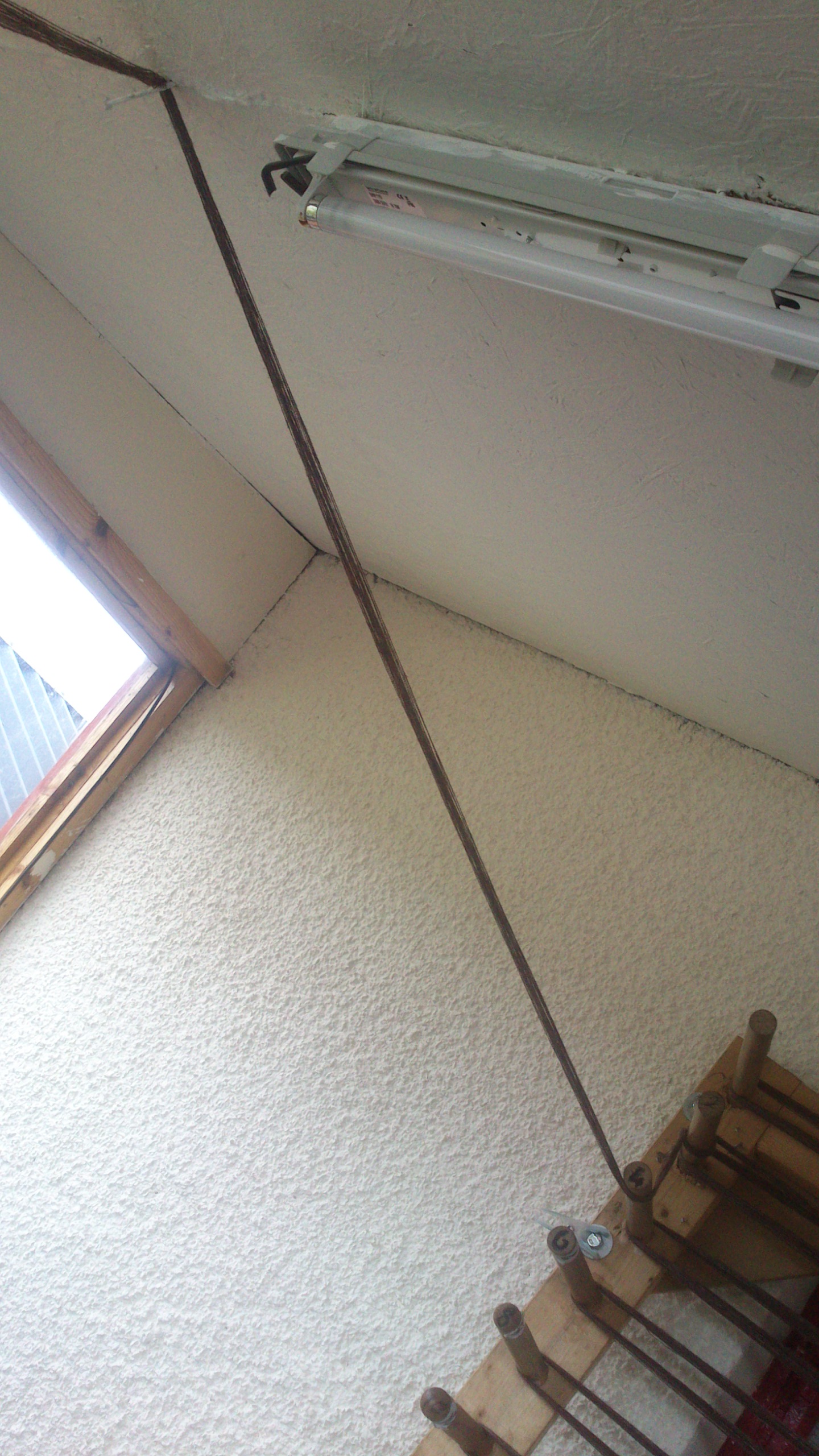
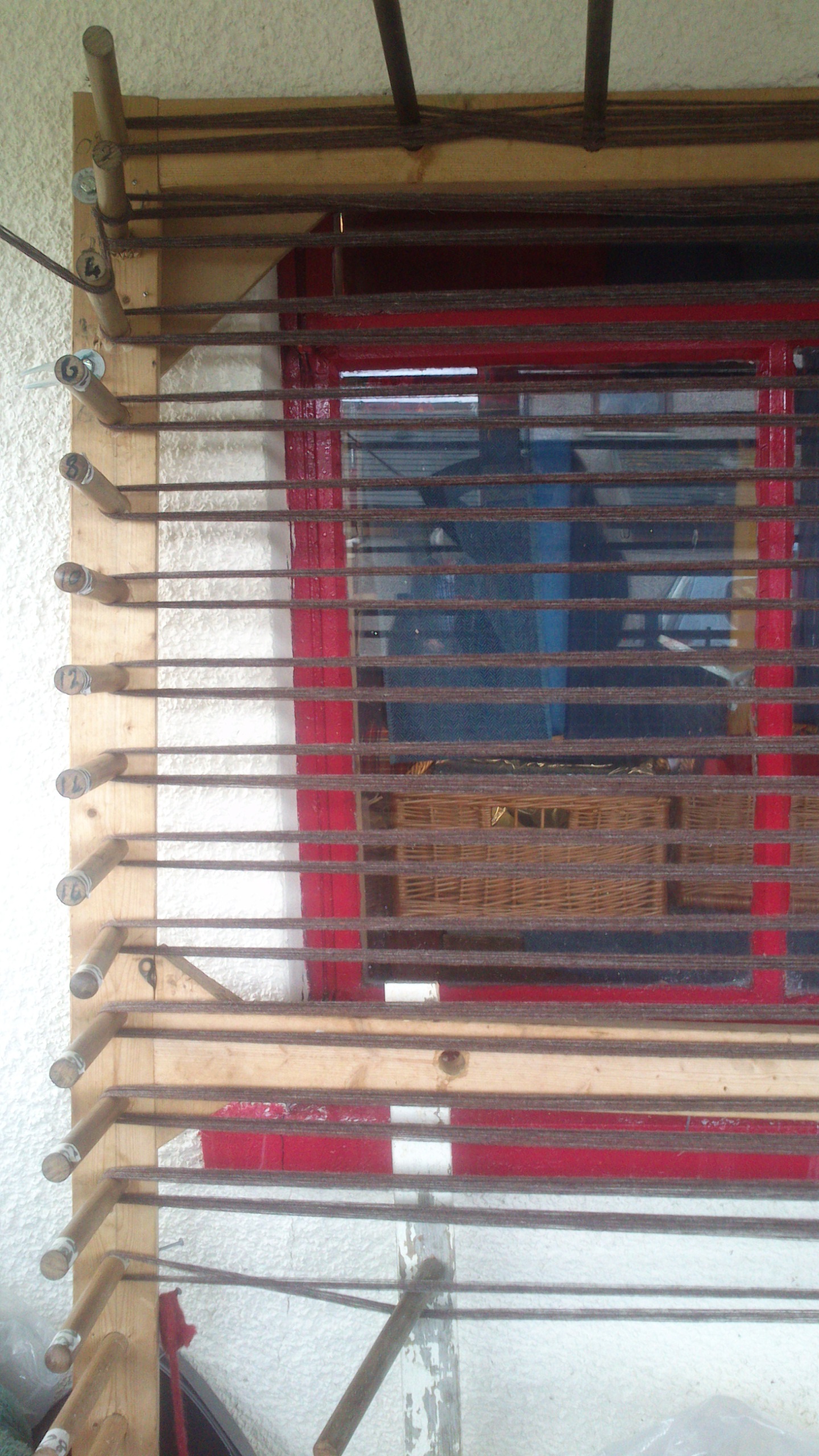
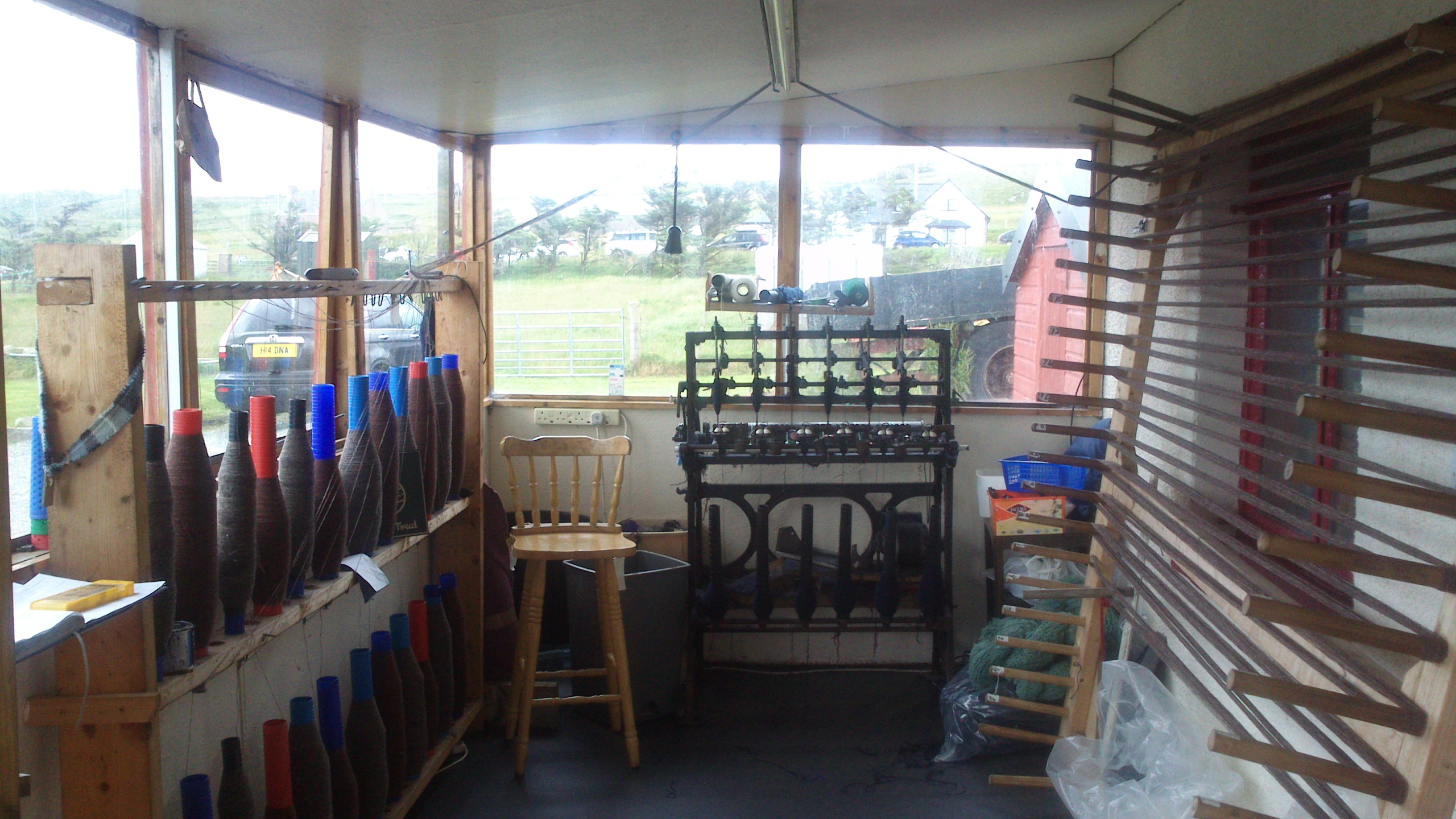
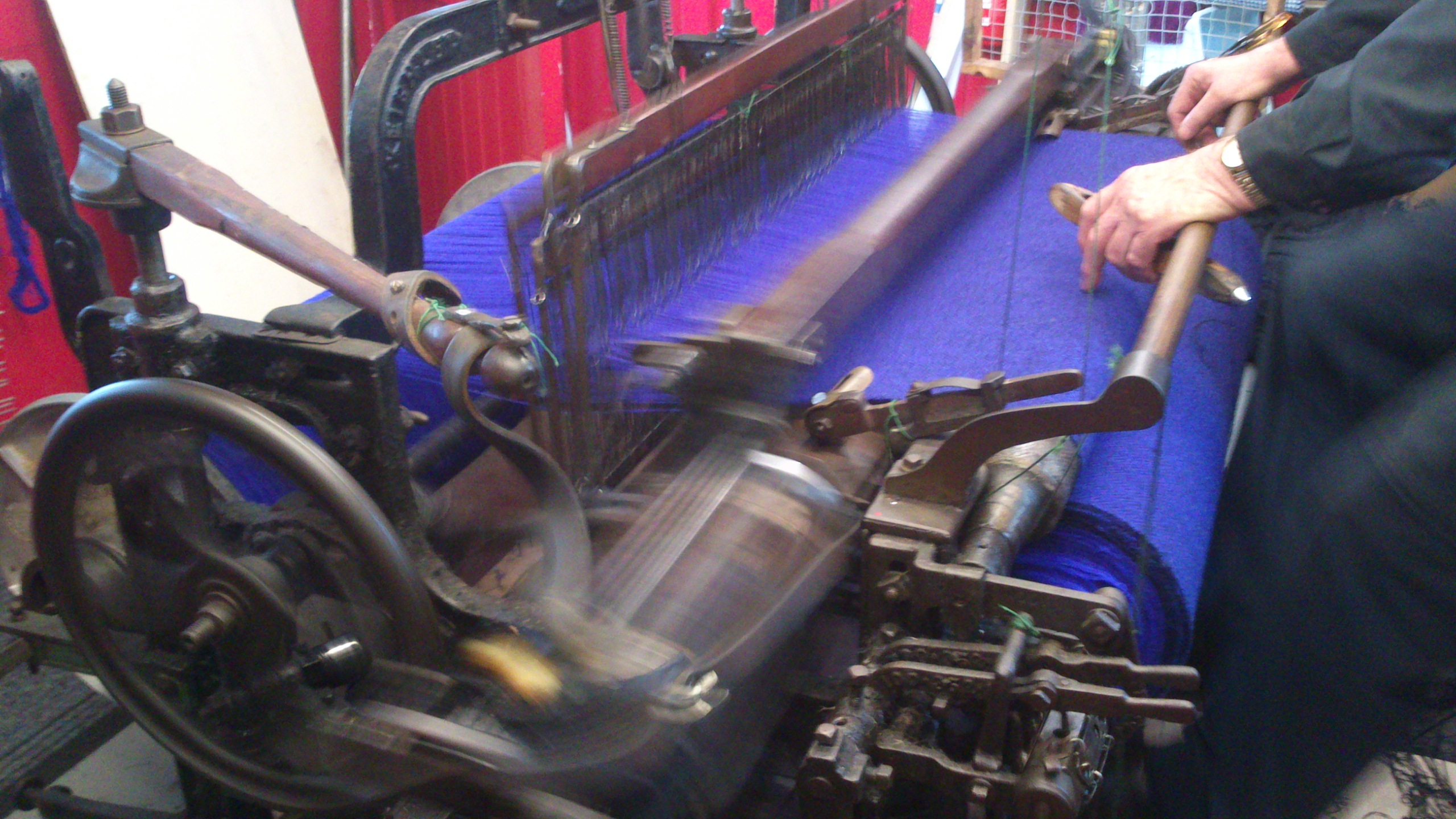
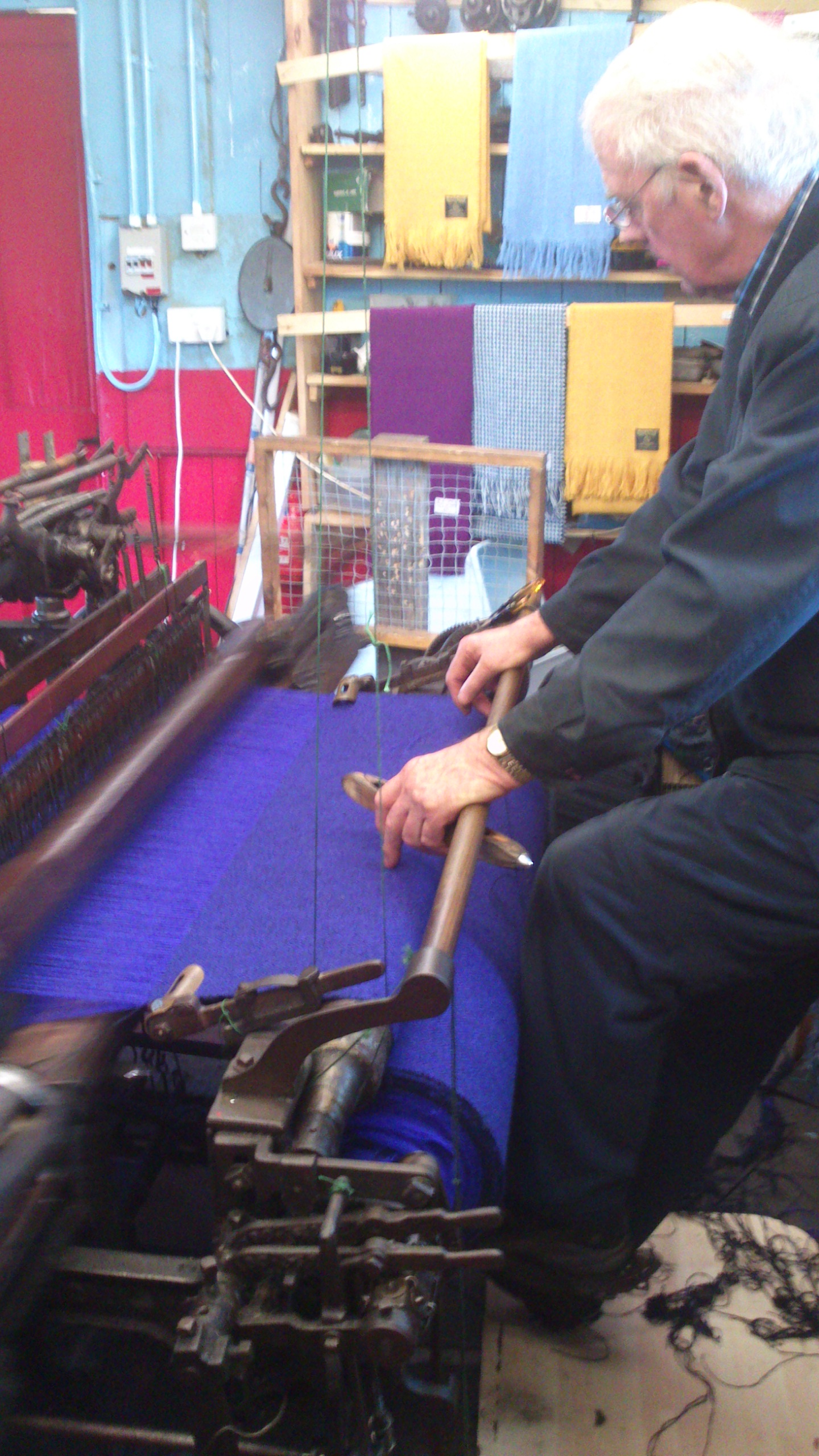
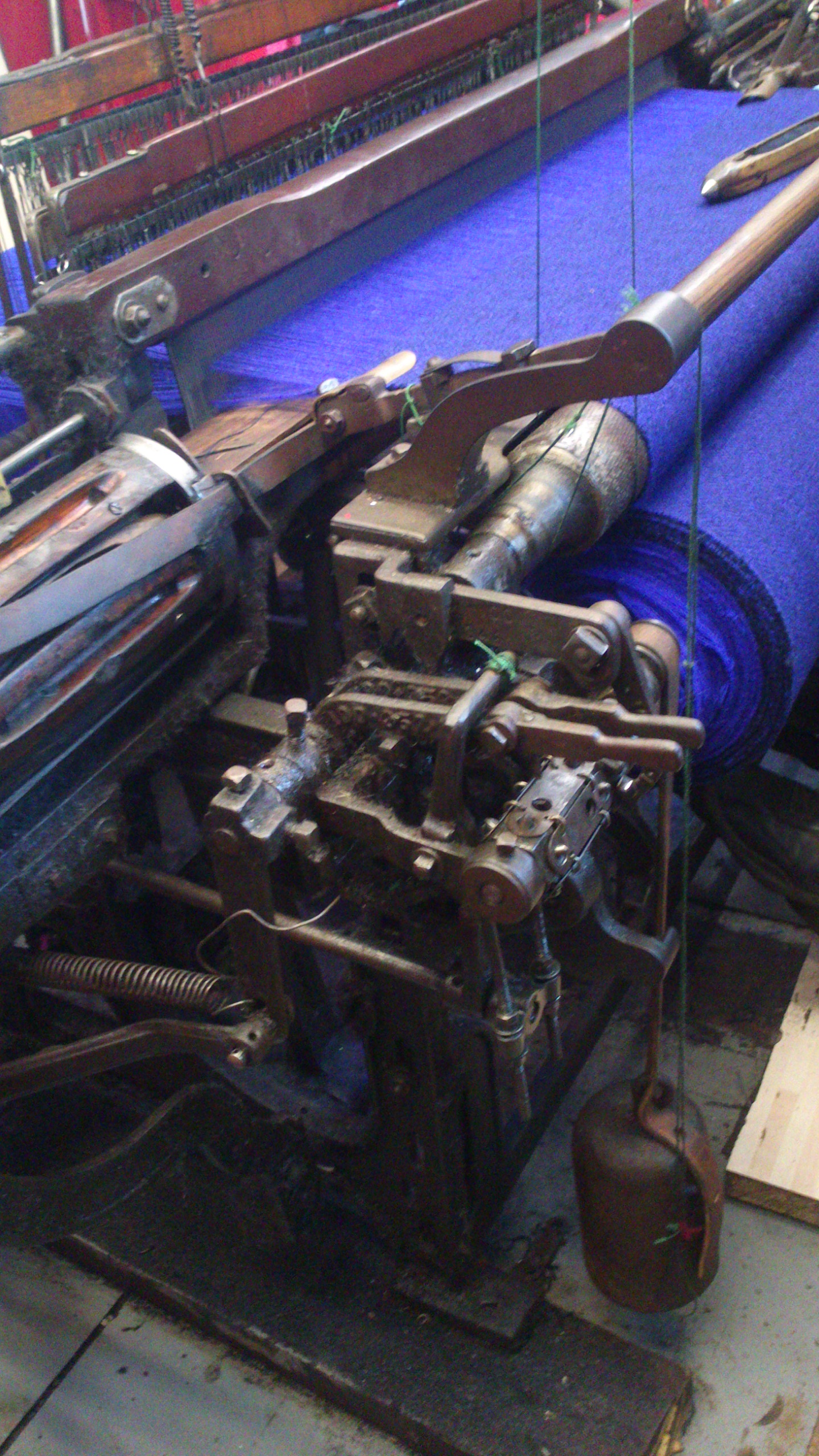
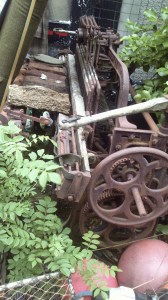
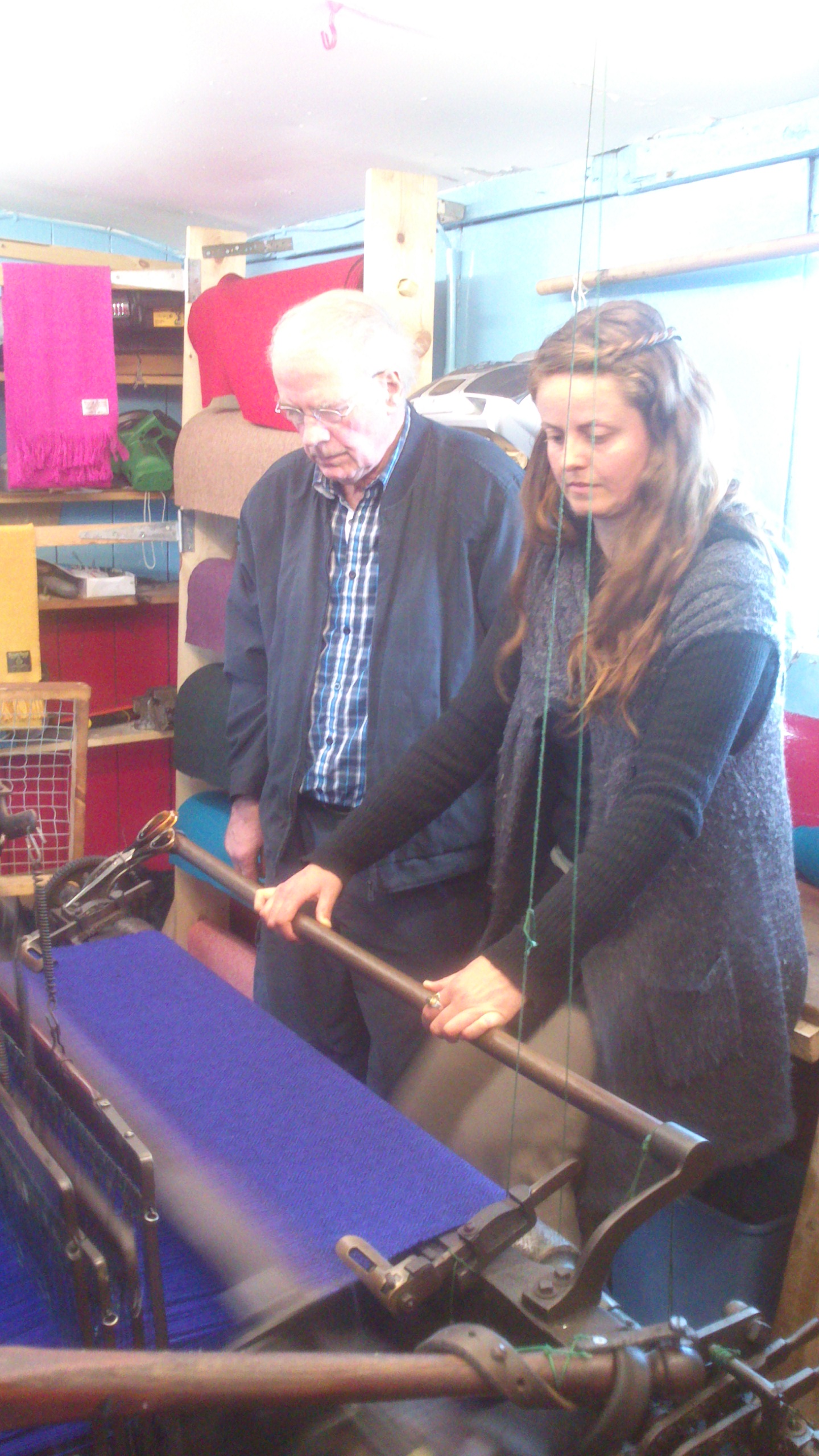
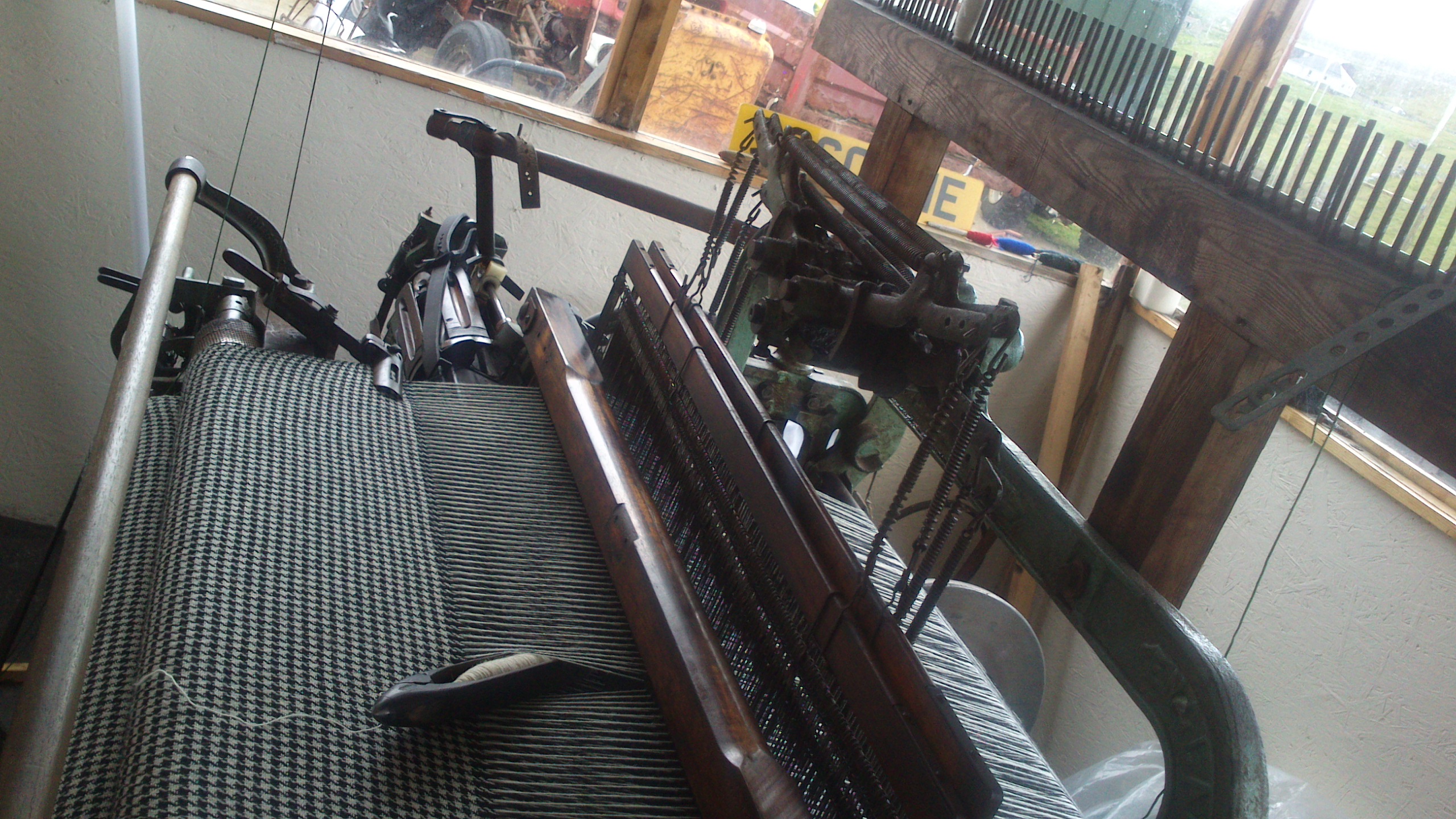
Today I finally visited a proper weaver. A Harris Tweed weaver. Norman Mackenzie is independent, which means that although his tweeds achieve the official orb that marks the provenance and quality, he does not weave under instruction from the mills. Where 98% of the weavers receive ready-wound warps for ready-planned designs that they must follow to the letter, he has creative freedom, but has to do his own buying and selling, rather than being paid by the metre. For sale at £17.50/metre, as I’m told it is all across the island, this certified, quality cloth is surprisingly affordable. He is a hobbiest, he says, though his workshop looks serious and his tweeds handsome. Fancy weaving 90 metres of the same cloth for fun! His warping frame is the size of one wall, and makes mine look like an Early Learning Centre toy, as does his beautiful 60 year old Hattersley loom. It is made in Keighley, Yorkshire, and I like that I have been there – and been there when their hills were as yellow with buttercups as the machairs are here. He shows me the weft winder filling the bobbins, answers all my questions, and even lets me have a go when I cheekily ask. I perch on his too-high stool, but the bar on his loom takes my weight on my hands. My knuckles are white and he tells me to relax. The loom makes a violent sound and I fear jamming up his machine or wrecking his bolt of cloth or catching one of our fingers in some heavy slingshooting bit of steel. But I get into some kind of rhythm and enjoy it, and watch intrigued as he fixes stray threads (even as he weaves, not just when I do) quite frequently and easily. This is the vintage Mercedes of the textile industry, with well oiled heavy parts and the odd thick, sturdy, supple leather strap. If I settle as a weaver with a fixed workshop I’d like one of these Hattersley looms.
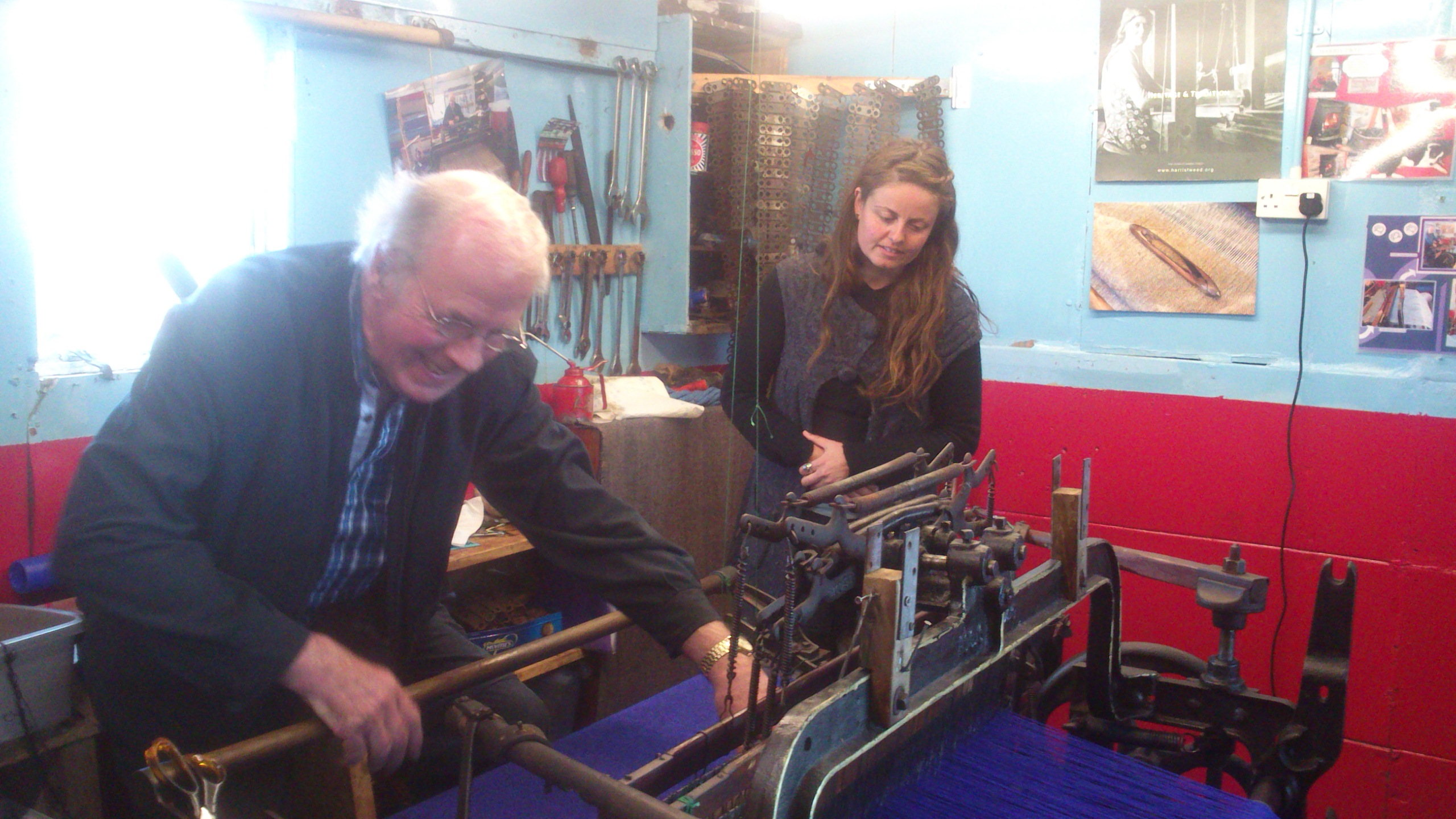
DSC_1309

Norman MacKenzie can make cloth to order and can be contacted on 01851 643 413 or nmmackenzie@aol.com
DSC_1305 DSC_1301

DSC_1293 DSC_1294 DSC_1297 DSC_1298  DSC_1292 DSC_1290 DSC_1289 DSC_1288

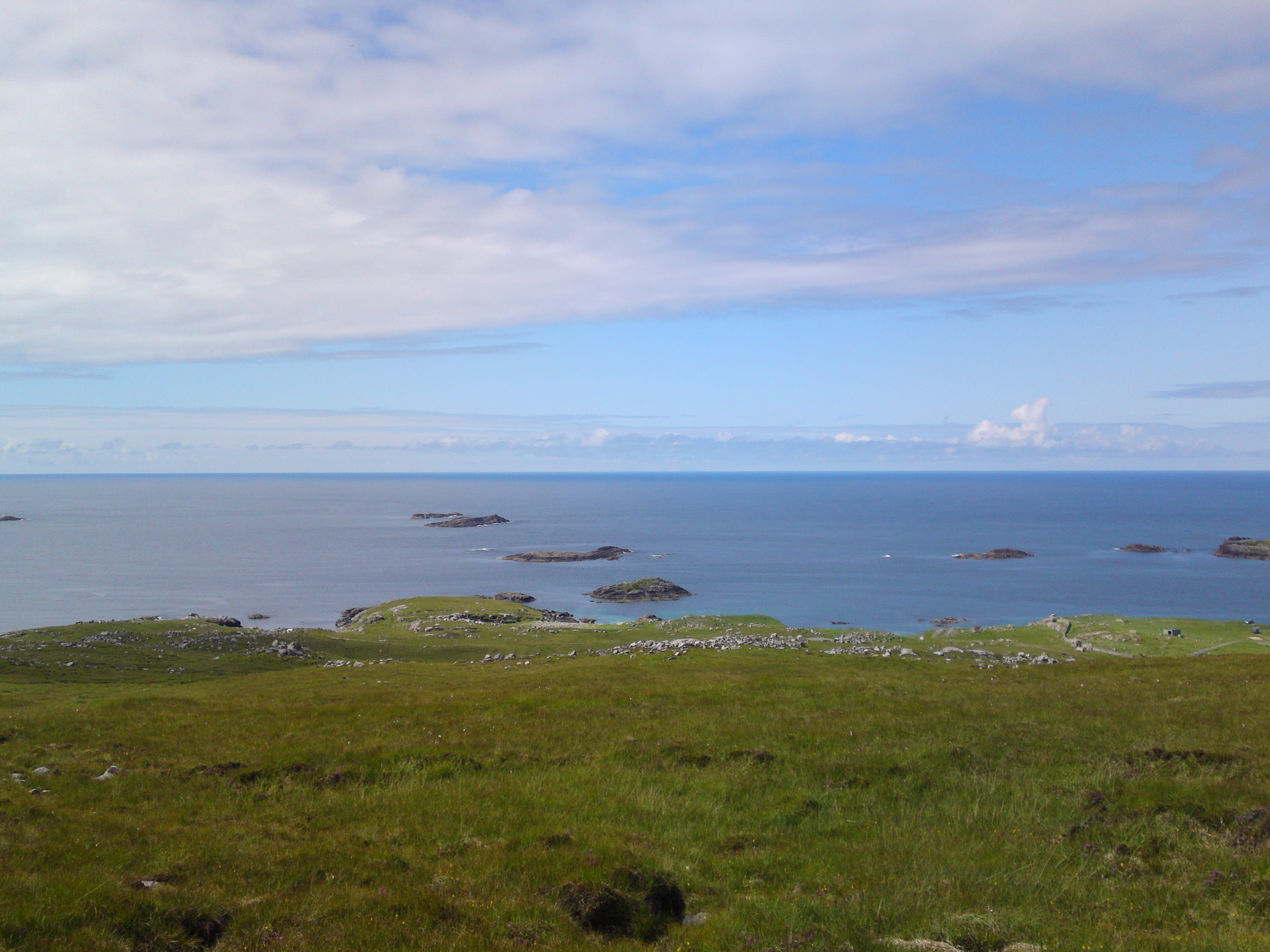
Tomorrow I go to the old blackhouse village and will probably see its wooden predecessor. I also hope to persuade the nearby mill to let me visit. Meantime there is a very golden light over the sea, a very leaden sky over the land and a rainbow over the both.
Week six: on drunkards, politics and learning to fish

In 1994, as a teenager, I got very cross about the Criminal Justice Bill, later Act. It legislated against such dubious things as human embryo testing and outdoor parties. (Did you know that more than eight people gathered together in their garden accompanied by an unlicensed repetitive beat constitutes an illegal rave? Apparently so. For the record: I am dubious about parties and irritated by other people’s repetitive beats (folk music doesn’t have a repetitive beat, surely?) but do lump parties and embryo testing together in irony.) It also outlawed the travelling way of life – officially – and, moved by impassioned and fearful traveller speakers at Glastonbury Festival and elsewhere, I joined the many marches in protest. I wasn’t planning a travelling life, but apart from the principle of freedom and the infectious jubilation of the Levellers’ ‘One Way’ anthem (here) something resonated: the freedom, or the dream of it. I probably knew that at some stage I would want to live like this, or would want the option. A friend sent me the Dubliners’ farewell to travelling life https://www.youtube.com/watch?v=1Uq30FeeLTM&feature=youtube and Christy Moore’s version of Go, Move, Shift is a favourite (here). However, when I decided to swap the smallholding for a bus, I feared prejudice and hassle, didn’t want to join the hippy trail, and very much wanted a motorhome in which I’d look like a tourist, and smart. I couldn’t afford smart (I wasn’t allowed anything but a Mercedes, of which I could only afford old; I was told off for nearly being seduced by Fiats with shiny bodywork and pretty cushions, which were probably scams anyway), and I don’t look like a tourist. I don’t think there’s much of a travelling scene here in the Outer Hebrides, so probably no-one’s given it a bad name here. However there are hundreds of motorhomes, and I’m told that we are resented, as they think us wealthy spendthrifts. (Can’t win: ironically it felt pretty embarassing to spend as much as £70 on a basketful of shopping – I hope it lasts me more than a week! I’m going on a high-protein, low carbs diet to try and address the dreadful low energy levels.)

After the shooting incident, I’m certainly feeling less welcome than I was, and more aware of how the locals (of which I gather he was not one, but still) must feel invaded.

The night after that, a notorious local alcoholic with angry eyes I’ve been introduced to comes and camps in the remote ‘safe’ spot I’ve retreated to. I ask the friendly, avuncular Angus, whom I met with his litter-picking daughter and who, like me, keeps coming back to his favourite spot, to park nearby. At nearly 10pm the man with the angry eyes knocks on my door, sounding friendly enough. But 10pm? Come on, man. I’ve pre-empted this, and have pulled up the mozzy nets so as to be less visible. Hiding, in effect, like a prey animal. I wondered whether I might answer and what I might say, but I don’t answer, keeping still until he goes, which he soon does, swaggering up the lane, can in hand, pissing in a burn as he passes.

These two incidents leave me feeling pretty vulnerable. An incomer, seemingly privileged, a traveller, a single woman: fair game, apparently. And leave me feeling pretty angry. But I don’t move from the retreat spot. I check every night that there is someone else camping within earshot – remote and wild and exposed though the place is, there always is, despite how many campers come to the end of the road and turn back again – it is too bleak for many, and only has little hidden sandy beaches that they miss.

24072015314

The next evening kindly Angus gives me a fishing lesson in the river. It has to be that evening because the following day is the Sabbath, and (he says) you can’t do anything involving two hands on the Sabbath, or we will offend the locals – especially fishing. We go just ten yards from the lane, and he catches a littly in the first pool we try, with the first cast, nonchalently. I take longer, but catch three. This is a big deal for a nearly-life-long vegetarian, and I am delighted. They are all too small to eat really, and we throw them back. Poor little loves though, I don’t like getting the hook out of their bruised lip, and I’m nervous, fumbling and clumsy. Holding them in my warm hand I try to be sensitive but wonder if I’m clutching too hard and burning them, and tighten my grip as I get more worried about unhooking their mouths gently. It reminds me of holding the cockerel of mine I killed: sensitive, firm, warm, reassuring; nervously fumbling and clumsily treacherous. I may buy myself a rod though.

The day after Angus heads into town, and I think I may head off too. I walk down the lane to see who is around, and meet camper Jim, a sheiling enthusiast with a pair of binoculars on a tripod. Another walking encyclopaedia, like Angus. I learn that there are beehive shelters like those in the Lot in France that may be as many as three thousand years old; that the solitary duck is not a duck, but a red-throated diver, as seen in Ewan MacGregor’s beautiful Islands on the Edge series; that when one doesn’t know if one’s watching an Arctic Tern or a Common Tern, one reports a Comic Tern; what a Merlin looks like; that the last baby born on the little island in the bay is still alive even though she was left on the island hours after birth on the assumption she wouldn’t make it while her dangerously-affected mother was carried partly by foot to the only hospital four counties away where she gave birth to a twin two days after the first; and a hundred other things about the place. The red-throated diver flies over quacking (sorry, diver, but you do quack), and I wonder if he’s telling his mate that he’s on his way home so can she put supper on. And then I realise that if he’s been out fishing, it won’t be that, and when next he flies over without quacking, I see he has a fish in his beak for her.

And for every screwy man there are at least three good ones.

Amen.

Oh and the weaving – and a little more on fishing

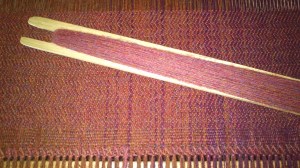
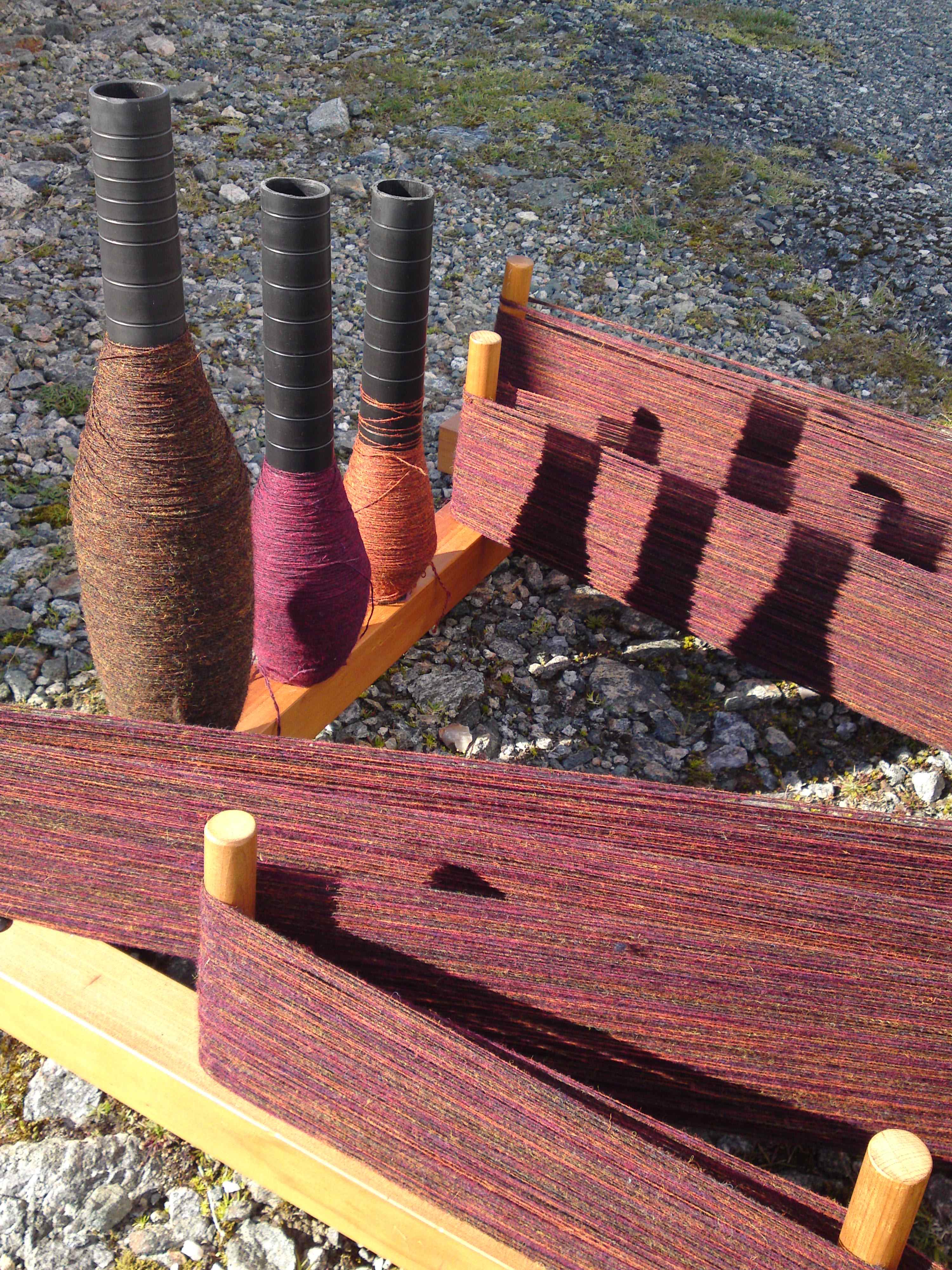
Hmm, I seem to be forgetting to tell you about the weaving. I’m sure I should depict it as the most exciting thing, but I shall be honest: lately I’ve not been liking what I’ve been making. The tweed yarn is wonderful, but in trying three experiments all at once none of them are working. I’m just not excited by what’s weaving up. One lunchtime I see a couple of lads arriving with serious fishing kit. Glad of the excuse to leave the loom, I go and watch them on the rocks and chatter. Local boys, they say that even today’s relatively quiet sea – and Angus has not seen a period this still in his 35 years of coming here – is treacherous and that they shouldn’t be at the water’s edge. ‘We wouldn’t kayak or anything in these currents here’, they say. This little channel is full of reefs, and I’m surprised to see any vessel in it. Always I think of the boys at school smashed on the rocks, claimed by a Cornish sea that would not let them out, and of their families. These lads’ lines snag in weed – too much weed, they say, is not good for fishing, ‘we probably won’t get anything here’, and they don’t, but quickly get back into their cars to move up the coast, hoping to find pollock and laith there. A brief interlude, and not the wealth of fishing spectacle I’d hoped for, so back I go to the loom. As hoped, the change of space has slightly refreshed my mind and I remember the original experiment I’d wanted to undertake on this bladderwrack warp: weaving double the width of the loom (get me: this is pretty clever you know). I have the barest instruction but extrapolate successfully, and a blanket of Icelandic wool is growing.

Week five: On singing scaff bars, dimpsy encounters and being shot at

A ‘Mevagissy treat’, held my forebears, is a wet arse and no fish. The seventy-something Leòdhasach returned from his long night on the misty moor (Liz Caroll tune) fuming: ‘Never again! The quads and nets have drained the best lochen and it was so cold I didn’t get a wink of sleep. I am too old for this!’ I thought the clear evening and sunny morning beautiful, but I am dismayed. However he says he says this every time, and still does it, so then I am glad. I fear the world would be lacking if he ceased. (For one thing, I was glad that his scooter was parked by my bus overnight when an edgy-looking windsurfer cased my remote joint for a parking spot late last night, and looked at me just too long. Though likely he was more nervous than I was.)

I go into Stornoway for another reality-day, do some PR online, and gladly pick up another commission from another warm, inspired, American creative who knows the Chagfordian fairy-folk of Dartmoor and sends some beautiful pictures as inspiration (Amy, it’s quite surreal, and quite lovely, to be meeting you all over again in another!). I then head back out West. There is a ‘music night’ in the interesting-sounding Loch Chroistean (‘Krishten’?) Centre, but since this turns out to be a fully booked restaurant with a couple of local trad musician serenading the pre-booked diners of whom I am not one, I turn to go again. As I do I am caught by sirens chiming the wind: have you ever heard an orchestra of scaffolding bars singing in a gale? It is astounding. (Amy, did you send me those? Port Na Bucai)

Disappointed that I’m missing out on the (human-made) music front but delighted that I’m bound for my favourite bay after a week away, I get back into the van. I take a little detour though, trying again to identify the converted croft-house rental; this time I spot it as it disappears in my rearview. I pull up above my bay, wondering at the strengthening wind, but deciding to try the high spot anyway, in part for solitude, in part to allow the van already down on the machair to have it to themselves. Mindful of the force whateveritis, I keep back from the first grassy drop, pointing up the hill a little. I walk Murph along the point a short way. It is the kind of wind you can lean into but not breathe into. A young guy in a Land Rover pulls onto the same sheep tracks, and, recognising me from the lock-in in the Royal, reverses up beside me as I get back. It is Calum the local crofting, surfing, guitar-playing geologist (it turns out), checking the 10pm waves but loathe to get into a wet wetsuit. He points out how the clean lines of swell that are spanning the whole bay are taking too long to crest, only breaking in the shallows, flattened by the crosswind. We natter for 20 minutes, strangely softly over the diesel of his engine and the hassle of the wind. He asks questions about my new and former life, interested, and we exchange brief stories, but he has the kind of eyes that never leave the sea. 

I’m watching a bird that has been perched on the top of a tump in front of me for half an hour. I am in the eagle’s larder here, but this one’s shoulders are insubstantial, and that tump is too small and close for it to be a bird of her size. No-one is chastising her, but then apparently gazelle know the difference between hungry lion and satiated lion. My beachcombing friends said buzzards were rare here but they’d recently seen one mobbing another, whilst someone else here said there were none, only eagles. I would guess buzzard were I at home on Dartmoor. Maybe hoodie up here. Eventually it rises off the rock: buzzard. So small. Eagles seem in this landscape the size that buzzards are on Dartmoor, and buzzards here are tiny.

I learn what it means to batton down the hatches – though wish I had some battons and some hatches. Calum said a winter gale might take me over the edge, but that this one would be alright, though I could turn my tail into it rather than be broadside on. Keen to just get in out of the wind, I take only the first part of his advice. From the cab seat where I eat my supper, the van seems to move surprisingly little in the buffeting force, and I congratulate it. It’s a heavy old thing, seriously laden. From the bed up top though, the movement is much more, and increases as I lie awake. Everything rattles. The whole thing is only being buffeted though, I tell myself, not rocked. I hit upon a comforting thought, but draw a worrying conclusion, and go round and around the same thought over and over, hoping the conclusion might mutate. When I drive my cowbell swings and rings. If it’s not doing that, that means we’re not moving as much as when we drive, and when we drive, I don’t feel in danger of tipping over. Much. Though it does roll an awful lot. So can we safely tilt as much when stationary as when moving? The conclusion is, again and again: probably not, because when moving we are driving forwards out of the roll, and that’s why we don’t tip. When there’s a little lull, my eyes close and inertia beckons comfortingly. Several times I am jolted out of this, and worry awhile. What if an exceptional summer like this one brought an exceptional gale, like a winter one? In the interests of relaxing somewhat, I swap my feet and head end of the bed, so that if we tip over, I land feet first. Rattle, rock, jolt, roll, rattle. I forget to breathe. Finally aware of this ridiculous resistance to changing one’s situation, I get up, drive off the chocks, reposition, get out into the gale, move the chocks, drive onto them level again, and attempt sleep that way. Rattle, rock, jolt, roll, rattle. I think the wind swings northerly to match. What would it feel like to tip over? Would I be safer on the floor? No, because my furniture is dead heavy and unsecured. Calum said there was a digger at the farm could right me again. Anyway, it won’t happen. Sleeeeeeep… Rattle, rock, jolt, roll, rattle. LIFT. Fuck. I am in the driver’s seat, manoeuvring off the chocks, and driving down to the machair. Phew. The wind feels like nothing when driving along (note to self). It is 7am and I sleep until midday in this safe little bay I know and love. The flowers have all grown inches since I was here a week ago, despite the coldest, wettest summer they all remember, ever.

Next day the sun is shining as if nothing ever happened. Breeze in the night, you say?

Some friendly Glaswegians I met at my last spot invite me round for an excellent risotto. She’s an under-pressure art teacher, head of faculty at a prestigious secondary school, and I love her vehement, non-stop dialect. She offers helpful thoughts about artist residencies on remote isles. He’s a tough-looking electrician on off-shore wind farms, driven mad by the flicker and pulse of them. They are the type who won’t take any shit, but probably do. They are warm, caring and love Murphy. He complains insightfully that tweed needs something new, and they enthuse about my experiments. Their son is a squaddy and when he gets a moment, confides in me about the girl he loves in another regiment who needs space for a while, but whom he’d love to marry. It’s all another lovely encounter. Into the evening I wind another bladderwrack warp.

 Bladderwrack warp

Next morning I visit the croft house conversion, and neighbour Alistair, a yachtsman, tells me a hundred useful things, especially about inverters for vans and boats. (I need 240V for my steam iron, really.) It has a lot going for it, but I am loving this life in a bus, so we’ll see.

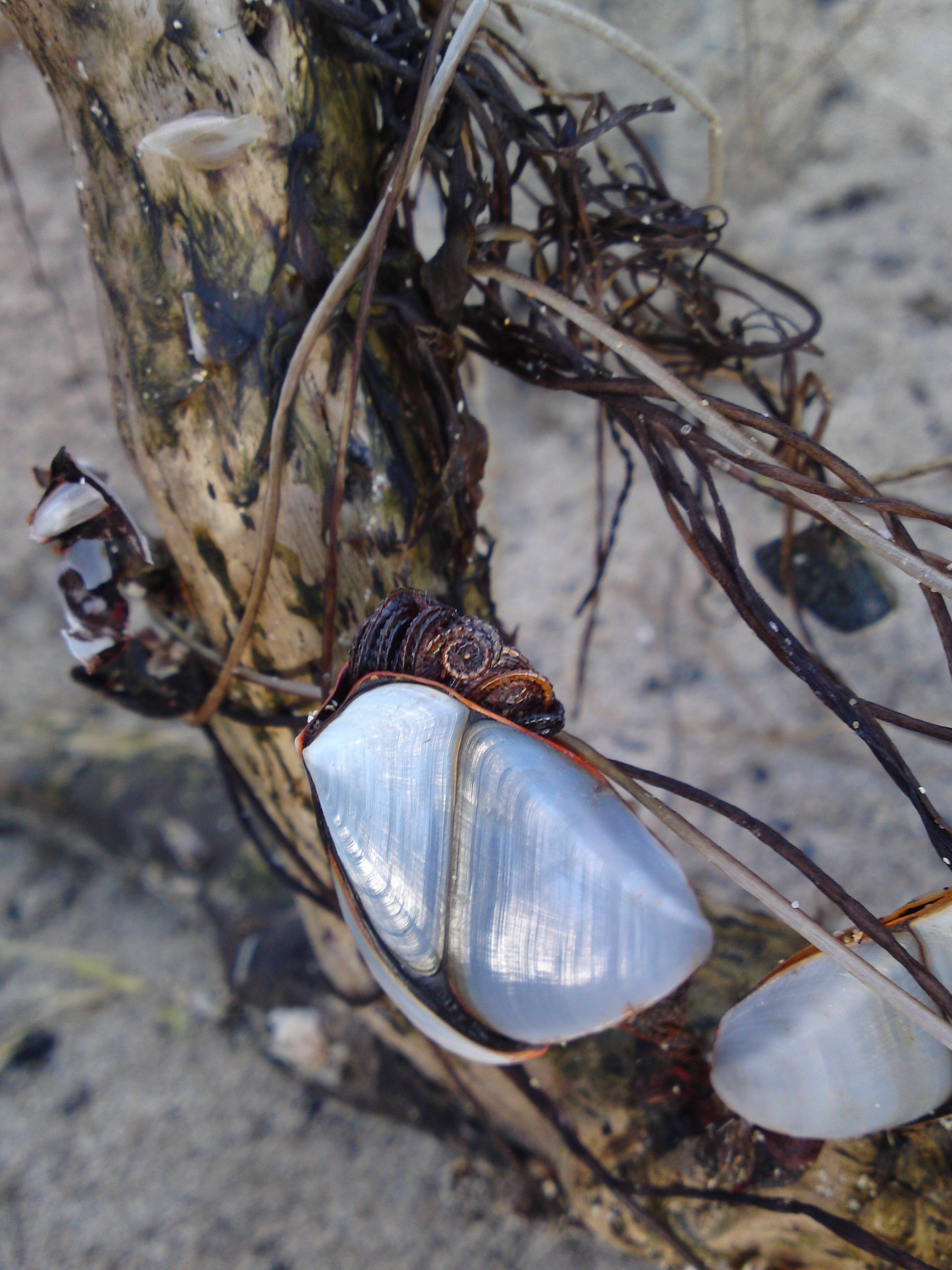
An internet-stop and then I head along the coast, checking out some new lanes as I go. I crane to see St. Kilda from the spots they say you can, but don’t. I walk Murph down to another beach that is supposed to be magnificent, and it is. Though it is empty, my favourite smell, woodsmoke, greets me, where previous visitors have pulled apart their fire but it is still hot. I would love to cook over this fire – it is that kind of evening: work done, Friday night, can of Guinness, and sunny. But that cauliflower needs using, you’ve got to make cauliflower cheese, you’ve just bought all the other ingredients, and it isn’t a fiery sort of meal. But how lovely: not only cooking supper over a fire on a beach, but cooking supper over an inherited fire on a beach. How lovely. I go back to the van and kit up and return. The fire is hottish but smokes and smokes whatever I do. I find some driftwood with some very weirdie beasties on it (anyone?), sadly dried out and shrivelled. 

Weirdie beasties 

My great, great, great grandfather, skipper of clipper Wytchwater and first importer of Guinness to the UK, toasted.

Aubergine, courgette, tomato, pepper and feta, prepared.

I’m about to put the veg over the embers when Murph jumps at what sounds like a twig snapping beneath someone’s foot just in the hollow of the nearest dune beside us. There is no-one, but there it goes again. More like a little pebble hitting a bigger stone, of which there are a few lying around. I look up, and see a man kneeling up in the short grass on the opposite hillside, facing us fully some 500 yards away, unhidden, and though I can’t see clearly, I suddenly know that we are being shot at. I shield my eyes from the sun and stop and stare at him. It looks as though he does the same, though he is in the shade – binoculars perhaps. I stare hard. He doesn’t move. Then I wave. He doesn’t wave back. I get up and scan the ground for what he might be shooting, but find nothing, and don’t dare look long. After a few seconds, he gets up, gun clearly discernible, and walks back towards the houses over there, disappearing behind a shed, and then reappearing bellying down again to shoot in a different direction. Rabbits, I guess, with an air rifle, I guess, and he knew that he could do us no harm from that distance, I guess – could he? I feel angry and alarmed, but not rattled like an act of hostility would usually rattle me, so maybe it’s ok, but I gather everything up and usher Murph back to the bus quickly enough. Bastard. I drive a good few miles, several villages away, to my eagle flight path, breathe a sigh of relief and cook cauliflower cheese.

I sleep well, apart from a nightmare that comes from godknowswhere in which a man orders a child virgin to rape and slay, to her weeping mother’s acceptance, ‘because it is Allah’s wish’. Today is another blue day and the sea sparkles – perhaps I just needed another reality-check, to reconnect with the big wide world, not get lost in my little idyll. Kill off the innocence. I follow the peat burn up the hill through red sphagnum bogs and orchids too numerous to count. We startle a bird couple who may be grouse – like corncrakes but redder and darker and the male(?) blacker, with a sound like a hen, a duck, a goose and a frog, all at once (anybody?). I turn around and sit on a rock and take in the golden sand and the rocks and the green and all the beautiful blue – and there she is unexpectedly, in four proud bumps on the horizon, St. Kilda.

Tweed, lock-ins, grammar and wilderness. (What else does a girl need?)

Week Four.

On experimenting with tweed

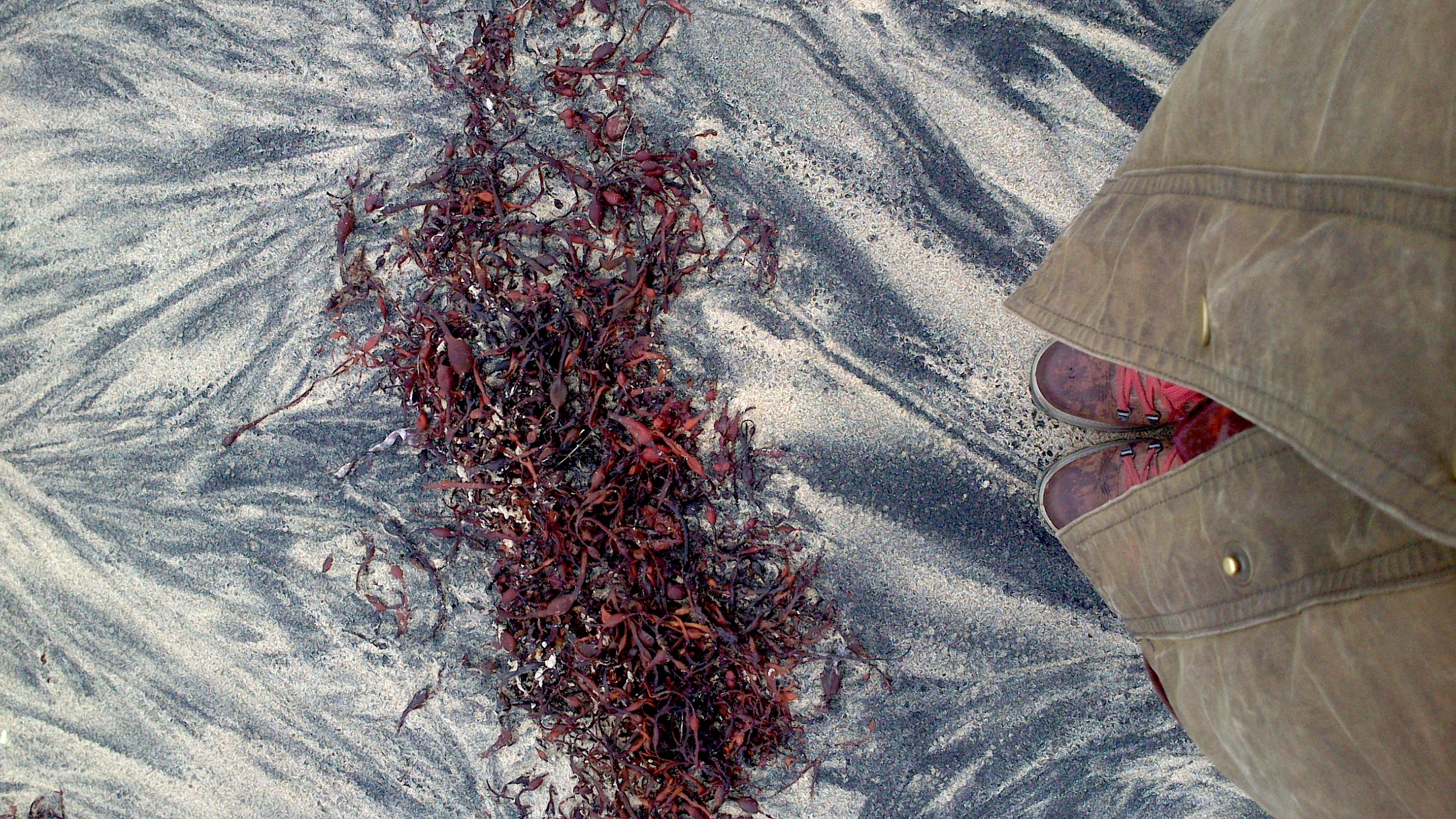
I have a commission for a red scarf for a plant lady, and I’d thought I might combine the red with a dark Jacob’s or similar. Inspired by the black and red bladderwrack from the very first beach (in my cover photo) I find that this project, to be sent to Wales, can benefit from some Hebridean coastal inspiration as well as act as a tweed experiment. I’ve used the same tweed yarn that they use in Harris Tweed before, stumbling across a thoroughly uncommunicative Leodasach (I think I am spelling that differently every time and resolve to look it up again) online selling it on industrial-sized bobbins for tuppence. Like an islander or a Dartmoor pony, it is hasslesome to work with. (At least, I imagine islanders to be strong-minded; I’ve only had gracious encounters thus far.) I’ve used it as a warp (longitudinal) thread nonetheless, but woven in a thicker, softer weft for a wide sett (8-10 threads per inch) and a (relatively) fast-growing cloth. I examine the tweed samples from the Lewis Loom Centre bazaar. 28 threads per inch is a lot of threads, and a lot of threading. I graduate a heathered burgundy with a tweedy rust and do a test patch with an almost-fluorescent sphagnum bog moss green.
Red tweed sphagnum detail

I love the colour result – the shot effect of Thai silk, which is one colour when you tilt it one way and another when you tilt it another – but curse the coarse hair-shirt effect and my imperfect technique and marvel at what by comparison is the incredible softness of the Real McCoy. Harris Tweed goes through many finishing processes – beating, steaming, washing, brushing, shaving, possibly a touch of felting (though I think they have more beautiful names than that, even in English), and my hand weave is very crude by comparison. For the next length I use a very soft Alpaca weft, DSC_1160

but for all its softness the cloth would still make your back sore if worn straight off the loom. Back to thinking of the bladderwrack again, I use a thick, softish Jacob’s, experimenting with twills and undulations, varying the weave pattern for an organic feel,

Red tweed bladderwrack skyview in sea


but I’m still not pleased.

Red tweed bladderwrack portrait 1

(Until later when I photograph them and they come to life in their seaweedy role!) I cut all of this off the loom and change the set, spacing the warp more widely and eliminating a third of the threads so I still have a scarf width. I’ve seen some handsome Harris Tweed bags, hoodies and crafting aprons made with a chunky-but-elegant sporting style this week, and my next two garments seem to reflect these: less the woodland whimsy  or seaweedy tangle, and more the bold, smart and functional: tweedy, but with softer, chunkier wefts, and straight lines. At first I don’t like them, until I consider their influences: since one of the reasons for being here is to learn from tweed, in that respect these snugs are a success.  The Diggory Brown (www.diggorybrown.com) crafter’s aprons, belts, cuffs, guitar straps and shapely Hebridean blacksheep kilts are strikingly earthy, trendy, chic and practical all at once. Hmmm. Perhaps I should just stick to blankets.
I shall run all these photos by the customer, but I don’t think I’ve got the red scarf right yet.

On finding the farthest sites

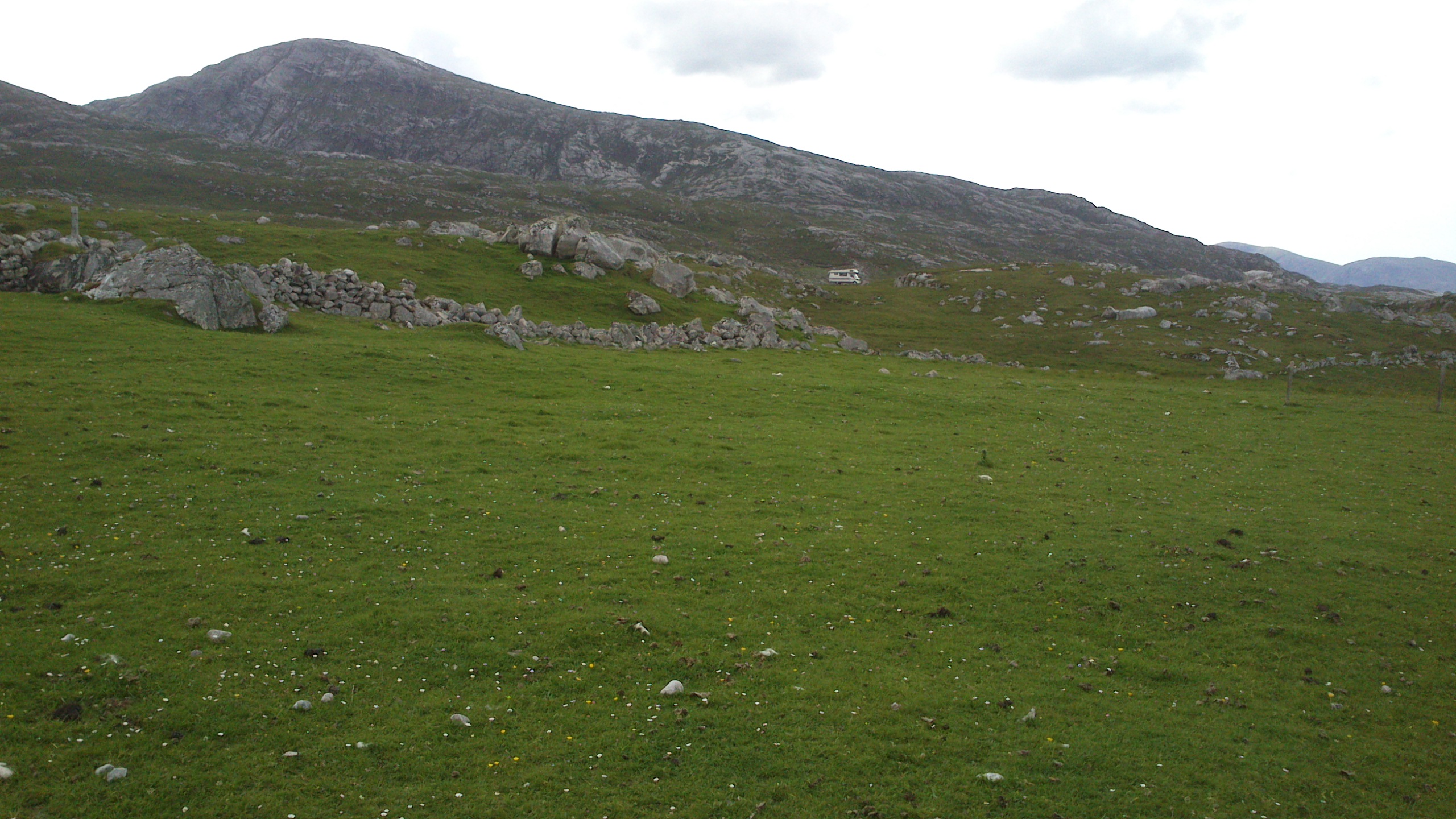
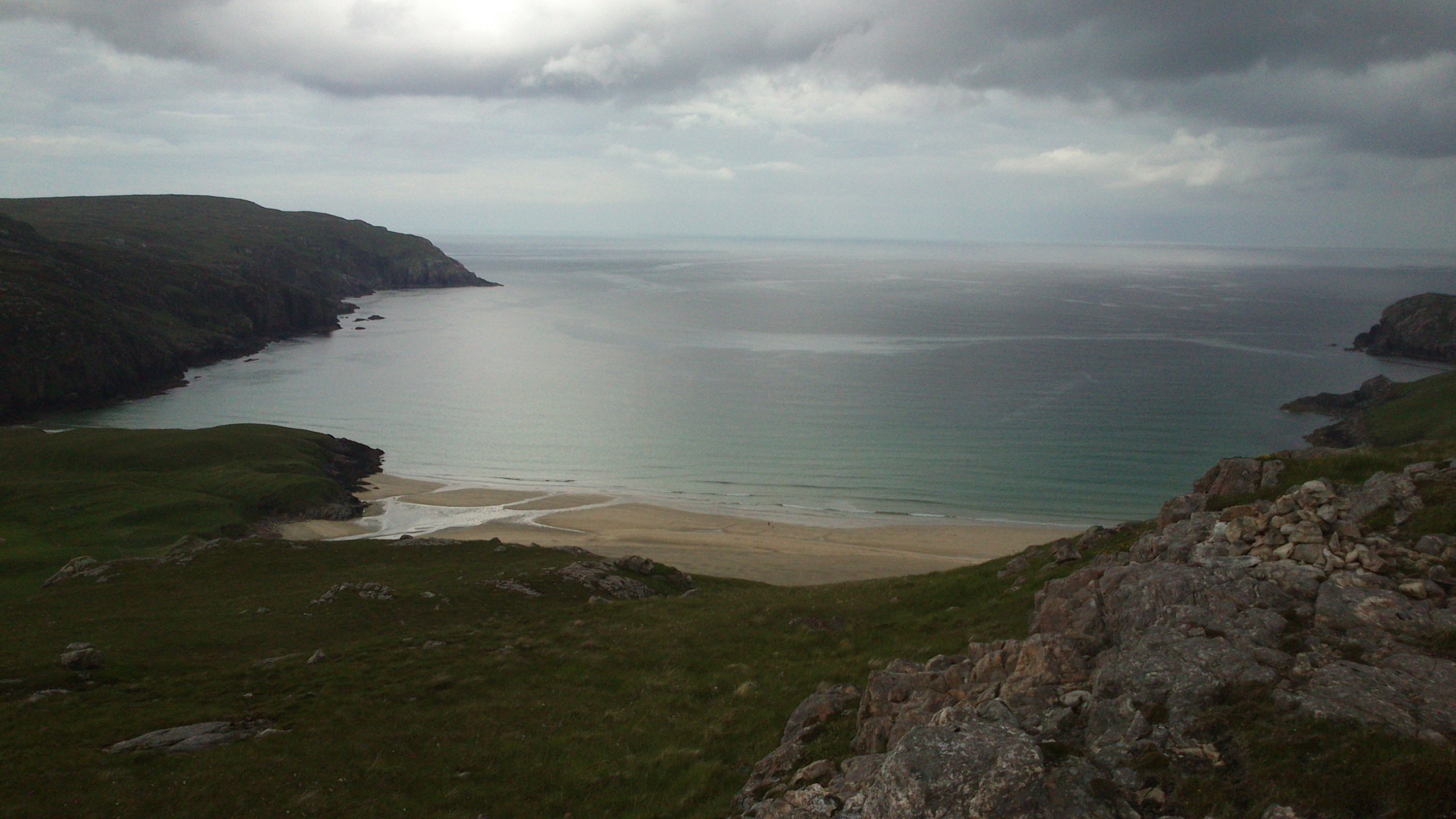
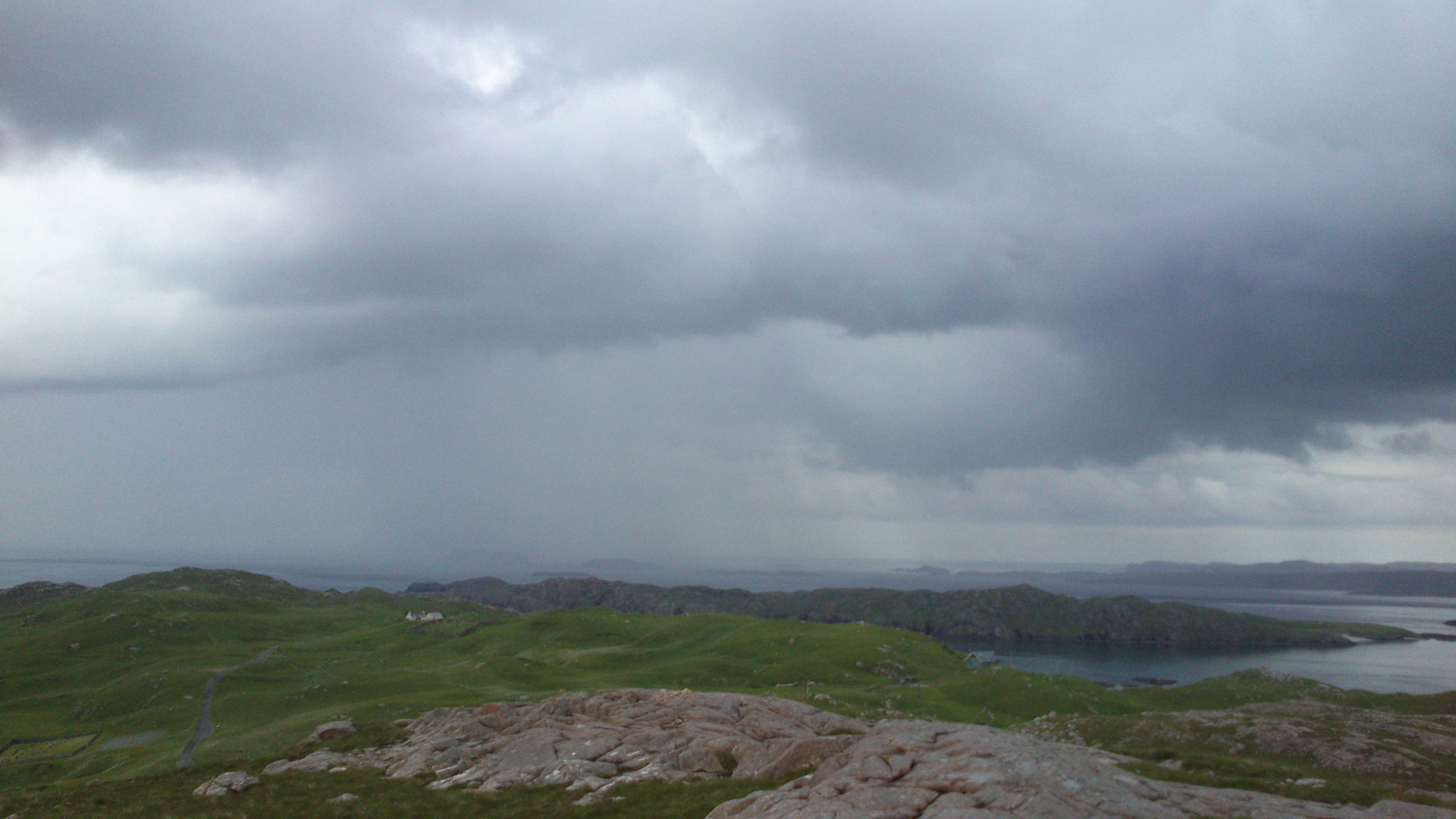
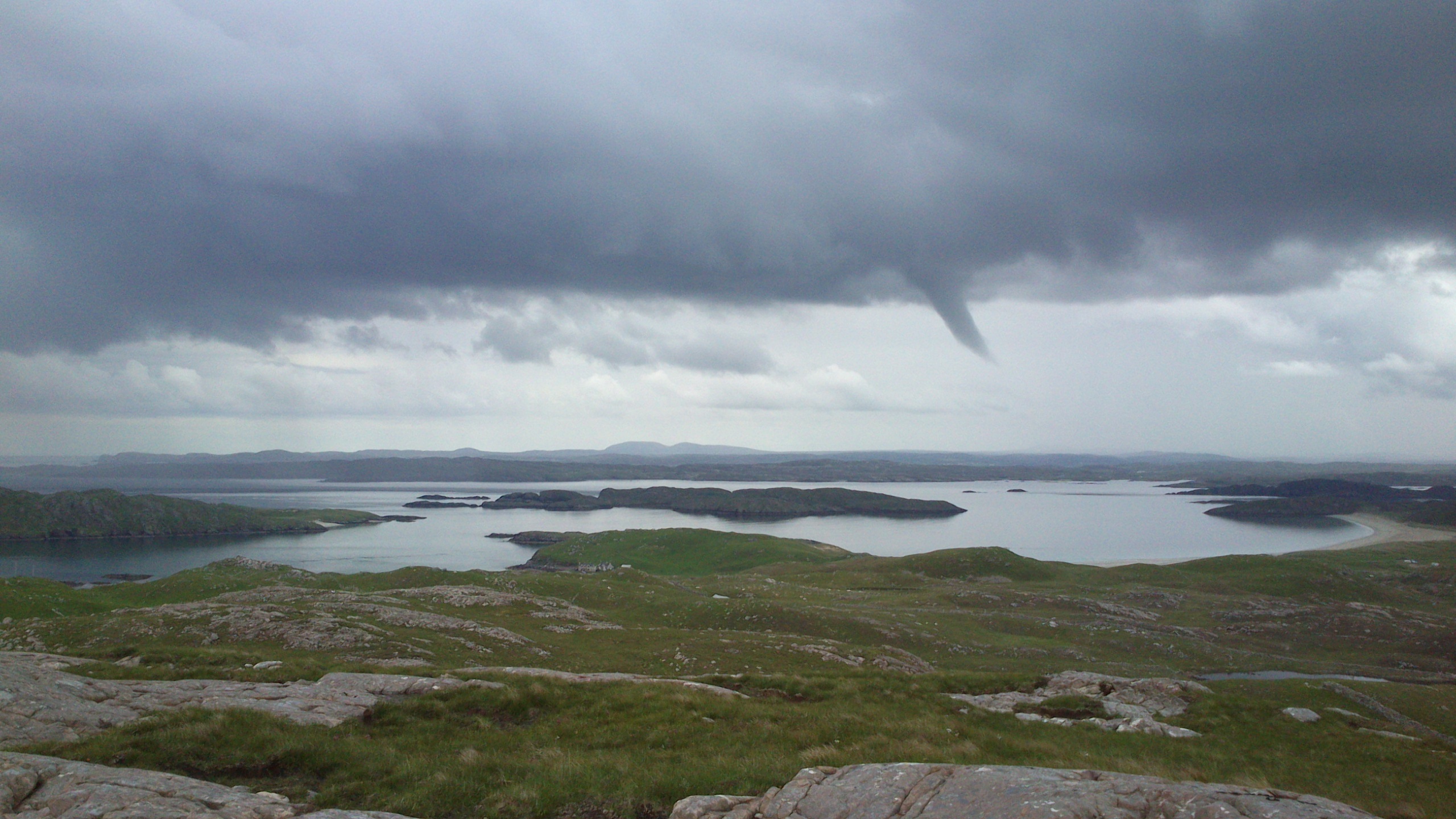
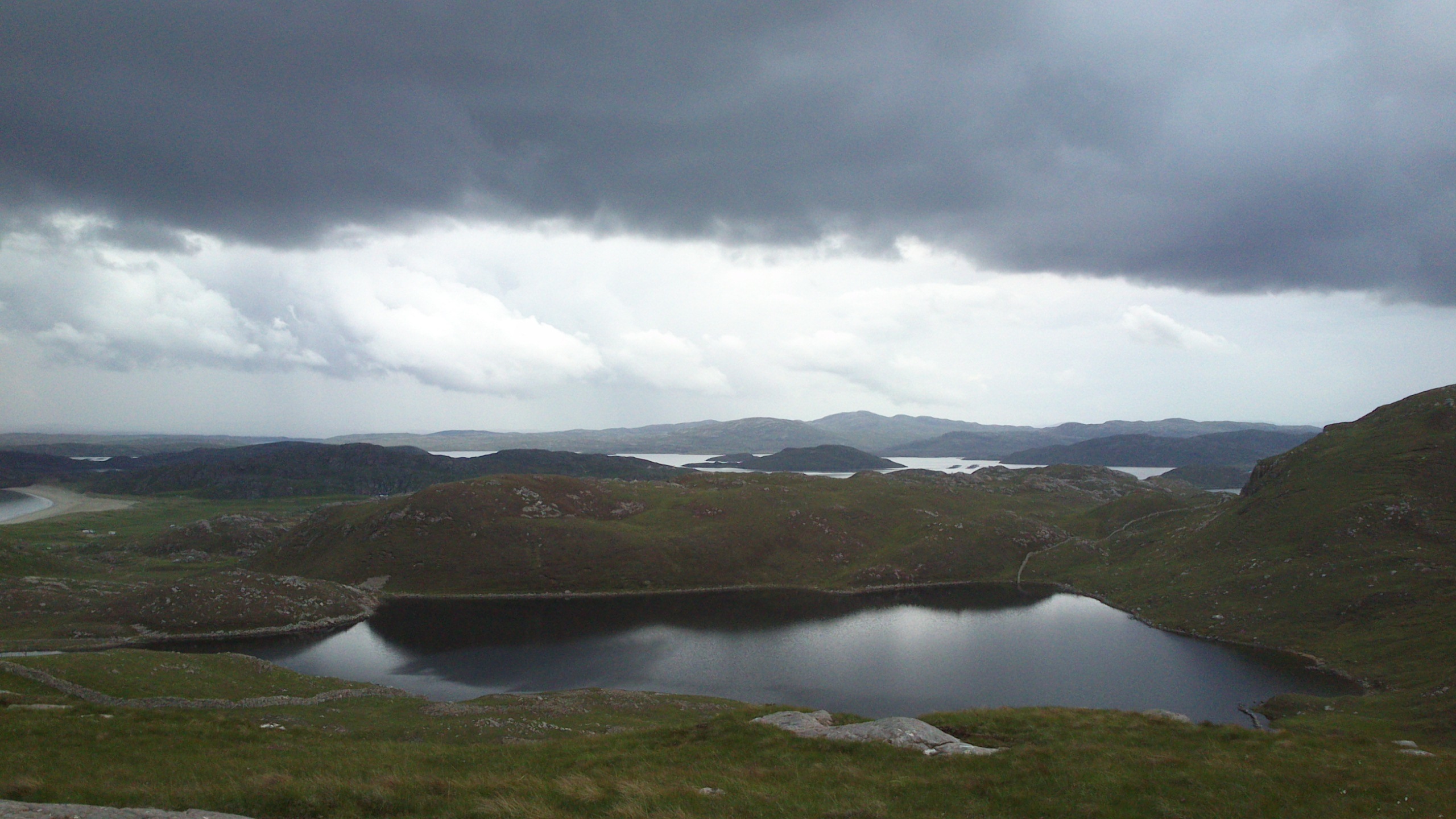
After a reality-day where I get my washing done, buy some supplies, do my rubbish and recycling and go online, I follow the road as far as it will go, and it takes me to just the right spot: beyond the last hamlet, beyond the long-abandoned nunnery, beyond the torpedoed passenger ship graves, beyond the beaches and campervans to where only a very few sheep have made a path. On one side rocky peaks reportedly as tall once as the Himalayas, and on the other, the rocky shore and a sea full of islands, reefs and gannets. Somewhere I could be for months. People not far but nowhere in sight; no room for anyone to park beside me; no need for pleasantry or judgment. As it happens, on day two somebody comes into view on ‘my’ pebbled beach (I am relieved to hear other visitors also talking like this) and they are picking the litter that I’d thought I might pick before leaving so I join them, and enjoy both their company and their local knowledge, as conversation ranges from conservation and sports medicine through art to archeology. Apparently the Vikings do not deserve their bad name in clearing the trees from these islands: the temperature dropped a few degrees and that’s the main silvestral challenge. I am not totally convinced, as where the grazing animals can’t reach, such as on top of needles of rock and scarps, alders and rowans are, as I understand it, starting the reforesting effort. But what do I know.
DSC_1163

Reminds me of home!

DSC_1125 DSC_1148 DSC_1153 DSC_1155  DSC_1180 DSC_1181 DSC_1192 DSC_1217 DSC_1226

DSC_1176

There is a grave by the edge, delineated by smooth stones, and more that make a cross and an anchor. A little handmade white-painted wooden sign says ‘At rest’ and another says ‘In peace’. No name, no date, but adult-sized, and not too many years ago.

I wake up thinking of Bob Dylan. Although I am a fan, I don’t usually do this, and wonder if he’s ok. The next morning I wake up thinking of Kris Drever. This is less random because he has a gig tonight in Stornoway, but since I’m in such a stunning spot, working well, enjoying the quiet and not wanting dirge, I decide not to go. I am probably missing quite a special event, as he gets together with a Shetlander and a Leodasach to explore islands and song, and I am probably doing them a disservice too, as he certainly has skill. ‘There is an altar down my street, I lay my wages at its feet’ goes over and over in my head and before I’ve got up I’ve written a song called ‘There are no fences’. It’s about sharing, territory, exploitation and boundaries, ends with ‘there are more fences’ and has tight rhyme and metre (try rhyming ‘kindred’, get me), but I’m not ready to share it yet as some of the facts are not straight (sorry, Vikings) and it needs a tune. (But thanks, Kris!) On my way back from a long, boggy walk I complete the chorus of a Selkie song I began writing a year or two ago.

I fill the water tank with brown stream water, hoping that boiling it won’t lessen the effect of the huge amounts of iron and other minerals when I drink it in my fruit teas. Have you ever noticed your poo going a very dark greeny brown when your iron intake increases? Well. (Dealing with your compost loo, you notice this sort of thing.)

On encountering eagles, musicians and Gaelic

There’s a solitary duck who flies over noisily a couple of times a day, and I wonder why. There’s also a miaowing that can’t possibly come from the cormorant on the water, but there are certainly no cats out there (I check), so I guess it must be the eagle – more adult cat than the kittenish mew of a buzzard. I’ve seen her twice up close – within 20 feet of the van the first time, landing on a rock to longsuffer the hoody’s righteous wrath, and flying towards me within 10 feet of the van the second time, being harangued by a tiny-looking gull. When she lands the second time I see her white tail: a sea eagle, the largest of all.

I reluctantly leave this spot, but know that I will be back soon. Where there is just landscape, I fit in. Where there is a wonderfully noisy town full of thumping festival, with real musicians and real Gaels, less so. But I enjoy a Gaelic language class (interesting learnings below, if these sorts of things interest you), some Gaelic language singers, and some stargazing.

When I first went to a sit-down folk gig on Mull, I was dismayed, as up until then lively music had been for dancing to. But now, I like duos and trios – no more than that – whose seated gigs and musical prowess have all the splendour and dignity of a baroque concert and a Menuhin violinist. (Look up Martin Hayes, if you don’t already know him – pure Grace. https://www.youtube.com/watch?v=z2K_lJtFaIU)

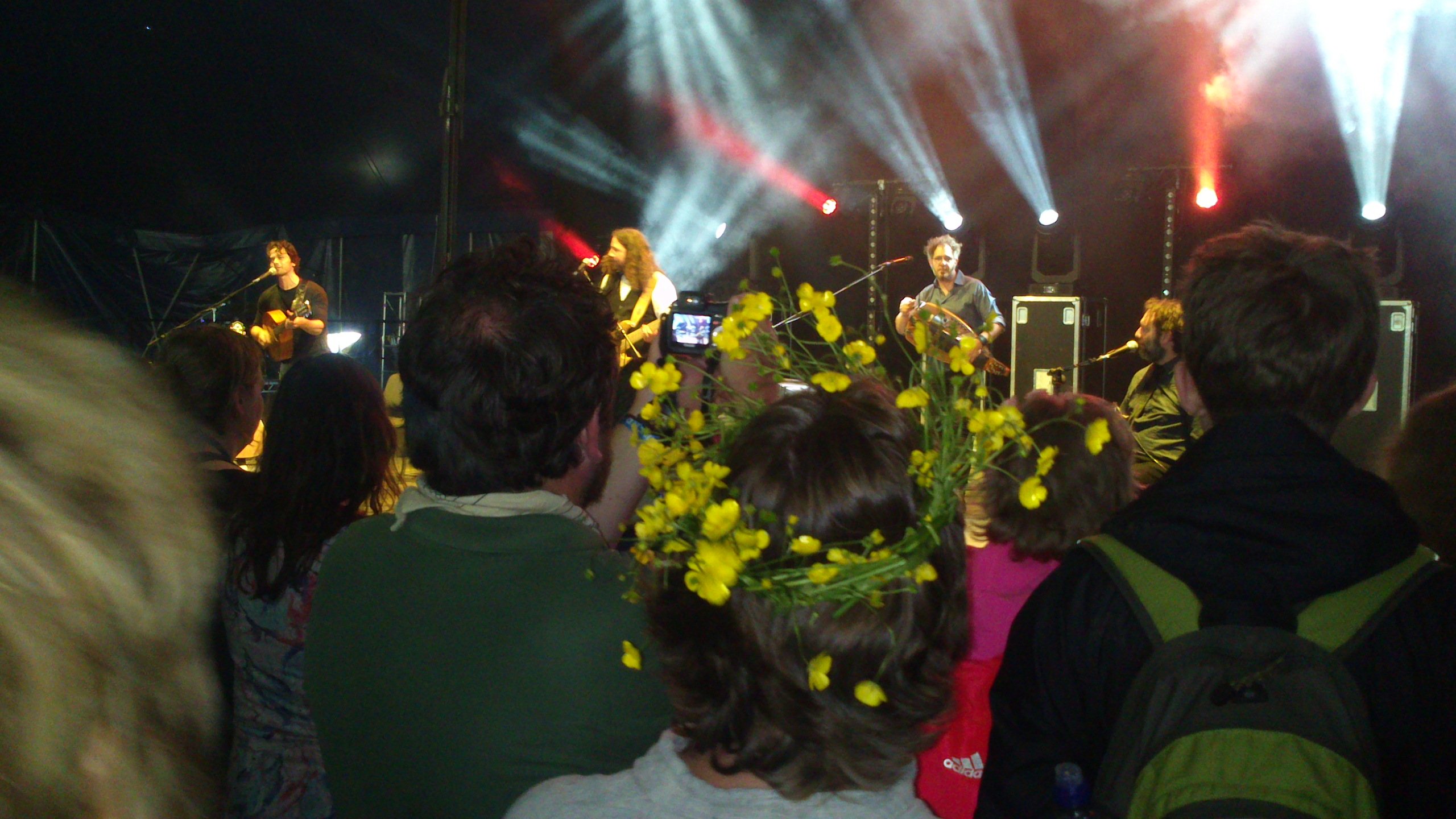
HebCelt is not like this – there are too many drumkits and bass guitars; the tents are too big for the PA systems; the PA systems are too loud for me; the power supply is too small for pounding Salsa Celtica, who bring it all to a halt, twice. However Alyth MacCormacl’s voice in Gaelic is beautiful; my friend Hannah Fisher is ethereal with indie-Celtic-Americana Mullach boyfriend Sorren Maclean; and Karen Matheson’s waulking songs have great rhythms thanks to aforementioned Sorren (on bass guitar, but I’ll forgive him – acoustic he’s a whizz), a great young acoustic guitarist Innes somebodyorother (one to watch), Donald Shaw’s beautiful arrangements, and the creative acoustic bass of a man I later happen upon in the wee hours in a lock-in. Le Vent du Nord are like a French-Canadian version of Scots-klezmer outfit Moishe’s Bagel: heartful Breton, Italian and gypsy-feeling, full of passion and pathos and politics, and real showmen. And then there are Idlewild, whose introverted, island-dwelling singer and his wife I’ve met and like, and Shooglenifty, and Afro-Celt. At 11pm I wander deserted streets in search of ‘The Caladh Sessions’, and feel unusually safe in little, cosmopolitan Stornoway. The music, when I find it, is too Indie for me, but the atmosphere is nice, and I befriend a warm, lively and politicised woman travelling alone from Edinburgh. I leave, tired, at half two, and wander the streets back buswards, but stop to peer through a hotel bar window on hearing some true folky strains: and there is my friend Hannah, beckoning me in, unlocking the door to join the people I’ve just been watching on stage. I meet a local lad – a crofter, guitarist and surfer Callum Buchanan, I must look him up, band name Sea Atlas – whom Hannah knows through Dougie MacClean, and we find we’ve encountered each other before, at our favourite beach. I’ve been offered a converted croft house to rent near there, but been unable to identify it. I was hoping it was a particularly lovely one on a flower-littered machair, but apparently Dougie owns that. Damn. Eamon Coyne, from Dublin, Roscommon and Glasgow, leads a spontaneous session whilst Hannah and I natter until broad daylight drives me to bed (and her to another session on a boat).

He made her a crown of gold...

He made her a crown of gold…

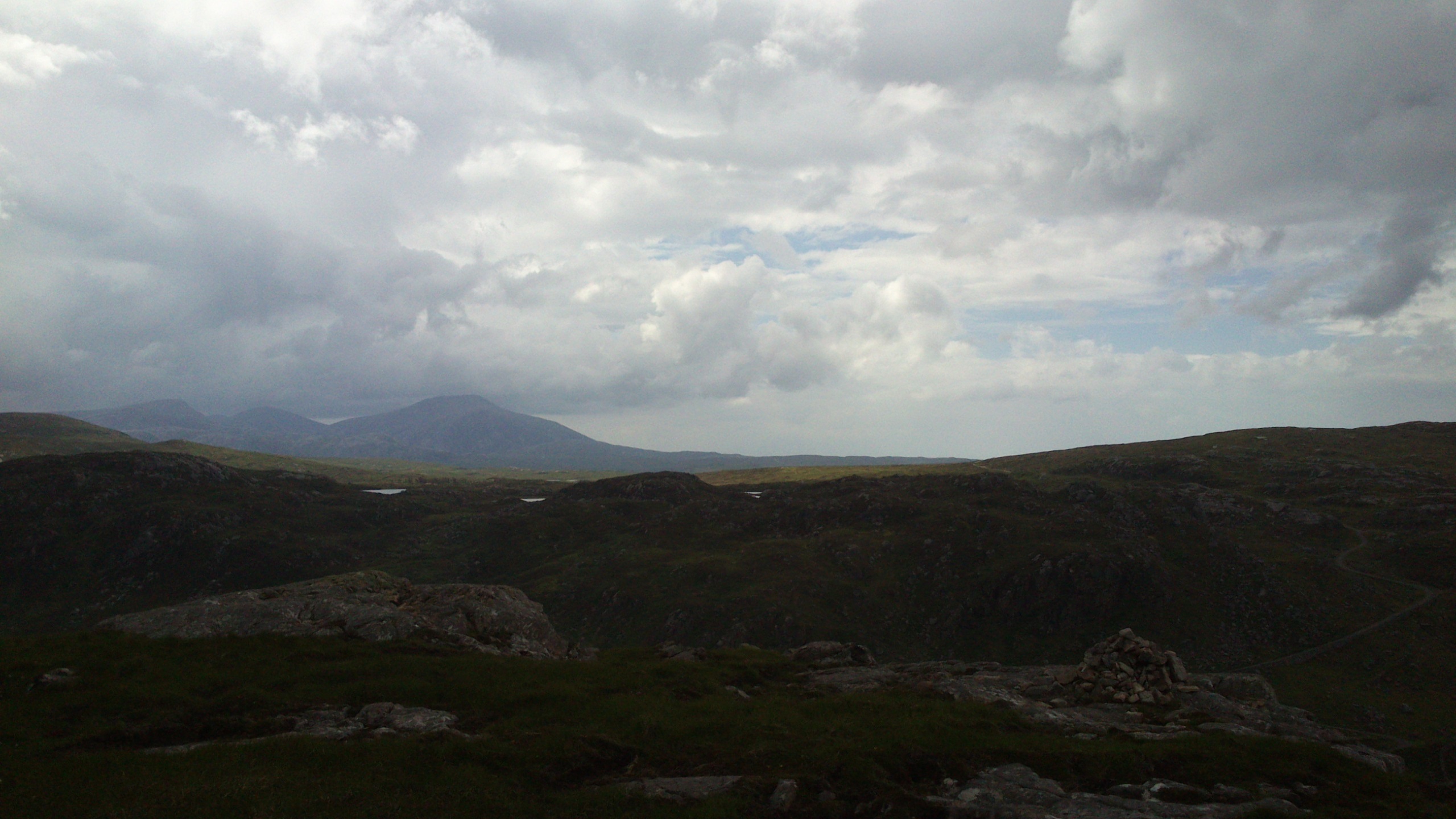
I bought just one day’s ticket to the festival, feeling indulgent at spending that, but Hannah and Sorren kindly put me on the guest list for the third day. When it’s over I decide to leave town rather than outstay my welcome, even though where I’m parked up by the road beneath the trees near the inner harbour all feels well. I head over a misty moor at the recommendation of a couple of people: it is great to know that after 11pm there is still some daylight and to know also that there will probably always be a place to park if I follow the dead-end roads, and here I still am several days later on a peat-track with a beautiful view, relatively undisturbed beyond yet more beautiful beaches. I meant to head north for a Gaelic language singing class, but have had to stay here. This lochen, and many I’ve seen from the roads, is full of water lilies, and this one also has Greylags.  The wind and rain keep the midges away. Another motorhome pulls into the car park in the bay below me. A Leodosach in his seventies has come out from the suburbs on his shiny new L-plated scooter with his fishing rod and a small rucksack. He says it’s a long walk out and he’ll stay overnight. Off up the track he goes.

Gaelic according to Grisela (who probably doesn’t spell it like that)

I learnt how to say a few things, and enjoyed making the sounds and deciphering the spelling, but rather than the vocab, here are the principles and facts of grammar from the workshop:

Gaelic has 18 letters, not the 16 I was told previously. (My mum says it’s a Romance language, though I’m skeptical. Grisela just knows that it’s Indo-European, but that doesn’t help much, because it’s pretty much bound to be.)

A grave accent, à, lengthens the vowel.

‘H’ is a modifier, often silencing the consonant it follows, e.g. an mh = v, whilst an fh, dh or th is merely aspirated.

A negative starts with a ‘ch’, whilst a positive ends with an ‘ee’ sound, apart from in the most common verbs, which are irregular (always the way).

There is no indefinite article, they just use the object, or ‘um’ for a specific object, so ‘a strawberry’ is ‘sùbhan laìr’ whilst ‘the strawberry’ would be ‘um sùbhan-làir’ (I don’t know what ‘strawberries’ would be, anyone know about plurals?).

Between certain consonants there is a ‘svarivakti vowel’ (corrections welcome): often a schwa that is included in speech but non-existent in the spelling, e.g. ‘Alba’ is pronounced ‘All∂ba’. I suspect, looking at the place names around here, that such vowels later become part of the spelling too, as in Tolsta (English), Tolastadh; Laxdale (Lacasdel); though I’m just guessing – maybe it’s the other way around: possibly the Anglicised spelling contracts things that the locals retain from the Gaelic even when speaking in English. (Some Scots say ‘fillum’ for ‘film’ – a svarivakti (?) vowel.)

Possession: one only calls ‘mine’ body parts and immediate family; all others, and other things, are either ‘at’ us or ‘with’ us; we don’t possess them.

Syntax is all skew. (For a native English speaker.) They say ‘Be you cold?’; ‘To be she lovely’ (where ‘she’ is the weather – ‘it’s lovely’); ‘Not knowledge at me’ (‘I don’t know’); ‘Jumped me up’ (‘I jumped up’).

Related colour words cross over between dialects, so some might call the same colour either grey or blue.

There are diphthongs and silent vowels, but where both vowels are pronounced, e.g. if there are two broad (open) vowels together, they are pronounced as two syllables. So fuar, cold, is foo-urr. ’You must pronounce both syllables’, says Grisela. ‘There is time for words, here.’

Red tweed bladderwrack seascape lighter crop

Hiraeth

Day, er – week, er, two? Three? – of the weavery investigation and my quest for autonomy and Celticness

Parked up in the same bay, with just a couple of gannets and a solid, friendly, unpretentious Portuguese couple braving the soaking gales in their tent. Dreach Celtic moment to play a little An Buachaillin Ban (https://www.youtube.com/watch?v=0Tvgk2WjM_Y). Reading the local paper.

Which is nothing like reading the Western Morning News. Well, it is a little like reading the Western Morning News: there are typically rural concerns that very much remind me of home (wherever that is) – ‘Cattle and coping with extremely wet summers’; typically provincial pride (in an endearing way); lots of adverts; and showcases for local businesses and village fetes (‘galas’, here). But Lewis is forward thinking, outward looking, creative and critical. There is, understandably, a little anti-Westminster-railing (I love the  3D ‘Yes’ sign planted on an island in a lochen outside Stornoway), and this modest local rag offers intelligent, left-leaning critique of Cameron’s proposals to cut immigration (and thus, this author suggests, to once again compromise UK industry and increase unemployment). This modest local rag visits Cuba to learn about community and finds their people ‘financially poor, but culturally and socially […] millionaires’. This modest local rag ‘challenges private estate owners to create crofts’ for local people and documents the successes of community-owned townships. This modest local rag boasts of prestigious traditional music courses producing shit hot musicians in tiny places (my friend and I were mega impressed by young Cameron and Ross, students on Benbecula, in Glasgow in January (http://listenagain.canstream.co.uk/celticpodcast/index.php?id=299). This modest local rag talks of ‘Saving languages and crossing borders’ as Gaelic looks to Occitania and the ‘Poetry of troubadours’ for some lessons in survival. This modest local rag dedicates pages and pages to the only Scottish music festival to appear in Songlines’ Summer top 10 year on year, and the black artists get columns as long as the Celtic ones. This modest local rag features artists and craftspeople with as much pride as it features crofters, entrepreneurs, footballers, kebab shops and primary school activities. And with almost as much pride as it features Harris tweed. (Almost.)

Stornoway has the largest Co-op supermarket I have ever seen, easily rivalling the Tesco baddies on the other side of town. (The little Co-op forget to give me my £50 cash back and though I don’t want them to take my word for it when I go back – not least because I am utterly scatterbrained at present – they handle it generously, trustingly and responsibly, and like the friendly informality of the Post Office who offer me an ad hoc, no-charge, paperwork-free service, it leaves me feeling glad to have this as my local town.) As well as the long-lost favourite cheese in the whole world ever (Scamorza – smoked mozarella), Stornoway also has lemon and black pepper chocolate and a Gaelic-speaking Pakistani community.

Can you tell I’m impressed?

OK, I admit it’s not Utopia. There are no trees, thanks to the Barelegged viking king’s scorched-earth battle tactics. Even the very few hardy Canadian conifers are struggling. The bungalows are still ugly, grey and prolific, planning regulations presumably pretty lenient, and people still consume like normal Westerners. The only whistle echoing round the hills and into the sea fog is my poorly played one. I have not yet found the ‘hireath’ that my mum tells me is Welsh for a mythical Celtic concept of the yearned-for, probably metaphysical, home – but there are music classes, sessions and ceilidhs on every night of the week around the island, if I’ve the energy. (I *will* find the time and energy for Gaelic language and Gaelic singing classes, I swear.) And this rainy bay is a good place in which to feel hireath, anyhoo.

On a mission for hook-up to do me ironing (no, not my clothes, silly, I mean crabbing my woves – steam ironing to set the cloth) I pass many a weaver’s studio with a welcome sign. There will be enough to keep me busy exploring for months – or, since I also need quiet time, music time and, ahem, weaving time, perhaps years. I also pass signs for Norse mills and kilns and brochs, and a friend of a friend gives me a lesson via Facebook on Norns (‘The Norns are most powerful beings,
In Norse mythology the three most well known ones are Urd (past) Verdandi (present) and Skuld (future, or that which will be)
They weave the fate of men, Gods, and even worlds. The skein of our personal Wyrd is decided by them…’)
. I know next to nothing about Norse mythology, so this is welcome information.

Docking in civilisation the campsite is astroturfed and unromantic, but still a reasonable place to go to work, and well-run. The Leodasach lady owner, whose lilt sounds very Welsh, who asks me what nationality I am and who totally counts the Cornish among the Celts, lived in a photographed-but-now-disappeared blackhouse village just 65 years ago, with animals under the same thatched roof. Is her tidy modernity an improvement? No, she says. We agree we’d rather battle the elements than the technology providers as she hands me a leaflet with WiFi instructions. (As predicted, the dear Highland WiFi won’t talk to my computer, though rather than getting furious I enjoy a chat with a taciturn character on Skye. He does all he can, and though it is unsuccessful, there’s something nice about contacting someone in a spot I can picture on another of these isles. It makes me feel connected – who wants a WiFi connection anyhoo?) She tells me that Gaelic has only 16 letters (the sensible ones), hence some odd combinations to make some sounds, like mh or bh = v. She tells me about broad (open, I think) and slender (closed) vowels in Gaelic, and how each side of a consonant the vowels must both be broad or both be slender, so for example in ‘abhainn’ the second ‘a’ is a simple spelling convention and silent. The stress or accented syllable changes the meaning in this case: if pronounced /avee(g)n/, it means river, if /aavi(g)n/ it means oven. Our lesson is rudely interrupted by my smoke alarm the other side of the campsite as I left the grill on.

So the greens are crabbed, finished, packed up and sent back to the National Trust gallery on dear Dartmoor. I go to the arts centre, plug in my laptop, get online, order a weird combination of foodstuffs sort of by accident that doesn’t work at all, and have grave difficulty focussing (not helped by a worried policeman’s visit that turns a wee bit heavy as a well-spoken young lad makes an ill-received joke and then admirably defends his right not to give his personal details. There’s a man gone missing near some cliffs. Fingers crossed for him and his loved ones.). I get very little work done, but do order a couple of useful things from eBay and enjoy giving my post restante address at Stornoway Post Office. Make that Post Restante. It feels exotic. The Post Office building is old and a little grand. Ondaatje’s Royal Geographic Society’s members in the English Patient probably had Post Restante addresses in Cairo. I don’t know why that comes to mind, but logic is often a few steps behind instinct, I find (or a few miles, or a few hundred or even thousand years, come to that). Maybe I’m enjoying the ex-pat thing. I hate, as an outwardly Englishperson, to be a privileged incomer – always painful too when one is at least as poor materially but doesn’t look or sound it – but though I am keen to be among the real Leodasachs, feel like an islander, maybe even *be* a crofter one day, I am also enjoying being a visitor: polite, alien, transient and anonymous. (A whole lot better than being alien in one’s own community, whatever that is, or was!) Maybe also it’s because the handsome postmaster is Canadian. He asks me whether I’m planning to live here and, vacant and startled, I smile wrongfootedly and offer a vague ‘possibly’. I barely know who I am, let alone where I live. I forget what simple, practical question I have to ask him – gone. I’m feeling very spaced out and Piscean and loving it. Neptune is definitely working his magic on me here.

I park up on the inner harbour facing the woods in the castle grounds (where there are some great long walks for Murphy to enjoy, and some more oraches for me to forage) and ‘stealth camp’ undisturbed as I am not yet done in town. In the van-sized parking places I puzzle for quite a while over the sign that says ‘Parking limited to 8 hours between 8am and 6pm’ and struggle to get my head around what this libertarian rule means for me in a 24 hour stretch, and read the sign again a few times. I was clever once. 

The next day I spend some more focussed hours sitting in the reference section of Stornoway Library using their internet (I know some of you dear readers are concerned about how I manage the pragmatics of life in a bus). Surrounded by local history archives and dictionaries, I feel at home, and like an undergrad again – languages, linguistics, and area studies: very much a part of what I’m doing here in the Outer Isles.

Lichen on old Blackhouse

And on my return to the little bay, I’m assembling yarns for the next big weave: heathered rusts, browns, reds, teals, ochres and greens, subtly combined in a peatlands-and-seaweed-inspired Harris-style tweedy-but-irregular-and-organic run of coasters (which act as useful little samples to experiment with weft combinations and weave patterns), snugs and scarves. I have to concede that these smaller things have their place, as especially with this fine, pain-in-the-arse twisty, ‘sticky’ yarn, embarking on vast blanketry or ‘clo mhor’ (big cloth) whose colours and patterns I found I disliked once combined would leave me either wasting kilos and hours or committed to several weeks of laborious dissatisfaction. I have to be feeling bright and strong at this stage in the process, energised and inspired, with the patience to think thoroughly through design and loom set-up, and the confidence to begin. Not today, but tomorrow, I hope.

Homing

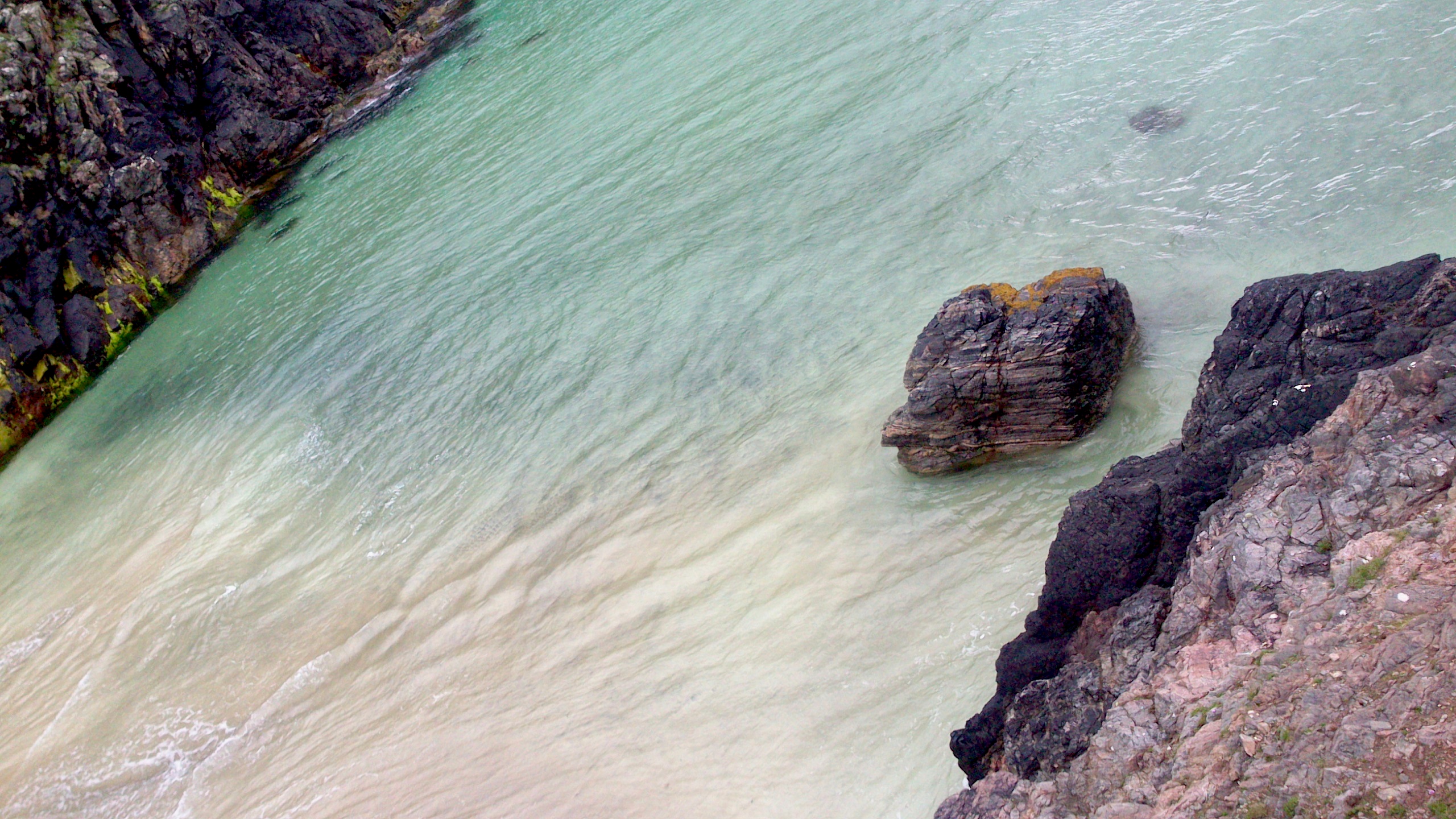
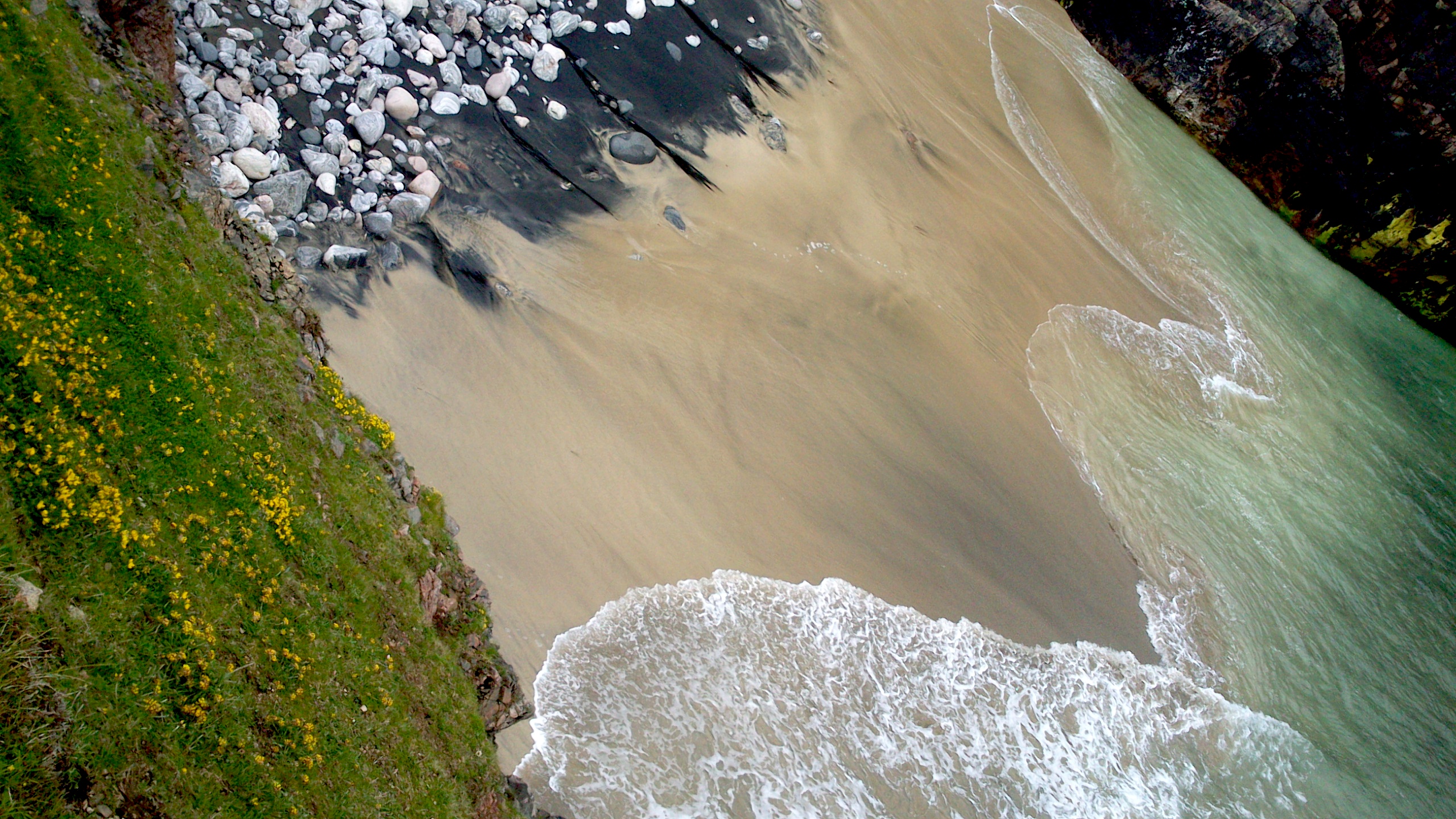
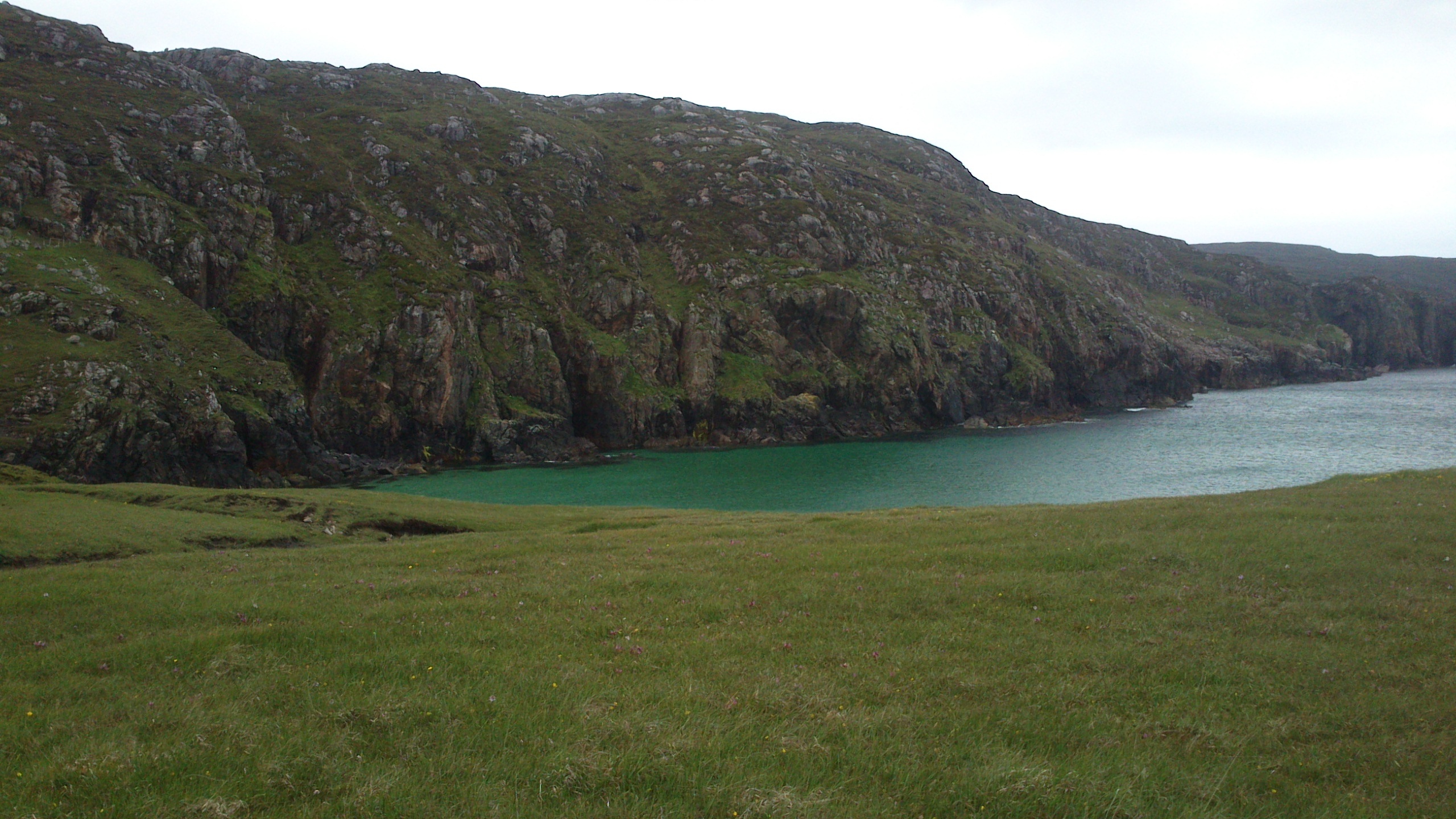
 Those island colours Turquoise bay

Day Four

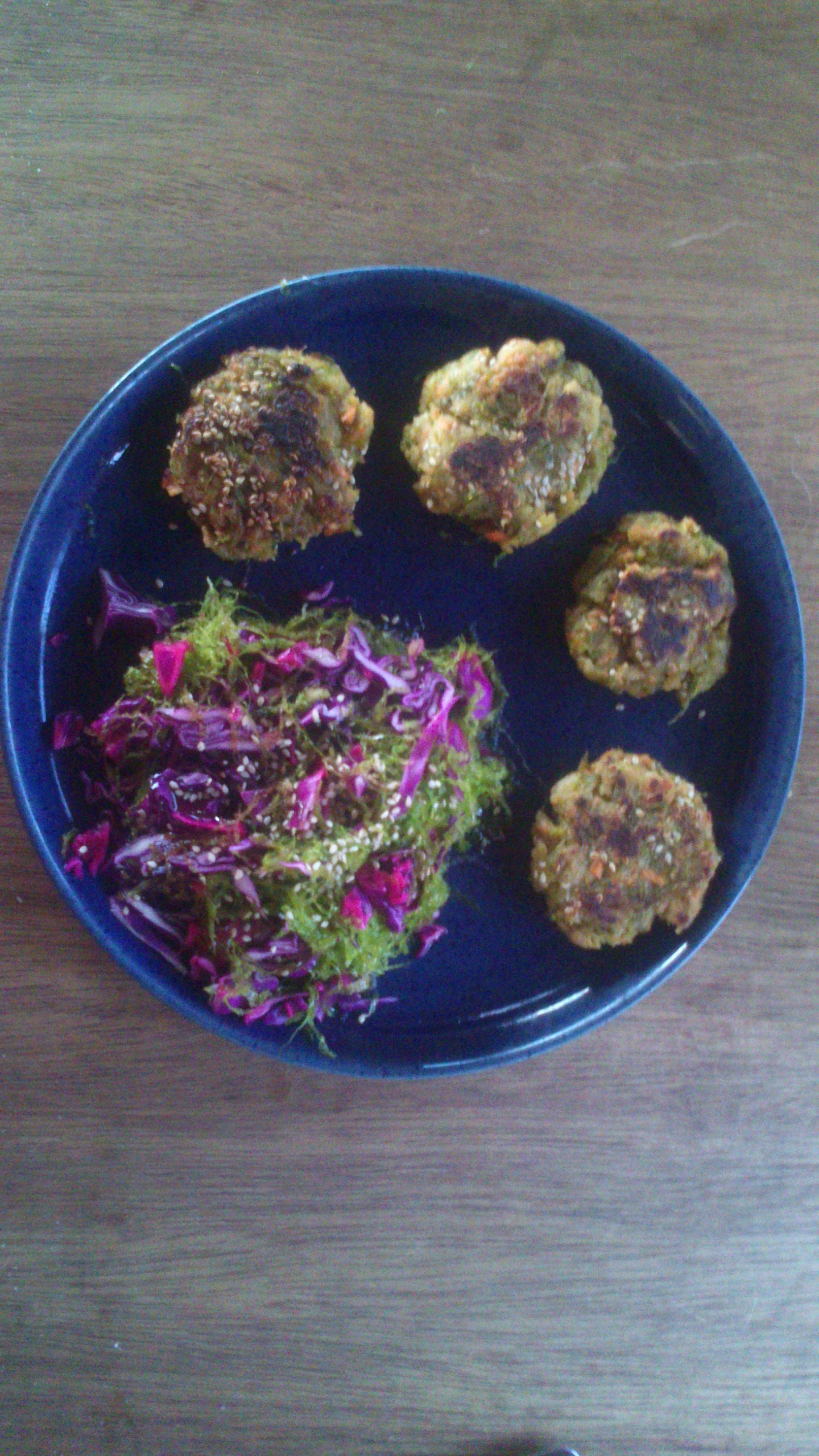
The sun is wholehearted today – truly hot – though the wind keeps us cool, but stomping up the heights to get a signal to see if a friend will be visiting on his RIB (alas, he won’t) I work up a sweat, and eyeing the crystal clear turquoise and azure bay beneath me I run all the way back down again and into the sea for my first Lewisian swim. Cold but amazing, of course. It’s 10am and I have the bay to myself again, after some noisy Danes and some shyly skinny-dipping Dutch folk left early. I do some stretches, dry off sunbathing and forage for some more gutweed. Murphy gets some in his breakfast and eats it all up. I make gutweed patties with butter, onion, sweet potato and thyme (yes, real wild mountain thyme, from the slopes here where more beautiful species appear with every look), and though they taste amazing in the cooking process and are soft and light and crisp with a toasted sesame seed coating, they end up tasting pretty much like every other patty I’ve ever made. Which is ok, but not earthshattering, unlike the rest of the day.

I finish off a run of green woves, tidy their tassels and darn them, and need hook-up for the final ‘crabbing’ process (steaming with a hot, static iron), so will have to dock in civilisation soon for that.

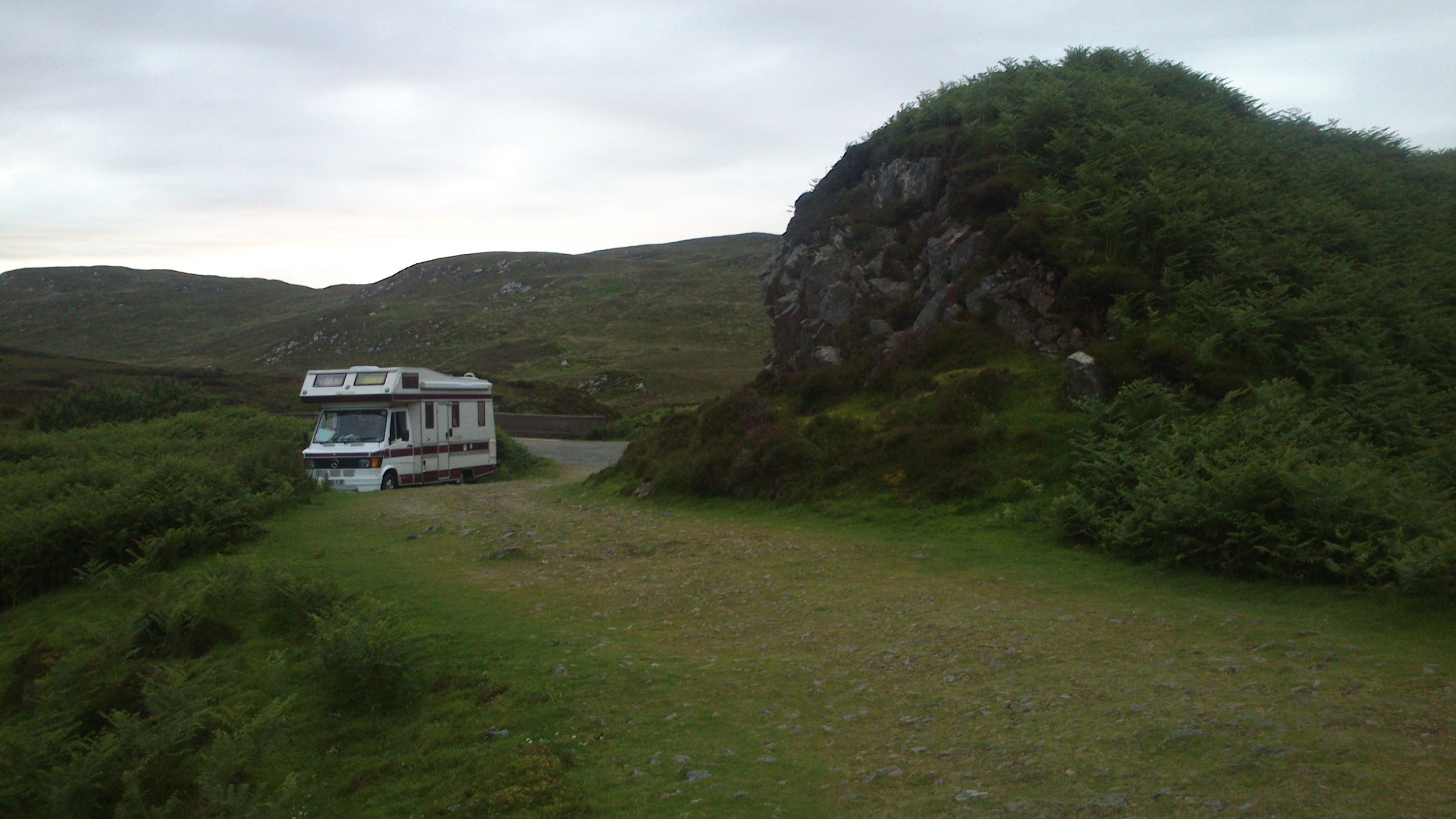
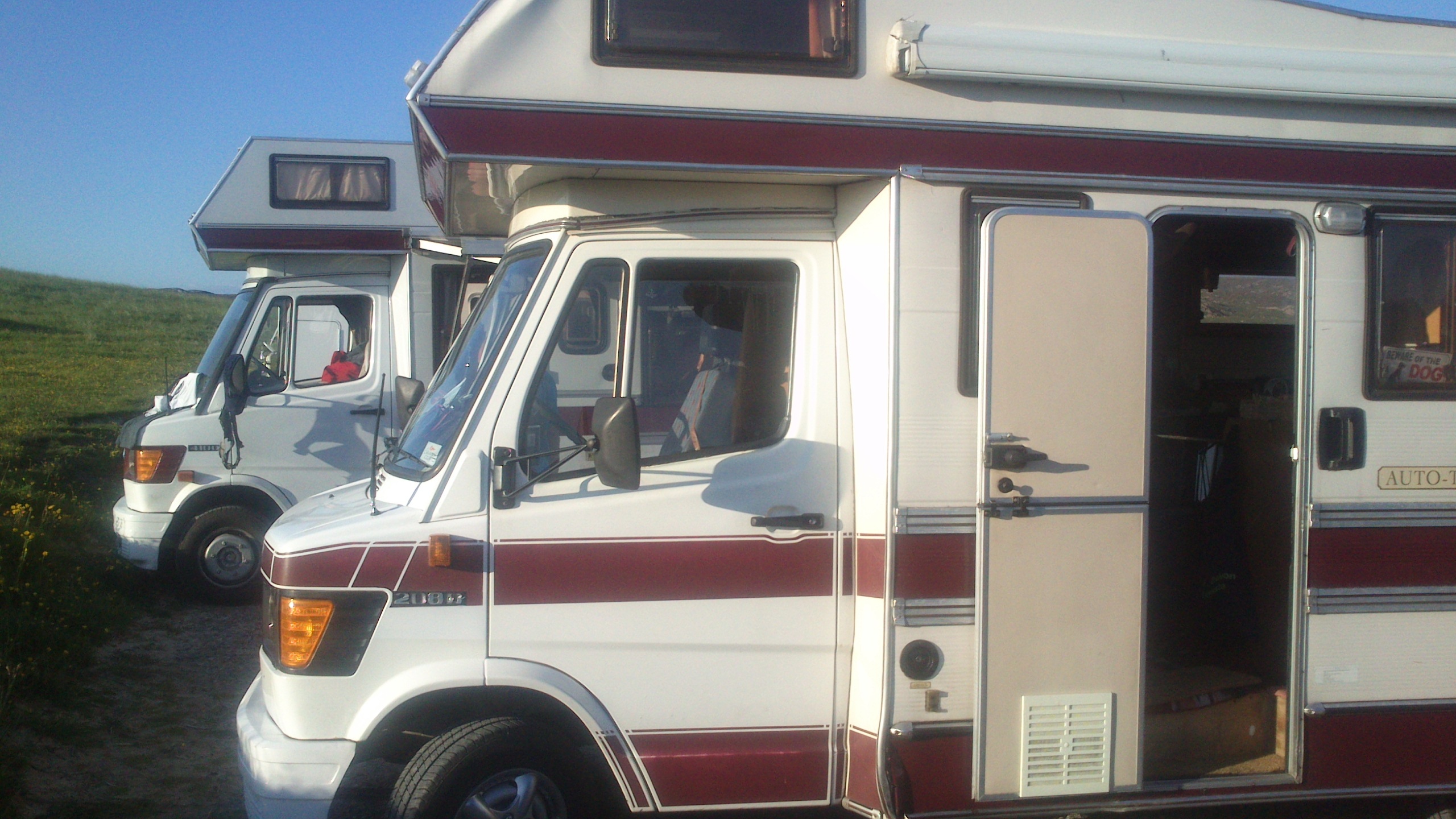
I go to Callanish and the stones appear dramatically on a tump, friendly but black and jagged against the apricot evening skyline. On other tumps, some surrounded by sea loch, there are roofless ruins in sympathetic alignment. There is music in the visitor centre but it is disappointing, so I leave again, pulled back to my incredible bay. I am missing it like mad but pass straight on by to explore another headland just to the south. It’s not the same, but for practical reasons I stay, pulled up alongside a burgundy and white (unlike my burgundy yellowing cream) Mercedes Chieftain so much like mine that its owner and I inspected each other’s and generally geeked about them for an hour till it seemed too late to head back to ‘my’ bay. Here I can’t see the sea or hear the waves, though it is only over a very small rise, and the evening is beautiful nonetheless, so it’s ok.

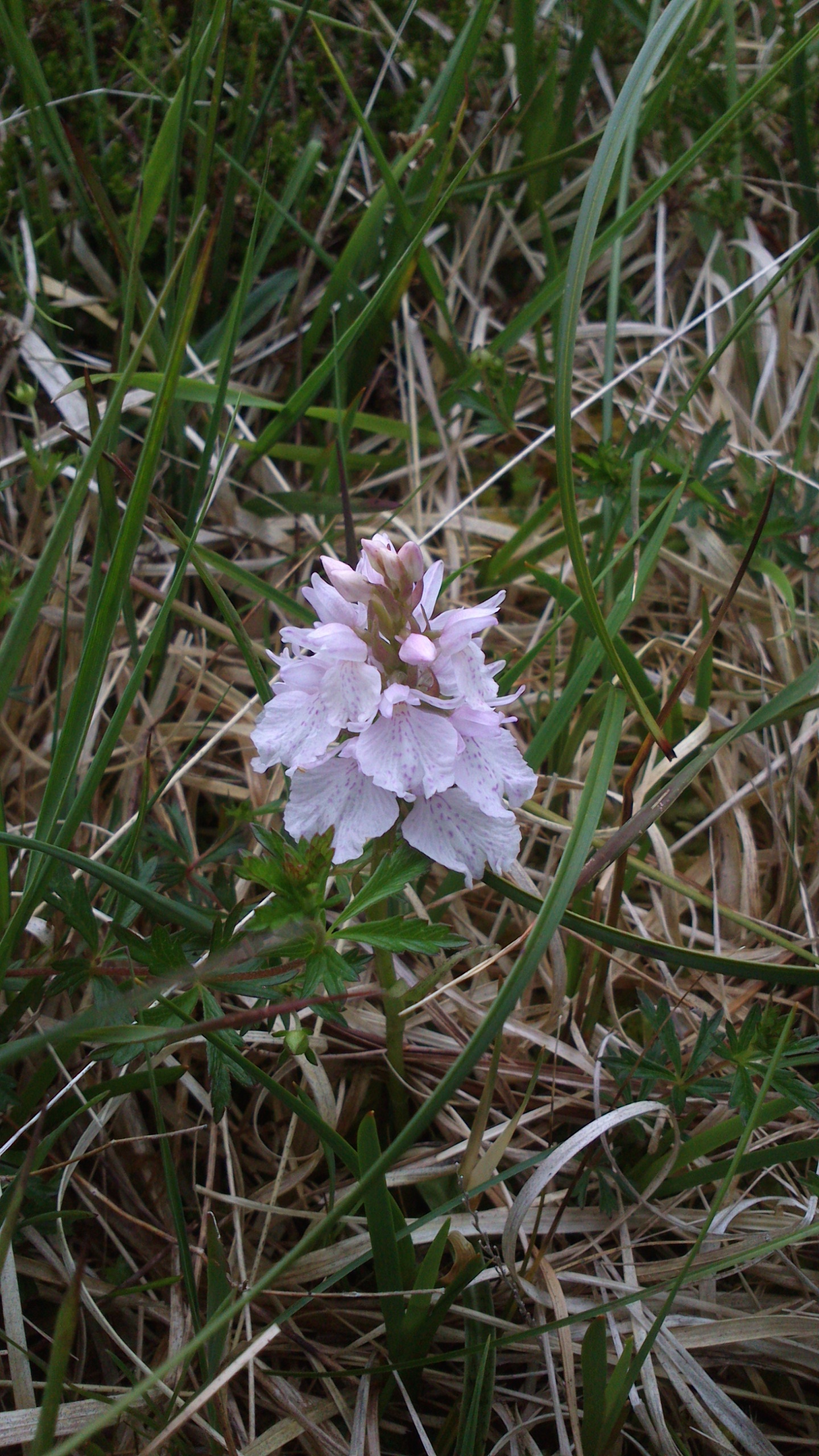
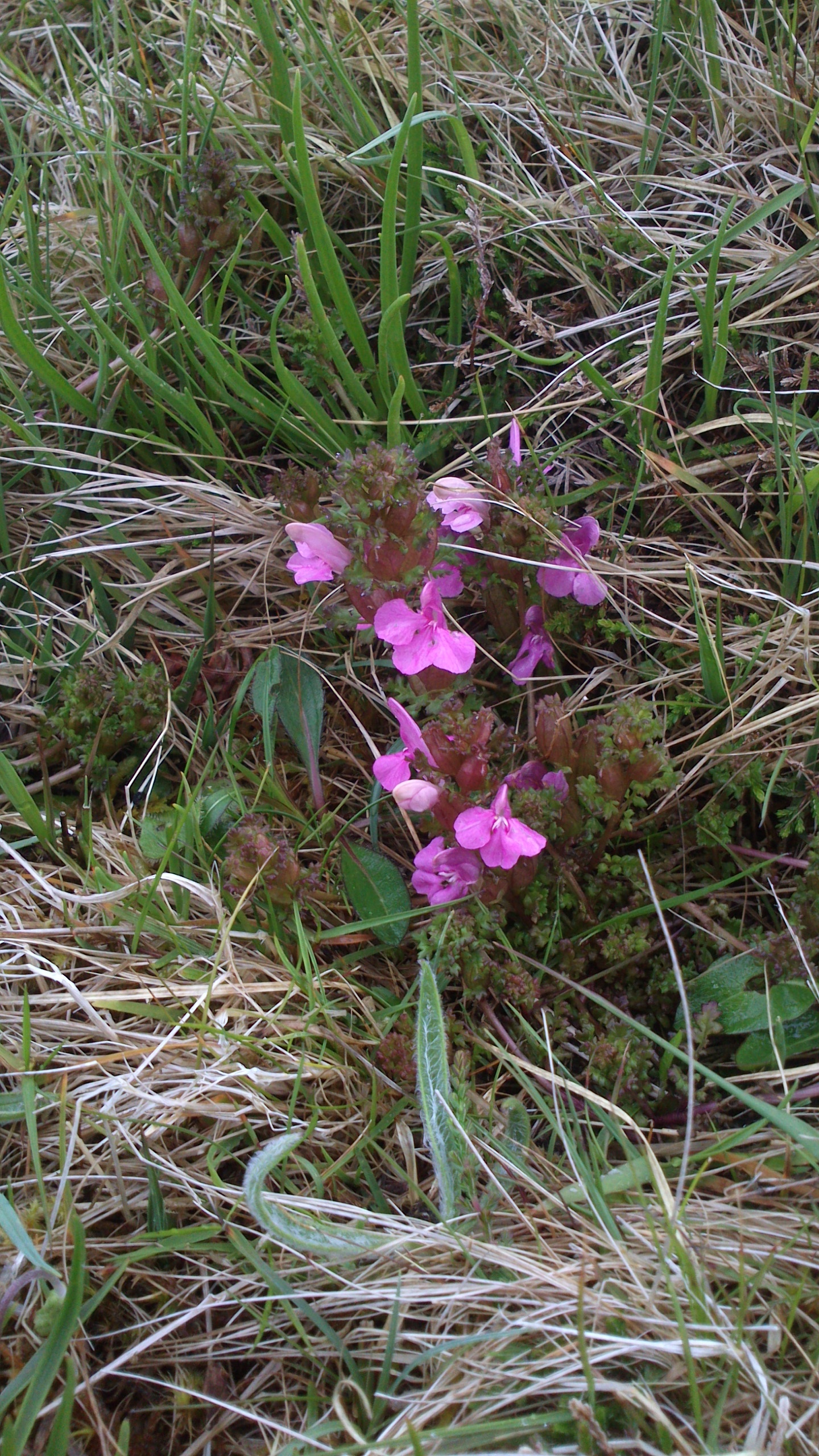
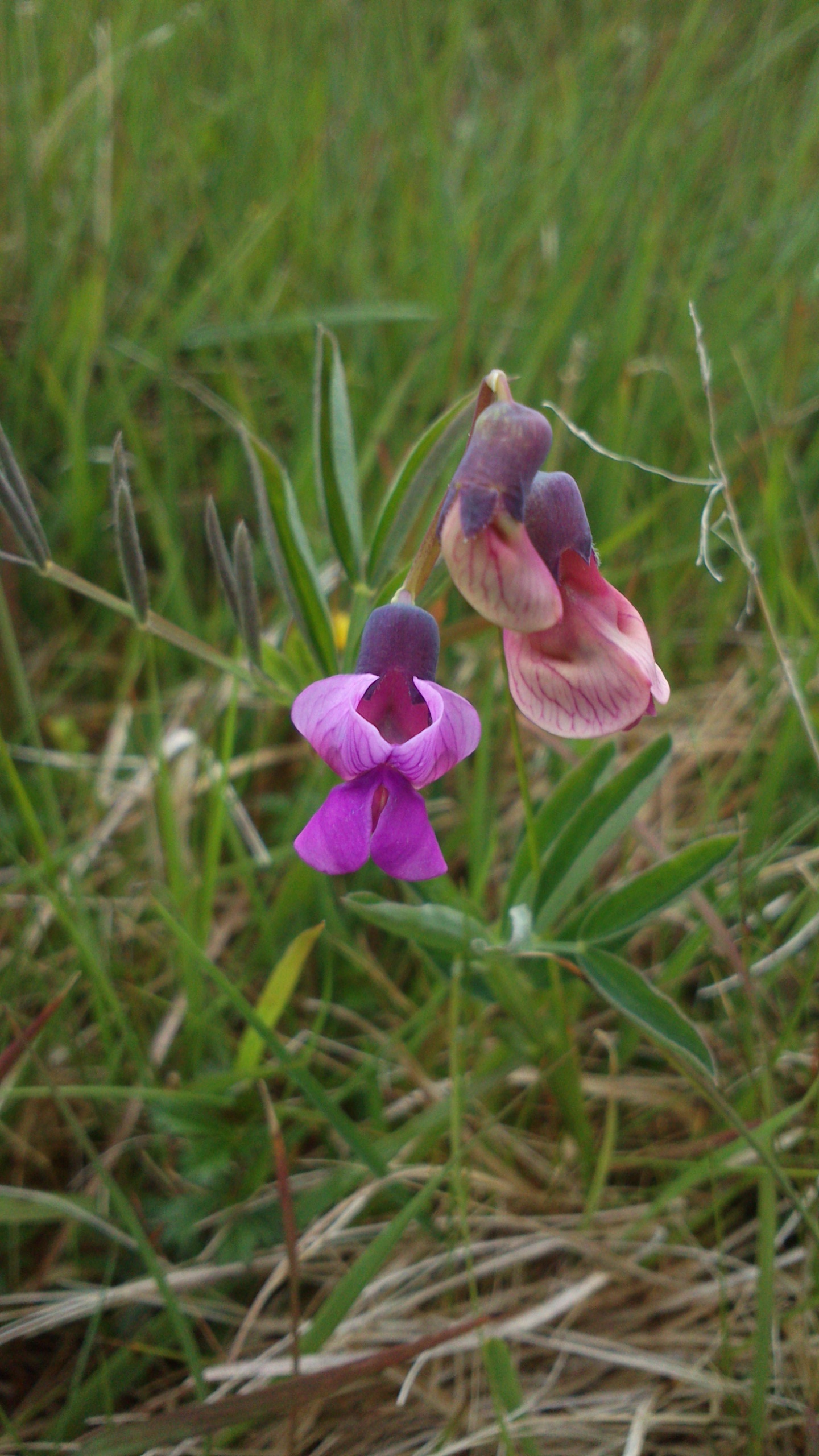
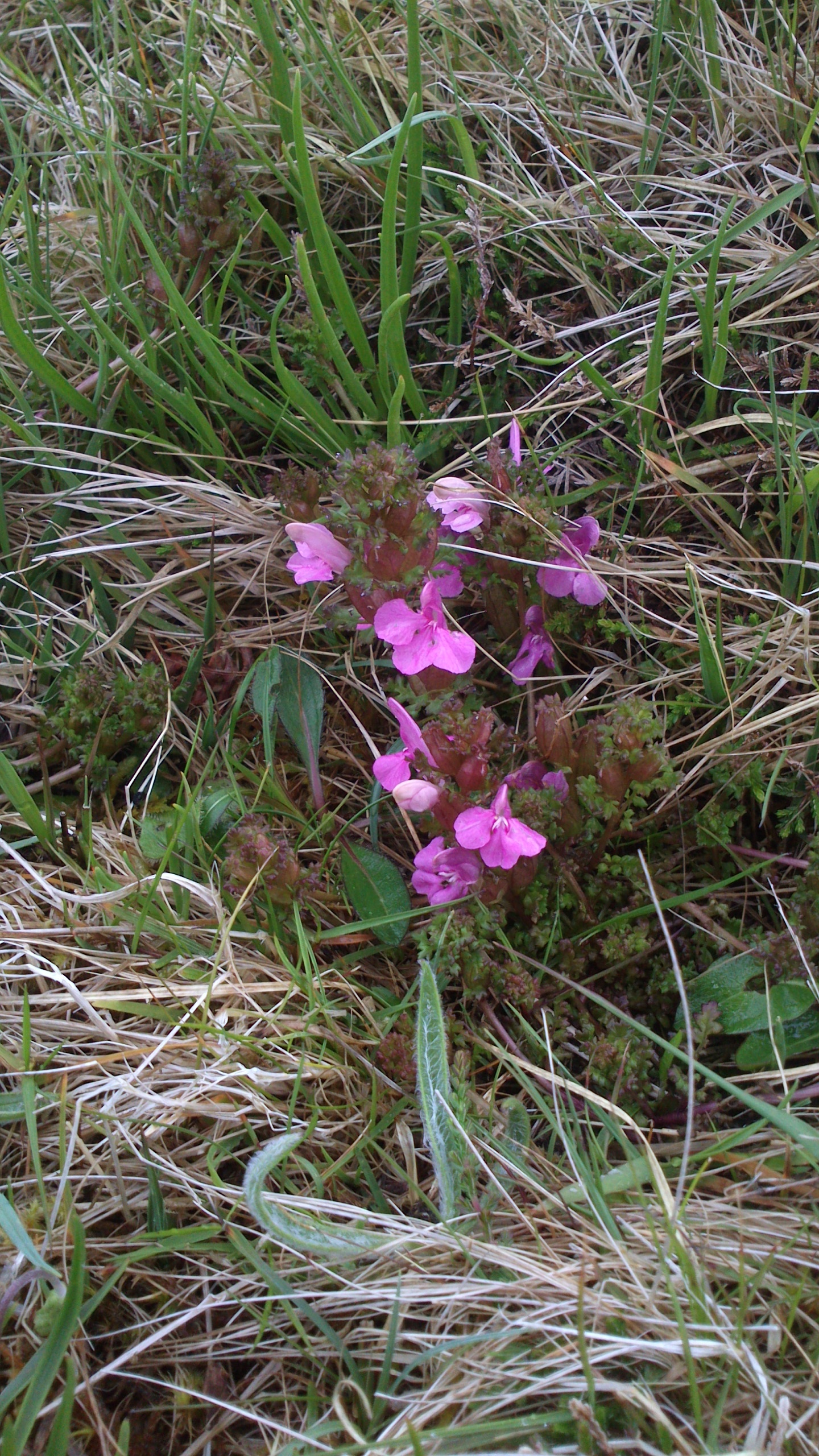
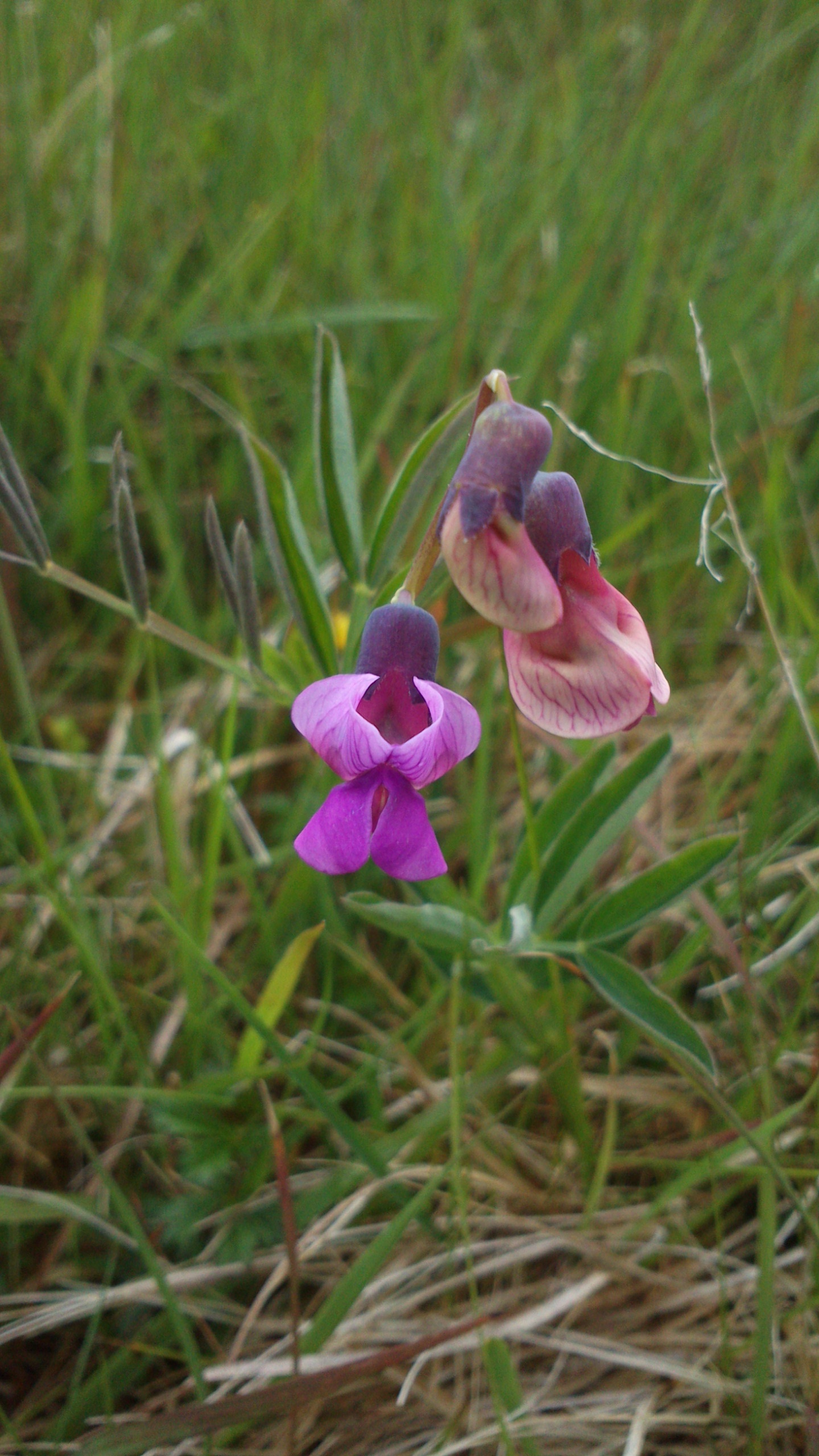
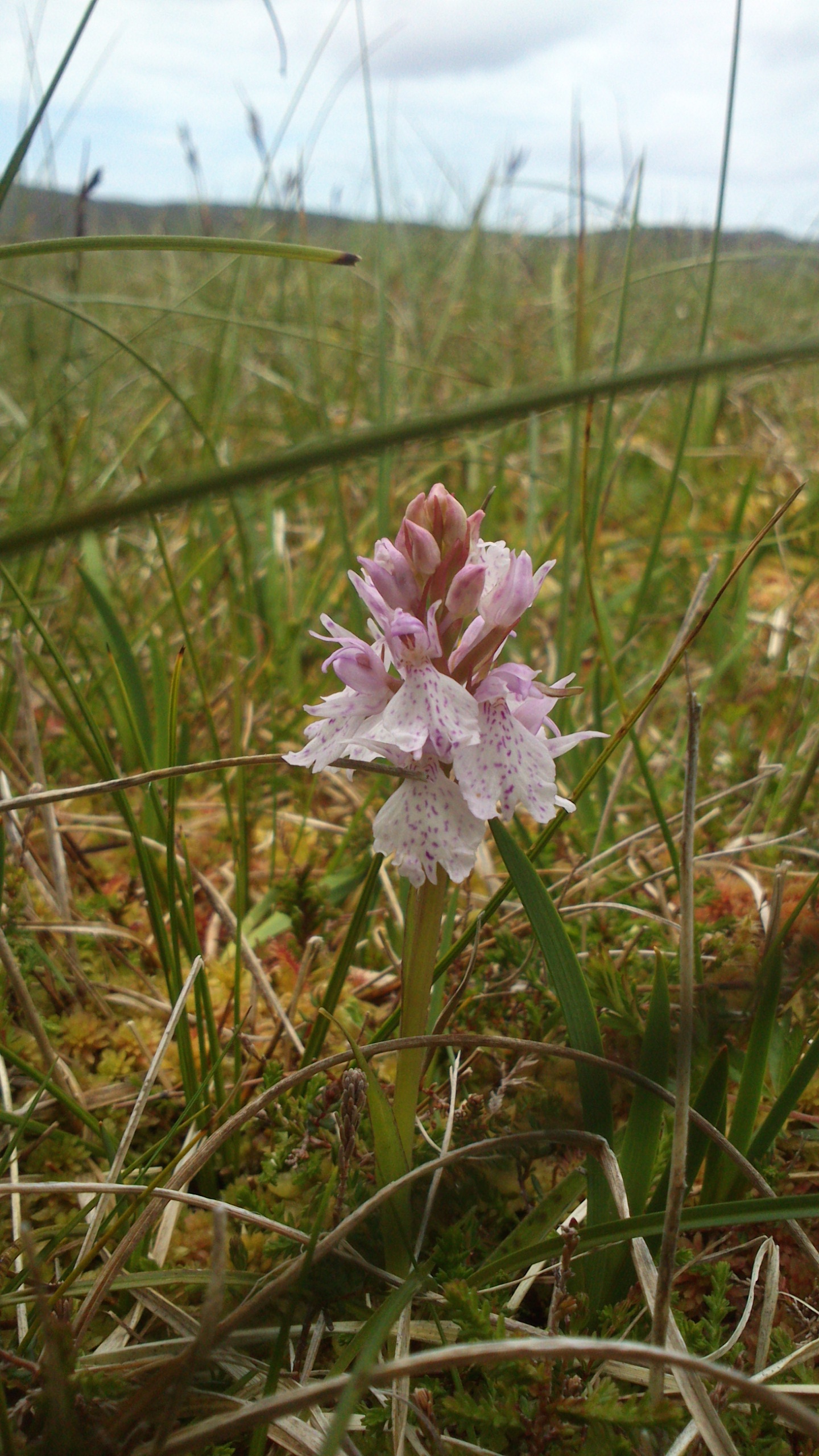
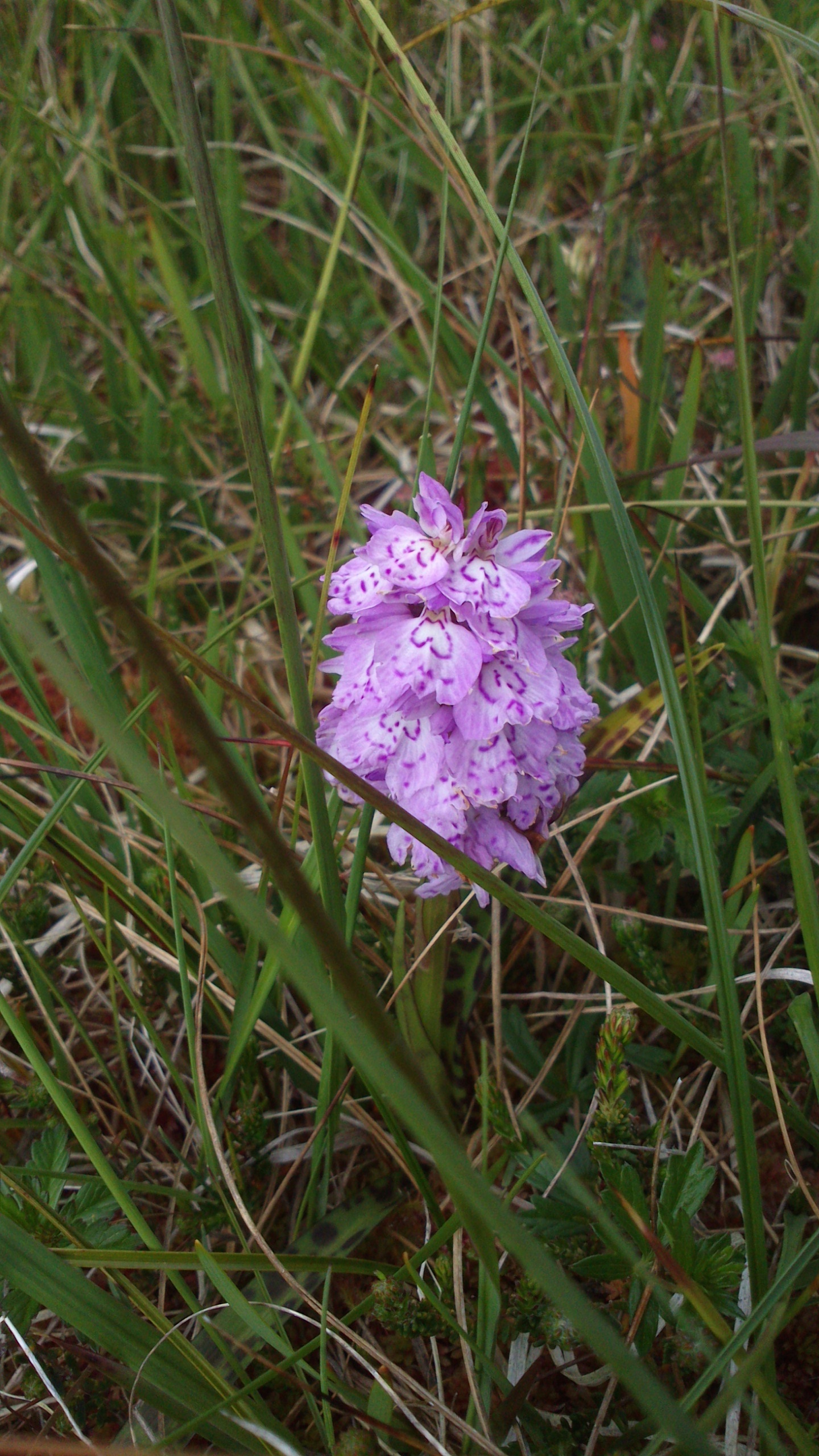
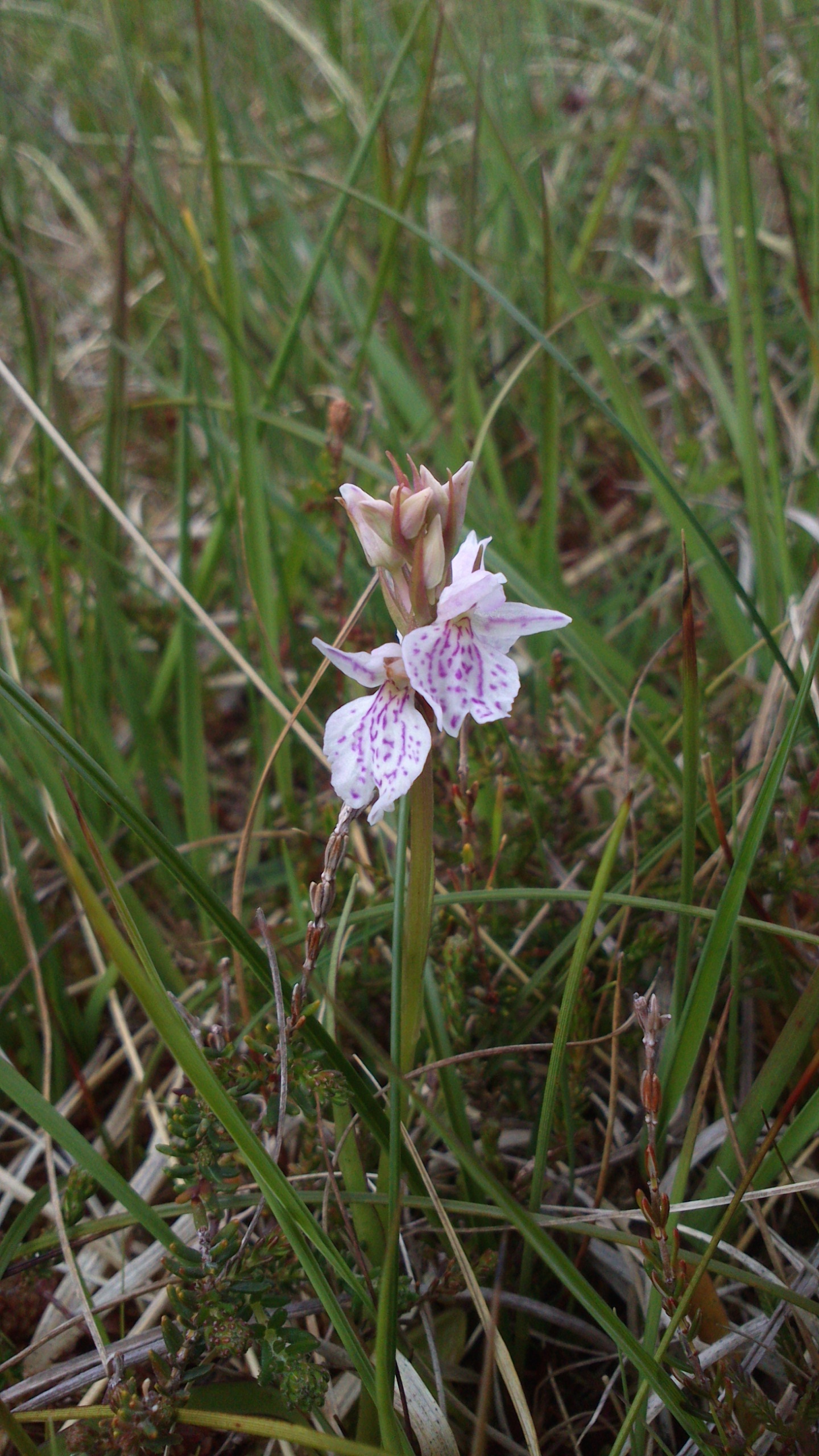
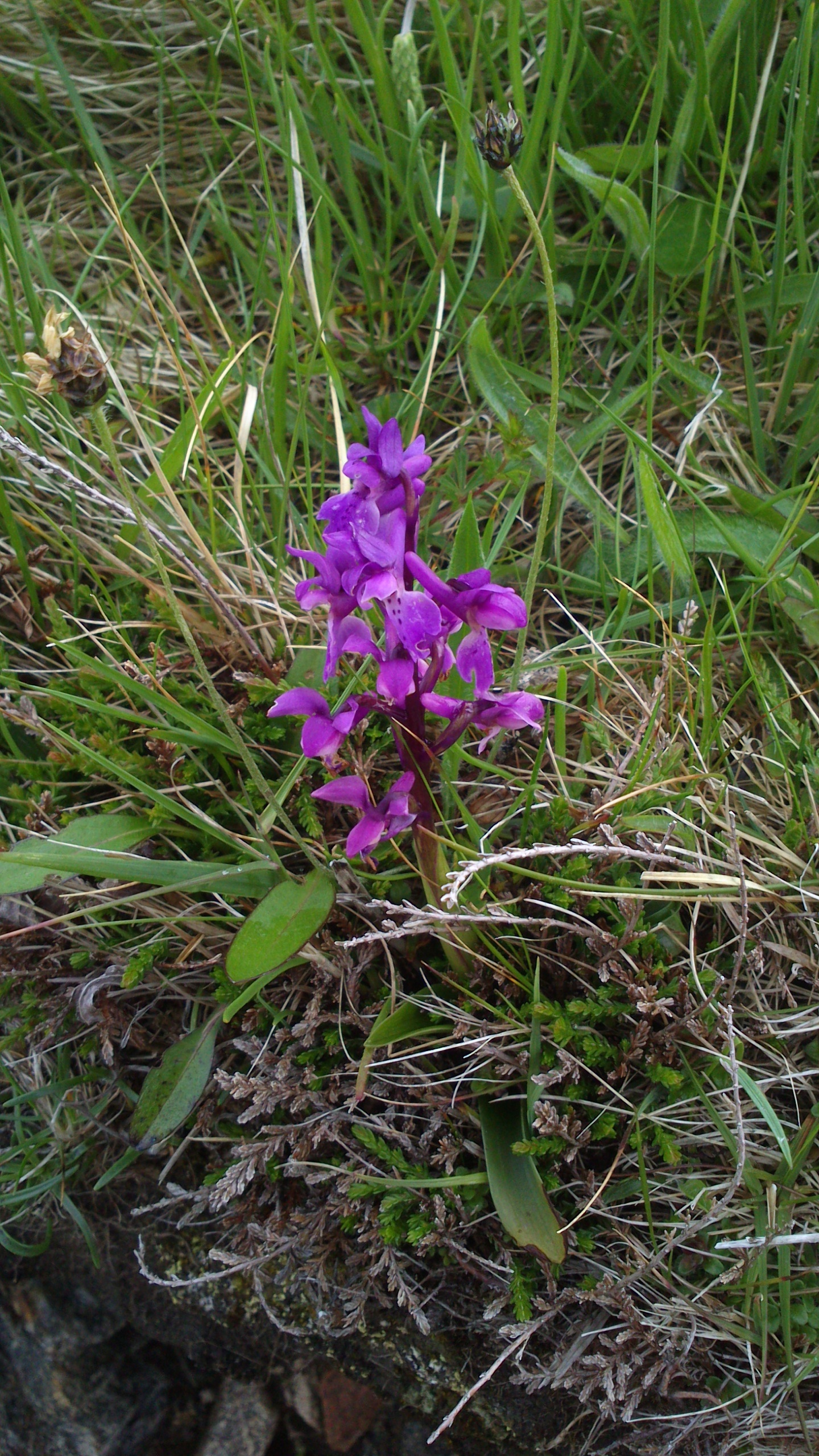
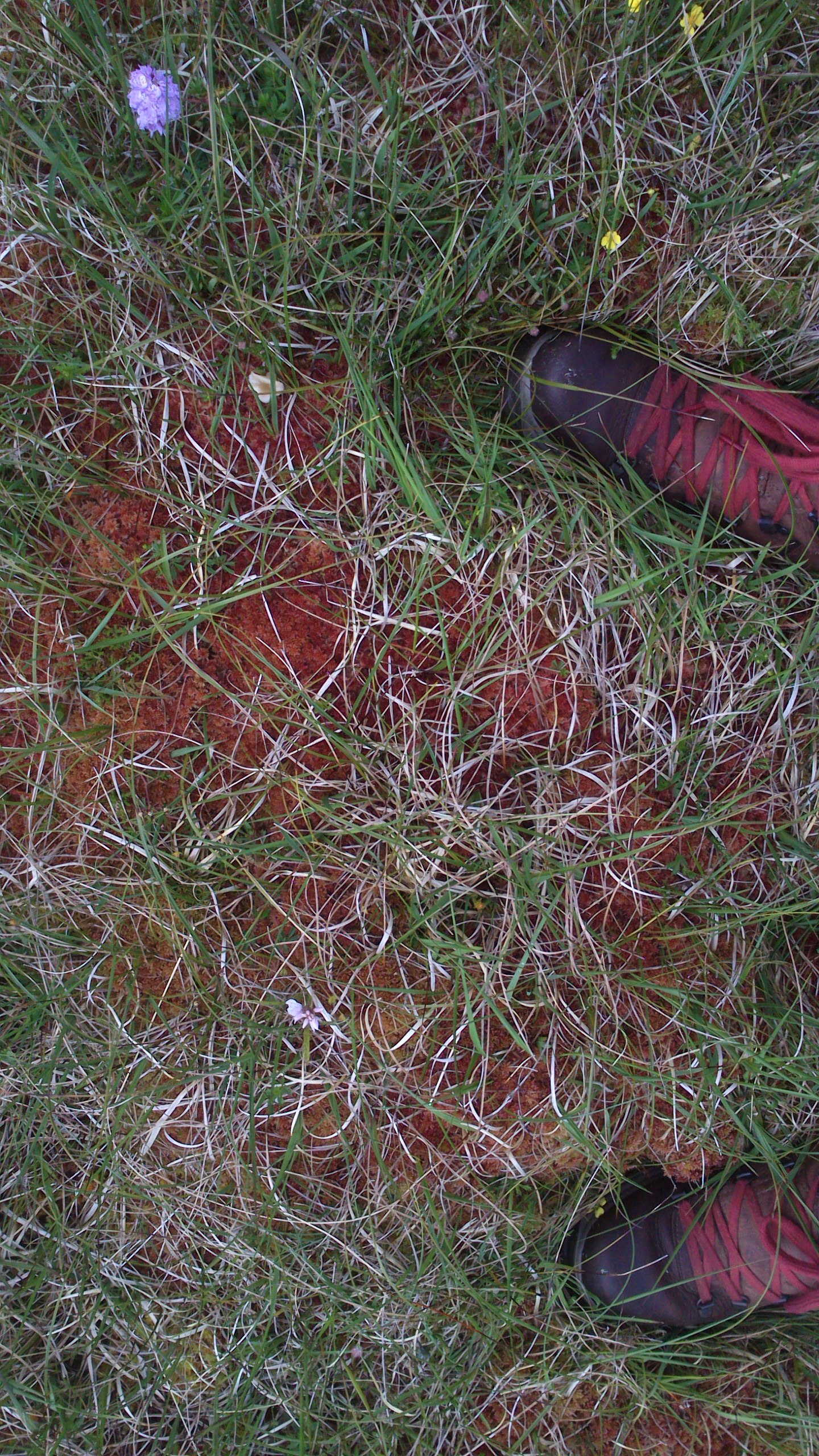
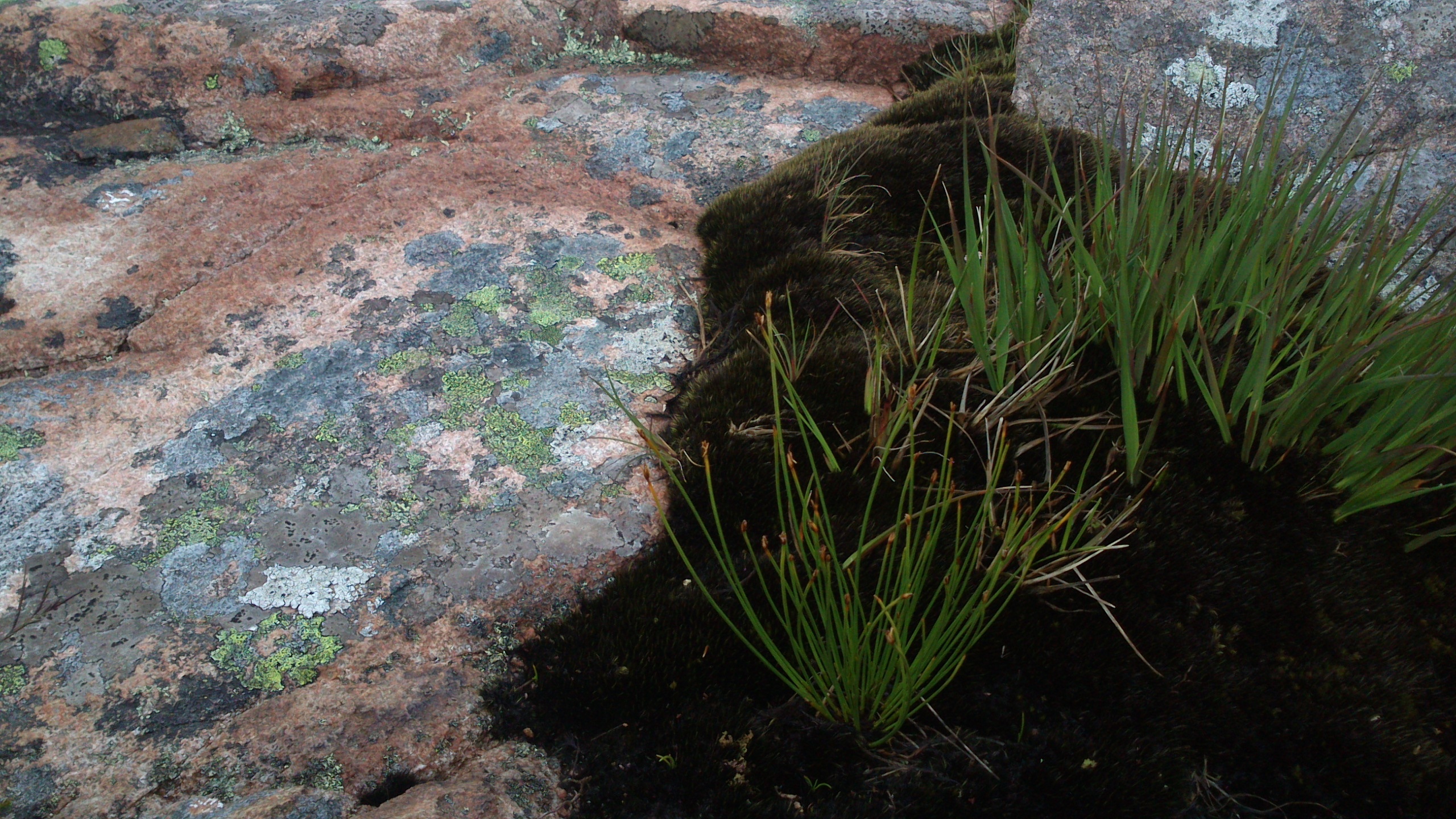
Croquettes Geekybuses palest pinky white orchid Pink nettle orchid Pink sweet pea orchid Pink nettle orchid Pink sweet pea orchid pinky white orchid pinky white orchid fat pinky white orchid slender purple orchid red moss rocky lichen moss

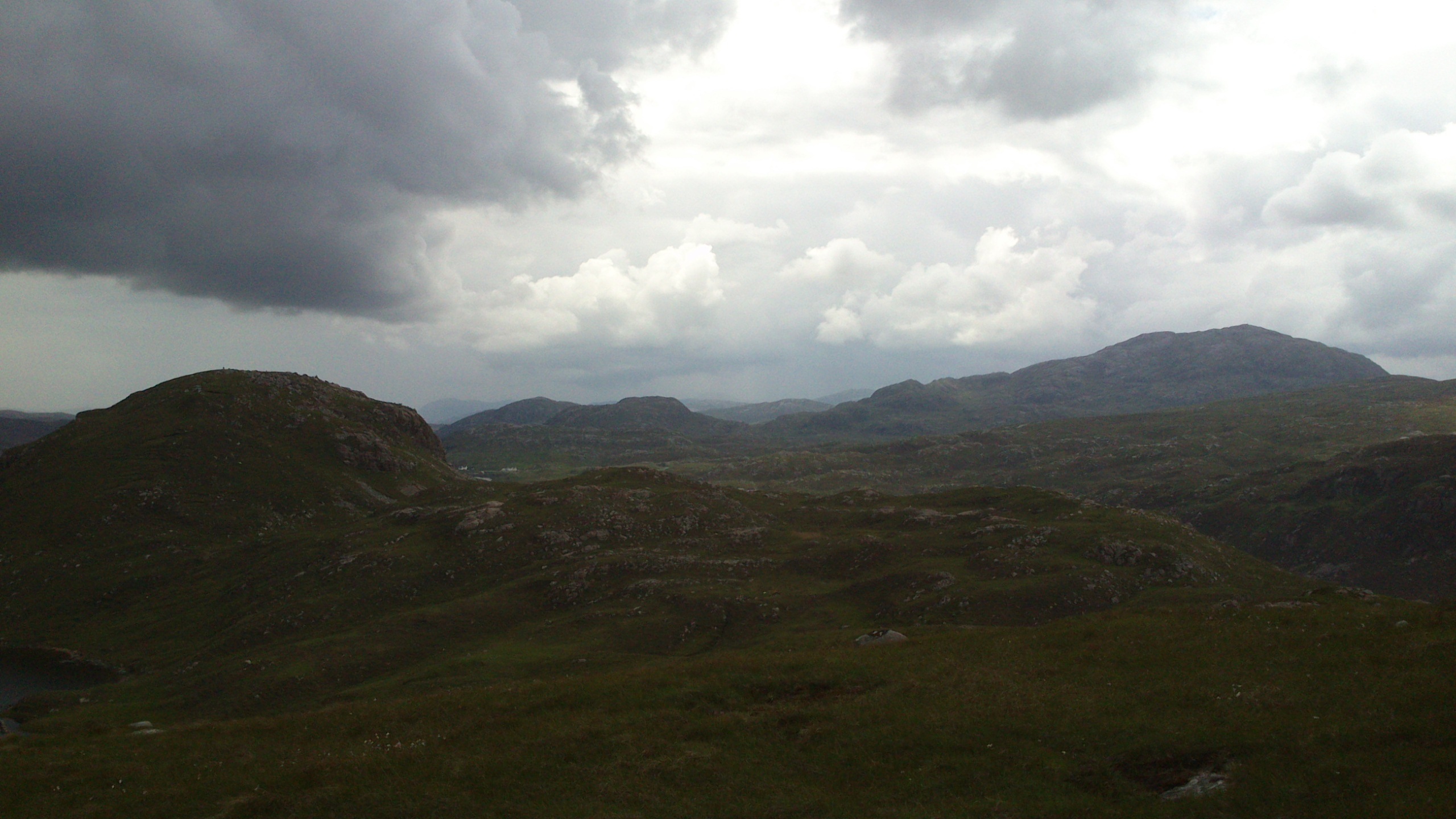
 Panorama 1a Panorama 2 Panorama 3 Panorama 4 Panorama 5 Panorama 6 Panorama 7

Day Five

I thought I might go to the local gala, where apparently the whole island is gathered, join in with local people instead of meeting only motorhomers (who are a wonderfully gracious breed, I notice), but it has come in stormy and I get distracted by unexpected internet access and a hundred other useful and tasty things – island shops rock! Nearly forgetting to pay for my fuel, and nearly forgetting to withdraw cash for the camping honesty box, when the latter was my main reason for leaving ‘my’ bay in its utmost glory yesterday, I return to my Greenland-facing spot late in the day and breathe a sigh of contentment. I am in a constant dreamlike state, and frequently doing silly things, but a most of me is very level, very focussed and very receptive. I finished some damnprettylittle coasters (for the National Trust shop, but which P possibly won’t even like, since she is a woman of taste and these were meant to evoke campions but possibly just evoke pink) and congratulated myself on a surprise day’s work (it’s normally the converse, isn’t it?). If blogging and coaster-making count as work – which they must. Saturday work, anyhoo. Oh and I did meet a local, or two and learn how to say Happy Birthday in Gaelic, though promptly forgot again, but here’s the written version: ‘La breiath sona dhut’

Above my parking spot there is an abandoned old school. It’s sad. I feel a sudden wish to fill the cleave with children and revive the school, Small School-style.

The School

A dear friend sent me an incredible article on a certain Mati Ventrillon, a beautiful young woman who left London to join the 54 other inhabitants on Fair Isle (the outermost inhabited island of the UK) and help revive their knitting tradition. She keeps 20 sheep with her two children and collie. Look her up, I’m going to. Fair Isle blankets perhaps? Definitely a stop on my tour one year.

Today’s recipe: happiness and calm

Give up everything.

Go and live in a bus on an island.

Watch the tides.

Work.

Walk.

Swim.

Rest.

Drink valerian tea.

Sleep well.

(If 1-3 aren’t available, 5-9 can be served separately, with noticeable benefits to health.)

Day Three

Day Three

I haven’t seen any darkness here yet, despite awakening once or twice in the dusky night. Last night there were oyster catchers and a bumble bee still up at gone 11. This morning in the small hours I thought someone was checking out my van, peered through the curtains and off fussed a noisy chatter of little brown hobbies – starlings, I realised later as the whole flock descended again around the van and on the fence, and doing their thing (starlinging?) from spot to spot in their waves.

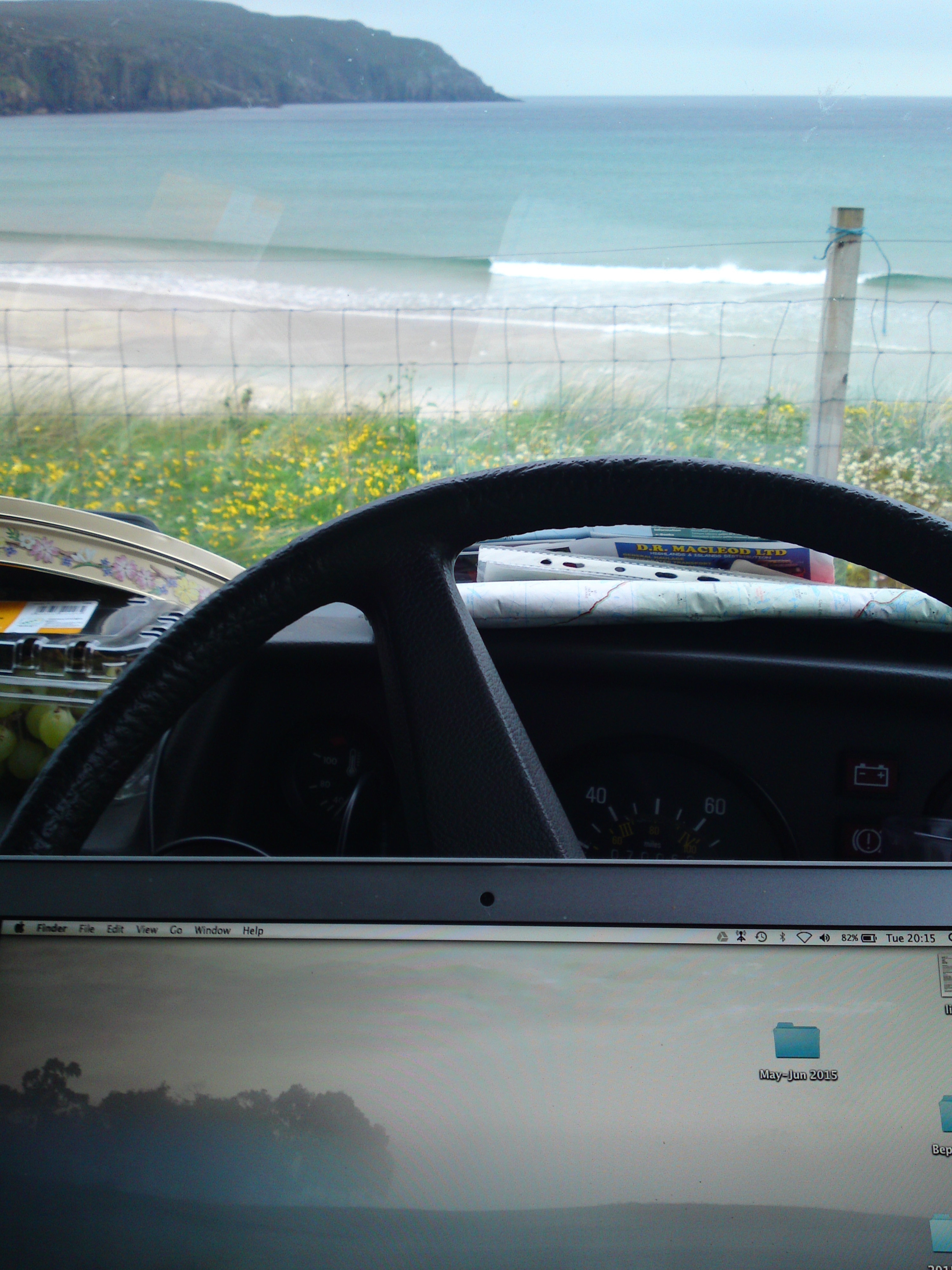
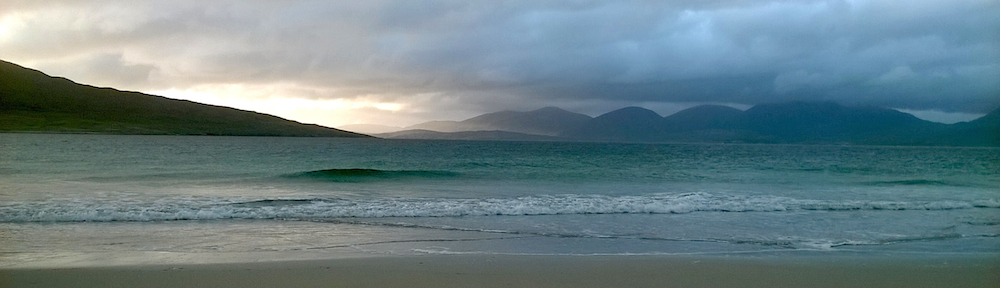
I’m in my driver’s seat (thanks to aforementioned mechanic-knight for a safe, solid, adjustable, allegedly spine-adjusting, original Type 1 van seat) watching the sea again, as I’m finding I can do for hours. I didn’t think I was particularly a sea person, wedded as I’ve been to the uplands, but my thousand miles or so were not complete until I’d got all the way to the Atlantic. The inland-facing sea-lochs just didn’t cut it – I just had to come all the way to the edge. I can’t actually *see* Greenland, but it’s quite amazing knowing it’s there. (Note to self: double check maps. I could be way out!) And so here I can rest. And weave. And play tunes.

On the loom is a project I’ve brought up from Devon, where I was seeking to capture the bluebell wood just below Huckentor: the truest, softest, strongest blue; the most acidic greens of new leaves; the red young bramble stems; the darker green nettle and the white of stitchwort.

Bluebell wood on the loom

The National Trust made a plea for colour

a pale gold sun appears, wintry and northerly, setting down the line of the headland into the sea – pale, palest icy colours…

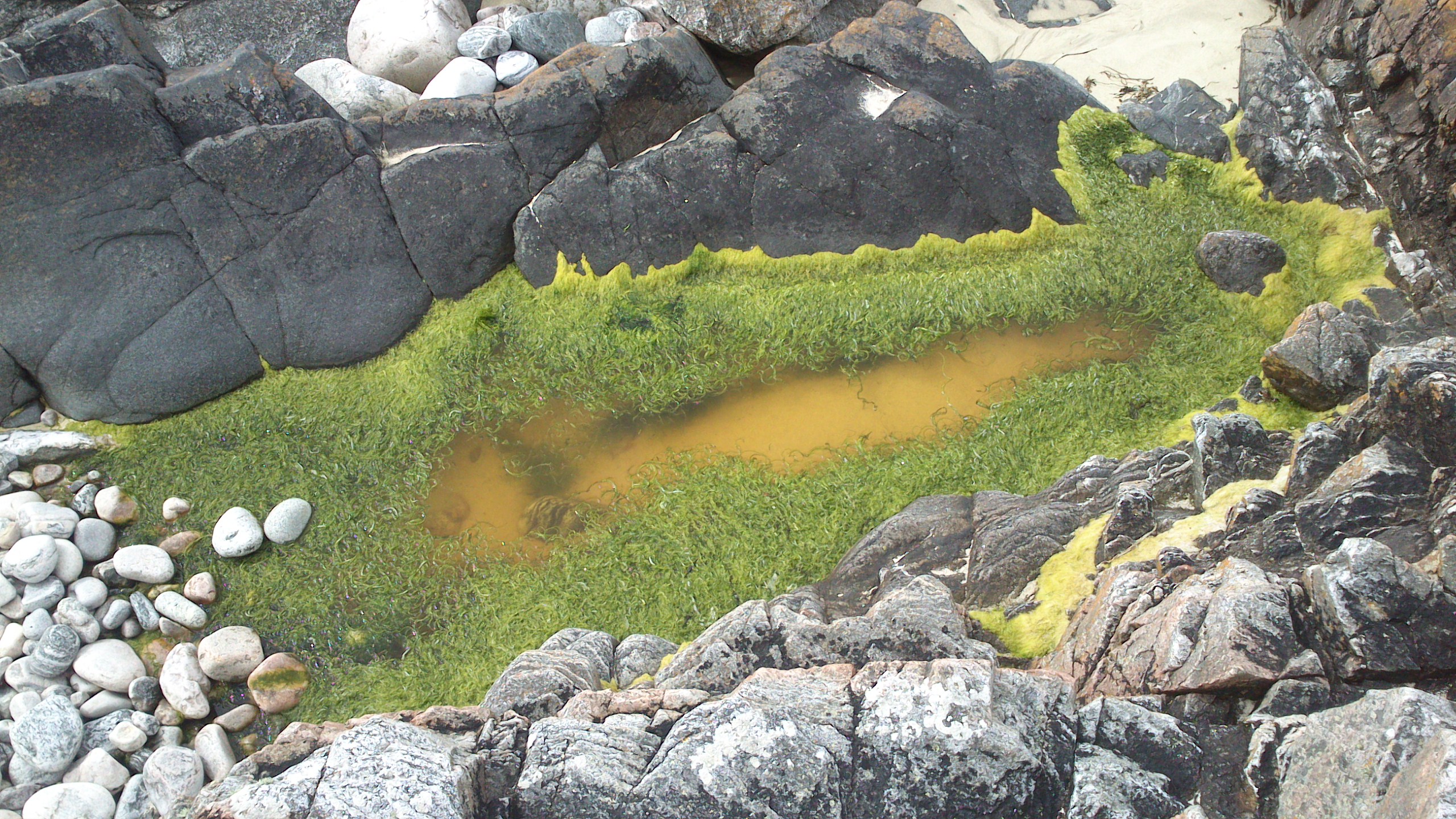
just when the Westcountry hedgerows were at their most incredible. With all this upheaval I’m behind though: stuck on Westcountry hedgerows (when the all-pink campion-smothered bank was what I really wanted but failed to capture), when now it’s summer and all I want to be weaving are the Harris yarns I’ve just bought, and the island austerity. At least the acid green of beech leaves is practically the same as the acid green of drying gut weed (which, incidentally, I ate for lunch today, see recipe below), and I have earthen reds, rusts, terracottas, brackens and rainbow tweedy browns for the kelp and dulse and bladder wrack, or whatever the other red one is here. (I could have eaten the whole rock face, but my (highly recommended) River Cottage Edible Seashore only covered a number, and though I understand that something like 99% of what comes from the sea to be edible, I don’t know what the 1% is (bankers? Oil barons? I’m an ethicatarian, I don’t eat those).)

I’m troubling over the nature of my weaving business. P – a ‘good egg’, as my friend says – at the National Trust gallery is enthusiastic and supportive and has some good ideas and is great to work with. However I need to watch my tendency to try to please and work *for*. A remit, brief or specification can be great: inspiring, steadying, focussing. Creativity can thrive within parametres, like the strict rules of a haiku, or like compression in a diesel engine. I think. But the perennial questions of the artist or craftsperson: how to make a living without playing to the market? How to make affordable things without compromising the artefact’s integrity? I don’t want to make pretty trinkets. I don’t want to make luxury garments. I’m not sure I even want to make art. I want to make good, honest, cloth. I’m surely in the right place for that, but next to the weavers of Harris tweed (and even the Bovey Tracy weaver in his deeply inspiring traditional workshop) with their Hattersley looms I feel like a WI hobbyist with my (relatively) little table loom and recent pretty colours.

And then I think of the (dark and miserable but still a bit pretty) songs I’ve been making with guitarist and cellist friends, and remind myself to work for edginess. I think of my musical heroes – tradmaking Celts: the depths they plumb and the new ground they break, and how when they work with popular, even more prestigious, highly ’successful’ outfits (I’m thinking especially of the Transatlantic Sessions) they lose their edges, and, for me, are sorely compromised.

And that’s why I’m out here, right on the edge.

Maybe I’ll make only blankets from now on.

Cliff camper-van stir-fry

Butter

Courgette (optional)

Salt

Smokey tofu (with good, firm texture)

Gutweed (the limest green, soft, fine fronds, cut from the rock, not ripped; ultra mild flavour; can be eaten raw)

Lemon

Garlic

Soy sauce (not Marmite, as I used)

Rice noodles

Toasted sesame seeds

Lightly sautee the courgette in butter, salting to taste and adding tofu, garlic, lemon and half the rinsed gutweed (a good taste-carrier) when courgettes are lightly done. After a minute add just enough water to cook rice noodles in the same pan, with a little soy sauce. After a few minutes, when almost all the water has been absorbed or turned to sauce and the noodles are cooked al dente, stir in the remaining gut weed (to get the benefit of the bright green). Lastly, sprinkle with toasted sesame seeds and serve with a sea view.

(Photos to follow)

The journey so far

I’m not sure where to start this one – being a baby in a bus with my parents in the Basque Country?  Being dragged to Scotland by my zealous mother? Getting my little white palfrey? Losing her son in a tragic accident? Pitching my whole strength against his mighty successor? Being dumped by a Scottish fiddle player? Meeting an incredible Irish guitar player? Being given a loom? Having a Swiss fairy godmother? Teaching critical thinking (all three of those in inverted commas) in a university until I alienated myself by being a little too critical? Working with students who helped me like myself? Being a resentful tenant? The realisation that I could not be a cog in someone else’s wheel? The death of the old dreams? (I don’t know what the new ones are, but living in a bus is a sort of no-compromise compromise for until the next ones take form, and will do just fine for now. It is liberating not to know one’s dreams.)

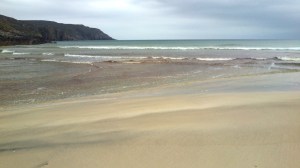
The wind is warm and this little bay looks blue and uncomplicated, but I am mesmerised by a little meeting of very shallow waves that come from 270 degrees around the slightest of sandbars and converge in an irregular twig-and-wool snowflake of the sort my mum and dad made to decorate the van in the Pyrenees for what was my second Christmas.Colours of Cliobh bay water

I was heroically on track with the the two-month smallholding packdown right until the very last evening, when, despite it’s different design and heat shield to protect from my super-go-faster-turbo-and-intercooler (cursed from the start by my oracular mechanic), the van’s starter motor no.4 sprung a sticky solanoid, just like starter motors 1, 2 and 3. Clearly I could not leave my best knight in such a hurry, and further work on the van’s innards (engine-ish, boiler) and outers (newly-crumpled bodywork and historically-rotted plywood) had me and others bodging, innovating and experimenting (I’m lucky to know the right people who won’t just go by the book but who will rewrite it expertly if it needs rewriting), and I saw parts of Plymouth I’d never had occasion to traverse in 20 years. I now know more about wiring, plumbing, solanoids, mastic, hydraulics and split voltage-sensitive relays than I did (which is easy), and the van is more sorted than it otherwise would have been had I rushed off to meet the Solstice on Lewis. (Welcome to homeowning, Eloise.)

So having missed the longest day on Lewis and hearing of Calmac strikes that meant I had to transfer my ferry ticket for 10 days hence, I decided to take the journey slowly. Even so I left at ridiculous-o’clock and indulged in a huge and imaginative free-range breakfast at the amazing new Gloucester Services (including broccoli juice – this is not any old services; like Tebay, they even sell smoked stilton), which even has flags on wooden frames that look like the remains of a jousting tournament. (Though I concede that they probably are not.) So I had decided to take the journey slowly but nonetheless was well impressed with the van’s steady 65pmh all the way to Beverley (this is fast for several tonnes of brick-shaped thing on overladen axles and cheap tyres).

Dashboard

I’d never heard of Beverley, but not only was it great to visit my almost-oldest friend and her about-to-be-ordained husband and charming boys who were sensitively enthralled with Murphy, we also had lunch in a square and  it felt like when we were in the south of France together. Complete with bagpipes, naturally. Oh and as well as a stunning minster it has cattle grazing in the town centre and lovely common land and kind Jewsons staff who got me a sackful of sawdust for my compost loo. Good place.

N & S

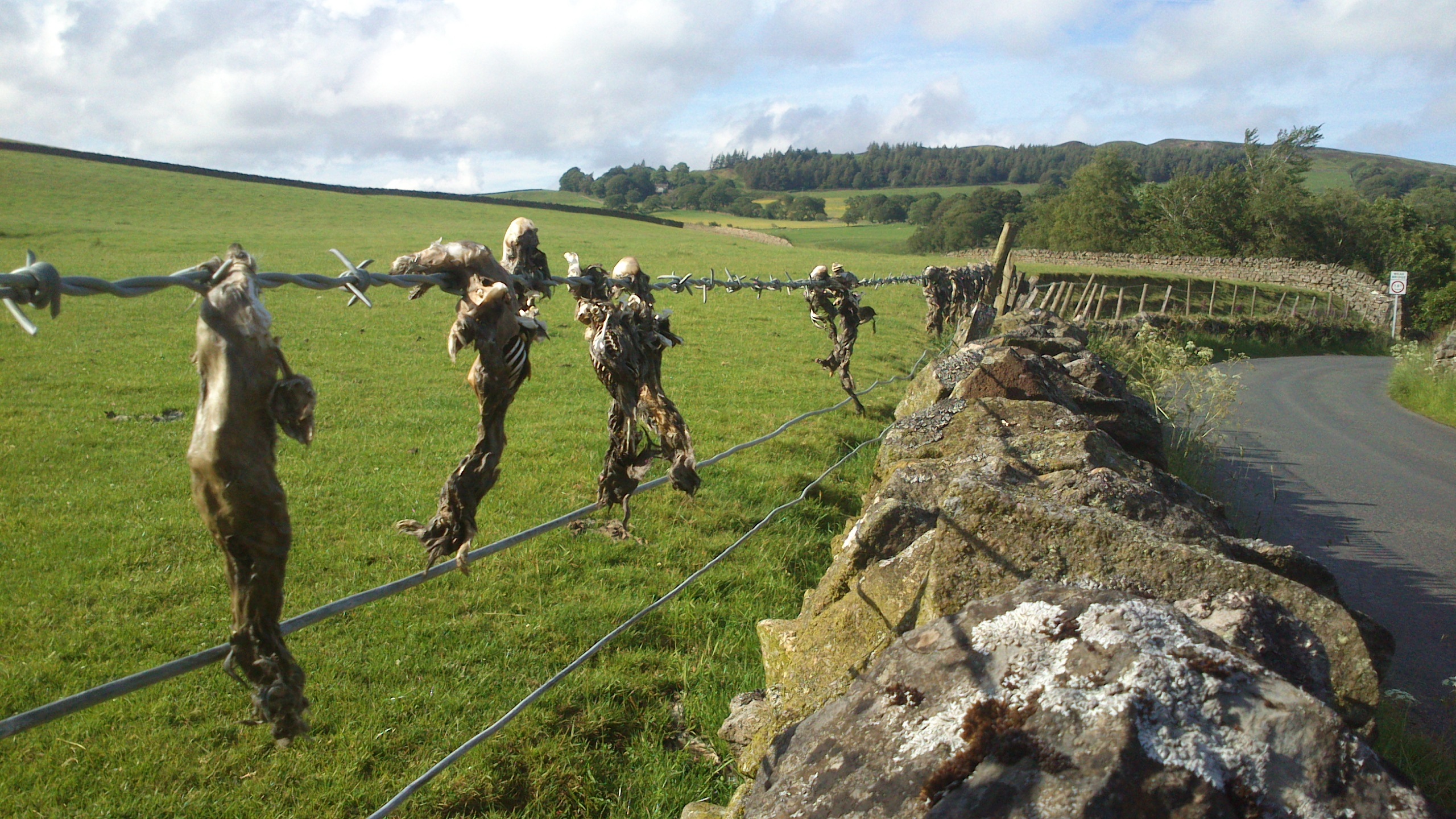
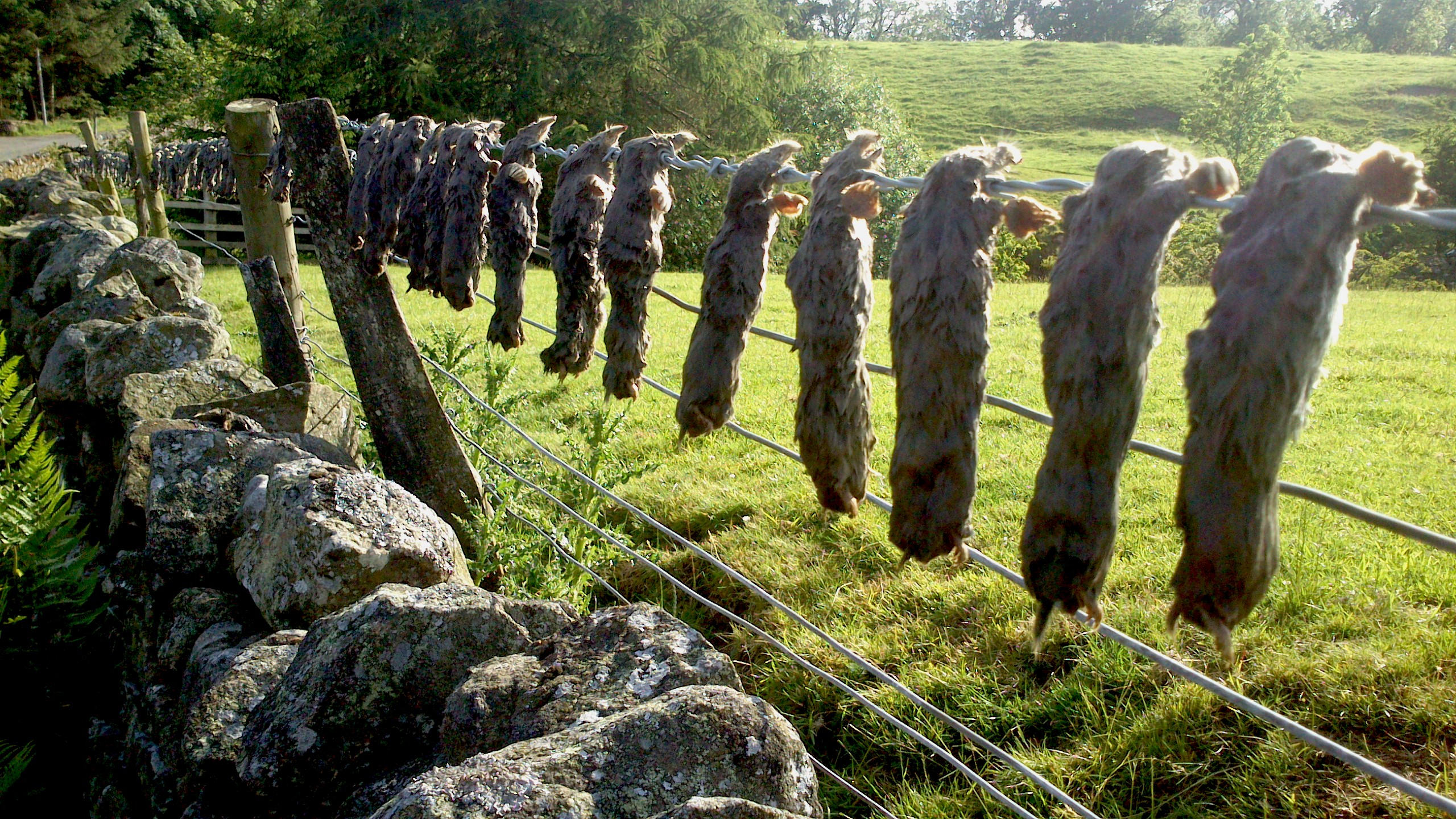
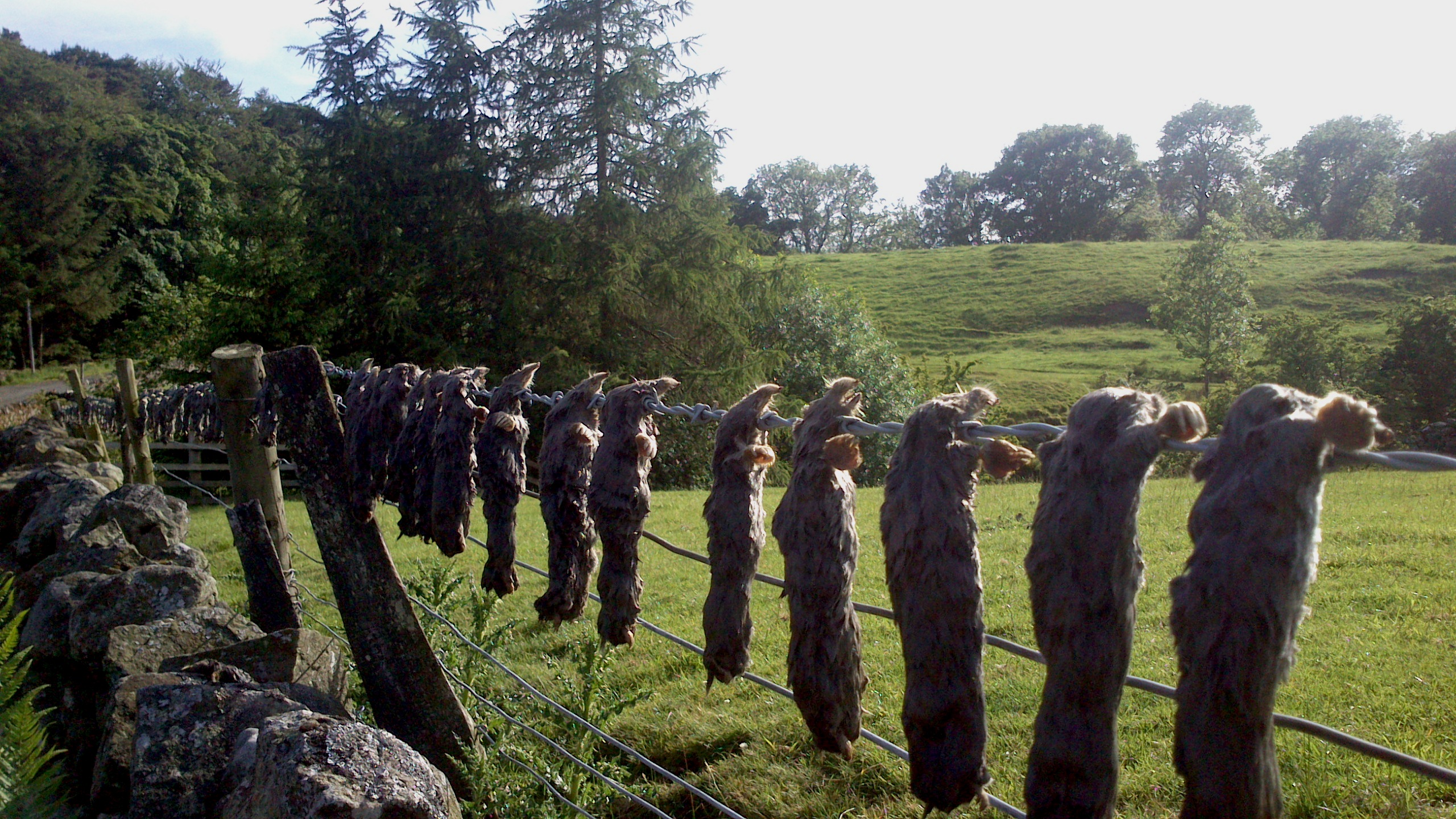
Then I drove through stunning Teesdale, and thought it was the most beautiful place on earth and that I might like to live there, until I saw 106 moles strung up on a barbed wire fence. I picked some flowers and strung them up with them.

My kind of LandscapeMoles 4Moles 1Moles 2

Moles 3TeesdaleBus in Teesdale

Supper in a friends’ garden near Newcastle on a high hill overlooking a big flat valley reminded me of being with them in Calvignac, in the Lot, on a stunning wisteria-terrace overlooking a flat river-valley growing tobacco (really?) and walnuts with a derelict mill and an illuminated castle on the next limestone cliff. (Rich life that I have led! Well done mum, on a shoestring!) I guess the French feelings are because I may go to Brittany in the autumn, and because of the warmth.

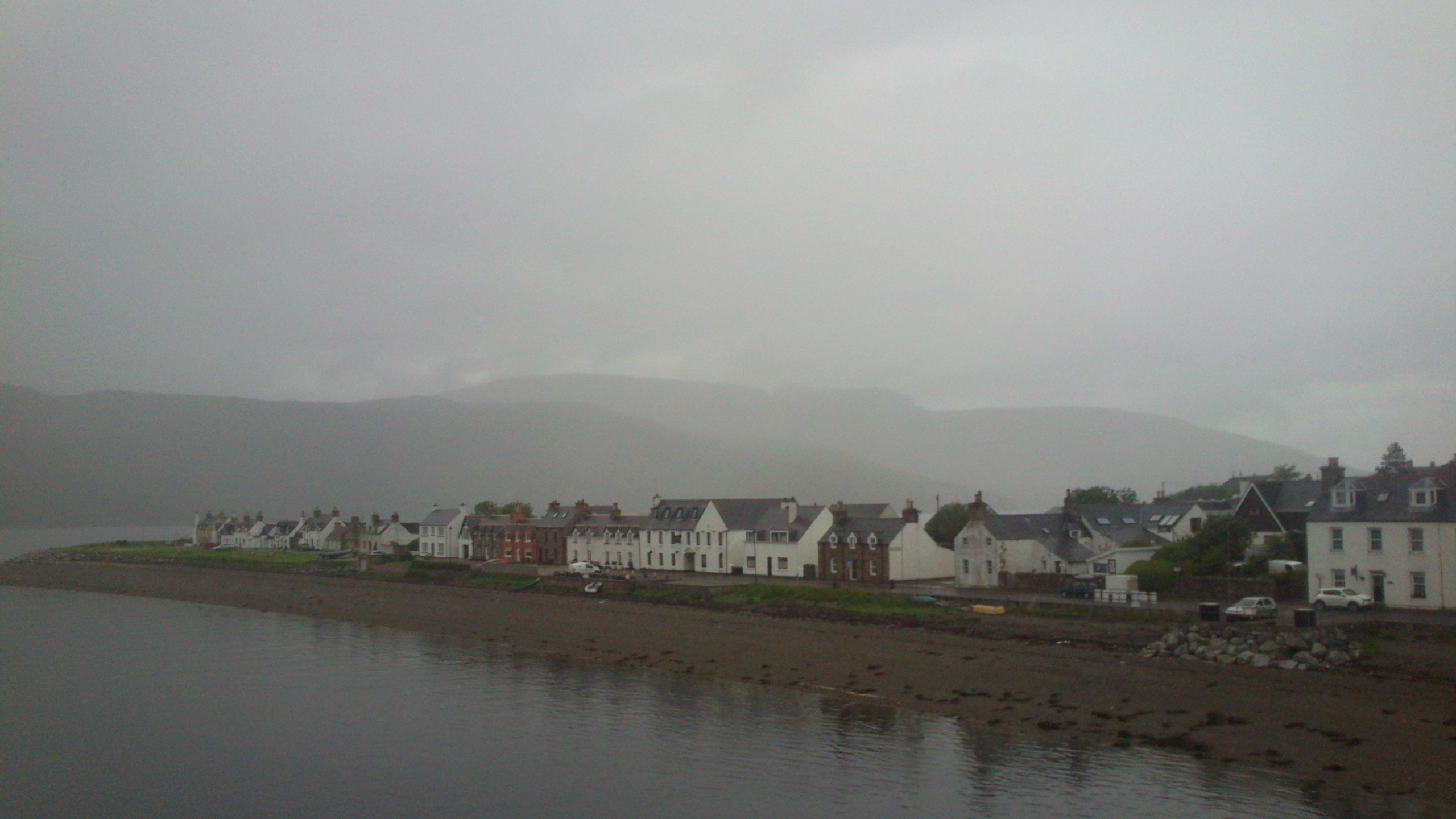
Lewis is dreach but the wind is warm. Ullapool even has palm trees!

So from Teesdale to Tyne I looked up Fraserburgh and Peterhead (those are references to two of my favourite John Doyle songs BTW; probably Ewan MacColl had something to do with them too) and made an unexpected visit to Findhorn, where a Devon friend was participating in a course on animal communication. I’d known of Findhorn, and though I am quite allergic to Communities with a capital C and the Enlightenment Competition, as well as to rendered suburbs, flat land and sand dunes hosting mediterranean pines, it is an interesting social experiment. Some of the wooden houses that are built more harmoniously with the surrounding flora were beautiful. A largish primer-coloured jet sits next door with the Duke of Edinburgh’s name on it.  A grey 11pm sundown on the North Sea was the last moment I’d expect to have a skinny-dip, but the wind was balmy and after all this is something of a rite of passage.

And then a fairly easy drive to Ullapool, with red kites and bleak Highlands. Drivers on Scottish roads are terribly cautious of late, and numerous times I regretted pulling over courteously to wait while they cautiously passed, only to be held up by them on the next dip (I need a run-up, dammit!). And then I probably (mildly) menaced someone who pulled over for me, and when shortly after I came upon my turnoff way too fast and precious friend-made ceramics flew out of the locker with the crappy spring, I thought that it was probably instant carma.

A prolonged siesta at Ullapool meant I missed all but the last half-song of the live music in the village (but it wasn’t trad), and finishing up my tomato juice over the last half-song meant I missed what may have been a stunning sunset over the sea and the Outer Isles, if the red light on the rocks to the East was anything to go by.

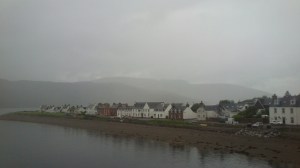
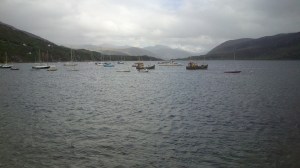
Ullapool moods red

Camping pretty much on the shore was great though, if grey and blustery.

Light in the isles

Ullapool moods

Ullapool moods 3

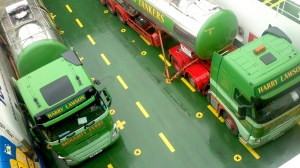
Beautiful green lorries

On the ferry the next morning I watched the also-grey profiles of foggy headlands and moody mountains recede, the only person sitting out on the aft deck in the rain, lulled by the throbbing engines. Having felt out of touch with my mission these last liminal weeks, it is good to have the bleak Celtic moments to remind me, and after a strange absence the strains of an Irish lament brought me back.

Ullapool pierULlapool harbourReceding Highlands

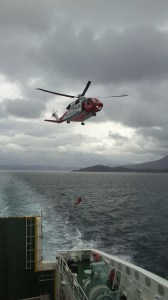
Then of a sudden I got all into focus on a little white low-flying thing that was clearly tailing us and getting closer. ‘They’ve found me!’ The red and white helicopter took its time approaching, then hovered over my head, and dropped a coastguard on a cable onto our ship’s deck. By now we were a little crowd, applauding this spectacular show. A royal bow and the guard caught the cable again and was hoisted back up as the ‘copter did a super-smooth Hollywood veer to the fore and port side and then turned tail, off to exercise their heroics somewhere else.

Suddenly out of the distanceCoastguard dropHeli

Stornoway when we arrived was even dreacher than

the Yorkshire moors, Highlands or Ullapool. ‘Summer’s coming next week’, they all said – it’s now next week and I’m still waiting. An unbeautiful grey town in which you are welcomed off the ferry by Tesco (there is a little colour – blue with a touch of red), and as I headed to my gravel caravan park where I’d thought it would be a good idea to spend my first night safe in suburbia, the scabs of grey bungalows blighting the crofting land made me wonder what on earth I was doing here. Another siesta and the airport suddenly got noisy with ferocious jets. Fuming, I peered through the yellowing perspex of one of my bedroom windows and wondered grumpily at the purple-red cloud and then realised that the invasion was by the Red Arrows. Are these the Chivenor ones, from my town of birth, to welcome me here? The world is strange!

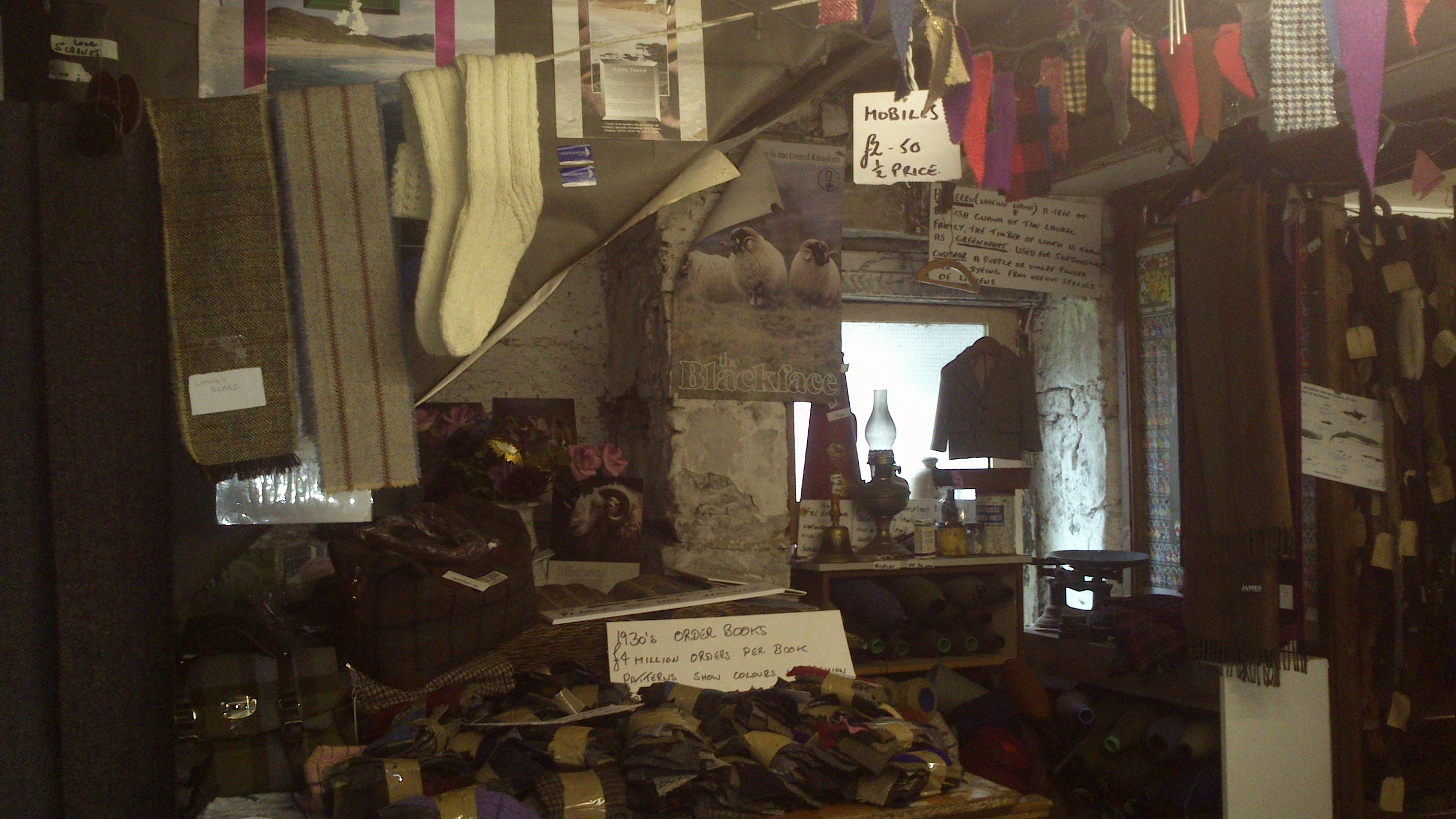
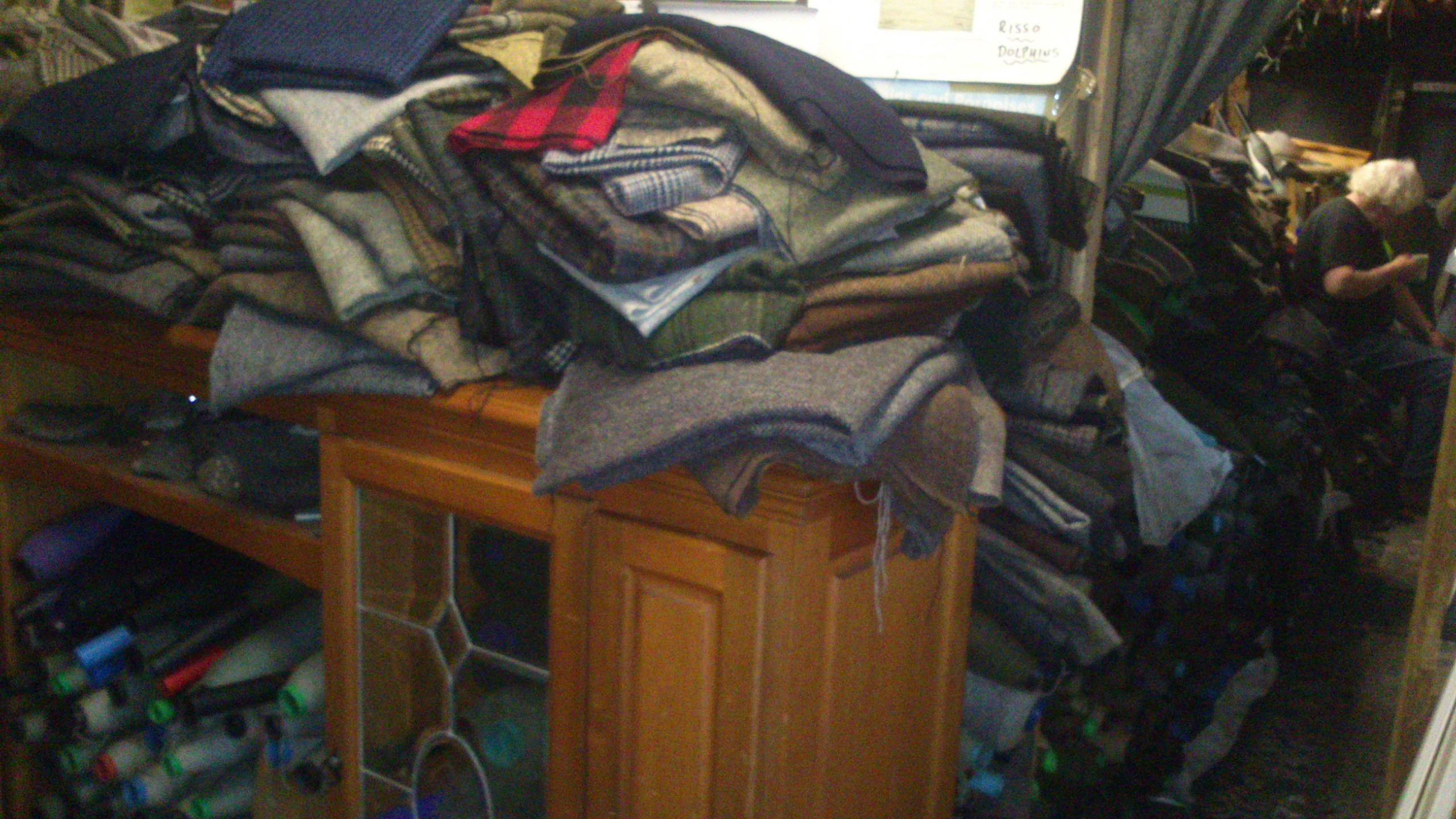
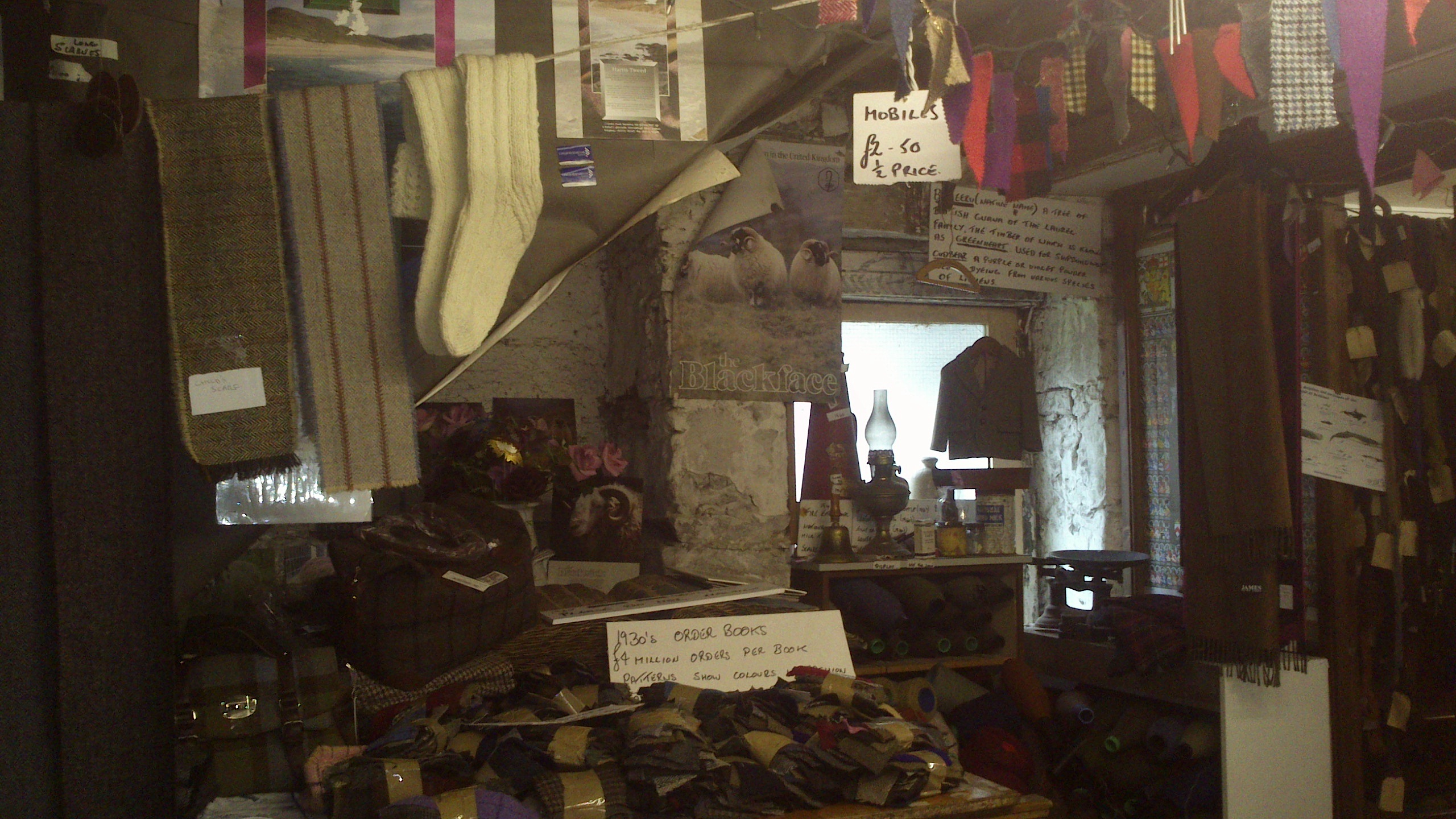
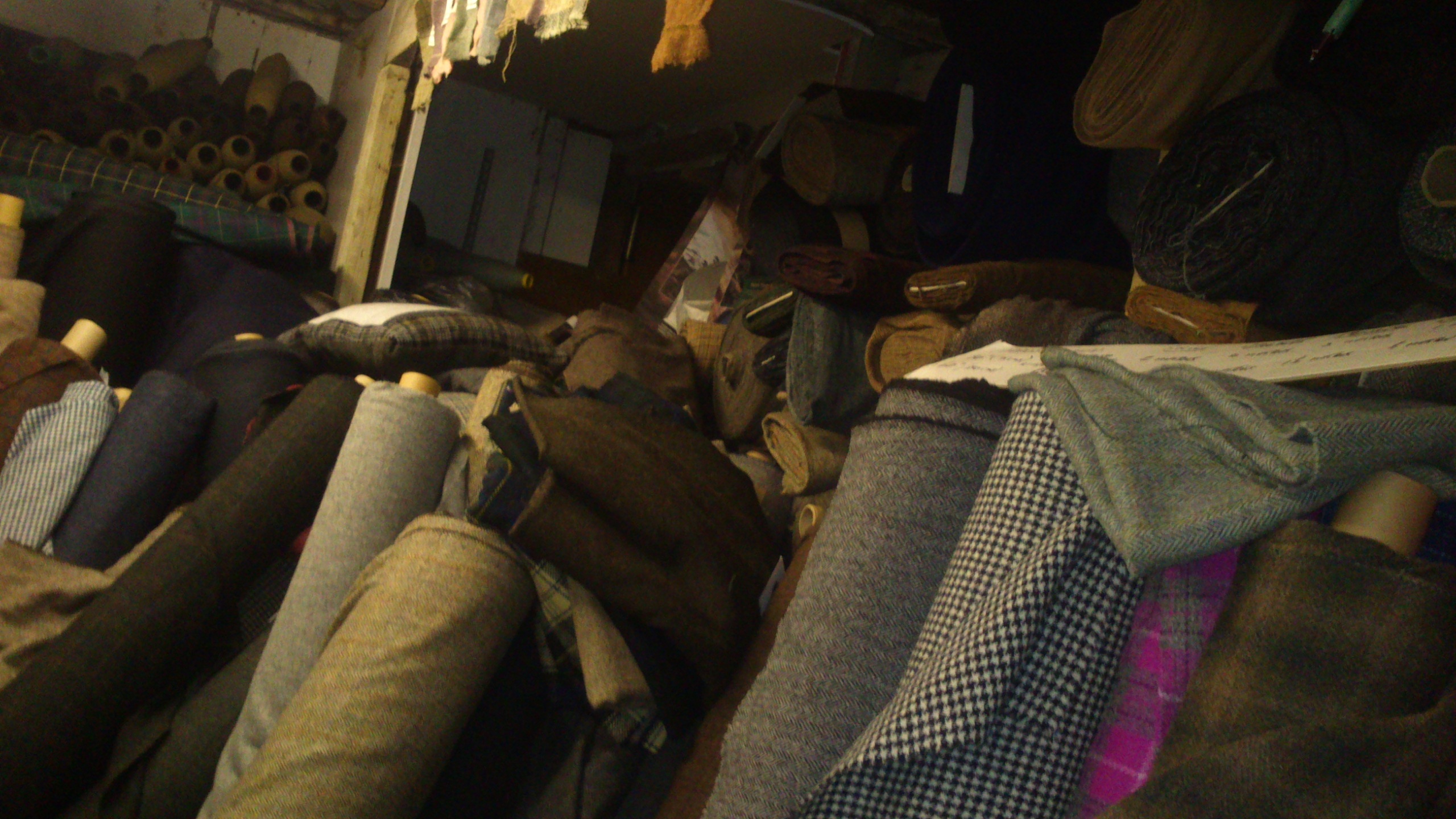
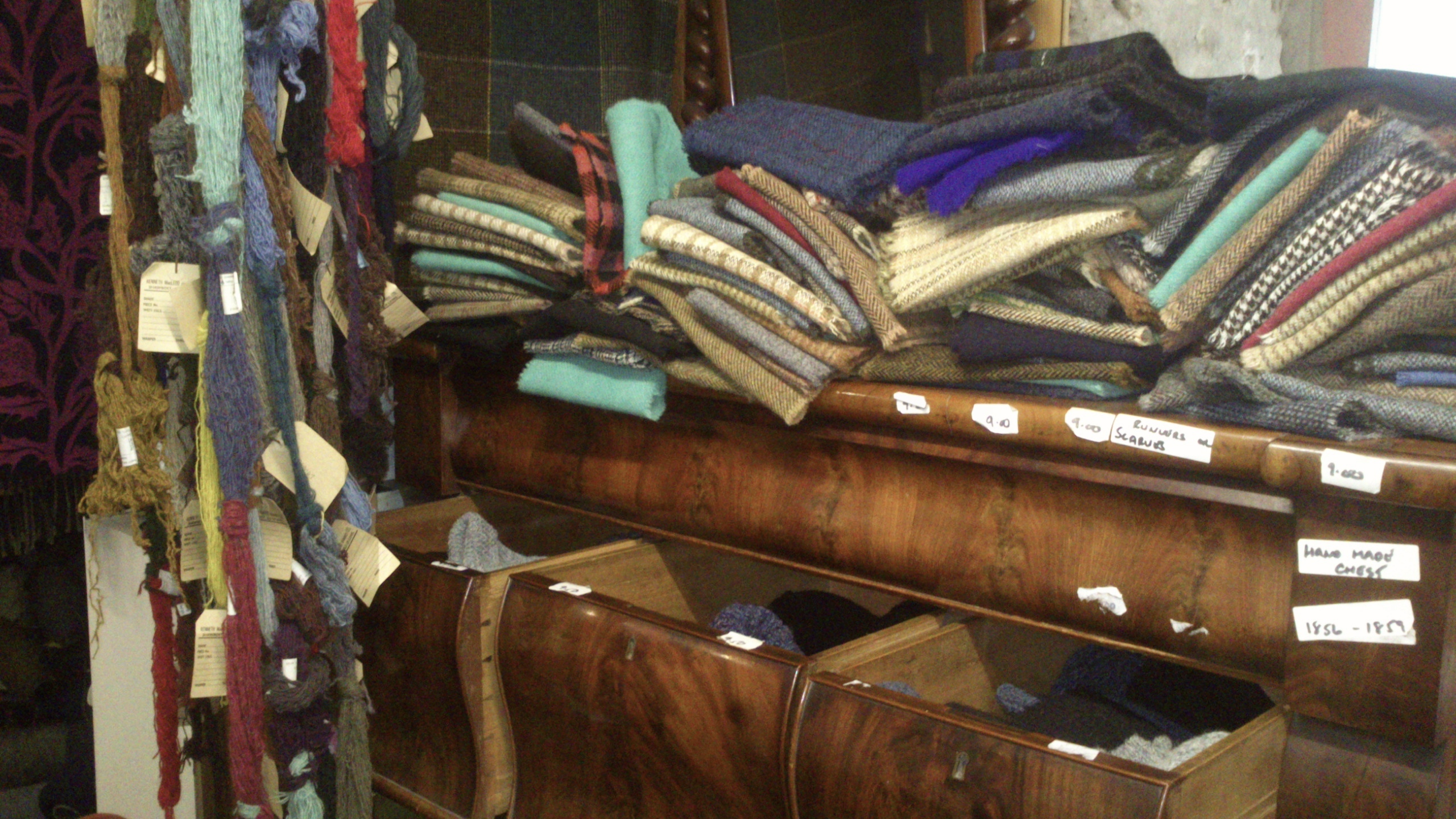
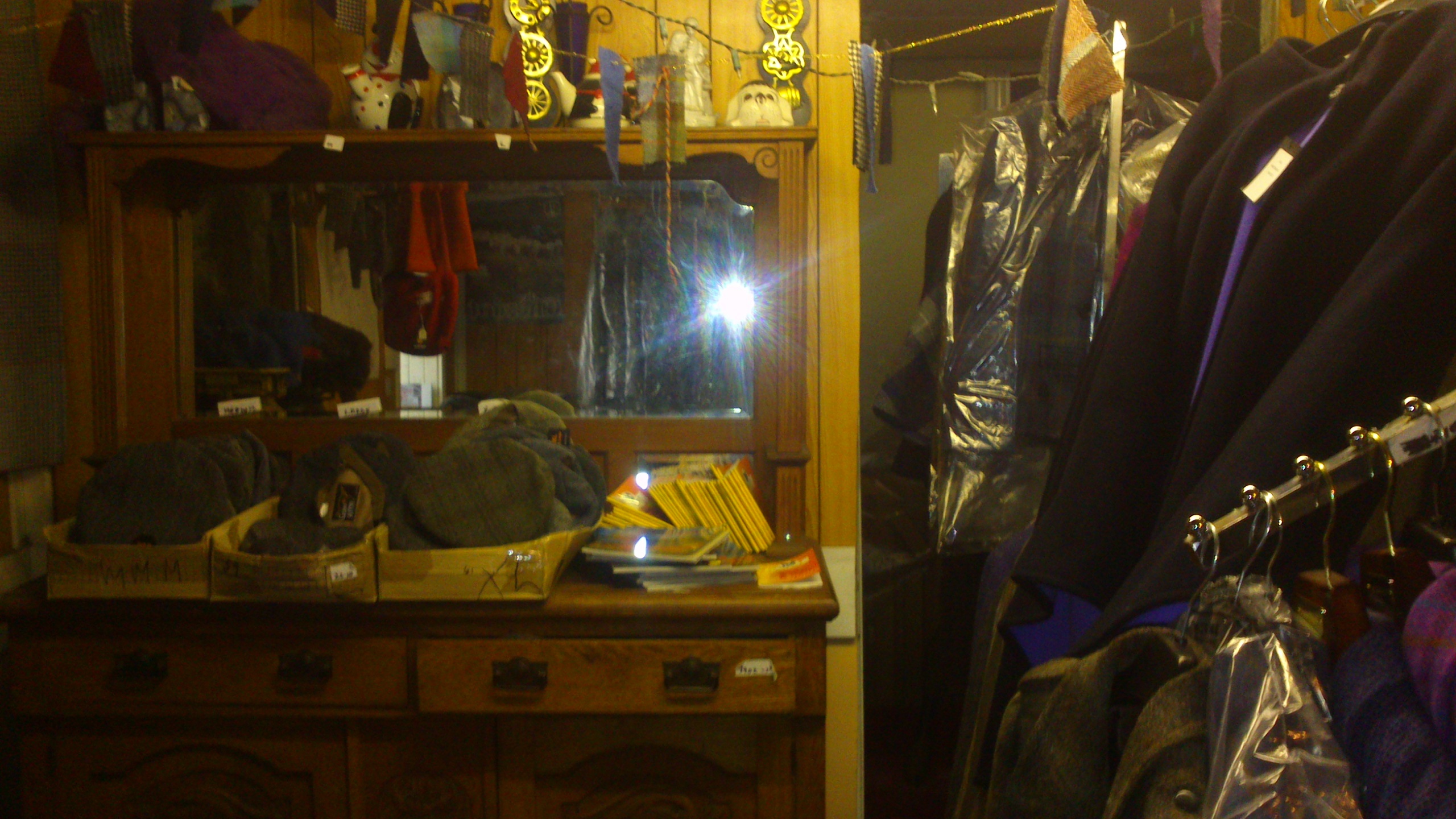
And then the speed-delve into Stornoway, where the posh but friendly Harris Tweedshop with Ian Lawson’s stunning book, a great film, beautiful fabrics and the weaving songs book too; the grotto-like bazaar that is the Loom Centre with the eccentric pair (one white-haired Leoisaich man, one Indian/Pakistani/Spanish/Irish Scots woman) who sell me tweed offcuts to make bunting for the bus and, along with the Wool 4 Ewe lady, sell me some Harris Tweed yarns and know the character who sells it for tuppence on eBay; the long-lost Italian scamorza; the trad sessions research (they are numerous) and the quick picnic in the castle grounds, all remind me exactly why I am here.

Bridge Centre    Mercedes drain

   Bus on inner harbourStornoway inner harbourLews Loom Centre signLewis Loom Centre antiquarian Lewis Loom Centre antiquarian 1 Lewis Loom Centre antiquarian 3 Lewis Loom Centre antiquarian 4 Lewis Loom Centre antiquarian 5 Lewis Loom Centre antiquarian 6 Lewis Loom Centre antiquarian 7  Lewis Loom Centre antiquarian 8    Old loom Stornoway Tweed, glorious tweedRainbow tweed clothRainbow tweedsHeading West  Moody Lewis     The road WestHighland glenRed bladderwrack and toes on Cliobh beach web Orchid 1         Happy Smurf

And now supper on this little Greenland-facing beach that I have all to myself. Frosted oraches, or perpetual spinach, from the pebbly upper shore of Ullapool, with garlicky tomato, rice and melted cheddar.

Cliobh bay view 1 Cliobh colours Cliobh colours 2 Cliobh colours 3 Cliobh composition + gutweed Cliobh diagonal Cliobh emerald water Cliobh hell of a parking place Cliobh land Cliobh sheep tracks 

PS I just closed the laptop and looked out the window. MIDGES! I wonder whether the Gaelic class I booked today will teach me how to say ‘fuck off’ in a way that they understand. 

Arriving

The office

The office. Somewhere on the west coast of Lewis. A week or so after the Solstice. Hands smelling of the rotted sheep sinew I wrested from between Murphy’s teeth.

In the wilds at last! Friends thought my old moorland home was wild and that my life there was fairly free, but not wild enough, nor free enough. I held (almost) all the stuff of my dreams in my hands but it was too heavy to walk with. Packing up two and a half bedrooms, three sheds, a barn and an acre or two and making arrangements for chickens, Horse, piano, tenor guitar, treadle Singer and old Merc was something of a feat in two months. I even did a little weaving along the way – although not much. Somehow Catholic guilt passed all the way to me (contrary to my mother’s belief, and Zen persuasion), and although some don’t see my Protestant work ethic, I certainly feel bad when I don’t work. God knows I cannot afford to be a lady of leisure, any more than I could afford to live like a married and moneyed woman smallholding without the husband or the money. I hope I can afford to live in an old motorhome. So tomorrow is at last, I hope, the first day of my new normal: weaving quietly all day in a bleak Celtic spot – or possibly weaving singing in a bleak Celtic spot, since I have a book of Scottish songs, a book of Irish tunes, and, as of today’s inspiring speed-delve into Stornoway, a book of weaving songs too.

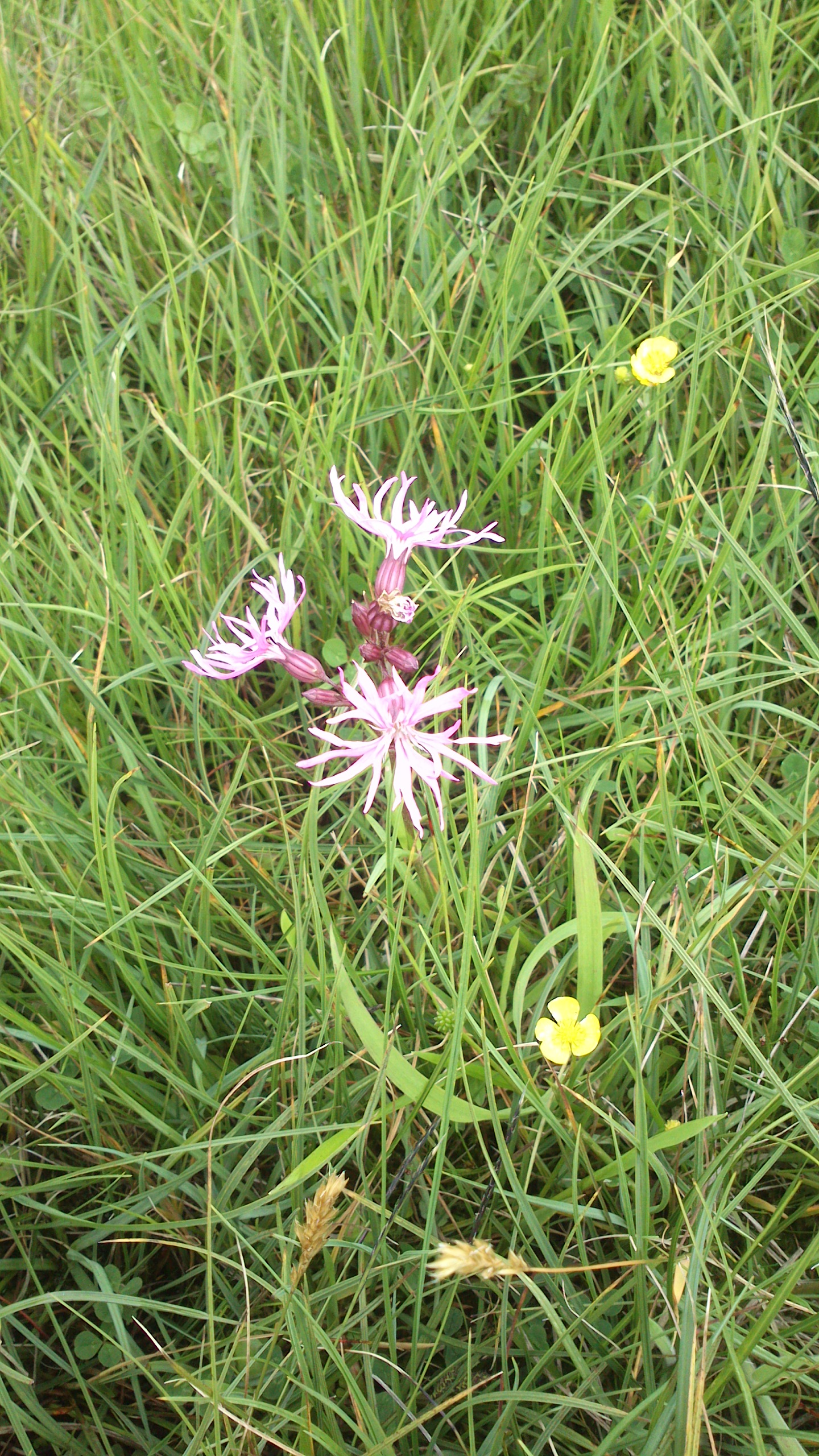
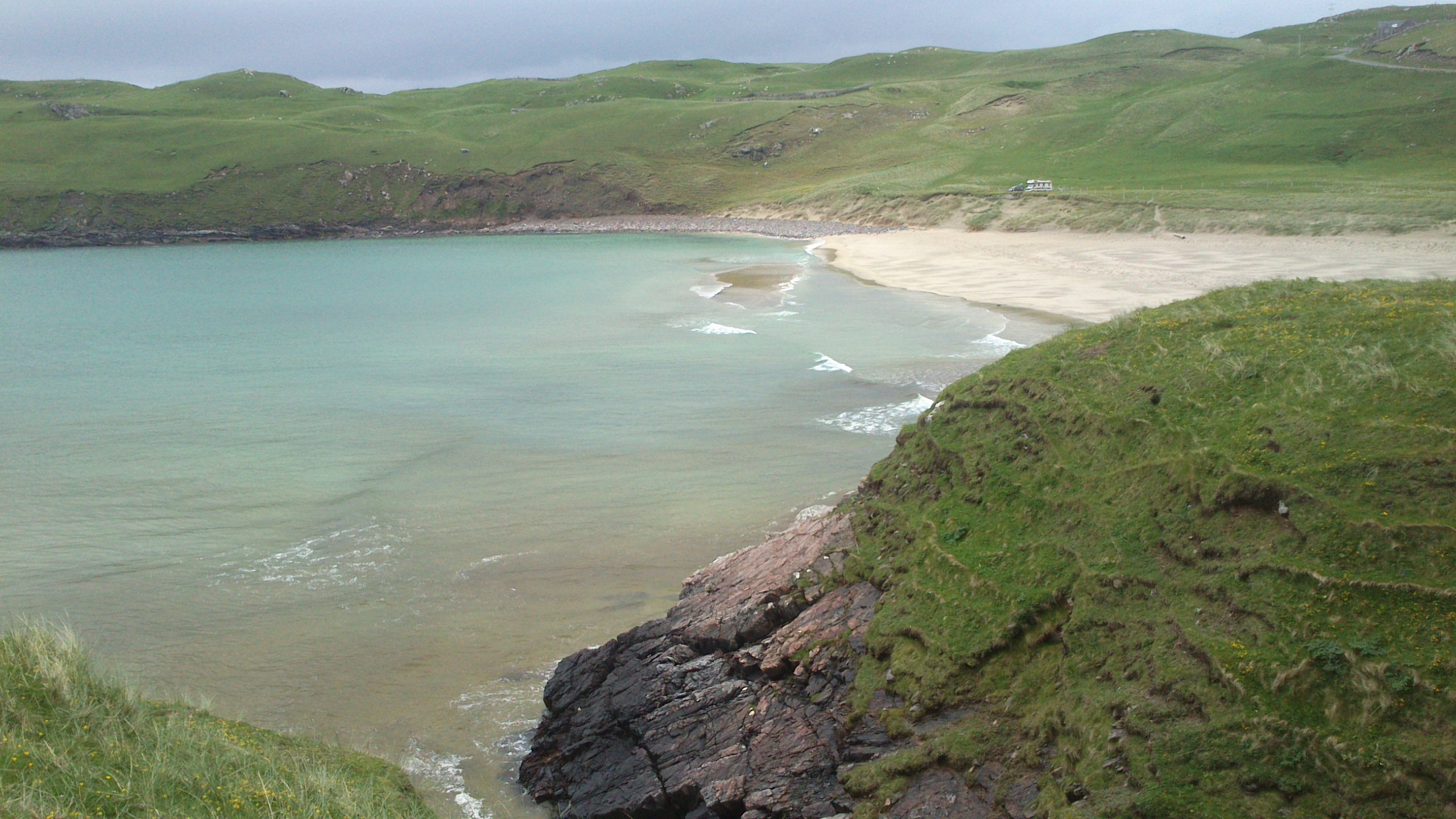
As I type I’m watching a gannet colony speed-delving into the sea. There is ground elder, and I’m going to see what my hedgerow cookbook says of it. There are three types of orchid, scattered gentian(?), sea pink, white campion, violets – ach no, I discover that they are nae violets but something far more exotic – prolific clover, buttercup and daisy, cinquefoil, sorrel, sunshine trefoil in abundance, sea-rocket and various others I don’t know. And all that just at an ill-informed glance.